Mastering Affiliate Program Management: The Modern Playbook
Category: Affiliate program management
So, you're thinking about affiliate marketing. Great choice. But just handing out links to creators and hoping for the best isn't a strategy—it's a gamble. Real success comes from effective affiliate program management, which is the art and science of building, nurturing, and optimizing the relationships you have with your creator partners to drive sales and brand awareness.
It’s about creating a solid, reliable system that handles everything from recruiting the right partners to tracking sales with precision, facilitating communication, and ensuring everyone gets paid accurately and on time.
Beyond Links: What Affiliate Management Really Means
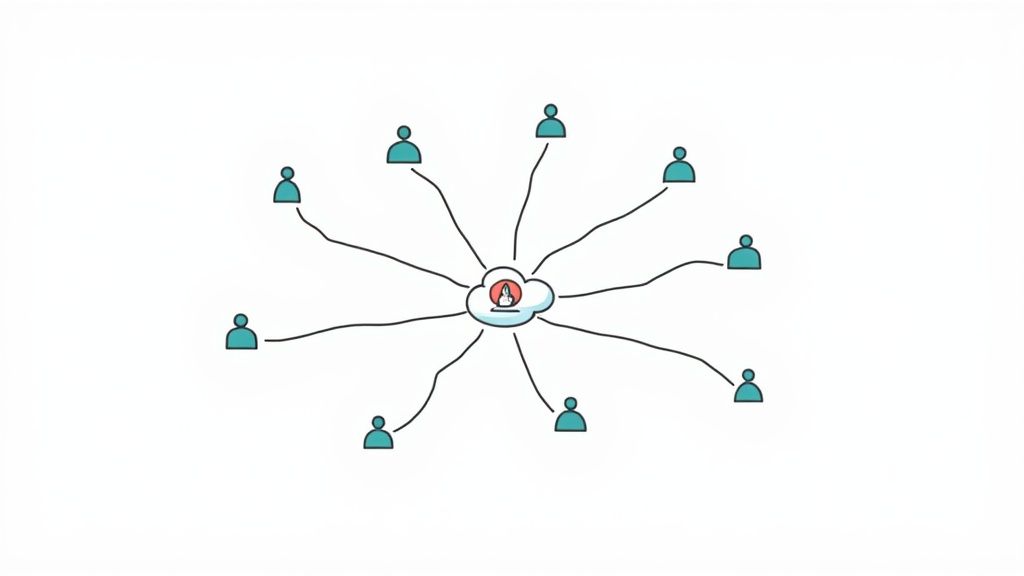
Think of a well-managed affiliate program as the engine that drives profitable, long-term partnerships. It’s no longer a side task for an intern; it’s a full-fledged marketing channel. And the numbers back this up. The global affiliate marketing space is on track to hit $20 billion by 2025 and is projected to nearly double by 2031. With over 80% of brands already running affiliate programs, it's clear this isn't just a trend. You can explore more affiliate marketing growth stats from Hostinger's research.
Not too long ago, "managing" an affiliate program meant wrestling with chaotic spreadsheets, sending out one-off emails, and manually processing every single payment. This old-school approach is not just a headache; it's a major liability that introduces complexity, human error, and serious trust issues.
The Problem with Manual Management
Trying to run an affiliate program by hand is a recipe for disaster. When you’re tracking sales and commissions manually, human error isn’t just a risk, it’s a certainty. A single typo or a missed sale can lead to an incorrect payout, which instantly poisons your relationship with a valuable creator. The manual process is open to a host of human errors and creates trust issues that can sink your program before it even gets off the ground.
The manual process is riddled with issues that destroy trust. The moment creators start doubting their earnings or chasing down late payments, their motivation to promote your products tanks. It’s the quickest way to kill a promising partnership.
This manual chaos just creates friction at every turn:
- It's a Time Sink: Hours get swallowed up by admin work instead of being invested in building real relationships.
- Payment Errors Happen: Incorrect payouts, born from human error, cause frustration and make creators lose faith in your brand.
- Communication Falls Apart: Disorganized messages mean missed opportunities and confused partners, undermining the brand-creator relationship.
- You Can't Scale: A manual system will collapse under the weight of a growing affiliate network, making growth impossible.
The table below breaks down just how different the old and new ways of thinking are.
Manual vs Automated Affiliate Program Management
The shift from manual to automated management isn't just about saving time; it's about building a more professional, scalable, and trustworthy program. Here’s a look at the key differences:
| Aspect | Manual Management (The Old Way) | Automated Management (The New Way) |
|---|---|---|
| Tracking & Attribution | Prone to human error; relies on spreadsheets and manual checks, creating trust issues. | Highly accurate; uses software for real-time, reliable tracking. |
| Payments | Slow, individual processing; high risk of mistakes and delays, damaging relationships. | Fast and automated; bulk payments are accurate and on time, building trust. |
| Communication | Disjointed and inconsistent; managed via one-off emails, leading to confusion. | Centralized and streamlined; managed through a dedicated portal, fostering community. |
| Scalability | Extremely limited; becomes unmanageable with more affiliates. | Highly scalable; easily supports hundreds or thousands of partners. |
| Creator Trust | Easily damaged by payment errors and poor communication. | Strengthened by transparency, accuracy, and professional systems. |
| Time Investment | Huge time drain on administrative tasks. | Frees up time to focus on strategy and relationship building. |
Ultimately, automation turns a logistical nightmare into a smooth, efficient growth machine, allowing you to focus on what really matters: your partners.
The Amazon Twist: A Powerful, Hidden Strategy
Most brands have affiliate programs linked to their own websites. That’s standard. But here’s a far more powerful (and traditionally more complex) secret: sending affiliate traffic directly to your Amazon product pages.
Why? Because you harness the power of Amazon's high conversion rates versus the typically lower conversion of a brand's own website. You get to ride the coattails of Amazon's massive conversion machine—its trusted reputation, one-click checkout, and Prime shipping benefits are things most standalone brand sites can only dream of.
However, affiliate program management sending traffic to Amazon is more complex than to websites. The big question is attribution: how can you be certain which creator drove which sale inside Amazon's walled garden? This is where modern tools like Coral completely change the game. Coral makes this advanced strategy easy by automating payments, providing a direct communication channel between brands and creators, and ensuring the entire system is quick and simple to set up and keep going. It takes a high-potential, complex strategy and makes it an accessible growth lever for any Amazon seller.
The Amazon Advantage in Affiliate Marketing
When you think about setting up an affiliate program, the first thought is almost always to send traffic to your own website. It just makes sense, right? You want customers on your home turf.
But what if I told you the smartest move is to send them somewhere else entirely? This is where a truly powerful affiliate strategy comes into play: sending your creator traffic directly to your Amazon product pages.
It’s a tactic the biggest brands have quietly mastered. They know that Amazon is, plain and simple, one of the most effective selling machines ever built. Your brand’s website might be beautiful, but it’s going up against an ecosystem that Amazon has spent decades perfecting for one thing: conversions.
Think about it. Amazon has earned the trust of millions of shoppers. Their payment information is saved, checkout is just one click away, and the promise of fast, free Prime shipping is a massive draw. When you tap into this environment, your affiliate traffic is dramatically more likely to turn into a real sale.
Why Your Website Can’t Compete with Amazon’s Conversion Power
Let’s be honest for a second. Even the slickest brand website faces an uphill battle against the advantages baked into Amazon.
When a customer lands on your site from an affiliate link, they still have to jump through hoops. They might need to create an account, go find their wallet, and then start thinking about shipping costs and delivery times. Every single one of these steps is a friction point—a place where you can lose the sale.
Now, imagine that same customer landing on your Amazon page. They’re already in a familiar, trusted space. The path to buying is practically seamless. This is precisely why sending affiliate traffic to Amazon often blows website conversion rates out of the water, turning more of your hard-earned clicks into actual revenue.
This isn’t just a hunch; it’s backed by major market trends. Affiliate marketing is a huge driver of e-commerce, influencing roughly 16% of all online sales globally. And within that world, Amazon Associates is the undisputed king, holding around 46% of the market share because of its massive reach and trusted reputation. You can dig into more affiliate marketing statistics at cropink.com to see the bigger picture.
The Challenge of Amazon-Centric Affiliate Management
So, if sending traffic to Amazon is such a game-changer, why isn’t everyone doing it? The short answer: it’s complicated. Managing an affiliate program that points to Amazon introduces a whole new set of problems you don't have with a standard website-based program.
Trying to do it all manually is a recipe for disaster.
- Tracking and Attribution: How do you know for sure which affiliate drove a specific sale inside Amazon's black box? Without a proper system, you're just guessing.
- Payment Accuracy: If you can't track sales, you can't pay commissions correctly. This is the fastest way to destroy trust with your creators, who will rightly wonder if they’re getting paid for the business they generate.
- Communication Gaps: Trying to manage affiliate relationships while manually piecing together sales data from Amazon reports is a logistical nightmare for everyone.
This complexity has historically made direct-to-Amazon affiliate programs a high-risk strategy that only massive brands with custom-built software could pull off. But this is exactly the problem that modern, specialized platforms were built to solve. If you want a deeper look at the nuts and bolts, you should check out our guide on the Amazon affiliate marketing program.
A dedicated tool like Coral automates this entire headache. It links directly with Amazon to give you crystal-clear sales attribution, handles commission payouts automatically to keep creators happy, and keeps all your communications in one place. By taking the manual work and human error out of the equation, Coral makes this incredibly powerful strategy easy and accessible for any brand, so you can focus on growing your business instead of getting lost in spreadsheets.
The Five Pillars of a Successful Affiliate Program
Think of a strong affiliate program like building a solid bridge. Each pillar needs to be perfectly placed and rock-solid, otherwise, the whole thing gets shaky. When you're trying to manage your program manually, every one of these five pillars is prone to developing cracks, which quickly leads to a lack of trust and poor results. This gets even trickier for brands selling on Amazon.
The entire process, from finding partners to paying them, rests on these core components. Each pillar represents a make-or-break stage in your relationship with your creators.
Here's a quick visual that breaks down the essential parts of managing an affiliate program, from the partner's side all the way to your tracking dashboard.
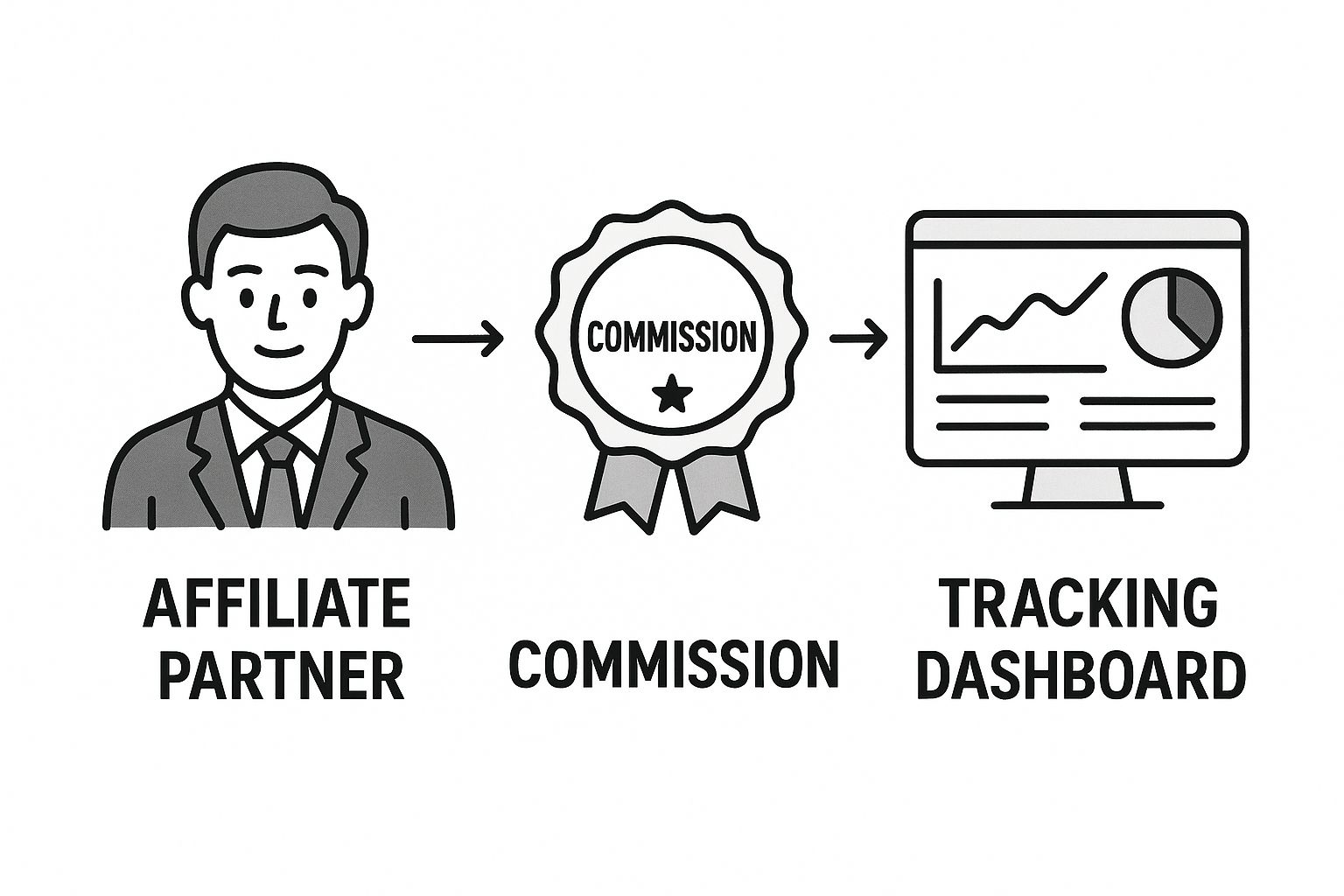
This graphic really shows how connected everything is. It’s a journey from the affiliate partner to the final performance numbers, and every step depends on the one before it.
Pillar 1: Recruiting and Onboarding
The bedrock of any program is finding the right people—creators whose audience is a natural fit for what you're selling. A manual approach usually means drowning in endless DMs and email threads, with no single place to properly vet applicants or keep track of who you've talked to.
Then comes onboarding, which can easily become a chaotic mess. You're sending one-off welcome emails, explaining the rules over and over, and just hoping new affiliates can figure it all out. This kind of disorganization makes for a terrible first impression and burns time that you should be spending on actual strategy.
Pillar 2: Motivating Commission Structures
Let's be honest: a one-size-fits-all commission rate just doesn't cut it. Your top-performing creators have earned VIP treatment and deserve higher rates, while newer partners can start on a standard tier. Trying to juggle this by hand is a nightmare of custom spreadsheets and manual payment reminders. It makes it nearly impossible to roll out tiered rewards that actually work.
This is especially true for Amazon-based programs, where you might want to set different commission rates for different products. Without an automated system, you're stuck with a rigid, uninspiring payment structure that does nothing to motivate your best partners.
Pillar 3: Accurate Performance Tracking
This is the pillar where manual management truly collapses and trust evaporates. How can a creator trust that you're paying them correctly if you're tallying up sales by hand? Whether the sales happen on your website or on Amazon, manual tracking is just asking for human error. Missed sales, wrong attributions, and late reporting are practically guaranteed.
For brands focused on Amazon, it's even more complex. You're trying to trace sales back to specific affiliates within Amazon's massive ecosystem without a reliable tool. Creators will lose faith in a heartbeat if they even suspect their referrals aren't being counted, and they'll simply stop promoting your brand.
An affiliate program without trustworthy tracking is like a business with no bookkeeping. It’s a complete guessing game that erodes confidence and makes sustainable growth impossible. Accuracy isn't a feature; it's a requirement.
Pillar 4: High-Quality Creative Assets
Your affiliates need the right tools to do their job well. This means giving them easy access to high-quality images, pre-approved ad copy, and engaging video content. Just dumping everything into a messy Google Drive folder and emailing links back and forth is clumsy and inefficient. Affiliates waste time hunting for what they need, and you have no idea if they're using outdated assets.
Providing the right creative is more important than ever. For example, great video content has been shown to boost conversion rates by around 49%. A streamlined system makes it simple to get these powerful assets into the right hands.
Pillar 5: Proactive and Centralized Communication
To keep your affiliates excited and engaged, you have to communicate consistently. Managing this through scattered email threads is a recipe for disaster—messages get missed and partners get frustrated. When a creator has a question, they need one reliable place to go for a quick answer.
When your communication is fragmented, your relationships will be, too. A central hub for announcements, support, and feedback is non-negotiable for building a loyal community of creators who feel like they're truly part of your brand. If you want to dive deeper into the specifics, our detailed article explains the benefits of using dedicated affiliate management software.
Ultimately, a platform like Coral is designed to automate these five pillars. It takes the hassle out of recruiting, automates commission payments, simplifies communication, and makes the entire process of setting up and running your program feel effortless—turning chaos into a scalable, high-trust growth engine.
How a Central Platform Ends the Chaos
If you've ever tried to manage an affiliate program yourself, you know the feeling. You're juggling a dozen creators, tracking their sales in one spreadsheet, their payment info in another, and their contact details are buried somewhere in your email inbox. Every month is a frantic scramble to calculate commissions, cross-reference sales reports, and pray you don’t make a costly mistake.
This isn't just inefficient—it's a high-stress, error-prone system that slowly erodes the trust you're trying to build with your partners. That’s the reality of manual affiliate program management.
Now, imagine a single, smart dashboard where all of this just happens. That's what a centralized platform brings to the table. It’s not just another tool; it’s a complete operational shift, moving you from chaotic, hands-on work to a smooth, automated system designed for growth. A dedicated platform like Coral is built to fix the real-world headaches that come from doing this all by hand, making your program strategic and scalable.
The Secret Amazon Advantage, Made Simple
Most brands send affiliate traffic to their own websites. It seems logical, right? But there’s a much more powerful strategy that many overlook: sending that traffic directly to your Amazon product pages.
This is a game-changer. You’re tapping into Amazon’s legendary conversion machine. Customers already trust Amazon, their payment details are saved for one-click checkout, and they get that sweet, sweet Prime shipping. The result is almost always a higher conversion rate than a typical brand website can ever hope to achieve.
So, why isn’t everyone doing this? Because tracking it manually is a nightmare. The main hurdles are:
- Tracking Sales: How do you really know if a creator’s link led to a sale on Amazon? Without the right tech, it's guesswork.
- Calculating Commissions: If you can't track sales accurately, you can't pay commissions correctly. This is the fastest way to create disputes and lose good partners.
- Building Trust: When creators feel like they aren't being paid fairly for the sales they drive, they'll stop promoting you. It's that simple.
This is exactly where a platform like Coral becomes indispensable. It was built from the ground up to bridge this gap, automating the entire process of running an affiliate program that points to Amazon. It makes this advanced, high-conversion strategy not just possible, but surprisingly easy to manage.
Automating Trust and Eliminating Human Error
At the end of the day, a great affiliate program runs on trust. Creators need to know, without a doubt, that they will be paid accurately and on time for the sales they generate. Manual processes are the enemy of that trust. One little typo in a spreadsheet or a misread report can cause an incorrect payment, instantly poisoning a valuable relationship.
When you automate payments, you're not just saving time; you're building a foundation of reliability. Creators see that the system is fair, transparent, and consistent, which motivates them to promote your products with more enthusiasm.
A centralized platform plugs directly into Amazon's data, ensuring every sale is tracked and every commission is calculated with precision. It completely removes the risk of human error and turns your payment cycle into a predictable, trustworthy process.
From Disjointed Communication to a Central Hub
Scattered DMs, lost email threads, and mixed messages create a frustrating mess for everyone. When an affiliate has a question or needs a new banner, they should have one clear, simple place to go. Trying to manage this manually leaves communication fragmented and makes it impossible to build a real community around your brand.
A platform like Coral fixes this by creating a central hub for all your interactions.
- Onboarding: New affiliates get a professional, streamlined welcome that makes a great first impression.
- Announcements: You can easily share program updates, new product launches, or special promotions with all your partners at once.
- Support: Creators have a direct line to you for questions, ensuring they get the help they need to succeed.
This kind of organized communication transforms your program from a loose network of individuals into a cohesive team of genuine brand advocates.
Setting Up in Minutes, Not Months
The very idea of launching an affiliate program can feel overwhelming. Doing it the old-fashioned way means building tracking systems, figuring out payment workflows, and creating onboarding materials from scratch—a project that can easily drag on for weeks or even months.
An automated platform flips the script entirely. With a solution like Coral, you can get your entire Amazon affiliate program configured and ready to go in under an hour. You just connect your Amazon account, set your commission rules, and start inviting creators. The platform handles all the technical heavy lifting, freeing you up to focus on strategy instead of getting stuck in the weeds. This speed means you can start driving new sales almost immediately.
Launch Your Amazon Affiliate Program Step By Step
https://www.youtube.com/embed/5BaxErQKq_g
Taking the leap into affiliate marketing can feel like a huge undertaking, especially when you're trying to make it work with Amazon. If you've ever considered doing it manually, you know the drill: endless spreadsheets, custom coding headaches, and that nagging fear of a tiny mistake costing you big.
But what if you could sidestep all that chaos? Imagine launching a powerful affiliate program that’s built for Amazon, and getting it done in less than an hour.
With the right platform, that's not just a sales pitch—it's completely doable. A dedicated tool can turn what used to be a technical nightmare into a simple, step-by-step process. You can go from a simple idea to a fully functioning program driving high-quality traffic straight to your Amazon listings, with payments and communication all handled for you.
Switching from manual grunt work to smart automation is a game-changer. Managing everything yourself isn't just a time-suck; it’s a breeding ground for errors that can break the trust you have with your affiliates. One missed payment or tracking glitch can ruin a great partnership for good.
From Zero To Launch in Under an Hour
The real magic of using a specialized platform like Coral is that it does all the heavy lifting for you. Instead of wrestling with code or spreadsheets for weeks, you get to focus on your strategy. The whole setup is designed to be fast and intuitive, letting you build a new sales channel without the usual headaches.
Trying to do this manually for an Amazon program is a whole different story. You’d have to pull Amazon Attribution reports, painstakingly match sales to specific creator links, calculate every commission in a spreadsheet, and then process each payment one by one. The process is slow, full of potential mistakes, and becomes nearly impossible to manage as you bring on more partners.
The biggest problem with manual affiliate management on Amazon is how quickly it erodes trust. When creators aren’t 100% sure their sales are tracked right and their payments are on time, they lose their motivation. Automation fixes this by building a transparent and reliable system everyone can count on.
Platforms like Coral take this tangled mess and straighten it out. They automate payments and make it easy to talk with your creators, making the entire system a breeze to set up and even easier to run.
The Actionable Launch Checklist
Getting your program up and running is really just a matter of following a few clear steps. A good platform guides you through it, turning a complicated operation into a simple checklist.
Here’s a look at what that process typically involves, from start to finish.
Launch Checklist for Your Amazon Affiliate Program
| Step | Action Item | Key Consideration |
|---|---|---|
| 1. Account Setup | Create your brand account on the affiliate platform. | This first step only takes a few minutes and creates the central hub where you'll manage everything. |
| 2. Link Amazon | Securely connect your Amazon Seller Central account. | This is the most critical integration. It lets the platform track every sale through Amazon Attribution, so no referral gets missed. |
| 3. Set Commissions | Define your commission structure and payment terms. | You can set a standard rate for everyone or create custom tiers to reward your top-performing creators. |
| 4. Create a Landing Page | Customize a branded landing page for your program. | This page is the public face of your program, where potential affiliates can learn about the opportunity and apply. |
| 5. Invite Creators | Send invitation links to your first group of creators. | Start with your most trusted partners. They can help you build early momentum and give you feedback on the process. |
| 6. Generate Links | Affiliates generate their unique Amazon links. | From their own dashboard, creators can easily make trackable links for any of your products, ready to share with their audience. |
| 7. Monitor Performance | Track clicks, sales, and commissions from your dashboard. | You get a real-time view of what’s working, helping you make smart, data-driven decisions to grow your program. |
By following this roadmap, you can quickly build a powerful sales channel that taps into the incredible conversion power of Amazon. You’re not just launching another program; you’re building a scalable, trust-based engine for long-term growth.
The Future of Brand and Creator Partnerships

The world of affiliate program management has changed. A lot. For brands that want to grow, the days of wrestling with messy spreadsheets, chasing down manual payments, and juggling scattered conversations are thankfully behind us.
What was once a tedious administrative chore is now a powerful growth engine built on trust. This is especially true for brands that sell on Amazon.
While most brands run affiliate programs pointing to their own websites, here's a little secret the pros know: sending creator traffic directly to your Amazon product pages is often a smarter move. Why? Because you get to piggyback on Amazon’s massive conversion rates, which almost always blow a brand’s own website out of the water.
Of course, running an Amazon-focused affiliate program comes with its own set of headaches. Accurately tracking sales inside Amazon's walled garden and making sure creators get paid for every single referral has always been a huge challenge, leaving a lot of room for errors and broken trust.
Streamlining the Amazon Strategy
This is exactly where a specialized platform like Coral completely changes the game. It was designed from the ground up to solve the unique problems that come with running an affiliate program on Amazon, making a once-complex strategy feel simple.
By automating the grunt work—tracking, payments, reporting—you're free to focus on what actually moves the needle: building strong, transparent, and profitable relationships with the creators who are your biggest fans.
Coral takes care of the entire workflow:
- Automates Payments: This gets rid of payment mistakes and delays, which is the fastest way to build real trust with your creators.
- Centralizes Communication: It gives you a single place for all your conversations, turning a loose network of individuals into a real team.
- Simplifies Setup: You can get your entire program up and running in no time, without needing a developer or any technical skills.
This isn't just about being more efficient; it's about opening up a scalable new way to make money. If you want to get into the nitty-gritty, our guide on the Amazon Associates app breaks down how it all works. The path forward is clear: modern affiliate management uses smart automation to build partnerships that last.
Frequently Asked Questions
Got questions about managing a modern affiliate program, especially for Amazon? Here are some straightforward answers to what sellers most often ask.
Why Send Affiliate Traffic to Amazon Instead of My Own Site?
This is a great question. It might seem counterintuitive, but sending affiliate traffic directly to your Amazon listings is often the smartest move you can make. Think about it: customers already know and trust Amazon. Their shipping and payment details are saved, and they're primed (pun intended) to buy with a single click.
That built-in trust and convenience means your conversion rates on Amazon will almost always be higher than on your own website. The tricky part has always been tracking those sales and paying out commissions correctly. That's where a tool like Coral comes in. It bridges the gap, giving you the high-octane conversion power of Amazon with the clear tracking and control of a private program.
How Does Automated Payout Build Trust with Affiliates?
Paying affiliates manually is a huge pain point, and frankly, it's where a lot of brand-creator relationships fall apart. It’s slow, prone to mistakes, and forces your partners to chase you down for their money. Nothing kills a creator's motivation faster than wondering if they're being paid accurately or on time.
An automated system changes the game entirely. It links directly to your sales data and pays commissions correctly and on schedule, every single time. When creators see that the system is fair and reliable, it builds incredible trust and encourages them to invest more effort into promoting your products.
Can I Set Different Commission Rates for Different Affiliates?
Absolutely. A one-size-fits-all commission rate is a thing of the past. Your top-tier creators drive a massive amount of your sales, and they deserve to be rewarded for it.
A flexible platform like Coral lets you manage all of this from one simple dashboard. You can set a standard commission for new affiliates, then create a higher, VIP rate to incentivize your top performers. This kind of flexibility is key to building a program that motivates your partners and aligns with your own business goals.
How Long Does It Really Take to Set Up an Affiliate Program?
If you were trying to do this from scratch, you’d be looking at weeks, maybe even months, of technical headaches and administrative setup. But with a platform built specifically for Amazon sellers, the process is shockingly fast.
Most brands get their entire affiliate program up and running in under an hour. It’s as simple as signing up, connecting your Amazon account, setting your commission rules, and sharing your sign-up link. The software handles all the complex backend work, freeing you up to focus on what matters: finding great partners and growing your brand.
Ready to see how simple it can be to build powerful creator partnerships on Amazon? With Coral, you can launch a professional, fully automated affiliate program in minutes. Start building your growth engine today.