6 Key Amazon Brand Registry Requirements for 2025
Category: Amazon brand registry requirements
Enrolling in Amazon's Brand Registry is one of the most powerful steps you can take to protect your products, unlock advanced selling tools, and build a lasting brand presence. It’s the gateway to features like A+ Content, Sponsored Brands, and robust protection against counterfeiters and listing hijackers. But navigating the Amazon Brand Registry requirements can feel like a complex maze. This guide breaks down every essential criterion into clear, actionable steps, showing you exactly what you need to prepare.
We'll demystify the entire process, starting with the most critical element: the trademark. Many sellers don't realize they can apply with a pending trademark, allowing you to enroll months sooner. You don't have to wait for full approval. This listicle will cover everything from securing that trademark to maintaining account health, ensuring you can enroll confidently and start reaping the benefits right away. Let's dive into the core requirements you need to meet.
1. The Most Important Requirement: A Pending or Registered Trademark
The absolute cornerstone of all Amazon Brand Registry requirements is securing a trademark for your brand name or logo. However, a game-changing update has revolutionized this process for sellers. You no longer need to wait months, or even years, for your trademark to be fully registered. Amazon now accepts applications from brands with a pending trademark, allowing you to enroll and access powerful brand protection tools almost immediately after filing.
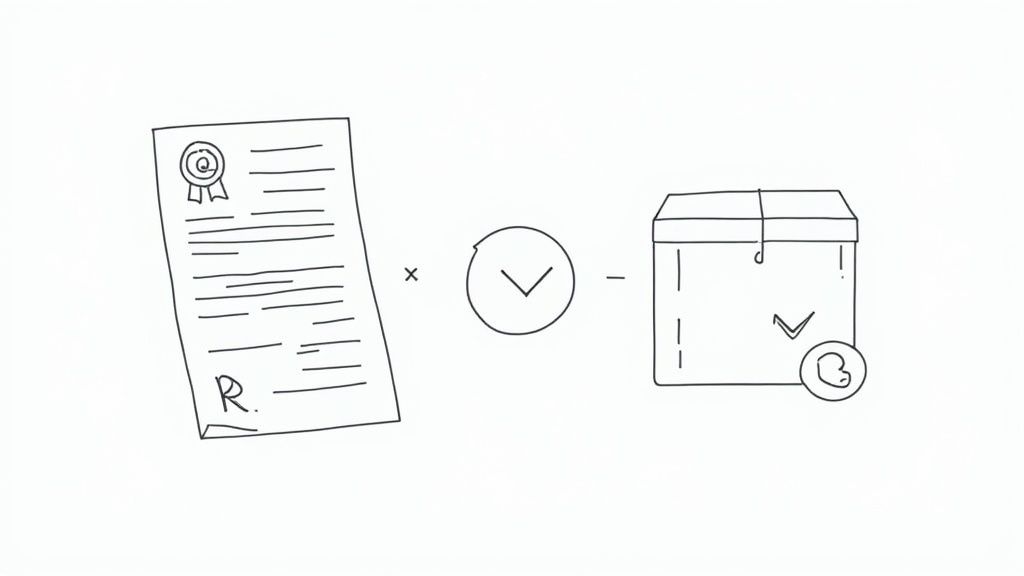
This means you can file your application with a recognized government trademark office, like the United States Patent and Trademark Office (USPTO), and use your application's serial number to join Brand Registry. This significantly accelerates your ability to combat counterfeiters and control your product listings. Amazon sellers can enroll right after they file their trademark, even before knowing if it will be approved or not.
How to Implement This Strategy
To take advantage of this, you must have a text-based (word mark) or an image-based (design mark) trademark that is physically present on your products or packaging. For example, a new supplement brand can file its name with the USPTO and enroll in Brand Registry the following week to start building its branded storefront. Similarly, a clothing company can use its pending logo trademark to create rich A+ Content, enhancing its product pages long before the trademark is officially approved.
Actionable Tips for a Smooth Process
File Early: Submit your trademark application as soon as your brand name is finalized to kickstart the protection process.
Ensure Consistency: Your trademark application must perfectly match the brand name or logo used on your products. Any discrepancy can lead to rejection.
Save on Fees: While legal firms charge hundreds of dollars to file trademarks, you can do it yourself by filing directly with the USPTO. For a detailed guide on how to use AI as a guide for your trademark filing on Dobro Labs, you can use ChatGPT as your trademark attorney.
Keep Your Serial Number: Have your trademark application serial number ready, as you will need it for the Brand Registry enrollment form.
2. Active Brand Website
Beyond the trademark, another key Amazon Brand Registry requirement is having an active, professional brand website. This site serves as crucial evidence that you are a legitimate business with a presence outside of the Amazon marketplace. Amazon reviewers use your website to verify your brand's existence, professionalism, and connection to the products you intend to sell, making it a non-negotiable step in the enrollment process.

Your website must be publicly accessible and fully functional. It should clearly display your brand's story, showcase your products, and feature your trademarked brand name or logo prominently. Think of it as your brand's digital headquarters; it solidifies your identity and provides Amazon with the confidence it needs to approve your Brand Registry application.
How to Implement This Strategy
To meet this requirement, your website must look and feel like a real business hub. For example, a successful electronics brand like Anker.com demonstrates this perfectly with a comprehensive site featuring their full product line, support pages, and company information. Smaller brands can achieve the same professional standard using accessible platforms like Shopify or WordPress to build a clean, branded site that mirrors their Amazon catalog and clearly establishes their brand identity.
Actionable Tips for a Smooth Process
Ensure Brand Consistency: Use the same logo, color schemes, and branding elements on your website that you use on your Amazon listings and product packaging.
Display Your Trademark: Place your trademarked logo or brand name clearly on the homepage and throughout the site to establish a direct connection.
Include Key Pages: Your site must have an "About Us" page detailing your brand story, a "Contact Us" page with verifiable business information, and product pages for your catalog.
Prioritize User Experience: Ensure your website is mobile-responsive, loads quickly, and is easy to navigate to reflect a professional operation.
3. Amazon Professional Seller Account
Beyond the trademark, another non-negotiable part of the Amazon Brand Registry requirements is having an active Professional Seller account. This isn't just a suggestion; it's a mandatory prerequisite. The Professional account unlocks the advanced toolset necessary for managing a brand, including bulk listing capabilities, advertising options, and, most importantly, access to the Brand Registry portal itself. An Individual account simply doesn't provide the infrastructure needed.

Think of the Professional account as the foundation upon which your brand's presence on Amazon is built. It signals to Amazon that you are a serious business operator, ready to leverage the full suite of features designed to protect and grow your brand. Without it, you cannot even begin the enrollment process for Brand Registry.
How to Implement This Strategy
The implementation is straightforward but critical. Before you attempt to enroll in Brand Registry, you must either sign up for a Professional Seller account or upgrade your existing Individual account. For example, a private label seller managing a growing portfolio of 50 SKUs would use a Professional account to efficiently manage inventory and advertising. Similarly, a well-established brand owner transitioning their business to Amazon must first establish their Professional Seller Central account before they can link their registered trademarks to it.
Actionable Tips for a Smooth Process
Upgrade First: Ensure your account is fully upgraded and verified as a Professional Seller before you start the Brand Registry application to avoid delays.
Set Up Business Details: Properly complete your business verification and tax information within Seller Central. This is a common stumbling block for new sellers.
Leverage Pro Tools: Once active, immediately start using the tools exclusive to Professional accounts, like advanced advertising reports and bulk inventory management, to maximize efficiency.
Monitor Account Health: A healthy Professional account is crucial. Keep a close eye on your performance metrics, as a suspended account can jeopardize your Brand Registry status.
4. Product Authenticity and Brand Authorization
Proving you are the legitimate owner or an authorized agent of the brand is another critical Amazon Brand Registry requirement. Amazon needs to verify that your products are authentic and that you possess the legal authority to sell them under the registered trademark. This step is essential for maintaining the integrity of the marketplace and protecting customers from counterfeit goods.
For brand owners, this means providing clear evidence linking you to the product's creation and supply chain. For authorized resellers, it involves presenting official documentation from the brand owner that grants you permission to sell their products on Amazon. Without this proof, your application will be rejected, as Amazon must ensure only rightful parties control a brand's presence on its platform.
How to Implement This Strategy
To fulfill this requirement, you must be prepared with specific documentation. For instance, a private label brand selling custom-designed kitchen gadgets can submit its manufacturing contract and recent purchase orders from its supplier. An authorized distributor of a popular electronics brand must provide a formal, signed letter of authorization from the brand owner, explicitly naming them as an approved Amazon seller. This documentation directly connects your seller account to the trademarked products.
Actionable Tips for a Smooth Process
Maintain Detailed Records: Keep a well-organized digital file of all sourcing documentation, including supplier contracts, purchase orders, and invoices.
Secure Written Authorization: If you are a reseller, obtain a formal authorization letter from the brand you represent. This letter should be on company letterhead and clearly state your rights.
Document Your Supply Chain: Clearly map out your manufacturing or sourcing process. This helps demonstrate control and authenticity if Amazon requests more information.
Leverage Brand Ambassadors: Once approved, you can empower trusted partners. To learn more about how a brand ambassador program can enhance your brand's reach, you can explore different strategies.
5. Account Performance and Policy Compliance
Beyond trademarks and product images, Amazon scrutinizes your selling history as a key part of the Brand Registry requirements. Amazon wants to ensure its brand protection tools are entrusted to responsible, high-performing sellers. This means your Seller Central account must be in good standing, free from serious policy violations, and demonstrate a commitment to excellent customer service.
Having a clean record is non-negotiable. An account with recent suspensions, a high Order Defect Rate (ODR), or unresolved policy warnings is a major red flag for the Brand Registry team. Proving you are a reliable seller is just as important as proving you own the brand, as Amazon links brand health directly to seller performance.
How to Implement This Strategy
To maintain an account worthy of Brand Registry, you must be proactive about your performance metrics. For instance, a brand selling fragile home goods can implement a rigorous quality control process before shipment to minimize negative reviews and A-to-z claims, keeping its ODR low. Similarly, a seller can leverage Fulfillment by Amazon (FBA) to guarantee pristine shipping and customer service metrics, which are heavily weighted in account health evaluations. Consistently monitoring your performance ensures you are always prepared for approval.
Actionable Tips for a Smooth Process
Monitor Daily: Make checking your Account Health dashboard a daily habit to catch and address potential issues before they escalate.
Use FBA Strategically: Enrolling your products in FBA can automatically improve your shipping performance, late shipment rate, and valid tracking rate.
Respond Immediately: Address all customer inquiries and complaints within 24 hours to maintain a healthy Customer Service Dissatisfaction rate.
Keep Detailed Records: If you must appeal a violation, keep detailed records of the issue and the steps you took to correct it. This demonstrates responsibility.
Track Your Metrics: Use tools to monitor your sales and performance data closely. For more insights, you can learn how to track Amazon sales effectively on coral.ax.
6. Product Listing and Catalog Management
Beyond your trademark, one of the most practical Amazon Brand Registry requirements is having well-managed product listings that consistently represent your brand. Amazon needs to see that you are an active, professional seller with a catalog that accurately reflects the brand you are trying to protect. This means creating complete, accurate, and professionally presented product detail pages before you even apply for Brand Registry.
Proper catalog management signals to Amazon that you are a serious brand owner. Your listings must use the exact trademarked brand name, be placed in the correct product categories, and feature high-quality content. Failing to maintain this consistency can lead to a rejection of your Brand Registry application, as it creates ambiguity about your brand's identity and ownership.
How to Implement This Strategy
To ensure your listings meet the standard, you must be meticulous. For instance, an electronics brand should have listings filled with detailed technical specifications, clear bullet points, and multiple high-resolution images showing every angle and port. Similarly, a fashion brand must maintain a consistent brand voice and style across its entire collection, using lifestyle photography to create a cohesive brand experience that builds trust and recognition.
Actionable Tips for a Smooth Process
Ensure Brand Name Consistency: The brand name field on every one of your product listings must perfectly match the name on your trademark application.
Use High-Quality Visuals: Invest in professional photography and videography that showcases your product and its packaging, clearly displaying your brand logo.
Optimize Your Content: Write clear, benefit-driven titles, bullet points, and descriptions. Strategically include relevant keywords to improve visibility.
Categorize Correctly: Always list your products in the most specific and accurate Amazon category. Incorrect categorization is a common red flag.
Audit Your Catalog: Before applying, conduct a thorough audit of your existing listings to find and fix any inconsistencies or errors. This proactive step is crucial for approval.
Amazon Brand Registry 6-Point Requirements Comparison
Item | Implementation Complexity 🔄 | Resource Requirements ⚡ | Expected Outcomes 📊 | Ideal Use Cases 💡 | Key Advantages ⭐ |
|---|---|---|---|---|---|
Registered Trademark | High 🔄🔄 (8-18 months process, legal steps) | Moderate (fees $250-$2,000+, legal help advised) | Strong legal brand protection 📊⭐ | Foundational for Brand Registry; legal brand security | Legal ownership proof; brand protection; advanced tools |
Active Brand Website | Medium 🔄 (professional design & upkeep) | Moderate (hosting, development, content updates) | Enhanced credibility and brand trust 📊 | Verifying legitimate business beyond Amazon | Builds customer trust; additional sales channel |
Amazon Professional Seller Account | Medium 🔄 (account setup and management) | Low to moderate (monthly $39.99 fee) | Access to advanced seller tools 📊⚡ | Serious sellers managing bulk listings & advertising | No per-item fees; access to seller benefits |
Product Authenticity & Brand Authorization | High 🔄🔄 (extensive documentation) | High (gathering legal and sourcing documents) | Protection against counterfeits 📊⭐ | Brand owners or authorized resellers proving authenticity | Prevents unauthorized sales; builds customer trust |
Account Performance & Policy Compliance | Medium 🔄 (ongoing monitoring and improvements) | Moderate (process improvements, customer service) | Approval for Brand Registry; account health 📊 | Sellers focused on compliance and performance excellence | Builds trust with Amazon; reduces risk of suspension |
Product Listing & Catalog Management | Medium 🔄 (detailed creation and maintenance) | Moderate to high (time, photography, copywriting) | Better discoverability and consistent branding 📊⭐ | Brands with multiple SKUs needing strong presence | Enhances sales; supports brand recognition |
Your Next Step: Building a Powerful Affiliate Program
Navigating the Amazon Brand Registry requirements is more than just a procedural task; it's the foundational step toward building a resilient and defensible brand on the world's largest marketplace. By securing a registered trademark, maintaining a professional seller account, and ensuring your products are authentically represented, you’ve erected a powerful barrier against hijackers and counterfeiters. You've moved from simply selling products to owning your brand identity on Amazon.
The journey doesn't end with enrollment. In fact, that’s where the real opportunity begins. The most crucial takeaway is that Brand Registry isn't just a shield; it's a key that unlocks a suite of exclusive marketing and analytics tools designed for growth. Mastering these requirements means you can now leverage powerful features like A+ Content, Brand Stores, and, most importantly, Amazon Attribution. This allows you to track external traffic and understand which marketing channels deliver the highest return.
Your immediate next step should be to leverage this newfound power. The fastest path to scalable growth for a Brand Registered seller is to build an army of advocates through an affiliate program. Instead of relying solely on PPC, you can partner with creators and influencers who drive authentic, high-converting traffic directly to your listings. By combining the protection of Brand Registry with the marketing engine of an affiliate network, you create a flywheel effect: brand protection fuels marketing confidence, and effective marketing drives sales and reinforces your brand’s market position. This strategic combination transforms your Amazon store from a simple retail outlet into a powerful, long-term business asset.
Ready to turn your Brand Registry status into a revenue-generating machine? Coral is an affiliate marketing platform built specifically for Amazon Brand Registered sellers. It integrates seamlessly with Amazon Attribution, allowing you to create your own affiliate program, recruit unlimited creators, and track every sale they generate from a single, intuitive dashboard. Start building your brand's advocate army today by visiting Coral.