Amazon Creator Connections for Sellers: Boost Your Reach
Category: Amazon creator connections for sellers
Why Amazon Creator Connections Changes Everything for Sellers
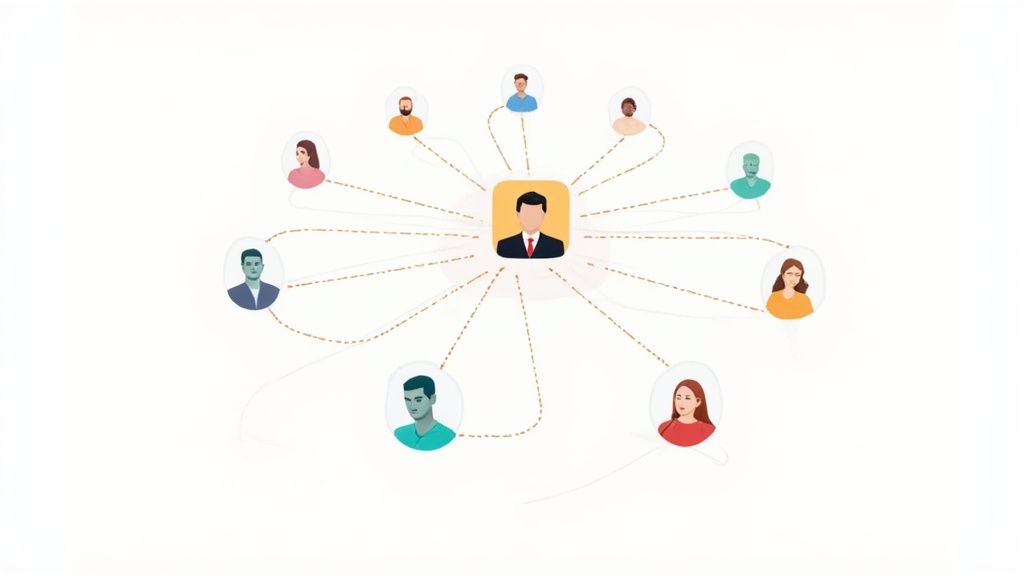
For years, Amazon sellers approached influencer marketing like casting a wide net into the ocean. You would spend a good deal of money on ads or single influencer posts, hoping to reel in a few sales but having little insight into what truly worked. You paid for exposure, not for results, which often left you questioning the real value of your marketing budget. Amazon Creator Connections for sellers completely changes this approach. Think of it less like a fishing net and more like a skilled matchmaker, introducing your brand to creators whose followers are already searching for products like yours.
This isn't just another way to advertise; it's a move toward building relationships based on performance. The idea is simple but effective: instead of paying upfront for possible reach, you partner with creators and pay them a commission only when their content leads to a sale. This performance-based model significantly lowers your financial risk. You're no longer betting on metrics like follower counts or impressions. Instead, you're investing directly in actual results, aligning your goals perfectly with the creator's. Every dollar you spend is connected to a confirmed sale, making your marketing budget work much more efficiently.
From Murky Metrics to Clear Attribution
Before this platform existed, figuring out an influencer's true impact was a major headache. Brands couldn't easily see how much a specific creator contributed to sales, which made it hard to justify long-term partnerships or expand successful campaigns. The arrival of Creator Connections gave sellers new tools to track and manage influencer campaigns right inside the Amazon ecosystem. This was a turning point, providing clear attribution that simply wasn't possible before. You can learn more about how this system is shaking up influencer marketing with these detailed insights on influencer-hero.com.
This newfound clarity helps sellers make decisions based on data. You can see exactly which creators are your best performers, what kind of content connects with audiences, and where to invest more. The ability to link specific content to actual sales turns influencer marketing from a guessing game into a measurable strategy. You can now build a network of proven brand ambassadors, feeling confident that your collaborations are delivering a positive return.
Misconceptions That Hold Sellers Back
Despite its clear benefits, many sellers are hesitant due to a few common myths. One big mistake is thinking a low campaign budget is a "safe" way to start. In reality, a tiny budget can make you look unserious to top-tier creators, attracting only those who are just looking for freebies.
Another common error is to just post a campaign and wait for the applications to roll in. This hands-off method often leads to a lot of spam from creators who haven't bothered to read your brief. As we’ll discuss later, the most successful sellers are proactive. They use specific strategies to pre-qualify partners and make sure they attract creators who are genuinely interested in their brand's success. By moving past these misconceptions and taking a strategic approach, you can tap into the full power of this tool.
Setting Up Campaigns That Attract Quality Creators
Starting a campaign on Amazon Creator Connections can feel a bit like hosting an open casting call. If you simply post a generic request, you might get a flood of messages from creators who are more interested in free products than a real partnership. The secret to finding high-quality collaborators is to set up your campaign strategically, making it clear you're looking for business partners, not just people to send samples to.
This starts with writing a strong campaign brief. Think of this as your brand’s resume and job description rolled into one. It needs to clearly describe your brand values, product benefits, and what you expect from the collaboration. Amazon Creator Connections for sellers is a feature within the Amazon Advertising Console that helps with the entire influencer marketing journey. It handles everything from finding influencers using filters for engagement and audience size to setting up detailed campaigns with clear objectives and content guidelines.
Crafting a Brief That Filters for Quality
Your campaign description is your first line of defense against low-effort applicants. Instead of a dry list of product features, tell a story. What is your brand about? Who is your ideal customer? What problem does your product solve for them? A well-written brief connects with creators who see a chance to make authentic content their followers will appreciate.
Here are some key elements to include:
- Brand Mission: Briefly share what your brand believes in.
- Ideal Creator Profile: Describe the kind of creator you want to work with. For example, "We're looking for creators who specialize in sustainable home living and create long-form video reviews."
- Content Expectations: Be specific about what you need. For instance, one Instagram Reel, one TikTok video, and three high-resolution photos.
- Call to Action: Tell interested creators exactly what to do next.
This infographic shows the basic flow of a successful campaign, from making the connection to driving sales.
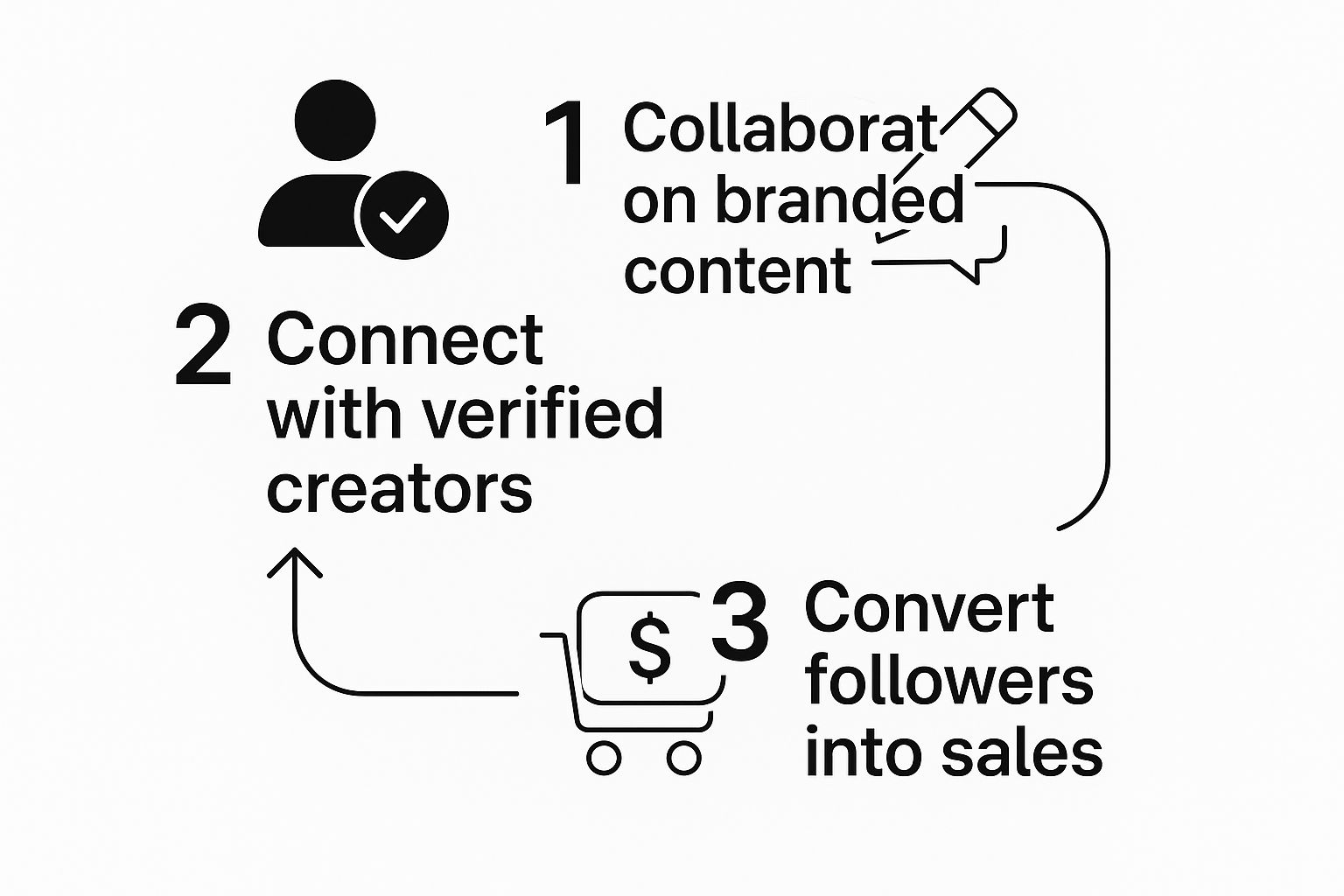
This visual highlights that a good campaign is a journey with multiple stages, not just a one-time transaction.
To help you structure your campaign for success, we've put together a checklist covering the essential elements and best practices for each stage.
| Setup Stage | Key Requirements | Common Mistakes | Success Tips |
|---|---|---|---|
| Campaign Brief | Clear brand story, ideal creator profile, specific content needs, and a strong call to action. | Vague descriptions, focusing only on product features, unclear expectations. | Tell a story. Be specific about the type of creator you want (e.g., niche, style). |
| Budget Setting | Set a high, risk-free budget to show confidence and attract serious creators. | Setting a low budget, which can signal a lack of confidence or commitment. | A high budget (e.g., $20,000) is low-risk since you only pay commission on actual sales. |
| Application Process | Use an external link to a dedicated landing page or application form. | Relying solely on the default Amazon application process. | The extra step filters out less motivated applicants and lets you ask targeted questions. |
| Creator Vetting | Review creator profiles for audience alignment, content quality, and past performance. | Choosing creators based only on follower count, ignoring audience demographics. | Look for genuine engagement and a style that matches your brand's voice. |
This table serves as a quick reference to ensure you're not just posting a campaign, but building a foundation for a successful partnership. By being intentional at each step, you can attract the right kind of creative talent.
Setting Budgets and Using External Links to Your Advantage
One frequent mistake is setting a low campaign budget. Since you only pay commissions on confirmed sales, a high budget shows serious creators that you believe in your product and are ready for a strong partnership. A $20,000 budget is virtually risk-free because if you only generate $2,000 in sales, you only pay commissions on that amount.
To further screen your applicants, include an external link in your campaign brief that leads to a special landing page or application form. This extra step is a simple but effective filter. It asks creators to invest a little more time, which shows they are genuinely interested. You can use this form to ask specific questions about their audience and content ideas. This approach helps you shift from just accepting applications to actively finding the right partners for your brand.
The External Link Strategy That Stops Spam Cold
Launching a campaign on Amazon Creator Connections can feel like opening the floodgates. You post your opportunity, and suddenly your inbox is overflowing. The catch? Many messages come from creators who barely glanced at your brief and are just hoping for free products. This leaves you sifting through dozens of unqualified applicants to find the one or two gems who are a genuine fit.
There's a simple yet effective strategy to fix this: using an external link in your campaign brief to pre-qualify applicants. Instead of allowing creators to apply directly on Amazon, you guide them to a dedicated landing page or an external application form. Think of it as adding a VIP checkpoint to your casting call. Only the creators serious enough to take that extra step will make it through, saving you hours of administrative work and letting you focus on building relationships with committed partners.
Building Your Creator Application Funnel
The goal of this external link is to create a small, intentional hurdle. It effectively filters out the "sample seekers" and attracts professional creators who see the collaboration as a real business opportunity. Your application form is your chance to gather the essential information that the standard Amazon process overlooks.
Here’s a glimpse from Amazon's guidelines of what creators see when they apply.
By placing your external link within the brief, you take control of the application process. This ensures that anyone who proceeds has carefully reviewed your requirements. It's your opportunity to ask targeted questions that reveal a creator’s true potential and interest.
Your form should include a mix of qualifying questions and prompts that spark creativity. Here are some essential questions to include:
- Audience Demographics: "Please provide a screenshot of your audience demographics (age, gender, location) from your main social media platform." This gives you solid proof that their followers align with your target customer.
- Content Ideas: "Could you share two or three specific content ideas for promoting our product?" This question quickly separates those who have given your brand real thought from those who haven't.
- Past Campaign Performance: "Share a link to a past brand collaboration you're proud of and explain why it was successful." This offers insight into their work quality and how they measure success.
- Brand Alignment: "After looking at our brand, why do you believe your audience would be interested in our products?" This prompts them to connect their personal brand with yours, showing genuine interest.
Why This Approach Works So Well
This strategy is powerful because it flips the script. You are no longer just passively accepting applications; you are actively building a pipeline of vetted talent. Every creator who takes the time to fill out your external form has demonstrated their professionalism and interest. A key principle for succeeding with Amazon Creator Connections for sellers is to invest in systems that improve the quality of your partners from the start.
Platforms like Coral can help manage this workflow. You can create dedicated landing pages for your affiliate program and direct creators from your Amazon campaign to your Coral page to apply. This keeps all your potential partners organized in one central location. It creates a smooth journey from discovery on Amazon to long-term management in your own system, laying the groundwork for scalable, high-quality partnerships.
Why High Budgets Actually Cost You Less Money

It sounds backward, but setting a large budget for your Amazon Creator Connections campaign is one of the smartest ways to manage costs and get better results. In typical advertising, a bigger budget equals a bigger bill. You pay for views or clicks, and the ads stop when the funds are gone. Creator Connections turns this idea on its head. You only pay a commission when a creator's work leads to a real sale. This performance-based model changes the entire budget conversation.
A high budget is a powerful signal to the creator community. Imagine seeing it from their side: a campaign with a $5,000 budget might seem like a small bet, but one with a $50,000 budget shows confidence and serious opportunity. Top-tier creators, who run their channels like a business, want to partner with brands that are just as serious. A big budget tells them you believe in your product, are ready for success, and have the inventory to support it. This attracts more professional creators who know how to drive major sales.
The Commission-Only Safety Net
The best thing about setting a high budget is that it’s almost entirely risk-free. Your budget isn't a down payment; it's a ceiling for potential commissions. If your $50,000 budgeted campaign only drives $15,000 in creator sales, you only pay the commission on that $15,000. The other $35,000 of your budget is never spent. This "pay-for-performance" setup means your marketing spend is always tied directly to revenue, making Amazon Creator Connections for sellers a highly efficient channel.
Your actual spending is also limited by your inventory. If a campaign is so successful that you sell out, the commissions stop because the sales have stopped. You never pay more commission than the sales you can actually fulfill. This provides a natural guardrail against overspending while still rewarding high performance.
How Budget Size Influences Campaign Outcomes
The budget you set directly affects the quality and reach of your campaign. A small budget might limit your campaign's visibility on the platform and mainly attract creators who are just starting out or less motivated. In contrast, a higher budget can lead to better outcomes across the board.
To understand this better, here's a look at how different budget approaches tend to perform.
Budget Strategy Impact Analysis
Comparison of different budget approaches and their actual performance outcomes
| Budget Range | Creator Interest Level | Typical Spend | Campaign Reach | ROI Impact |
|---|---|---|---|---|
| Low ($1k - $5k) | Attracts sample-seekers; low interest from top creators. | Low, often due to poor performance. | Limited, as fewer quality creators participate. | Low to negative. |
| Medium ($5k - $15k) | Moderate interest from a mix of creators. | Moderate, based on a few successful partnerships. | Decent, but may miss out on top-tier creators. | Moderate. |
| High ($15k+) | High interest from serious, professional creators. | Variable; tied directly to high sales volume. | Extensive, as more top creators join. | High to very high. |
As the table shows, a bigger budget isn't just about spending more—it's about attracting the right partners who can deliver real results.
Ultimately, a larger budget for your Amazon Creator Connections for sellers campaign is a strategic choice. It attracts better talent, signals your commitment, and ensures you only pay for actual sales, which often leads to a much higher return on your investment.
Reading the Data That Actually Matters
Once your campaigns are running, the Amazon Creator Connections dashboard becomes your central hub. It's easy to get lost in the charts and numbers, with many sellers focusing on surface-level metrics like impressions or the total number of creators who accepted a request. While these are nice to know, they don't predict success. The goal is to zero in on the data that directly translates to sales and shows which partnerships are truly moving the needle.
Think of yourself as a sports team manager. The number of players who tried out for your team (accepted requests) is far less important than the number of points each player scores during a game (sales). Your job is to identify your star players and figure out why they perform so well.
Moving Beyond Basic Sales Numbers
While total sales is the ultimate prize, the real magic happens when you dig into creator-specific data. Instead of just looking at the campaign's overall revenue, you need to break it down. The most crucial metric is the conversion rate per creator. This tells you exactly how effective a creator's content is at turning their audience into your customers. A creator with a smaller following but a 15% conversion rate is much more valuable than a huge influencer with a 1% conversion rate.
To analyze performance effectively, focus on these data points:
- Sales per Creator: Quickly see your top-performing partners. Who is consistently driving revenue?
- Conversion Rate: Calculate this by dividing the number of sales by the number of clicks from a creator’s link. This reveals the quality of their audience traffic.
- Content Performance: Observe which types of content (like video reviews, tutorials, or Instagram stories) generate the most sales. This helps you refine your content guidelines for future collaborations.
By tracking these details, you'll start to see patterns. For instance, you might find that creators making "how-to" videos for your product consistently outperform those who just post a single photo. This is a powerful insight you can use to guide your entire influencer program.
A/B Testing and Optimizing for Success
Armed with this performance data, you can start making smarter decisions. Use it to run A/B tests on different parts of your strategy. For example, you could offer two similar creators different commission rates to see if a higher rate leads to more motivated promotion and better sales. One might get a 12% commission, while the other receives 15%. Tracking their individual results will tell you which payment structure gives you a better return.
This data-first approach also helps you spot red flags early. If a creator is generating lots of clicks but zero sales, it might mean their audience isn't the right fit for your product. It’s better to pause that partnership and put your resources elsewhere.
On the other hand, when you identify a star performer, use the data to build a stronger relationship. You can offer them a higher commission or exclusive access to new products, turning a one-time project into a long-term, profitable partnership. The heart of a successful Amazon Creator Connections for sellers strategy is ongoing improvement based on real performance data.
Building Your Creator Network for Long-Term Growth

The most effective sellers see Amazon Creator Connections for sellers not as a machine for quick promotions, but as a garden for growing long-term partnerships. A single successful campaign is good, but building a community of brand advocates creates a powerful and lasting sales engine. This means shifting from one-time transactions to ongoing relationships that deliver compounding returns. Think of it as moving from hiring a musician for one gig to forming an in-house band that perfectly understands your brand's style.
This approach is built on solid relationship management. The work doesn't stop once you find a great creator; it's just getting started. Keeping your best partners happy and engaged takes more than just paying commissions on time. It involves consistent communication, giving them early access to new products, and truly valuing their creative ideas. This fosters a sense of partnership that inspires them to become genuine champions for your brand.
Creating Tiers and Rewarding Performance
A structured way to manage and expand these relationships is by setting up a tiered commission system. This method rewards your top-performing creators and shows everyone a clear path for advancement. For instance, you could have a standard commission rate for newcomers and then introduce higher tiers for creators who consistently hit or surpass sales goals.
| Creator Tier | Monthly Sales Threshold | Commission Rate | Additional Perks |
|---|---|---|---|
| Partner | Up to $1,000 | 10% | Standard support |
| Ambassador | $1,001 - $5,000 | 12% | Early product access |
| VIP | Over $5,000 | 15% | Custom content collaborations |
This type of structure does more than just motivate creators; it professionalizes your program. It signals that you are invested in their success, which builds loyalty and encourages them to feature your brand more prominently in their content. A well-planned system can elevate a good partnership to a great one.
Building Feedback Loops and Repurposing Content
To make these partnerships even stronger, create a system for feedback. Check in regularly with your best creators to talk about what’s working well and what could be improved. Ask for their thoughts on how their audience is reacting to your products. This two-way conversation helps them produce better content and gives you valuable market insights straight from your customers.
Also, make sure to maximize the value of the content your network creates. User-generated content (UGC) from creators you trust is a marketing treasure. With their permission, you can repurpose their best videos, photos, and reviews on your other marketing channels. Feature their content in social media ads, on your product detail pages, and in your email campaigns. This not only extends the content's reach but also adds a layer of authentic social proof that you can't get from traditional advertising. Our guide on Creator Connections for Amazon provides more ideas for managing these long-term partnerships. By combining smart relationship management with a good content strategy, you can build a creator network that drives steady, long-term growth for your Amazon brand.
Your 90-Day Creator Connections Success Plan
Putting what you've learned into practice is the final step to making Amazon Creator Connections for sellers a key part of your brand's growth. This 90-day roadmap breaks the entire process into manageable phases, guiding you from your initial setup to scaling your first successful partnerships.
Phase 1: The Foundation (Days 1-30)
Your first month is all about laying the groundwork and launching your first campaign the right way. The goal here isn't about getting instant sales, but about building a solid system that attracts the right kind of partners for the long run.
- Week 1: Strategy and Setup. Start by defining clear goals for your campaign. Which products will you highlight? Who is your ideal creator? Use these answers to draft your first campaign brief, making sure to weave in your unique brand story.
- Week 2: Build Your Filter. It's time to set up your external application form. This is where you can ask important qualifying questions about an influencer's audience demographics and their content ideas. This simple step is vital for filtering out applicants who aren't a good fit.
- Week 3: Launch with Confidence. Post your first campaign on Creator Connections. To show you're serious and committed, set a high, risk-free budget (for example, $15,000+). A commission of at least 10% is now the standard and signals that you value the work creators put in. Make sure all applications are funneled through your external form.
- Week 4: Review and Select. As applications arrive via your form, review them with a keen eye. Look for genuine brand alignment and creative sparks, not just big follower numbers. For your first run, choose a small, manageable group of 3-5 creators to begin with.
Phase 2: Activation and Analysis (Days 31-60)
Now that you have your first creators on board, the focus switches to collaboration and digging into the data. This is the phase where you truly discover what resonates with your audience.
- Weeks 5-6: Content Creation. Ship your sample products out quickly and maintain clear communication with your creators. Give them creative freedom, but also make sure they have a solid understanding of your product's key benefits and selling points.
- Weeks 7-8: Go Live and Track. As their content is published, it's time to track performance. Use Amazon Attribution to watch clicks, sales, and conversion rates for each creator. This will quickly show you who is driving actual results and who your star players are.
Phase 3: Scaling and Optimization (Days 61-90)
The final phase is all about taking your early wins and turning them into a sustainable, long-term creator network.
- Weeks 9-10: Nurture Your Stars. Reach out directly to your top-performing creators from the last phase. Consider offering them a better commission rate or a long-term partnership agreement. Make them feel like a valued part of your team.
- Weeks 11-12: Refine and Relaunch. Take the data from your first campaign and use it to sharpen your strategy. Update your campaign brief based on what you learned from your most successful creators. Now, launch a second, larger campaign, inviting both new creators and your proven performers to join. This kicks off a cycle of continuous improvement.
By following this 90-day plan, you'll go beyond simple one-off promotions and start building a powerful, sales-driving creator program.
Ready to manage your creator partnerships like a professional? Coral offers the tools to build your affiliate landing page, handle commissions, and track performance all in one place. Turn your creator network into a strong growth engine today.