6 Powerful Brand Advocate Examples to Inspire You in 2025
Category: Brand advocate examples
What if your best customers became your most effective marketers? That's the core idea behind brand advocacy. Unlike paid influencers, brand advocates are genuine fans who promote your products organically because they truly believe in them. Their authentic recommendations build trust and drive sales in a way that traditional advertising simply can't match. For growing brands, especially on competitive platforms like Amazon, building a community of these supporters isn't just a marketing tactic; it's a powerful engine for sustainable growth.
This article moves beyond theory to provide a strategic breakdown of real-world brand advocate examples. We will dissect the methods used by iconic companies like Apple, Starbucks, and Tesla to transform everyday customers into powerful evangelists. You won't find generic overviews here. Instead, you'll get a detailed analysis of the specific strategies, community-building efforts, and reward systems they implemented.
Each example is structured to give you actionable takeaways. We'll explore how these giants created exclusivity, fostered a sense of belonging, and empowered their fans to share their passion. By the end, you'll have a clear playbook of replicable tactics you can adapt to build your own loyal army of brand advocates, whether you're a DTC brand owner or an Amazon seller looking to scale.
1. Starbucks Brand Evangelists: Building a Community, One Cup at a Time
Starbucks’ approach to brand advocacy is less about a formal program and more about cultivating a powerful culture of brand evangelism. Instead of relying on structured commissions, they built an ecosystem where customers want to promote the brand organically. This powerful strategy turns everyday coffee drinkers into some of the most effective brand advocate examples in modern retail.
These advocates are not just customers; they are participants in the brand's story. They share photos of their seasonal drinks, post unboxing videos of new merchandise, and proudly display the Starbucks siren logo as a status symbol. This user-generated content (UGC) is a testament to a deep emotional connection, transforming a simple coffee run into a shareable lifestyle experience.
Strategic Analysis: How Starbucks Does It
Starbucks' success stems from making customers feel like insiders. They achieve this through a blend of personalization, exclusivity, and community-building initiatives.
- Personalization as a Ritual: From writing a customer's name on a cup to remembering a regular's favorite order, Starbucks makes the experience feel personal. This simple act fosters a sense of recognition and loyalty that customers value.
- The Starbucks Rewards Program: This is the engine of their advocacy machine. The program uses gamification, offering "Stars" for purchases that unlock free items. It also provides early access to new products and personalized offers, making members feel special and encouraging repeat visits and social sharing.
- Seasonal Hype and Scarcity: Limited-time offers like the Pumpkin Spice Latte or exclusive holiday-themed cups create a sense of urgency and cultural relevance. This scarcity drives immense social media buzz as customers rush to participate in the trend, generating millions of dollars in free advertising.
Actionable Takeaways for Your Brand
Even without a global footprint, any brand can apply Starbucks' principles to foster its own community of advocates.
- Create a Ritual: Find a small, repeatable element in your customer experience that you can personalize. For an Amazon seller, this could be a uniquely designed thank-you note in your packaging or a personalized follow-up email after a purchase.
- Build a Tiered Loyalty Program: Reward your best customers with more than just discounts. Offer them early access to new products, exclusive content, or a special designation in your community forums. Make them feel like valued VIPs.
- Manufacture Scarcity: Launch limited-edition product variations or seasonal bundles. This tactic works exceptionally well for DTC brands and Amazon sellers looking to create a spike in demand and encourage social proof as customers share their exclusive "get."
Key Insight: Starbucks mastered the art of making customers feel like part of an exclusive club. The "reward" for their advocacy isn't a commission check; it's the social currency and sense of belonging they gain by being associated with the brand. This emotional incentive is often more powerful than a financial one.
2. Apple's Cult Following: Engineering Brand Devotion
Apple's brand advocacy is the gold standard in technology, a result of meticulously engineering a "cult following" rather than a formal, incentivized program. The brand has cultivated a global army of evangelists who don't just use its products; they identify with the brand's core values of innovation, premium design, and simplicity. This unwavering loyalty transforms ordinary users into some of the most powerful brand advocate examples in history.
These advocates are visible everywhere: camping outside stores for new iPhone releases, populating Reddit forums to defend product decisions, and creating countless unboxing videos that build hype. Their advocacy is deeply personal and emotionally charged, turning the purchase of a device into an initiation into an exclusive, forward-thinking community. This user-driven promotion validates the brand's premium positioning and generates immense organic marketing value.
Strategic Analysis: How Apple Does It
Apple's success lies in creating an integrated ecosystem that fosters an emotional connection and makes customers feel like they are part of a revolutionary movement.
- The Seamless Ecosystem: By designing hardware, software, and services that work together flawlessly (e.g., iPhone, Mac, and iCloud), Apple creates a high-friction environment for switching. This integration enhances the user experience so significantly that customers become natural advocates for the entire product family.
- Branding as an Identity: Apple doesn't just sell technology; it sells an identity. Through its iconic "Think Different" campaigns and minimalist aesthetic, it has positioned itself as a brand for creative, innovative, and discerning individuals. Customers buy into this identity and proudly display their Apple products as a reflection of their own values.
- Anticipation and Theatrical Launches: Steve Jobs pioneered the art of the product launch, turning keynotes into must-see global events. This tradition continues today, building immense anticipation and making customers feel like they are getting a first look at the future. This creates a powerful cycle of media coverage and social discussion driven entirely by consumer excitement.
Actionable Takeaways for Your Brand
Even small brands can adopt Apple’s core strategies to build a devoted following and stand out in crowded markets like Amazon.
- Focus on a Superior User Experience: Obsess over product quality, packaging, and the customer journey from start to finish. A product that "just works" and feels premium is its own best marketing tool, creating customers who are eager to share their positive experience.
- Build a Cohesive Brand Story: Define what your brand stands for beyond its products. Is it sustainability, innovation, or exceptional craftsmanship? Communicate this story consistently across your Amazon listings, social media, and packaging to build an emotional connection with your audience.
- Create Product Launch Events: You don't need a massive auditorium. For a new product launch, create a "launch week" event for your email list or social media followers with exclusive previews, live Q&A sessions, and special introductory offers. Build a sense of occasion to drive excitement and sales.
Key Insight: Apple demonstrates that a superior, integrated product experience is the ultimate brand advocacy engine. When your product makes a customer's life genuinely better or simpler, they are not just willing to advocate for it; they feel compelled to. The reward is the user experience itself.
3. Tesla Owner Community: Driving a Movement, Not Just a Car
Tesla has cultivated a fiercely loyal community that acts as one of the most powerful and organic marketing forces in any industry. Unlike traditional automotive brands that spend billions on advertising, Tesla's growth is fueled by a global network of owner-advocates. These are not just customers; they are passionate evangelists for the brand's mission to accelerate the world's transition to sustainable energy.
This community of brand advocate examples voluntarily creates content, defends the company online, and acts as a decentralized sales team. They organize meetups, produce in-depth YouTube reviews, and manage online forums with hundreds of thousands of members. Their advocacy stems from a shared identity and belief in the product and its purpose, making their promotion authentic and highly influential.
Strategic Analysis: How Tesla Does It
Tesla’s success in building this community comes from aligning a world-changing mission with a product that delivers a superior experience. They empower owners to feel like they are part of a movement.
- A Mission-Driven Identity: Tesla doesn't just sell cars; it sells a vision for the future. This larger-than-life mission gives owners a powerful reason to advocate. They aren't just defending a vehicle; they are promoting a solution to climate change.
- Direct-to-Consumer Communication: By bypassing traditional dealerships, Tesla maintains a direct relationship with its customers. CEO Elon Musk's active presence on social media gives owners a sense of direct access and transparency, fostering a tight-knit community feel.
- The Referral Program Engine: Tesla’s historic referral program was legendary for its effectiveness. It rewarded both the advocate and the new buyer with perks like free Supercharging miles or even the chance to win a new car, directly incentivizing word-of-mouth marketing and making every owner a potential salesperson.
The following chart illustrates key metrics that underscore the incredible scale of Tesla's community-driven success, from production volume to its impactful referral system.
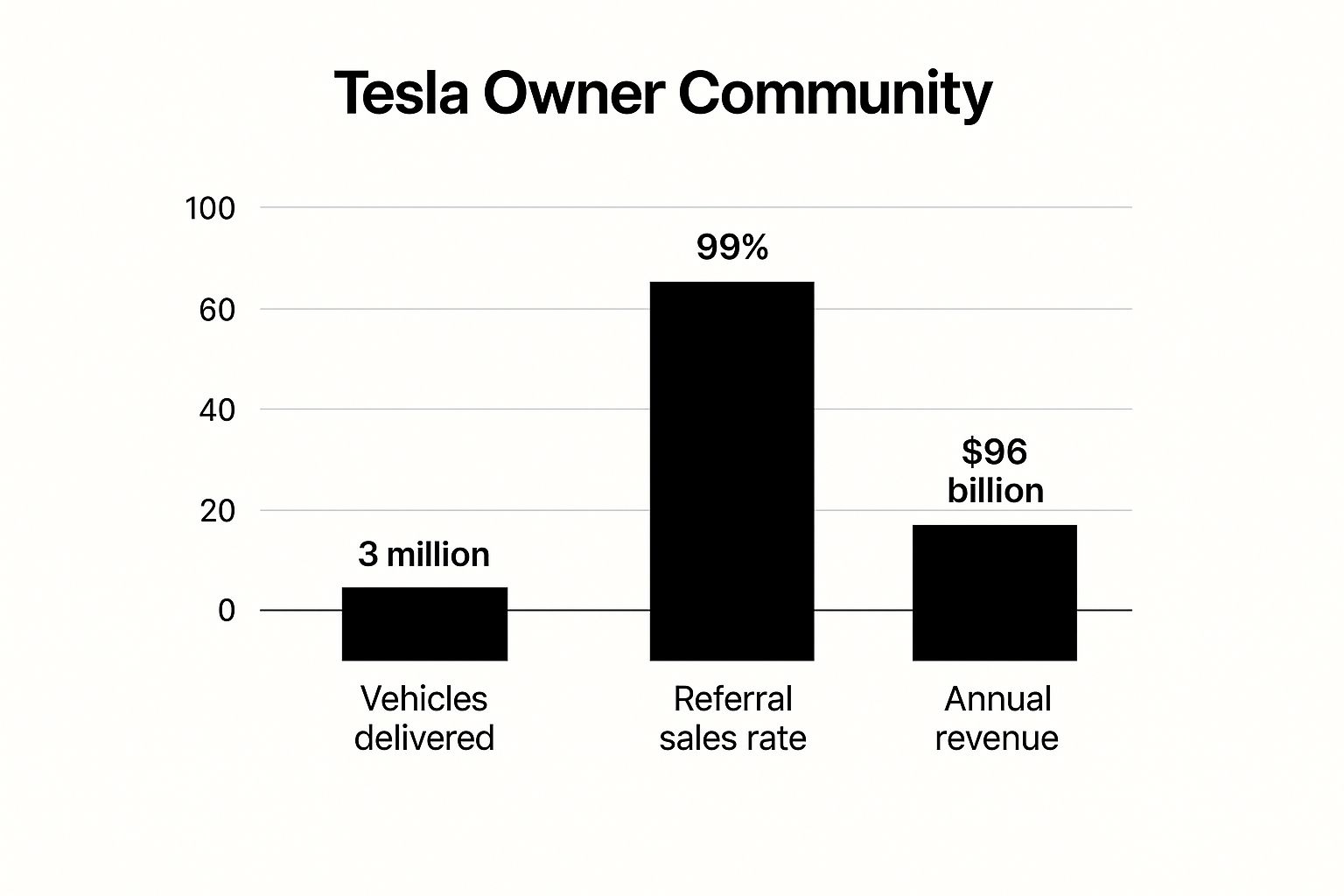
This data highlights how a strong brand mission, combined with an effective referral strategy, can translate into massive production and revenue scale with minimal traditional marketing spend.
Actionable Takeaways for Your Brand
Even if you aren't trying to change the world, you can apply Tesla's principles to build a passionate community around your brand.
- Define Your Mission: What does your brand stand for beyond the products you sell? Create a clear, compelling mission that customers can connect with on an emotional level. This could be about sustainability, craftsmanship, or supporting a specific cause. You can learn more about how brands like the Tesla Owner Community build such dedicated followings.
- Foster Direct Communication: Create channels where customers can interact directly with your brand and each other. This could be a private Facebook group, a Discord server, or regular "ask me anything" sessions with your company's founder.
- Launch a Value-Driven Referral Program: Design a referral program that offers genuine value to both the advocate and the new customer. Think beyond simple cash discounts; consider exclusive products, early access, or unique experiences that align with your brand's mission.
Key Insight: Tesla proves that a powerful mission is the ultimate brand advocacy tool. When customers believe they are part of something bigger than a simple transaction, their loyalty transforms into active, passionate evangelism that no advertising budget can replicate.
4. Nike Athlete and Lifestyle Advocates: From Global Icons to Grassroots Champions
Nike’s advocacy strategy is a masterclass in building a multi-layered empire of influence, blending high-profile athlete endorsements with a powerful, grassroots community. Their iconic "Just Do It" slogan isn't just a tagline; it's a philosophy that empowers both world-class champions and everyday fitness enthusiasts to become advocates. This dual approach makes Nike one of the most compelling brand advocate examples in history, creating authentic connections across vastly different demographics.
At the top are legends like Michael Jordan, whose partnership evolved into a billion-dollar brand, and cultural figures like Colin Kaepernick, whose campaigns ignited global conversations. On the ground, this advocacy is embodied by local running clubs proudly wearing Nike gear, social media influencers showcasing the latest apparel, and customer success stories featured in major marketing campaigns. This creates a powerful feedback loop where inspiration from the top fuels aspiration at the grassroots level.

Strategic Analysis: How Nike Does It
Nike's success comes from its ability to transform a product into a symbol of personal achievement and identity. They achieve this by aligning the brand with core human values of determination, resilience, and greatness.
- Aspirational Endorsements: Nike doesn’t just sponsor athletes; it partners with icons who embody the brand's ethos. The stories of these athletes' struggles and triumphs become intertwined with the Nike brand, making the products feel like a part of that journey.
- Grassroots Community Building: Through platforms like the Nike Run Club (NRC) app, Nike fosters a sense of community among everyday athletes. Users can track runs, participate in challenges, and cheer each other on, creating an ecosystem where the brand facilitates personal connections and achievements. This strategy is also a prime example of how brands can work with nano-influencers at a hyper-local level.
- Taking a Stand: Nike is not afraid to align itself with cultural and social issues important to its audience. Campaigns like the one featuring Colin Kaepernick demonstrate a willingness to stand for something beyond profit, forging a deep and resilient bond with customers who share those values.
Actionable Takeaways for Your Brand
You don’t need a multi-million dollar endorsement budget to apply Nike's principles. The core strategy is about connecting with your audience's values.
- Elevate Your Customers: Identify your most passionate customers and feature their success stories in your marketing. For a seller of fitness accessories on Amazon, this could be sharing a customer's transformation photo on social media (with permission) or highlighting their product review in an email newsletter.
- Facilitate a Community: Create a space for your customers to connect, whether it's a private Facebook group, a dedicated Discord channel, or a branded hashtag. Encourage them to share tips, progress, and stories related to your product niche.
- Define and Live Your Values: What does your brand stand for beyond the products you sell? Authentically support a cause that aligns with your mission and resonates with your target customer. This builds brand equity that can't be bought.
Key Insight: Nike sells an idea more than a product. Their advocacy is built on the belief that everyone has an inner athlete. By providing the tools, inspiration, and community, they empower customers to unlock that potential, turning personal victories into powerful brand endorsements.
5. Harley-Davidson Riders Community: Riding on a Legacy of Loyalty
Harley-Davidson has transcended product sales to cultivate a deeply ingrained culture of identity and belonging. Its approach centers on the Harley Owners Group (HOG), a global community that transforms customers into lifelong advocates. These riders don't just own a motorcycle; they adopt a lifestyle, making them one of the most powerful brand advocate examples in history.
The advocacy is profound and authentic. Members organize charity rides, attend massive rallies, and even tattoo the brand's logo on their bodies, signifying a permanent commitment. This isn't a paid marketing campaign; it's a genuine movement built on shared values of freedom, rebellion, and adventure. The brand becomes a core part of their personal identity, passed down through generations.
Strategic Analysis: How Harley-Davidson Does It
Harley-Davidson’s success comes from nurturing a community so strong that it becomes a self-sustaining ecosystem of brand promotion. They accomplish this by focusing on heritage, connection, and empowerment.
- Fostering an Exclusive Identity: The Harley Owners Group (HOG) is more than a club; it’s an institution. Membership offers exclusive benefits, organized events, and a shared identity, making owners feel like part of an elite, global family.
- Embracing Authentic Brand Heritage: Harley-Davidson doesn’t shy away from its century-old legacy of rugged individualism. By consistently reinforcing these core values, the brand attracts customers who see themselves in its story, creating a powerful emotional bond.
- Encouraging Personalization and Storytelling: The brand actively supports the customization of its bikes, allowing riders to express their individuality. This turns each motorcycle into a personal story, which owners are eager to share at rallies and on online forums, generating endless user-generated content.
Actionable Takeaways for Your Brand
Even if you don't sell motorcycles, you can build a community with the same passion by applying Harley-Davidson’s core principles.
- Create a "Founders Club": For your most loyal customers, create an exclusive group with a unique name. Offer special perks like early product access, a dedicated communication channel (like a private Slack or Discord), or unique merchandise only available to members.
- Define and Live Your Brand Values: What does your brand stand for beyond its products? For an Amazon seller of eco-friendly products, this could be sustainability. Host community clean-up events or partner with environmental charities to bring your values to life.
- Facilitate Customer Storytelling: Encourage customers to share how they use your product. A DTC brand selling outdoor gear could create a "Trail Stories" section on its blog or a dedicated hashtag to feature customer adventures, turning their experiences into your marketing assets.
Key Insight: Harley-Davidson proves that a brand can become a core part of a person's identity. The advocacy isn't driven by financial incentives but by a deep-seated need for belonging and self-expression. By building a true community around shared values, you create defenders and promoters for life.
6. Patagonia Environmental Activists: Advocating for a Planet, Not Just a Product
Patagonia has built one of the most powerful forms of brand advocacy by aligning its entire business with a mission: saving our home planet. This approach transforms customers into fierce advocates who champion the brand’s values, not just its high-quality outdoor gear. These are not just consumers; they are partners in activism, making Patagonia one of the most profound brand advocate examples driven by shared purpose.

These advocates proudly wear their Patagonia fleeces to environmental protests, share the company’s political stances on social media, and participate in company-sponsored initiatives like the Worn Wear program, which encourages repairing gear instead of replacing it. This creates a community bound by a deep commitment to environmentalism, turning a purchase into a statement of personal values and a pledge to a greater cause.
Strategic Analysis: How Patagonia Does It
Patagonia’s success comes from its unwavering authenticity and its courage to prioritize purpose over profit. They engage customers not as targets for a sale, but as allies in a global movement.
- Mission-Driven Action: Patagonia doesn't just talk about its values; it acts on them. The company famously ran a "Don't Buy This Jacket" campaign, encouraging mindful consumption. It also donates 1% of sales to environmental nonprofits and sues governments to protect public lands, proving its commitment is real.
- Extending the Product Lifecycle: The Worn Wear program is a brilliant advocacy tool disguised as a repair service. It allows customers to trade in used gear for credit, hosts repair workshops, and sells refurbished items. This reinforces the brand’s sustainability message and creates powerful stories of product durability that advocates love to share.
- Empowering Customer Activism: Patagonia actively provides tools and platforms for its customers to become activists. Its Patagonia Action Works website connects individuals with local environmental groups, turning the brand's audience into an organized force for grassroots change and cementing their loyalty.
Actionable Takeaways for Your Brand
Even small brands on Amazon or DTC platforms can build a community around a shared mission.
- Define and Live Your Mission: Identify a cause that resonates with your brand and your customers. For a seller of baby products, this could be donating a percentage of profits to a maternal health charity. Authenticity is key, so ensure your business practices align with your stated mission.
- Create a Durability or "Second Life" Program: If you sell a durable product, create content around its long-term care and repair. Encourage customers to share stories of how long your product has lasted. This builds trust and positions your brand as a sustainable choice.
- Mobilize Your Community for a Cause: Launch a campaign tied to your mission and invite customers to participate. This could be a social media challenge to reduce plastic use or a collective fundraising effort for a specific nonprofit. This fosters a sense of shared purpose that transcends transactions.
Key Insight: Patagonia proved that a brand's strongest advocates are those who are aligned with its core values, not just its products. The reward for their advocacy is the feeling of contributing to a meaningful cause. By taking a stand, Patagonia attracts customers who advocate for the brand's soul, which is infinitely more powerful than advocating for a jacket.
Top 6 Brand Advocate Examples Comparison
| Brand / Community | 🔄 Implementation Complexity | ⚡ Resource Requirements | 📊 Expected Outcomes | 💡 Ideal Use Cases | ⭐ Key Advantages |
|---|---|---|---|---|---|
| Starbucks Brand Evangelists | Medium – Requires ongoing engagement and campaigns | Moderate – Loyalty programs, social media management | High – Organic promotion, higher lifetime value | Retail brands emphasizing community & social sharing | Authentic testimonials, viral marketing potential |
| Apple's Cult Following | High – Integrated product ecosystem & premium positioning | High – Innovation, exclusive events, retail design | Very High – Customer retention 90%+, premium pricing | Premium tech brands focusing on innovation, ecosystem lock-in | Extremely high retention, strong word-of-mouth |
| Tesla Owner Community | High – Mission-driven model with direct sales & software updates | Moderate – Product innovation, online community management | High – Referral sales 99%, rapid brand growth | Brands with mission-driven products and tech innovation | Minimal ad spend, high referral rates |
| Nike Athlete and Lifestyle Advocates | High – Multi-tier advocate system with athlete endorsements | High – Partnership costs, app development, campaigns | High – Broad demographic appeal, viral campaigns | Sportswear and lifestyle brands leveraging influencer marketing | Credible athlete endorsements, emotional connection |
| Harley-Davidson Riders Community | Medium – Community events and exclusivity programs | Moderate – Event organization, membership management | High – Extreme loyalty and repeat purchase rates | Lifestyle and automotive brands building identity-based loyalty | Multi-generational loyalty, strong community defense |
| Patagonia Environmental Activists | Medium – Activism and value-driven engagement | Moderate – Sustainability initiatives, activism support | Moderate – Authentic advocacy, premium pricing justified | Brands with strong mission focus on sustainability | Strong mission alignment, authentic advocacy |
Building Your Own Army of Advocates
Throughout this article, we’ve explored a powerful collection of brand advocate examples, from the community-driven passion of Harley-Davidson riders to the lifestyle-centric loyalty of Nike’s followers. Each case study, whether it’s Apple's legendary evangelism or Patagonia's mission-aligned activism, reveals a fundamental truth: the most potent marketing isn't bought, it's earned. These brands didn't just sell products; they built movements.
The common thread weaving through these diverse strategies is a deep, authentic connection with the customer. They moved beyond transactional relationships to foster a genuine sense of belonging, shared values, and emotional investment. This is the core of a successful brand advocacy program.
Key Takeaways for Your Brand
Let's distill the most critical lessons from these giants. Building a powerful advocacy program doesn't require a billion-dollar budget, but it does demand a strategic and human-centric approach.
- Foster a Shared Identity: Brands like Tesla and Harley-Davidson prove that a strong community is built around more than just a product. It’s about a shared identity, a lifestyle, or a common belief system. Ask yourself: What do our customers have in common, and how can we unite them around that shared trait?
- Empower with Purpose: Patagonia’s success is a masterclass in purpose-driven marketing. Their advocates aren't just fans of their jackets; they are soldiers in a shared environmental mission. Giving your customers a cause to rally behind transforms them from passive buyers into active participants.
- Create Exclusive Experiences: From Starbucks' early access rewards to Apple's iconic product launches, creating exclusive experiences makes advocates feel special and valued. This sense of being an "insider" is a powerful motivator for them to share their passion with others.
- Equip, Don't Script: The most effective advocates are authentic. Instead of giving them rigid scripts, provide them with the tools, information, and freedom to share their genuine experiences. Whether it's behind-the-scenes content or unique product insights, empower them to create their own stories.
Your Actionable Next Steps
Feeling inspired by these brand advocate examples is one thing; implementing the strategies is another. Here’s how you can start building your own program today, whether you're a burgeoning Amazon seller or an established DTC brand.
- Identify Your Potential Advocates: Start by looking at your most engaged customers. Who leaves reviews? Who tags you on social media? Who consistently repurchases? These are your future brand champions.
- Define Your "Why": What is the mission or value that unites your brand and its customers? Clearly articulate this shared purpose. This becomes the foundation of your community.
- Start Small and Nurture: You don't need a thousand advocates overnight. Begin with a small, manageable group. Offer them exclusive perks, listen to their feedback, and build a genuine relationship. Make them feel seen and heard.
- Launch a Formal Program: As you grow, formalize your efforts with a structured program. This could be an affiliate system, a VIP group, or a creator collaboration platform. The key is to make it easy for advocates to participate and track their impact.
Ultimately, turning customers into advocates is about building a brand that people are proud to be associated with. It's about creating an experience so remarkable that they can't help but tell others about it. This is how you build sustainable, long-term growth driven by your most valuable asset: your customers.
Ready to turn these insights into action? Managing affiliate links, creator payouts, and tracking performance for your Amazon store can be complex. Coral simplifies the entire process, providing you with a single, powerful platform to build, manage, and scale your brand advocate and affiliate programs. Create your first affiliate link in seconds with Coral.