How to Find TikTok Influencers Your Brand Needs
Category: How to find tiktok influencer
Finding the right TikTok creator is about so much more than just follower counts. It’s about finding a real person, an authentic voice who actually gets your brand and can share it with their audience in a way that feels genuine. Your search really begins with immersing yourself in TikTok's unique culture and identifying creators whose vibe and values mirror your own.
The 4 Steps to Finding the Perfect TikTok Influencer for Your Amazon Brand
Let's break down the process of finding, vetting, and finally partnering with the creators who will actually move the needle for your Amazon business.

Step 1: Lay the Groundwork by Defining Your Ideal Creator Profile
Before you even open the TikTok app, you need to know who you’re looking for. A little prep work here saves a ton of time and frustration later. Start by thinking about your own brand.
What are your core values? Who is your ideal customer? The answers to these questions will build the foundation of your ideal creator profile.
Let's say you sell eco-friendly yoga mats on Amazon. You're not just looking for any fitness influencer. You're looking for someone who genuinely cares about sustainability, maybe they post about low-waste living or mindfulness, and their audience trusts their recommendations in that space.
Your creator profile should be a checklist of must-haves:
- Niche Alignment: Do they operate in your world? For our yoga brand, this means wellness, sustainability, or fitness.
- Audience Demographics: Does their audience match your target customer? Look at their followers' age, location, and interests.
- Content Style: Does their content feel authentic? You want someone whose natural style fits your product, not someone who has to create a heavily-scripted, ad-like video.
- Engagement Rate: Don't get hung up on follower count. A creator with 15,000 highly engaged followers is often more valuable than one with 150,000 passive ones. Look at the comments and shares—are people actually listening?
Building a clear creator profile isn't just a "nice-to-have." It’s the compass that will guide your entire search, ensuring you don't waste time on partnerships that are doomed from the start.
Step 2: Start the Hunt—Where to Find TikTok Creators
Once you know who you're looking for, it's time to find them. There are a few solid methods you can use, from manual searching to using dedicated platforms.
To give you a quick overview, here's a rundown of the main approaches.
Quick Guide to Finding TikTok Influencers
Here's a summary of the core methods for identifying the right TikTok creators for your brand.
| Method | Best For | Key Challenge |
|---|---|---|
| Manual Hashtag Search | Brands on a tight budget or those looking for hyper-niche creators. | Extremely time-consuming; difficult to vet creators at scale. |
| "Similar Accounts" Feature | Quickly expanding your list once you've found one good creator. | Can lead you down a rabbit hole of similar but not-quite-right accounts. |
| TikTok Creator Marketplace | Brands that want an "official" route with built-in analytics. | Can be expensive and may feel more transactional than authentic. |
| Influencer Platforms (e.g., Coral) | Brands that need to scale their efforts and manage multiple partnerships efficiently. | Requires a subscription fee, but often saves significant time and money. |
Each of these methods has its place, and often, the best strategy is a mix of all of them. Let's dive a little deeper.
Method A: The Manual Grind (Hashtags and Competitor Analysis)
This is the old-school, roll-up-your-sleeves approach. It’s completely free but requires a serious time investment.
Start by searching for relevant hashtags on TikTok. For our yoga mat brand, you’d search for things like #yogatok, #sustainability, #ecofriendlyliving, or even #amazonfinds. Scroll through the top-performing videos and look for creators who fit your profile.
Another great manual trick is to check out your competitors. See which influencers they're working with. This not only gives you a list of potential partners but also shows you what kind of content is already working in your niche.
Method B: Leveraging TikTok’s Own Tools
TikTok has a couple of built-in features that can help. When you find a creator you like, go to their profile and tap the dropdown arrow next to the "Follow" button. TikTok will suggest similar accounts, which can be a goldmine for finding more creators in the same niche.
There's also the official TikTok Creator Marketplace, which is a platform run by TikTok itself. You can filter creators by niche, audience size, and location. It provides some handy analytics upfront, but it can feel a bit more formal and is often used by larger brands with bigger budgets.
Method C: Using an Influencer Affiliate Platform
When you’re ready to get serious and scale your program, manual methods just won’t cut it. This is where dedicated influencer affiliate platforms like Coral come in.
These platforms are designed to streamline the entire process. Instead of you hunting for influencers, influencers can apply to work with your brand.
Coral, for example, is specifically built for Amazon brands. You can:
- Set up a branded application page where creators can apply to your program.
- Automatically vet applicants based on their Amazon storefront and past performance.
- Manage relationships, track sales with unique affiliate links, and handle payments all in one place.
This approach transforms influencer recruitment from a time-consuming manual task into a scalable, efficient system. It lets you focus on building genuine relationships instead of getting bogged down in spreadsheets and DMs.
Step 3: The Vetting Process—Look Beyond the Follower Count
Finding a potential creator is just the beginning. Now, you have to do your due diligence to make sure they're a good fit. This vetting process is crucial for avoiding partnerships that could damage your brand's reputation.
Start with a deep dive into their content.
- Content Quality and Consistency: Is their video and audio quality decent? Do they post regularly? A creator who posts sporadically may not be reliable.
- Audience Engagement: Don't just look at likes. Read the comments. Are followers having real conversations? Do they seem to genuinely trust the creator? Watch out for comment sections filled with spam or generic "great post!" comments.
- Check for Red Flags: Scroll way back in their feed. Have they ever promoted a direct competitor? Is there any past content that conflicts with your brand values? A quick search of their username on other platforms is a good idea, too.
Most importantly, you need to check for fake followers and engagement. Look for sudden, unnatural spikes in follower growth or videos where the number of likes seems disproportionately high compared to the comments and shares. A high follower count is useless if it's not made up of real, engaged people.
Step 4: The Outreach—Making First Contact
Once you’ve vetted a creator and are confident they’re a great match, it’s time to reach out. How you do this can make or break a potential partnership. Remember, popular creators get dozens of pitches a day. Yours needs to stand out.
Don't just send a generic, copy-pasted DM.
Instead, personalize your message. Mention a specific video of theirs that you enjoyed. Explain why you think their specific audience and content style would be a perfect fit for your product. Be clear, concise, and professional.
Your initial outreach should focus on building a relationship, not just making a transaction. Make it clear that you see this as a partnership. Be upfront about what you're offering—whether it’s a free product, a flat fee, or an affiliate commission. Creators appreciate transparency.
Many brands find that working with smaller influencers can deliver a fantastic return. Their niche audiences are often incredibly loyal and more likely to act on a recommendation. For some great examples, check out how major brands are partnering with smaller creators to achieve amazing results.
Finding Influencers Directly Within TikTok
Ready to get your hands dirty? Sometimes, the best place to find your next great TikTok influencer is right inside the app itself. It might sound a bit basic, but trust me, some strategic scrolling and smart searching can uncover creators who are a perfect, natural fit for your brand.
This isn't just about blindly typing keywords into the search bar. It’s about getting a feel for the platform’s pulse and, more importantly, training TikTok’s powerful algorithm to do the heavy lifting for you. By engaging with content in your niche, you can essentially turn your "For You Page" (FYP) into a custom-built discovery engine.
The influencer scene on TikTok is exploding. By 2025, over 61% of marketers will be running campaigns on the platform, making it the third most popular spot for influencer marketing. And they're not just looking for one-off posts; 47% of brands are now focused on building long-term partnerships. You can see more data in the 2025 influencer marketing benchmark report.
Train Your For You Page Algorithm
Think of your FYP as your most powerful, and completely free, discovery tool. To get it working for your brand, you have to teach it what you want to see.
Start by deliberately searching for and interacting with content that’s relevant to your products and industry. For instance, if you sell sustainable home goods, you'd start searching for hashtags like #ecohome, #zerowasteliving, or #sustainablefinds.
But don't just be a passive viewer. You need to engage.
- Follow creators who are already posting the kind of stuff you love.
- Like and comment on videos that match your brand’s vibe and values.
- Save videos that look like the content you'd want created for your own products.
Do this consistently, and you'll notice a shift. TikTok's algorithm will start feeding you more and more of these kinds of creators and content, bringing potential partners straight to your screen.
Master Hashtag and Competitor Discovery
Beyond training your algorithm, you need to do some targeted digging. Put yourself in your ideal customer's shoes. What hashtags would they be searching for or following? This often goes deeper than the obvious industry terms.
Let's say your Amazon brand sells portable blenders. Your hashtag research could look something like this:
- Broad Niche:
#healthylifestyle,#mealprep - Product-Specific:
#portableblender,#blenderhacks - Community-Focused:
#thatgirl,#postworkout,#amazonkitchenfinds
Here’s another little goldmine: your competitors' tagged posts. Head over to a competitor’s TikTok profile and tap on the tab showing videos they’ve been tagged in. This is a quick way to see who they’re working with (or have worked with in the past). It’s basically a pre-vetted list of creators who are already familiar with your product category.
Pro Tip: When you spot a creator who seems like a good fit, don't just look at their follower count. Do a quick scan of their bio for an email address or a link to their Linktree—that’s a clear sign they’re open for business. I also recommend checking their last 5-10 videos to get a real sense of their current content style and how their audience is engaging.
As you find people, you need a way to keep track of them. A simple spreadsheet is your best friend here. For a more detailed breakdown of how to structure your search and stay organized, check out our guide on how to find TikTok influencers. This hands-on approach is how you find creators who are a truly authentic match, not just the ones with the biggest numbers.
How to Vet Influencers Beyond Just Follower Counts
So, you’ve found a creator with a big audience. That’s a great start, but don't pop the champagne just yet. The real work—the part that separates a campaign that drives sales from one that just burns cash—is digging deeper. It's time to look past those flashy follower numbers and figure out what actually matters for your brand.

A huge follower count can be misleading. What you really need to care about is their engagement rate. This is a much better sign of a healthy, active community that actually listens to the creator. It’s not just about likes and views; it’s about the quality of the conversations happening.
Analyze Their Real Engagement
Start by becoming a temporary lurker. Go read the comments on their last few videos. Are people asking real questions, sharing their own stories, or tagging their friends? Or is it a wasteland of "Nice vid!" and spam bots? That first scenario is gold—it shows an audience that trusts the creator’s opinion.
Meaningful engagement is everything. While the average TikTok engagement rate is around 4.07%, this number swings wildly depending on the niche. For instance, educational channels can pull in rates as high as 9.5%, while the sports and fitness niche boasts a massive 18.36%. Knowing these benchmarks helps you see if a creator's numbers are genuinely good for their field. You can dive deeper into these TikTok engagement statistics on SocialPilot.co.
Here's a practical tip: manually calculate the engagement rate yourself. Pick a few of their recent, non-viral videos. Add up the likes, comments, and shares, divide that by their total follower count, then multiply by 100. This gives you a much more honest picture than one mega-viral video ever could.
Check for Brand Fit and Professionalism
Numbers aside, you have to make sure the creator actually makes sense for your brand. This means putting on your detective hat for a bit.
- Dig Through Their Past Content: Don't just look at the last few posts. Scroll deep. Does their content history vibe with your brand? If you're selling high-end, vegan skincare, a creator who mostly does fast-fashion hauls is probably not the right fit. The messaging will feel off to both of your audiences.
- Look at Their Sponsored Posts: How do they handle other brand deals? Do they feel like a natural part of their content, or are they just a glorified commercial? Check how they disclose the partnership (using #ad or #sponsored). A creator who is transparent and professional about this is a huge green flag.
- Check Their Audience Demographics: Don't be afraid to ask for a media kit. It should give you a breakdown of their audience's age, gender, and location. You need to make sure their followers are the same people you're trying to sell to.
A creator can have incredible engagement, but if their audience isn't your audience, the campaign is dead on arrival. Making sure the audiences align is just as important as checking the metrics.
Think about it this way: if you’re launching a new line of high-performance running shoes, you wouldn't team up with a gamer known for their cozy, sedentary live streams, no matter how many followers they have. The context is just all wrong.
You're looking for someone whose content and lifestyle provide a natural home for your product. That kind of authenticity is what truly works on TikTok.
Using Platforms to Streamline Your Search
Manually hunting for creators on TikTok is a great way to get your feet wet, but let's be honest—it can quickly turn into a massive time sink. Scrolling through endless hashtags and digging into competitor profiles works, but it isn’t the most efficient way to build out your Amazon brand's influencer program, especially if you want to grow. This is where dedicated platforms can completely change the game.
Think of these tools as your secret weapon. They’re designed to solve the exact headaches you're facing. Instead of spending hours sifting through profiles that aren't a good fit, you can apply powerful filters to find creators who match your ideal partner profile down to the last detail. It’s like switching from a flashlight to a sophisticated radar system.
Why Platforms Offer a Major Advantage
The single biggest benefit? Data. Influencer marketing platforms give you a look under the hood with detailed analytics that are almost impossible to find on your own. You can filter creators by incredibly specific metrics, building a pre-vetted list of potential partners in minutes, not days.
Most quality platforms let you drill down by:
- Audience Demographics: Find influencers whose followers perfectly match your ideal customer’s age, location, and gender.
- Engagement Rates: Instantly spot the creators who have a genuinely active and responsive community, not just a big follower count with no real pulse.
- Niche and Content Categories: Quickly narrow your search to creators who live and breathe your specific niche, whether that's sustainable home goods or high-tech kitchen gadgets.
- Past Performance: Some platforms even provide data on how well a creator has performed on past brand campaigns, giving you a sneak peek at their potential ROI.
This data-driven approach helps you make smarter decisions from the start. It also sets realistic expectations. For instance, you’ll quickly see that smaller creators often pack a much bigger punch when it comes to engagement.
The data consistently shows that as follower count goes up, engagement rates tend to go down.
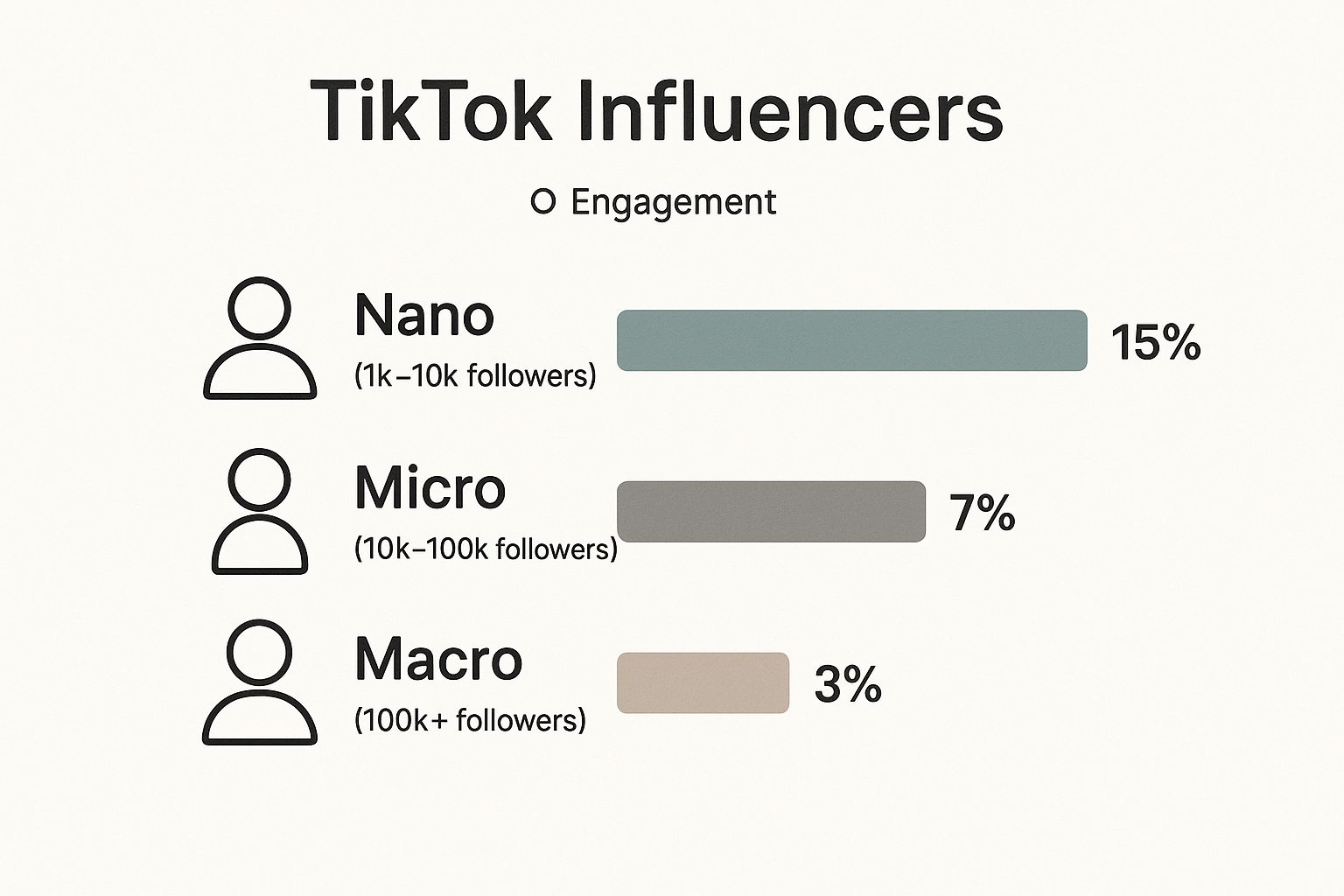
As you can see, nano-influencers with smaller, tight-knit communities often have sky-high engagement, making them incredibly valuable for brands that want to build authentic connections and drive real action.
Manual Search vs Platform Search
So, should you stick to the manual grind or invest in a platform? Both have their place. A platform gives you speed and data, while a manual search can feel more organic and personal. Here’s a quick breakdown to help you decide what's right for your brand right now.
| Feature | Manual Search | Platform Search |
|---|---|---|
| Speed & Efficiency | Slow and time-consuming | Fast, find dozens of candidates in minutes |
| Data & Analytics | Limited to public-facing metrics | Deep analytics on audience and performance |
| Cost | Free (but costs you time) | Typically requires a subscription fee |
| Scalability | Difficult to scale | Built for managing multiple campaigns |
| Discovery | Relies on hashtags and manual digging | Advanced filters for precise targeting |
| Authenticity | Can feel more organic and personal | Can sometimes feel transactional |
Ultimately, the best approach is often a blend of the two.
Use a platform to build a strong list of potential partners, but then take the time to manually review their content and craft a personalized outreach message. This gives you the best of both worlds—data-driven efficiency and genuine, human connection.
For Amazon brands in particular, platforms like Coral are built to manage the entire affiliate process from start to finish. While many tools are just for discovery, a dedicated affiliate hub lets you create a branded application page so interested creators can come directly to you.
From there, you can manage all your relationships, track sales with Amazon Attribution, and automate commission payments—all in one place. This turns your search for a TikTok influencer from a one-time chore into a sustainable, long-term program for building a community of true brand advocates.
Writing an Outreach Message That Actually Gets a Reply

Alright, you've done the legwork. You've vetted creators and have a solid shortlist of people who feel like a great fit. Now comes the part that trips up so many brands: the first message.
Think about it from their perspective. Popular TikTok creators get slammed with dozens of collaboration requests every single day. Most are lazy, generic, and instantly forgettable. Yours needs to cut through that noise.
The secret isn't just pitching your product; it's about starting a real conversation. Ditch the copy-paste templates and get personal. This one shift in approach will make a world of difference in your reply rate.
Making That First Impression Stick
Your opening line is your make-or-break moment. A generic "Hi, we love your content" is a one-way ticket to the trash folder. You have to get specific.
Find a recent video of theirs you genuinely connected with and mention it. For example, "Your recent 'Amazon home finds' video was hilarious—the bit with the lemon squeezer actually made our team laugh out loud."
See the difference? It immediately proves you've done your homework and aren't just blasting out a form letter. It shows you value them as a creator, not just as a number.
After that personal touch, briefly explain why you think they're a good fit for your brand. Keep it short and sweet, focusing on what you both stand to gain.
A winning first message really just needs four things:
- A Personal Hook: Reference a specific video or something unique about their content.
- The "Why You" Factor: Clearly state why their style and audience align with your brand.
- A Quick Intro: Who are you and what do you sell? No long-winded brand stories here.
- The Offer: What's in it for them? Be upfront. Is it a free product, a paid post, or an affiliate deal?
Don't make creators dig for the details. Be direct and respect their time. A vague message like, "Are you open to collabs?" just creates more work for them and will likely get you ignored.
Where to Send Your Message
So, where should you send this masterpiece? Email is almost always your best bet. Check their TikTok bio or Linktree for an email address. It feels more professional and is far less likely to get buried in a flood of DMs from fans. An email shows you're a serious brand ready for a proper partnership.
If you absolutely can't find an email, a direct message on TikTok or Instagram is your backup plan. Just keep it extra brief and suggest moving the conversation to email as soon as they reply.
Nailing the perfect pitch takes a bit of practice, but it's a skill that pays dividends. If you want to see how these ideas look in action, checking out some proven influencer outreach email templates can give you a great starting point. Just remember to always add your own personal flair.
Got Questions? We've Got Answers
Stepping into the world of TikTok partnerships can feel like navigating a new city—exciting, but a little confusing. Let's clear up some of the most common questions brands have when they start looking for TikTok influencers. My goal here is to give you straightforward answers so you can move forward with confidence.
What's a Fair Rate to Pay a TikTok Influencer?
Honestly, there's no magic number. Influencer rates are all over the map because they depend on so many different things. You have to consider their follower count, how much engagement they typically get, what you're asking them to do, and whether you want to use their content in your own ads.
A micro-influencer with 20,000 followers who have a real, active community might be happy with a free product or maybe a few hundred bucks for a single video. On the flip side, a creator with 500,000 followers could easily ask for several thousand dollars. The best way to start is just to ask for their media kit or rate card. It’s a standard request and opens the door to a conversation about what works for both of you.
A crucial piece of advice: You're paying for influence, not just followers. A creator with a smaller, super-niche audience can often bring you a much better return than a massive account with broad appeal.
What’s the Difference Between Gifting and a Paid Post?
Knowing the difference here is vital for managing your budget and setting the right expectations. They're two totally different ways to work with creators.
Product Gifting: This is exactly what it sounds like. You send a creator your product for free, hoping they'll like it enough to post about it. It’s a low-cost way to get your product in front of the right people, but it’s a gamble. The creator has zero obligation to feature it.
Paid Posts: This is the professional route. You have a contract that clearly outlines what you're paying for—say, one dedicated TikTok video, a few Instagram stories, and the right to use that content for 90 days. With a paid post, you get guaranteed exposure and a say in the creative direction.
If you’re just dipping your toes in, gifting can be a smart way to start. But if you need predictable results and want to build a real program, paid posts are the way to go.
How Do I Actually Measure the ROI of a TikTok Campaign?
You absolutely have to track your return on investment; otherwise, you're just throwing money into the wind. The best way to do this is by looking at both hard numbers and the softer, brand-building metrics.
For tracking sales and getting a clear ROI figure, you need tools that connect a sale directly back to a specific influencer. The most common methods are:
- Unique Affiliate Links: Give every creator their own trackable link to your Amazon product page. A platform like Coral can generate these Amazon Attribution links for you, which makes it incredibly simple to see who is driving clicks and sales.
- Custom Discount Codes: Create a unique code for each influencer, like "TIKTOKSTAR15." This lets you easily track every single purchase that comes from their audience.
But don't stop at sales. Pay attention to brand awareness, too. Watch the views, comments, shares, and saves on the sponsored videos. And keep an eye on your own brand's TikTok follower count during the campaign. A truly great partnership moves the needle on both sales and conversation.
Ready to turn your influencer search into a scalable, revenue-driving program? Coral is an affiliate platform built for Amazon brands, helping you manage partnerships, track sales with Amazon Attribution, and automate commission payouts all in one place. Discover how Coral can help you build your community of brand advocates.