What Is Brand Advocates and Why It Matters for Your Business
Category: What is brand advocates
When you think about your most loyal customers, who comes to mind? It's probably the person who tells their friends about you, leaves glowing reviews, and defends your brand online—all without you ever asking. These are your brand advocates.
They're your most passionate fans, the ones who recommend you not because they're paid to, but because they genuinely love what you do. Their voluntary word-of-mouth recommendations are often far more powerful than any traditional ad campaign.
So, What Are Brand Advocates, Really?
Let’s skip the textbook definitions. Imagine your friend discovers an amazing new restaurant and can't stop talking about it. They tell you what to order, why the service is fantastic, and insist you have to go. Their excitement is real, and you trust their opinion. That's a brand advocate in a nutshell.
This is the heart of what a brand advocate is: a real customer who promotes a brand simply because they had a fantastic experience. Their power comes from that authenticity. They aren’t actors in a commercial; they're everyday people whose opinions carry weight with their friends, family, and colleagues.
You don't buy advocacy; you earn it. It grows naturally when a company consistently delivers amazing products, top-notch service, and memorable experiences. Over time, these advocates become one of your greatest assets for long-term growth.
This isn't just a hunch; the data backs it up. Research shows that customer recommendation scores are a solid predictor of a brand's health and customer loyalty. According to YouGov's Most Recommended Brands report, advocacy is a critical sign of brand strength across the globe.
The chart below highlights the brands that are winning at this, topping the charts based on real customer recommendations.
As you can see, the companies that are best at creating advocates often lead their industries in customer love. Understanding how this works is the first step toward building your own army of supporters.
Advocates vs Influencers and Ambassadors
It’s easy to get these terms mixed up. While brand advocates, influencers, and brand ambassadors all talk about your brand, how and why they do it are worlds apart. Knowing the difference is crucial for building a genuine marketing strategy that actually works.
The biggest distinction boils down to one simple thing: money.
A brand advocate is your truest fan. They’re a real customer who had such a fantastic experience that they can’t help but tell people about it. Their praise is completely voluntary, unpaid, and comes from a place of authentic appreciation.
A brand ambassador, however, is in a formal, paid relationship with you. Think of them as a long-term partner who represents your brand, often under a contract. They become a public face for your company, consistently sharing your message because they're paid to do so.
Then you have influencers. Their relationship is usually transactional and short-term. You pay them for a specific campaign, like a few Instagram posts or a single YouTube video. They have a built-in audience, and you’re paying for access to it.
At the end of the day, brand advocates spring from genuine delight with your product or service. You can't buy that kind of loyalty; you have to earn it.
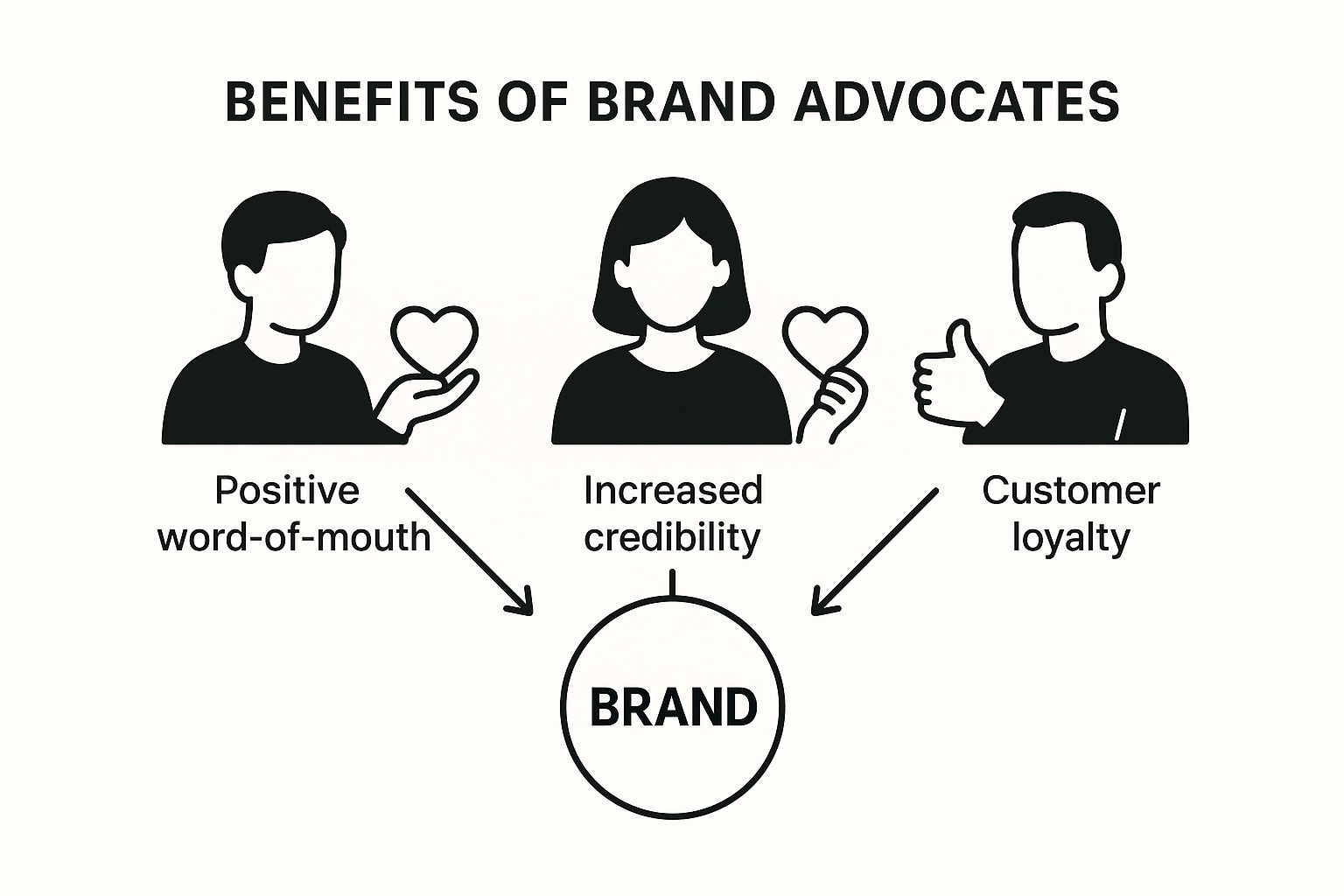
This authentic excitement is what sets advocates apart. While you might pay an influencer to promote a product, you earn an advocate's support through an amazing customer experience. If you want to explore the nuances of working with paid partners, it's worth understanding product seeding versus influencer gifting.
Brand Advocates vs Ambassadors vs Influencers
So, let's put these three roles side-by-side to make the differences crystal clear. Each has a place, but they aren't interchangeable.
| Characteristic | Brand Advocate | Brand Ambassador | Influencer |
|---|---|---|---|
| Motivation | Genuine love for the product | Contractual obligation & payment | Financial compensation per campaign |
| Relationship | Organic and voluntary | Formal and long-term | Transactional and short-term |
| Audience Trust | Extremely high (they're a peer) | Medium (known to be a paid sponsor) | Varies (often seen as a clear ad) |
While ambassadors and influencers can give you a major visibility boost, the authentic word-of-mouth from a brand advocate builds a level of deep-seated trust that money simply can't buy. They are the bedrock of a strong brand reputation.
Why Advocates Are Your Strongest Marketing Channel
In a world drowning in ads, your brand advocates offer something a big budget just can't buy: trust. Think about it. We're all bombarded with polished, paid advertising, and most of it feels impersonal. But a recommendation from a friend? That feels real. It cuts through the noise because it’s genuine, and that’s precisely why advocates are your most powerful marketing channel.
Just how powerful is that trust? It’s huge. Global studies show that for a staggering 71% of consumers, whether they trust a brand is a make-or-break factor in their buying decisions. People don't just want to be sold to; they want honesty and transparency. When a happy customer shares their positive experience, they're essentially passing their trust in that person directly onto your brand. You can't replicate that with a PPC campaign. For more on this, you can discover more insights on brand trust from recent studies on bostonbrandmedia.com.
Building a Foundation of Trust and Growth
This trusted channel isn't just a feel-good metric; it directly fuels sustainable growth. Every single recommendation acts as powerful social proof, giving potential customers the green light and making their decision to buy from you that much easier.
Here’s how it typically breaks down:
- Higher Customer Retention: Advocates are your loyal fans. Their passion creates a sense of community that makes other customers want to stick around, turning a simple purchase into a long-term relationship.
- Improved Brand Reputation: When advocates talk, people listen. These organic, positive conversations happening online and in real life build an authentic and resilient reputation for your brand.
- A Stream of High-Quality Leads: Referrals from advocates aren't just random leads. They're usually a fantastic fit for your business because they come with a built-in understanding of what you offer, leading to much higher conversion rates.
Ultimately, brand advocates become your most cost-effective growth engine. A single, heartfelt recommendation can outperform a massive ad spend because it’s not about reaching the most people—it’s about reaching the right people with a message they’ll believe.
By focusing on building these genuine relationships, you're not just creating a customer base—you're cultivating a volunteer marketing army. Our detailed guide on the brand advocate role digs even deeper into this idea.
How to Find and Nurture Your Brand Advocates

Brand advocates aren't built in a boardroom; they're found out in the real world. To find these enthusiastic fans, you have to get good at listening to what people are already saying about your brand. Their genuine excitement is the starting point for your most authentic marketing.
The first step is simply knowing where to listen. Your best future advocates are probably already leaving clues all over the internet. You just need to tune in.
Where to Look for Potential Advocates
Think of it like a treasure hunt. Your most passionate supporters are already out there, and finding them means paying attention to your digital presence.
Here’s where you can start looking:
- Social Media Mentions: Keep an eye out for customers who tag your brand, share pictures of your products in action, or even defend you in the comment sections. These organic shout-outs are pure gold.
- Customer Reviews & Testimonials: Dig through review sites and your own testimonials page. Anyone who takes the time to write a detailed, positive review is already showing advocate potential.
- High Net Promoter Scores (NPS): If you use NPS surveys, your “Promoters” are the people who score you a 9 or 10. They’ve literally raised their hands and said they’re willing to recommend you.
Once you spot these people, the next step is to nurture that relationship. This isn't about a transaction; it's about building a real connection.
The most powerful way to empower an advocate is to simply show them you’re listening. A little recognition can turn a happy customer into a lifelong supporter, often without any formal program or reward.
To take this a step further, you can get much more strategic about how you listen and engage. For a deeper dive into these tactics, check out this guide on how social media listening can increase customer advocacy. It’s all about building authentic, lasting relationships.
Turning Your Team Into Powerful Brand Advocates
While you’re busy winning over customers, don't overlook the incredible advocates already on your payroll: your own team. When your employees genuinely believe in what your company does, their excitement is one of the most authentic marketing assets you can have. They aren’t just pushing a product; they’re sharing a passion.
Of course, you can't just mandate enthusiasm. This kind of advocacy has to come from a genuine place—a positive company culture where people feel valued, heard, and respected. When your team is happy, they naturally want to talk about it, both as a great place to work and as a brand people should get behind.
Unlocking Internal Advocacy
This isn't just a marketing play. Tapping into internal advocacy also polishes your employer brand, making it much easier to attract top-tier talent. Who better to vouch for your company than the people who know it inside and out? Their insights carry a weight and credibility that no formal ad can ever match.
The data backs this up. A recent report found that 61% of organizations see employee advocacy as 'extremely' or 'very important.' The payoff is huge, with 52% reporting a jump in brand awareness and 26% seeing better brand visibility.
These programs are also remarkably cost-effective. In fact, 23% of businesses using employee advocacy get cost-per-click results under $1 from content their teams share. For a deeper dive, you can check out the full employee advocacy report from dsmn8.com.
So, where do you start? It all begins with creating a supportive environment. For some great, actionable ideas, take a look at these tips on how to improve employee engagement. Much like a formal brand ambassador program, a strong internal culture can organically transform your team into your most trusted voice.
Got Questions About Brand Advocacy? We’ve Got Answers.
Even after you've got the basics down, a few questions about brand advocates usually pop up. Let's clear up some of the most common ones so you can feel confident putting these ideas to work.
What’s the Real Difference Between Brand Loyalty and Brand Advocacy?
Think of it like this: brand loyalty is a habit, while brand advocacy is an action. Loyalty is what a customer does, while advocacy is what they say.
A loyal customer is the person who buys your coffee every single morning or reorders your skincare products without even thinking about it. Their consistent business shows you they’re happy, but it’s usually a private relationship. They stick around because they know and trust what they're getting.
An advocate, on the other hand, takes that loyalty and shouts it from the rooftops. They don’t just buy your coffee; they post a picture of it on Instagram, tag your shop, and write, “Seriously, the best coffee in the city!” All advocates are loyal, but not every loyal customer will become an advocate. Advocacy is that extra step—the voluntary, enthusiastic promotion that turns a quiet fan into one of your most powerful marketing assets.
Is It Okay to Pay Brand Advocates?
The simple answer? No. The moment you pay someone to promote your brand, they stop being a brand advocate and become a paid ambassador, influencer, or affiliate.
The magic of a true brand advocate is their authenticity. People trust what they say because it comes from a genuine, unpaid love for a product or service.
Paying someone for a shout-out fundamentally changes the relationship. It’s no longer about real enthusiasm; it’s a transaction. That shift can destroy the very trust that made their recommendation so powerful to begin with. You absolutely can and should show your advocates love with non-monetary rewards—think exclusive access to new products, a personal thank-you note, or a feature on your social media. But direct payment is a different ballgame entirely.
How Can I Actually Measure the Impact of Brand Advocates?
Measuring the ROI of advocacy isn't as straightforward as tracking a click on an ad, but it's definitely doable. You just need to look at a few different key metrics to see the full picture of their impact.
Here are a few smart ways to track what they’re doing for you:
- Unique Referral Codes: Give your top advocates their own special links or discount codes. This is one of the easiest ways to directly connect their efforts to new sales and traffic.
- Social Media Monitoring: Keep a close watch on your social media mentions and see who’s driving the most engagement and reach. This gives you a great sense of the buzz they’re creating.
- Customer Surveys: Pay attention to your Net Promoter Score (NPS). If you see a rise in the number of "Promoters" that lines up with a boost in organic growth, that's a strong sign your advocacy efforts are paying off.
No single metric will give you the whole story, but when you look at them together, you'll get a clear idea of just how much your advocates are contributing to your brand's growth.
Ready to build your own army of advocates? Coral gives you the tools to create, manage, and track your affiliate and influencer partnerships, turning passionate creators into powerful growth channels. Get started for free today!