Amazon Attribution Links: Boost Your Off-Platform Sales
Category: Amazon attribution links
The Marketing Mystery Amazon Attribution Links Solve
Imagine spending thousands on Facebook ads and Google campaigns, all pointing shoppers to your Amazon listings. You see traffic coming in, but when a sale happens, you're left guessing which specific effort actually convinced the customer to buy. It’s like throwing darts in a dark room and only hearing that one hit the board—you don't know which dart it was or where it landed. This frustrating lack of clarity is the core problem that Amazon Attribution links are built to solve.
These specialized URLs act as invisible bridges, connecting every click from your external marketing directly to a purchase on Amazon. Think of them as digital breadcrumbs. When a customer clicks a link in your email newsletter or a social media ad, that special attribution link follows their journey. It then reports back exactly what they did once they reached Amazon, turning your marketing guesswork into a clear, data-driven strategy.
Shining a Light on Your Marketing Blind Spots
Before these tools were available, marketers were flying blind. You could see that your external campaigns generated clicks, but the trail went cold the moment a user landed on Amazon's website. There was no definite way to prove that your Google ad budget led to a specific number of sales. This measurement gap made it nearly impossible to calculate a true return on ad spend (ROAS) for any off-Amazon advertising.
To fix this, Amazon introduced its free advertising and analytics solution in 2020. This was a huge step forward because Amazon has always been a "walled garden," historically blocking third-party tracking pixels on its product detail pages. This barrier to measurement was finally removed. Now, brands could get official data on how their efforts on platforms like Facebook, Google, or even influencer blogs were impacting sales. You can learn more about how Amazon Attribution connects off-platform ads to sales.
Why This Data Is a Game-Changer
With the information from Amazon Attribution links, you can finally answer critical business questions:
Which social media platform drives the most "Add to Carts"?
Does my email marketing campaign lead to more sales than my search ads?
Is that high-cost influencer collaboration actually generating revenue?
By seeing which channels and campaigns are your top performers, you can confidently invest more in what works and cut spending on what doesn’t. This isn't just about tracking; it's about making your entire marketing budget more effective. This detailed data allows you to refine your ad copy, target your audiences more precisely, and build a growth plan fueled by real performance metrics, not just vanity clicks and impressions. It’s the key to turning your marketing budget into a predictable investment rather than a hopeful expense.
Why Mobile-Friendly Links Make or Break Your Conversions
Once you see the power of tracking external traffic, the next step is making the customer's journey as smooth as possible. Picture a potential buyer scrolling through Instagram on their phone. They spot your product in an influencer's story, get excited, and tap the link. But instead of the familiar Amazon app opening, they land on a clunky mobile browser login page. This is a massive conversion killer.
The customer is now at a frustrating dead end. They have to recall their password and peck it into a tiny screen, likely fighting autocorrect along the way. More often than not, this friction is enough to make them give up on the purchase. Considering that over 60% of Amazon’s sales happen on mobile devices, a seamless mobile experience is essential.
Forcing a browser login creates a weak point that can cost you countless sales.
The best path is the one with the least resistance: a single click that takes a logged-in user directly from your ad to the product inside their Amazon app.
The App-Opening Advantage: Removing Friction with 'Deep Links'
The difference between a link that opens the browser and one that launches the Amazon app is night and day for your conversion rates. Think of it this way: a browser link is like sending a customer to a locked store, forcing them to fumble for the right key. An app-opening link (aka. a deep link) is like having a helpful doorman who greets them and walks them straight to the correct aisle. The first experience is frustrating; the second is effortless.
This is where specialized Amazon Attribution links are so important. Not only do they track performance, but the best ones are also built to be mobile-friendly. They can intelligently detect a user's device and automatically open the Amazon app if it's installed, completely bypassing the dreaded browser login. This ensures your mobile traffic converts at the highest possible rate because the path to purchase is direct and simple.
To better understand the difference, the table below compares the two user journeys.
Mobile Browser vs. App Experience Comparison
A side-by-side comparison showing the user journey differences between traditional browser links and mobile-friendly app links
User Action | Browser Experience | App Experience | Conversion Impact |
|---|---|---|---|
Clicks Link | Redirected to Amazon's mobile website. | Amazon app opens directly to the product page. | App: Immediate engagement + impulse buy |
Login Status | User is often logged out, sees a login screen. | User is almost always logged in. | Browser: High friction, drop-off point. |
Authentication | Must manually enter email and password. | Seamless; no login required. | App: Zero friction, user proceeds. |
Payment/Shipping | May need to re-enter payment & shipping info. | All information is pre-filled and ready. | Browser: Added steps, increases cart abandonment. |
Final Outcome | High chance of user abandoning the purchase. | High chance of a quick, one-click purchase. | App: Dramatically higher conversion rate. |
The takeaway is clear: the app experience removes critical barriers to purchase, making it far more likely that an interested shopper will complete their order.
This infographic shows just how much key metrics can improve when you switch from untracked campaigns to a measured, mobile-optimized approach.
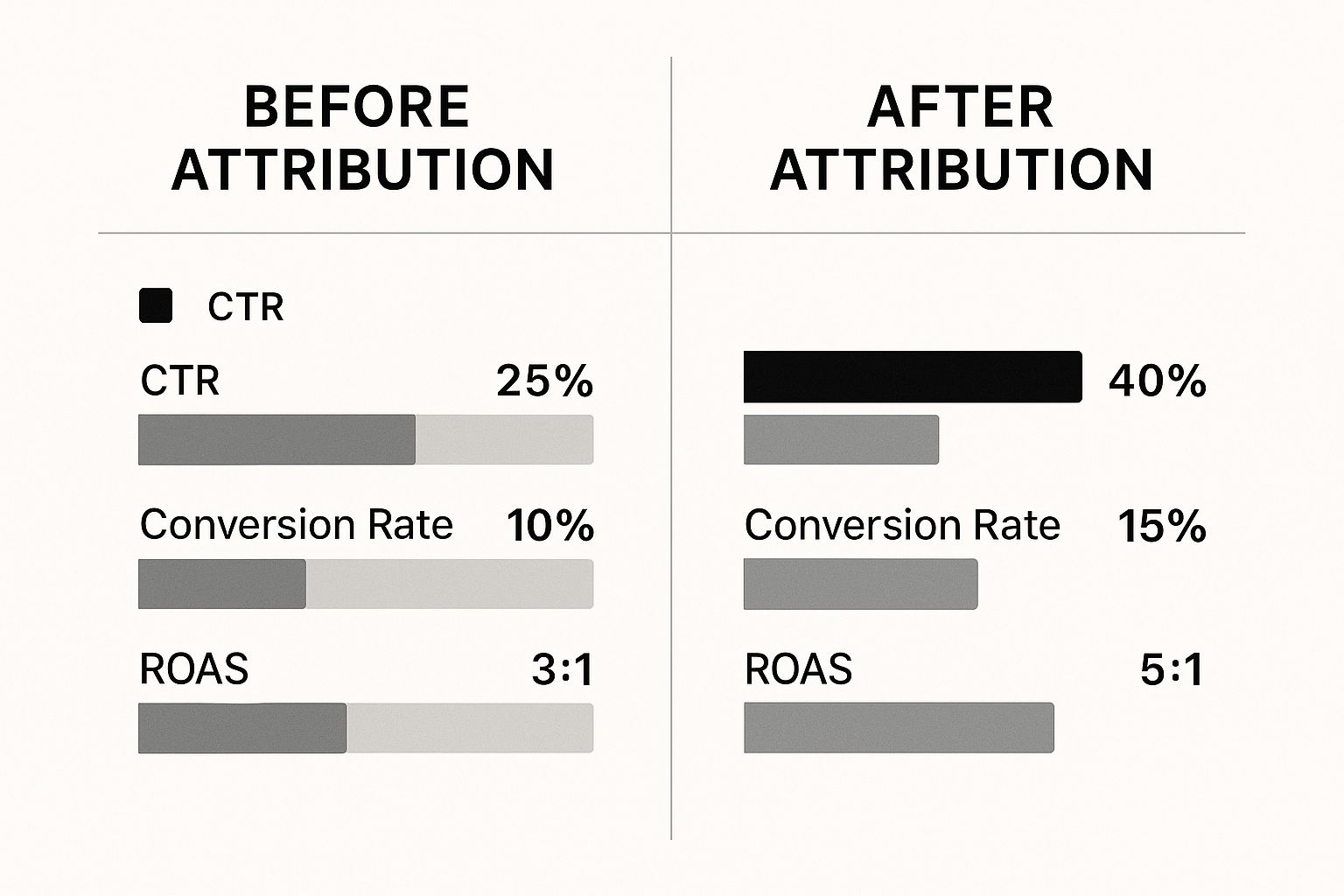
The data plainly shows that a well-tracked campaign with a app-opening link leads to better click-through rates, more conversions, and a much-improved return on ad spend.
How to Guarantee App-Opening Links
The good news is you don’t need to be a developer to create these better-performing links. Many tools are designed to handle this for you. Platforms like Coral, for instance, generate mobile-optimized affiliate links by default. When you use Coral to run your affiliate program, every link your partners create is automatically built to open the Amazon app, protecting your conversions and giving shoppers a better experience. For a deeper look, check out our guide on how to create and manage your own Amazon Attribution links.
If you’re just looking for a simple, free solution to generate these links outside of an affiliate platform, tools like OctoLink offer a great starting point. It allows you to create Amazon mobile-friendly links quickly, ensuring that anyone clicking from a phone is sent straight to the app. By putting a mobile-first linking strategy in place, you remove the single biggest point of friction in the off-Amazon to Amazon customer journey, which directly helps your bottom line.
Real Success Stories: Brands Crushing It With Attribution

Theory is one thing, but seeing how Amazon Attribution links work in the real world truly shows what's possible. When brands can finally connect their external marketing efforts to actual sales, they stop guessing and start making smarter decisions that grow their business. The data isn't just about insights; it's a playbook showing exactly where to invest more ad spend and where to cut back.
Two standout examples show this power in action. Premier Nutrition, a company in the crowded health market, used attribution to monitor its off-Amazon campaigns. The results were dramatic: they achieved a 96% growth in sales quarter-over-quarter and a stunning 322% increase year-over-year for their Premier Protein products. In a similar story, cookware maker Meyer Group Ltd used attribution to track traffic from their Facebook and Google ads. This allowed them to boost revenue by 54% while also cutting their cost per acquisition (CPA) by a massive 48%. You can learn more about how these brands transformed their marketing results.
The Mobile-Friendly Link Difference
A key piece of the puzzle for these brands is creating a smooth customer journey, especially for shoppers on their phones. A common mistake is using a link that forces a customer to log into Amazon through their phone's web browser. This small bump in the road is often enough to lose a sale entirely. The most effective Amazon Attribution links are mobile-friendly, meaning they automatically open the Amazon app if the shopper has it installed.
This simple feature makes a huge impact on conversion rates. When a customer taps a link from an influencer's social media post, they expect a seamless trip. Opening the app directly uses their saved login and payment info, making the purchase feel effortless. In contrast, being redirected to a browser adds frustrating extra steps that lead many people to give up.
How to Implement a Winning Mobile Strategy
To achieve the kind of success seen by Premier Nutrition and Meyer Group, making your links mobile-friendly is essential. The good news is you don’t need to be a technical expert to get this right. Here’s how you can prepare your campaigns for mobile shoppers:
Use an Affiliate Management Platform: Solutions like Coral are built specifically for Amazon sellers and generate mobile-friendly affiliate links by default. Every link you create is set up to open the Amazon app, helping you get the most out of your influencer and affiliate traffic.
Leverage Free Link Generators: For more basic needs, free tools can do the job. Services like OctoLink focus on creating Amazon links that are designed to open the app first, which is a great way to improve the mobile customer experience without any extra cost.
By taking a mobile-first approach with your attribution links, you remove one of the biggest hurdles in the path to purchase, helping turn more of your clicks into sales.
Your First Attribution Links: Setup Made Simple
Now that you see the power behind attribution, it's time to put that knowledge into practice. Creating your first Amazon Attribution links might sound technical, but it’s a logical process once you break it down. Everything starts in the Amazon Advertising console, which is the command center for your brand's marketing activities. If you're enrolled in Brand Registry, you're already set up with access.
The image above shows the main dashboard you'll see upon logging in. This is your starting point for creating the tracking links that will give you a clear view of your marketing performance.
Accessing the Attribution Tool
Getting to the right place is the first step. Here's how to find the tool inside your seller account:
Log in to Seller Central.
Go to the Advertising tab and click on Campaign Manager.
In the Advertising Console, look for Measurement & Reporting on the left-side menu.
Select Amazon Attribution.
If you haven't used it before, Amazon will walk you through a quick, one-time registration for your brand. After that, you're ready to build your first campaign and generate the links that connect your off-Amazon marketing efforts directly to your sales data.
Manual vs. Bulk Campaign Creation
Amazon offers two ways to set up attribution campaigns: one by one (manual) or all at once (bulk).
When you're just starting, the manual method is a great way to learn the ropes. You’ll create a campaign, set up an ad group for a specific channel (like a "TikTok Ad" or "Email Newsletter"), and choose the products you want to track. After you click ‘Create,’ Amazon gives you a unique tracking URL—this is your Amazon Attribution link. This hands-on approach helps you understand how each component works together.
But what happens when you're running a campaign with 50 different influencers? Creating links individually would be a huge time sink. This is where bulk creation is a game-changer. You can download a template file, enter all your campaign information, and upload it to generate hundreds of attribution links simultaneously. It’s the go-to method for larger, more complex marketing initiatives.
To help you get started on the right foot, here's a checklist that covers the key steps and considerations for setting up your attribution campaigns.
Setup Step | Required Information | Best Practices | Common Mistakes |
|---|---|---|---|
Campaign Creation | Campaign Name, Products to Track | Use a clear, consistent naming convention (e.g., "SummerSale24_Meta"). | Vague names like "Test 1" make reporting confusing later on. |
Ad Group Setup | Ad Group Name, Publisher/Channel | Create separate ad groups for each channel (e.g., Facebook, Google, TikTok). | Lumping all channels into one ad group prevents you from seeing which one performs best. |
Link Generation | Click-Through URL | Ensure the link directs to the correct Amazon product page or storefront. | Linking to a generic Amazon search page instead of your specific product. |
Link Implementation | Placement in Ad/Post | Place the link on the most prominent call-to-action (CTA) button or text. | Hiding the link where users are unlikely to see or click it. |
Mobile Optimization | App-Opening Functionality | Use a service like Coral or OctoLink to ensure links open the Amazon app on mobile. | Using a standard web link that forces a browser login, killing conversions. |
This checklist helps ensure you're not just creating links, but building a solid foundation for accurate and insightful performance tracking.
The Mobile-Friendly Imperative
No matter how you create your links, making them mobile-friendly is non-negotiable. A standard Amazon link can send a mobile user to Amazon's web login page, a notorious conversion killer. Think about it: how often do you happily stop to type a password on a tiny screen? Most people just give up.
The highest-performing links are those that automatically open the Amazon app, where users are already logged in and their payment details are saved. This transforms a clunky process into a smooth, one-click journey from your ad straight to your product.
While Amazon's tool provides the tracking, you often need an external service to guarantee this app-opening capability. Platforms like Coral are built specifically to solve this issue, generating mobile-optimized links that make your affiliate and influencer campaigns as frictionless as possible. For a free alternative that focuses solely on this app-opening feature, a tool like OctoLink can help you improve mobile conversion rates without a complicated setup.
Connecting The Dots: From Clicks to Sales Revenue

If you've ever spent money on a Facebook ad or a Google campaign and wondered if it actually drove any sales on Amazon, you’re not alone. For a long time, the path from an external ad click to a final purchase on Amazon felt like a black box, leaving marketers to guess at their real return on investment. This measurement challenge is a major hurdle; in fact, recent analyses show that 39% of marketers struggle to measure campaign effectiveness on third-party platforms. Amazon Attribution links are the solution, providing the missing piece that connects off-platform marketing directly to sales performance. You can read more about these findings on marketing measurement.
From Guesswork to Confident Decisions
Without proper tracking, you're making decisions with one hand tied behind your back. You might see an Instagram post get thousands of likes or a Google ad receive hundreds of clicks, but these are just surface-level metrics. They don't tell you if those interactions translated into revenue. Attribution data bridges this gap by providing concrete metrics like Detail Page Views, Add to Carts, and most importantly, the actual sales generated by each specific link.
This means you can finally compare the performance of different channels, apples-to-apples. You might discover that your email newsletter, despite a lower click-through rate, actually generates more sales than your high-traffic social media ads. These insights are key for optimizing your marketing budget. By understanding which channels deliver the highest return, you can confidently shift your spending toward what works, all while avoiding wasted investment on underperforming campaigns. It's an essential part of a solid strategy for tracking your Amazon sales from external traffic.
The Mobile Experience: A Critical Factor in Conversion
A crucial element in turning clicks into revenue is the user's mobile experience. A large portion of your traffic will come from smartphones, where even a small amount of friction can stop a potential sale in its tracks. When a shopper clicks a standard link on their phone, they often land on Amazon's mobile browser, which frequently requires them to log in. This is a huge roadblock; typing a password on a small screen is frustrating and a primary reason people abandon their purchase.
This is why mobile-friendly Amazon Attribution links that open the Amazon app directly are so important. When the app opens, the user is already logged in, their shipping information is saved, and their payment methods are ready to go. The path to purchase becomes almost effortless. To ensure this smooth experience, many brands use specialized tools. Platforms like Coral are designed to automatically create these app-opening affiliate links. For a free alternative, tools such as OctoLink also focus on generating mobile-friendly links. By prioritizing a frictionless mobile journey, you give the traffic you worked so hard to get the best possible chance of becoming a sale.
Advanced Optimization: Turn Data Into Profit
Beyond just counting clicks and sales, the real value of your data is its power to turn good campaigns into profit-generating machines. Once you have a steady stream of information from your Amazon Attribution links, the exciting work can begin. This is where you shift from knowing what happened to understanding why, empowering you to make smarter, more profitable marketing decisions. The objective is to convert raw numbers into practical intelligence.
Think of your initial attribution data as a basic map showing the roads your customers traveled. Advanced optimization is like adding real-time traffic updates, weather conditions, and points of interest to that map. It provides the complete picture you need to find the fastest, most efficient route to more sales and a better return on investment (ROI).
From High-Level Metrics to Granular Insights
Your first move is to dig deeper than the surface-level numbers. Instead of just looking at total sales from a specific channel, analyze the entire customer journey. For instance, your attribution data might show that while Facebook ads lead to fewer direct sales than Google ads, they generate twice as many "Add to Carts." This is a critical insight. It suggests your Facebook audience is highly interested but may need a final nudge—perhaps a retargeting campaign or a limited-time offer—to finalize their purchase.
By analyzing metrics like these, you can pinpoint your best-performing traffic sources and allocate your advertising budget more effectively. This process lets you:
Scale Winning Campaigns: Confidently increase your spending on platforms and with influencers that consistently deliver a high ROI.
Refine Ad Creative: Use conversion data to learn which images, headlines, and calls-to-action connect most effectively with your audience. If a certain influencer's style repeatedly drives sales, use it as a model for your other marketing materials.
Optimize Your Marketing Mix: Find the perfect blend of channels for different products. A highly visual product might thrive on Instagram, whereas a problem-solving item could perform better with search ads or in-depth blog posts.
The Critical Role of Mobile Optimization
A crucial piece of advanced optimization is ensuring a flawless mobile experience. As mentioned, a large portion of your traffic will come from smartphones. A major conversion killer is forcing users to log into Amazon's mobile website. This single point of friction can undo all your hard work. To avoid this, you must use Amazon Attribution links that open the Amazon app directly, where users are already logged in and ready to buy.
This isn’t just a "nice-to-have" feature; it's essential for maximizing profit. Solutions like Coral automatically create these mobile-friendly links for all your affiliates, ensuring every click has the highest possible chance of converting. If you're looking for a simple, free tool to generate these app-opening links, services like OctoLink are also a great choice. By removing this one obstacle, you directly protect your conversion rates and boost your overall profitability. The insights gained from advanced optimization are a cornerstone of building a successful program; to explore this further, check out our guide on the Amazon affiliate marketing program.
Avoiding Costly Attribution Mistakes
Even the sharpest marketers can stumble into common traps with their attribution tracking, leading to wasted ad spend and missed chances for growth. These mistakes can quietly disrupt your measurement efforts, so learning to spot and avoid them is key to keeping your data accurate. Think of your tracking setup like the foundation of a house; even small cracks can compromise the whole structure.
One of the most frequent—and damaging—errors is forgetting about the mobile experience. A huge amount of online shopping happens on smartphones, and not optimizing for this is a costly oversight. If your Amazon Attribution links send mobile users to their phone's web browser instead of directly into the Amazon app, you're creating a massive roadblock. This browser journey often forces customers to stop and manually enter their login details, a clumsy process that kills conversion rates. Shoppers expect a smooth, instant jump from an ad or social post to the product page inside the app they already know.
The Mobile Friction Fiasco
This mobile login hurdle isn't just a small bother; it's a direct route to an abandoned cart. The fix is to make sure every link is mobile-friendly and can "deep-link" straight into the Amazon app. While Amazon Attribution provides the tracking data, it doesn't automatically create this app-opening function. This is where specific tools become incredibly useful.
Here’s how you can steer clear of this common mistake:
Prioritize App-Opening Links: Always use links that are smart enough to open the Amazon app for mobile users. This one change can significantly improve your conversion rates by creating a seamless path to purchase.
Use a Mobile-Optimized Platform: Solutions like Coral automatically generate mobile-friendly affiliate links by default. This ensures every partner you work with uses links that give customers the best possible experience, with no extra work from you.
Leverage Free Tools: If you need a quick, simple way to make app-opening links, services like OctoLink are excellent free options. They specialize in creating Amazon links designed to send mobile traffic right where it belongs: the app.
Beyond Mobile: Other Common Pitfalls
Past the mobile experience, other mistakes can threaten your data's integrity. Misunderstanding attribution models or having a disorganized campaign structure can lead to poor optimization choices. For example, if you group all your social media traffic under one campaign, you'll never know if TikTok is outperforming Instagram. Creating separate ad groups for each channel is vital for detailed insights. By avoiding these errors and focusing on a frictionless mobile journey, you can ensure your data is reliable and your marketing budget is invested wisely, turning insights into real profit.
Ready to build an affiliate program that avoids these costly mistakes from the start? Discover how Coral can help you manage and scale your creator partnerships with mobile-friendly links and powerful tracking.