Amazon Brand Registry Without Trademark: 6 Expert Tips for 2025
Category: Amazon brand registry without trademark
Unlock Brand Registry: Your Path to Amazon Success Starts Here
For many Amazon sellers, Brand Registry feels like an exclusive club with a steep entry fee: a fully registered trademark.
This single requirement often seems like an expensive and time-consuming barrier, preventing entrepreneurs from accessing the essential tools needed to protect their listings, unlock powerful marketing features like A+ Content, and build real brand value on the platform. This common misconception stops countless sellers from gaining a critical competitive edge.
The reality is, you do not have to wait a year or more for full registration.
Securing Amazon Brand Registry without a trademark that is fully approved is not just a possibility; it is a strategic and highly accessible process for sellers who know the right steps. The secret lies in understanding the alternative pathways Amazon now accepts, with the most direct route being a pending trademark application.
This means you can gain access to Brand Registry's benefits in a matter of hours, not years. You can file your trademark application directly with the United States Patent and Trademark Office (USPTO) yourself, eliminating hefty legal fees.
To streamline this process and increase your chances of success, you can even leverage AI tools like ChatGPT to help conduct preliminary research and find a trademark that will get approved. This dramatically lowers both the cost and complexity, putting brand protection within reach for everyone.
This comprehensive guide is your roadmap. We will break down six distinct methods, from leveraging pending applications to other creative strategies, that will get you enrolled in Brand Registry fast. Get ready to stop worrying about hijackers and start building your brand legacy on Amazon.
1. Trademark Office Pending Application Method
This is the most direct and reliable path to enroll in Amazon Brand Registry without a fully registered trademark. While Brand Registry's ultimate goal is to protect registered marks, Amazon recognizes the lengthy government processing times. They created a crucial exception: sellers can enroll using just a pending trademark application from a select list of government trademark offices.
This means you can gain access to powerful brand protection and marketing tools months, or even a year, before your trademark is officially granted. For sellers eager to establish their brand and wondering about Amazon Brand Registry without a trademark yet in hand, this method is the official and most effective starting point.
How the Pending Application Method Works
The process is straightforward. You file a trademark application for your brand name (only text) with the United States Patent and Trademark Office (USPTO). Within hours, the office will issue a unique serial number for your pending application.
This serial number is your golden ticket. You can immediately take it to the Amazon Brand Registry enrollment page and submit your application. Amazon will verify the active status of your pending application and, upon approval, grant you access to the registry. You get the benefits now while the government continues its review in the background.
The path from filing your trademark to enrolling in Brand Registry is a simple, linear process. The decision tree below illustrates the key steps to take once you decide to pursue your trademark.
As the flowchart shows, the critical step is obtaining the serial number, which unlocks the door to your Brand Registry application.
Real-World Use Cases
This method is versatile and valuable for various seller types:
New Private Label Brands: A seller creating a line of electronics accessories under their brand name can file a trademark and use the pending status to immediately create A+ Content and protect their listings from hijackers.
Expanding Small Businesses: An established business launching a new line of eco-friendly cleaning products can secure its brand identity on Amazon right from launch day, preventing copycats from using a similar name.
Amazon Handmade Artisans: A jewelry maker who has built a following for their unique designs can trademark their brand name. This allows them to use Brand Registry to report counterfeit listings that use their brand name, protecting their craft and reputation.
Actionable Tips for a Successful Application
You can navigate the trademark filing process yourself, often without expensive legal fees. Here are some essential tips to ensure a smooth journey:
Do Your Homework First: Before filing, use tools like ChatGPT to come up with brand names. There's a tutorial with a prompt to help you use ChatGPT like a Trademark attorney. Then, check the USPTO's TESS database to see if a similar mark already exists. This step greatly reduces the chance of rejection.
Be Precise with Your Description: When you file, your description of goods and services must accurately match the products you are selling or plan to sell on Amazon. Vague or incorrect descriptions are a common reason for application issues.
File Smart to Save Money: For U.S. sellers, consider using the USPTO's 'TEAS Plus' application form. It has stricter initial requirements but comes with a lower government filing fee.
Act Immediately: Don't wait. As soon as you receive your trademark application serial number, head straight to the Brand Registry website and apply. There is no waiting period.
Stay Vigilant: After enrolling in Brand Registry, it’s crucial to monitor the benefits and protect your brand actively. Having access to enhanced analytics can help you see the impact of your new marketing tools; you can learn more about how to track your Amazon sales here to measure your success.
For a visual walkthrough of the Brand Registry enrollment process, check out the video below:
2. Text-Based Logo Trademark Strategy
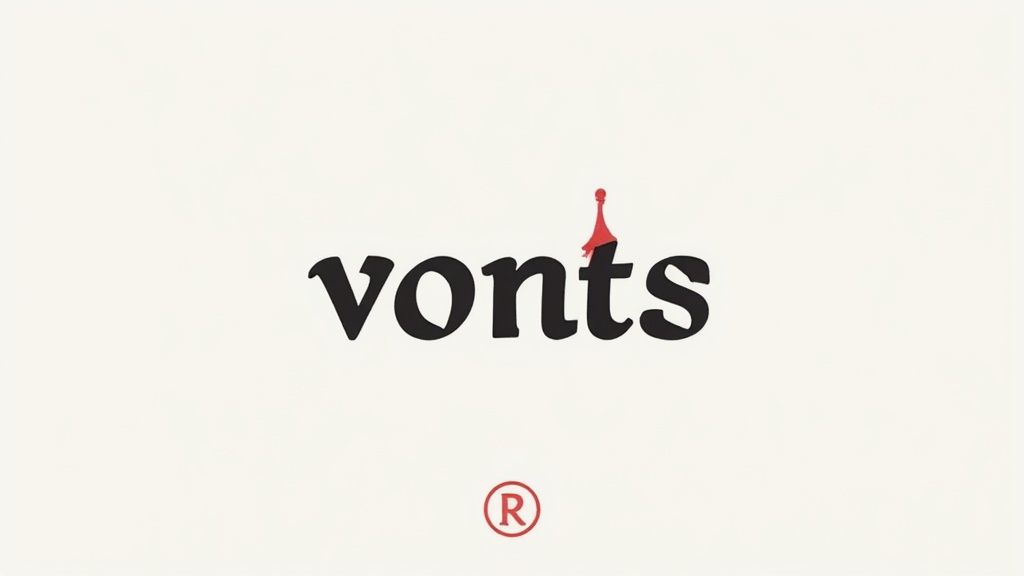
This is a clever and highly effective strategy for sellers who want a distinct visual identity without the cost and complexity of a full graphic logo. Instead of trademarking just the plain words of your brand name (a word mark), you trademark your brand name written in a specific, stylized font or design. Amazon accepts these design marks for enrollment, making this an excellent path to Brand Registry.
This approach offers a middle ground, providing more brand personality than a simple word mark while being faster and cheaper to create and file than a complex logo. For sellers looking for a quick route to Amazon Brand Registry without a trademark that is fully registered, this method is a powerful and popular choice.
How the Text-Based Logo Strategy Works
The process involves treating your stylized brand name as an image. You first select or create a unique font that represents your brand's ethos. Then, you create a simple black-and-white image file of your brand name written in this font. This image is what you submit to a supported IP office, like the USPTO, as your trademark application.
Because it's filed as a design mark, it protects the specific visual appearance of your name. Within a few weeks of filing, you'll receive a pending application serial number. You can use this number to apply for Amazon Brand Registry immediately, gaining access to brand protection tools long before the trademark is officially granted.
Real-World Use Cases
This strategy is particularly useful for brands that want to build a memorable visual identity quickly and affordably:
Kitchen Brands: A seller of premium cookware can use a bold, custom font that evokes professionalism and quality. This text-based logo is then stamped on products and used across their Amazon Storefront.
Fitness Brands: A company selling workout equipment might use a sleek, italicized font to convey speed and energy. This stylized text becomes their recognizable mark on resistance bands, weights, and apparel.
Beauty Brands: A private label cosmetics line could use an elegant, flowing script font for its name. This creates a sophisticated and high-end feel on packaging and in A+ Content, all protected under Brand Registry.
Actionable Tips for a Successful Application
You can manage this entire process yourself, avoiding high legal fees and getting your brand protected faster. Follow these tips for a smooth application:
Brainstorm and Search: Use tools like ChatGPT to brainstorm unique brand names. Before you commit to a name and design, conduct a thorough search on the USPTO's TESS database to ensure a similar stylized mark doesn't already exist. This is a critical first step.
Choose a Distinctive Font: Avoid common system fonts like Arial or Times New Roman. Use a unique, commercially licensed font or have a simple custom one created. The key is distinctiveness.
Ensure Readability: Your stylized text must be clear and easy to read, especially in small sizes like Amazon mobile search results and thumbnails. Test its visibility before filing.
File Directly to Save: You can file your trademark application directly on the USPTO website using the TEAS form. This removes the need for expensive legal services for a straightforward filing.
Apply to Brand Registry Immediately: The moment you receive your pending trademark application serial number from the government office, go straight to the Amazon Brand Registry website and enroll. There is no benefit in waiting.
3. International Trademark Transfer Method
This is a creative and less-traveled route for sellers looking to secure a registered trademark quickly. Instead of filing a new application and waiting, this method involves acquiring the rights to an existing, already registered trademark from an international market. Because Amazon Brand Registry accepts trademarks from numerous government IP offices worldwide, owning a registered mark from a country like the United Kingdom, Canada, or Germany is just as valid for enrollment as one from the U.S.
This is sometimes the only viable option to have your brand registered on Amazon, if the trademark in the US is already taken by another company.
This strategy allows a seller to bypass the entire pending period and gain immediate access with a fully registered mark. It's a sophisticated approach for sellers who want to get into Amazon Brand Registry without a trademark they personally filed, offering a shortcut if the right opportunity arises.

How the International Trademark Transfer Method Works
The process involves finding and legally acquiring an active trademark that is either for sale or dormant. This can be done through trademark brokers, specialized marketplaces, or direct negotiation with the current owner. Some international jurisdictions have lower registration and maintenance costs, leading to a larger pool of available marks.
Once you identify a suitable trademark, you enter a legal process to either purchase it outright (a transfer of assignment) or license it for your specific use. After the legal paperwork is finalized and the trademark is officially in your name or licensed to you, you can use its registration number to apply for Amazon Brand Registry. Unlike the pending application method, this gives you a fully registered mark from day one.
Real-World Use Cases
This method is best suited for savvy sellers who can identify and act on unique opportunities:
Fast-Moving Electronics: An electronics seller finds a dormant EU trademark for 'NexusTech' that perfectly fits their new line of accessories. By purchasing the mark, they skip the 9-12 month registration wait and can immediately protect their listings in a competitive category.
Niche Home Goods: A brand planning to launch a set of unique kitchen gadgets discovers a registered Canadian trademark, 'CuisineCraft', is for sale. They acquire it, allowing them to launch on Amazon.ca and Amazon.com with full Brand Registry protection from the start.
Global Fashion Brands: A U.S.-based clothing seller wants to expand into Europe. They purchase a registered UK trademark for a fashion-related brand name. This not only gives them instant Brand Registry access but also establishes a brand foothold in their target overseas market.
Actionable Tips for a Successful Application
While filing a new U.S. trademark application can often be done affordably on your own, this transfer method is more complex and requires careful execution. Success depends on thorough due diligence.
Engage Legal Experts: This is not a DIY process. Always work with a qualified trademark attorney who specializes in intellectual property transfers and licensing. They are essential for navigating the legal complexities and ensuring the transfer is valid.
Verify the Trademark's Status: Before any money changes hands, your attorney must verify the trademark is in good standing, has no pending disputes or opposition, and that all maintenance fees are current.
Check the Product Classes: Ensure the trademark's registered "classes of goods" accurately cover the products you intend to sell. A trademark for clothing (Class 25) won't help you if you sell kitchen knives (Class 8).
Investigate Existing Agreements: Uncover any existing licensing agreements or restrictions that could limit how or where you can use the brand name. You need clean, unencumbered rights to the mark.
Budget for All Costs: The purchase price is just the beginning. Factor in legal fees for the attorney, government transfer fees, and any ongoing maintenance requirements to keep the trademark active.
4. Trademark Attorney Fast-Track Service
While filing for a trademark yourself is a popular and cost-effective route, some sellers prefer a guided, expert-led process to minimize errors and save time. This is where specialized trademark attorney services come in. These services are not a loophole to get Amazon Brand Registry without a trademark; instead, they are a premium, hands-off method to secure the necessary pending application with professional oversight.
These attorneys and law firms, often specializing in e-commerce, offer packages designed specifically for Amazon sellers. They manage the entire process, from conducting a comprehensive trademark search to filing the application and sometimes even handling the Brand Registry submission on your behalf. It’s a white-glove service designed for speed and peace of mind.
How the Attorney Fast-Track Service Works
This approach streamlines the journey to Brand Registry. You hire an attorney who understands the specific requirements not just of the trademark office but of Amazon itself. They begin with a deep, professional-level search to ensure your chosen brand name has a high probability of being approved, going far beyond a basic database check.
Once you approve the brand name, the attorney prepares and files the official trademark application with the appropriate government office (like the USPTO). They ensure the description of goods and services is perfectly aligned with your Amazon products to prevent future issues. Upon receiving the pending application's serial number, they can either provide it to you for immediate Brand Registry enrollment or complete the Amazon application for you. The "fast-track" component comes from avoiding common mistakes that cause delays.
Real-World Use Cases
This service is ideal for specific types of sellers who prioritize security and time over budget:
The Time-Strapped Entrepreneur: A founder launching multiple products who cannot afford the time to learn the intricacies of trademark law and filing procedures. They outsource this critical task to focus on sourcing, marketing, and logistics.
The Risk-Averse Investor: A seller investing a significant amount of capital into a new brand. They pay for an attorney's expertise to maximize the chances of a successful trademark registration and minimize the risk of a costly rejection and re-brand down the line.
The International Seller: A non-U.S. business owner who finds the USPTO system complex or faces requirements for a U.S.-based attorney. Hiring a local expert simplifies the entire cross-border legal process.
Actionable Tips for a Successful Engagement
Choosing the right legal partner is crucial. While you can save on legal fees by filing yourself, if you opt for this service, make sure you get your money's worth:
Verify Amazon-Specific Experience: Don't just hire any trademark attorney. Ask them specifically about their experience with the Amazon Brand Registry enrollment process and any common issues they've handled.
Request a Clear Breakdown of Costs: Services can range from $1,500 to $3,000 or more. Demand a clear, itemized list of what is included. Does the fee cover the government filing cost? Does it include responses to minor office actions?
Inquire About Success Rates: Ask about their success rate for first-time filings and how they handle applications that receive an office action (a preliminary rejection) from the trademark office. A good firm will have a clear plan for this.
Compare Multiple Providers: Just as you would for any other service, get quotes and speak with at least two or three different attorneys or firms before making a commitment. This will give you a better sense of the market rate and service quality.
5. Brand Bundle Acquisition Strategy
This is a capital-intensive but incredibly fast path for sellers who want the benefits of Amazon Brand Registry without waiting for the trademark process themselves. Instead of building a brand from the ground up, this strategy involves purchasing an existing Amazon business that is already enrolled in Brand Registry and possesses a fully registered trademark.
By acquiring an established brand through business brokers like Empire Flippers, marketplaces like Flippa, or direct negotiation, you are essentially buying a turnkey operation. You gain immediate access to all the Brand Registry tools and protections because the intellectual property, the trademark, is transferred to you as part of the sale. This method completely bypasses the personal need to file for and await a trademark.
How the Brand Bundle Acquisition Strategy Works
The process centers on a business transaction rather than a government application. You identify a suitable Amazon brand for sale, conduct due diligence, and purchase the business assets. A critical part of this transaction is the legal transfer of the brand's registered trademark from the previous owner to you.
Once the trademark assignment is legally complete and filed with the appropriate IP office (like the USPTO), you can work with Amazon to have the Brand Registry ownership transferred to your seller account. This grants you control over the A+ Content, Storefront, and brand protection tools associated with the brand you just bought. It's the ultimate shortcut to getting Amazon Brand Registry without a trademark application of your own.
Real-World Use Cases
This strategy is best suited for sellers with available capital who prioritize speed and immediate market entry:
Portfolio Investors & Aggregators: An investment firm or an established seller looking to build a portfolio of brands can acquire multiple Brand-Registered businesses to scale quickly, skipping the 9-12 month wait time for each new brand.
Sellers Entering New Markets: A successful seller in the pet niche wants to expand into high-end kitchen gadgets. Instead of starting from scratch, they acquire a small, established kitchen brand for $75,000, immediately leveraging its Brand Registry status to compete.
Time-Crunched Entrepreneurs: An entrepreneur has the funding and product ideas to capitalize on a new trend but knows the trademark process is too slow. They buy a brand with a broad, relevant trademark and pivot its product catalog, using the existing brand protection from day one.
Actionable Tips for a Successful Acquisition
Buying a business is complex, so thorough due diligence is non-negotiable. Here are key tips to protect your investment:
Verify Everything: Before making an offer, demand proof of Brand Registry enrollment and active trademark status. Use the USPTO's TESS database to independently look up the trademark serial number and confirm its validity and ownership.
Check Renewal Dates: A trademark is worthless if it's about to expire. Check the registration and renewal dates to ensure you won't face an immediate lapse in protection.
Insist on a Legal Transfer: The trademark must be legally transferred to you via a "Trademark Assignment Agreement." This document must be signed by both parties and filed with the government IP office. Do not rely on a verbal agreement.
Analyze Brand Reputation: Investigate the brand's history. Look for previous trademark disputes, a history of poor product reviews, or other potential liabilities that could harm your investment.
Plan for Post-Acquisition Growth: Once the brand is yours, focus on scaling it. A powerful way to build brand awareness is by collaborating with influencers and content creators. To ensure these partnerships are professional and secure, it's wise to use a formal agreement; you can learn more about crafting a brand ambassador contract template here to protect your newly acquired asset.
6. Common Law Trademark Documentation Method
This approach is a defensive, last-resort strategy rather than a direct path to enrollment. A common law trademark refers to rights you automatically gain by simply using your brand name or logo in commerce. While Amazon Brand Registry does not officially accept common law rights for enrollment, compiling extensive documentation of these rights can be a crucial asset in specific, limited circumstances, such as appeals or disputes.
This method is not for sellers asking about Amazon Brand Registry without a trademark as a way to enroll. Instead, it is for established brands that need to prove their existence and prior use when facing an infringement issue before they have secured a formal registration. It is a tool for proving you are the rightful brand owner, but it will not unlock Brand Registry's proactive tools on its own.
How the Common Law Trademark Method Works
Unlike filing for a registered trademark, this method involves no application. It is a process of meticulous evidence collection. You must build an undeniable portfolio that proves you have been using your brand name in a commercial capacity, consistently and publicly, over a significant period. This evidence demonstrates that customers in the marketplace associate the brand name with your specific products.
This documentation is typically presented to Amazon Seller Support or the legal department during a dispute. For instance, if another seller starts using your unregistered brand name, you can use this evidence to file an infringement claim and argue that your common law rights predate their use. Success is not guaranteed and often requires a persistent and well-organized effort.
Real-World Use Cases
This strategy is most relevant for brands with a history that predates their Amazon presence or trademark filing:
Legacy Local Brands: A family-owned business that has been selling a product under the name 'Mountain Peak Grills' in a specific region for 30 years could use decades of local ads, invoices, and press to fight a new online seller who tries to use the same name nationally.
Established Online Creators: A popular YouTuber who has built a community around the 'Gadget Guru' brand for a decade can use their video history, merchandise sales, and media mentions as evidence against a hijacker selling counterfeit 'Gadget Guru' accessories.
Artisans from Other Platforms: A crafter who sold 'Luna Weave' baskets on Etsy for five years before launching on Amazon can use their Etsy sales history, customer reviews, and social media presence to prove they are the original creator and user of the brand.
Actionable Tips for Building Your Case
While pursuing a formal trademark is always the primary goal, building a common law case in parallel is a smart defensive move.
Become a Meticulous Archivist: From day one, save everything. Keep a digital folder organized by date containing invoices, packaging designs, product photos, website screenshots, and marketing emails. Use tools like the Wayback Machine to capture historical snapshots of your web presence.
Document Your 'First Use': The single most important piece of evidence is your date of first use in commerce. Find your oldest invoice, public social media post, or sales record that features the brand name. This establishes your priority.
This Is Your Backup, Not Your Plan A: Treat this as a supplementary insurance policy. The official, and far superior, path is to file for a trademark with the USPTO. You can often handle the filing yourself using the TEAS Plus system to save on government fees and avoid high legal costs.
Prove Your Commercial Impact: A key element of a common law claim is demonstrating that your brand has a recognized presence in the market. By tracking your marketing efforts, you can learn how to calculate lift in sales and use this data to prove your brand’s commercial significance and customer recognition over time.
6 Amazon Brand Registry Methods Comparison
Method / Strategy | Core Features ✨ | User Experience & Quality ★★★★ | Value Proposition 💰 | Target Audience 👥 | Unique Selling Points 🏆 | Price Points 💰 |
|---|---|---|---|---|---|---|
Trademark Office Pending Application Method | Uses pending trademark serial number; works with USPTO, EU, UK, Canada | Faster Brand Registry access, moderate risk | Cheaper than buying trademarks; legal route | Small brands, private label sellers | Immediate partial brand protection; recognized by Amazon | $350 federal filing fees |
Text-Based Logo Trademark Strategy | Stylized brand name logo; covers fonts/colors | Easier and cheaper than complex logos | Broad use across categories; easier defense | Amazon private label brands | Protects visual brand identity; accepted by Amazon | $50-$500 design cost |
International Trademark Transfer Method | Purchase/license international trademarks | Immediate Brand Registry eligibility | Bypasses long applications; cost-effective | Sellers targeting multiple markets | Instant registered trademark rights; includes brand history | $1,000-$10,000 (varies by trademark) |
Trademark Attorney Fast-Track Service | End-to-end filing + Brand Registry assistance | High success rate; professional handling | Reduces filing errors; includes maintenance | Sellers wanting expert help | Expedited process; direct liaison with Amazon | $1,500-$5,000 per package |
Brand Bundle Acquisition Strategy | Acquires brands with pre-approved Brand Registry | Instant access to established brands | Fast trust & sales history leverage | Buyers of established Amazon brands | Complete brand infrastructure included | $10,000-$1,000,000+ |
Common Law Trademark Documentation Method | Based on actual use and documentation, no registration | Low success rate with Amazon Brand Registry | No filing costs; relies on market presence | Longstanding or regional brands | Can provide some legal protection despite lack registration | Minimal costs; time delay & effort intensive |
From Registry to Revenue: Your Next Steps as a Brand Owner
The journey to securing amazon brand registry without trademark registration can feel like navigating a complex maze. Many sellers believe a fully registered, expensive trademark is an absolute prerequisite, creating a barrier that stalls brand growth before it even begins. However, as we've detailed, this is a common misconception. The path to Brand Registry is not a single, locked gate but a series of accessible doors, if you know where to look.
From the straightforward Trademark Office Pending Application Method to more creative approaches like the Brand Bundle Acquisition Strategy, you have viable options. The core principle remains the same: you don't need to wait months or years for full registration. You need a verified connection to a pending application, and that is a much more attainable goal.
The Key Takeaway: A Pending Trademark is Your Golden Ticket
Let's be clear on the most important takeaway from this entire guide: a pending trademark is enough to enroll in Amazon Brand Registry. This single piece of information changes the game for emerging brands. You do not need to invest thousands in legal fees or wait an entire year for the United States Patent and Trademark Office (USPTO) to finalize your registration.
The most direct and cost-effective path is to file the application yourself directly with the USPTO. To significantly increase your chances of a smooth approval, you can leverage modern tools. For example, using AI like ChatGPT to analyze your proposed brand name against existing trademarks can help you spot potential conflicts before you ever submit your application. This proactive, low-cost vetting process demystifies a once-intimidating legal procedure, putting control back into your hands.
Beyond Protection: Unlocking Your Brand's Growth Potential
Successfully enrolling in Brand Registry is a monumental achievement, but it's the starting line, not the finish line. The true power of this program lies not just in protecting your listings from hijackers but in the suite of powerful growth tools it unlocks. Think of it as graduating from being just another seller to becoming a recognized brand owner on the platform.
You now have access to:
A+ Content: Go beyond plain text descriptions and create visually rich, engaging product pages that tell your brand's story and significantly boost conversion rates.
Brand Stores: Build a dedicated, multi-page storefront on Amazon. This becomes your brand's home base, allowing you to showcase your entire product catalog and curate a unique shopping experience.
Sponsored Brands: Utilize powerful, top-of-search advertising formats that feature your logo, a custom headline, and multiple products, driving visibility for your entire brand, not just a single item.
The Untapped Power of Off-Amazon Traffic and Attribution
While A+ Content and Stores are fantastic for on-platform conversion, one of the most transformative yet underutilized tools is Amazon Attribution. This program allows you to create special tracking links that measure exactly how much traffic and sales your off-Amazon marketing efforts are driving.
Sales from Amazon Attribution traffic earn a 10% Brand Referral Bonus.
Without this, any investment in social media influencers, blog posts, or Google Ads that links to Amazon is a shot in the dark. With Attribution, you can finally answer critical questions: Which influencer drove the most sales? Was that Facebook ad campaign profitable? This data is the key to building a smart, scalable external marketing strategy that funnels high-converting traffic directly to your protected listings.
Building Your Sustainable Growth Engine: An Affiliate Army
Leveraging Amazon Attribution effectively leads to the next logical step: transforming your marketing from one-off collaborations into a sustainable growth engine. Instead of paying influencers a flat fee for a single post, you can build your own private network of brand ambassadors and affiliates.
By offering a commission on the sales they generate, you create long-term partnerships with creators who are genuinely invested in your brand's success. You empower them to become authentic advocates, creating a scalable, word-of-mouth marketing force that continuously drives new customers to your Amazon store. This is how you turn your Brand Registry status into a true, long-term revenue machine.
Now that you understand how to gain entry to Brand Registry and have a roadmap for what to do next, it's time to equip yourself with the right tools to execute your vision. Managing an army of affiliates, tracking their sales through Attribution, and handling payouts can quickly become a complex task.
That's where a dedicated platform becomes essential. Coral is designed for Brand Registry sellers to build, manage, and scale their own affiliate programs by integrating directly with Amazon Attribution. You can create a branded portal to recruit creators, automate commission tracking, and see precisely which partners are driving your growth.