Amazon Influencer vs Affiliate Deciding Which Is Right
Category: Amazon influencer vs affiliate
When you boil it down, the difference between an Amazon Influencer and an Amazon Affiliate is pretty straightforward. Influencers use their social media clout, while Affiliates rely on traffic from their website or blog.
The Influencer Program is tailor-made for creators who have a dedicated following on platforms like Instagram, TikTok, or YouTube, giving them a personalized storefront to showcase their favorite products. On the flip side, the Affiliate Program—also known as Amazon Associates—is for publishers who bring in sales by embedding affiliate links into their articles and ranking on Google.
Influencer vs Affiliate A Quick Breakdown
Deciding between the two really depends on where your audience lives and what kind of content you create. One program is built for visual, on-the-spot recommendations, and the other is perfect for converting readers who are actively searching for detailed information. Getting this right is key to making sure your strategy actually works for the community you’ve built.
The Influencer Program: Made for the Creator Economy
The Amazon Influencer Program was created specifically for social media creators. If you're new to this space, understanding the basics of influencer marketing is a great place to start. Amazon saw the writing on the wall—the influencer marketing world is projected to hit $32.55 billion globally by 2025, a huge jump from $24 billion in 2024. This program taps directly into that growth, capitalizing on the power of social proof and trusted recommendations from real people.
The Affiliate Program: The Original for Content Publishers
The Amazon Affiliate Program, or Amazon Associates, is the classic, time-tested model for bloggers and website owners. It’s been the foundation of content monetization for years. If your strength is writing in-depth reviews, how-to guides, or articles that show up in search results, then this is the program for you. For a much deeper look into this approach, check out our complete guide to the Amazon Affiliate Marketing Program.
This isn't just about followers versus pageviews. It's about choosing your core strategy: Do you want to build a curated hub for your personal brand (the Influencer Storefront), or do you want to strategically place recommendations inside valuable content (Affiliate Links)?
To make these differences crystal clear, let's break it down side-by-side.
Key Differences at a Glance
Here’s a quick table to show you how the two programs stack up against each other at a high level.
| Feature | Amazon Influencer Program | Amazon Affiliate Program (Associates) |
|---|---|---|
| Primary Platform | Social Media (Instagram, TikTok, YouTube) | Websites, Blogs, Newsletters |
| Main Promotional Tool | Custom Amazon Storefront | Text-based affiliate links (SiteStripe) |
| Ideal Creator | Social media creators with an engaged following | Bloggers, SEO specialists, niche site owners |
| Content Focus | Visual content like videos, stories, and shoppable photos | Written content like reviews, guides, and articles |
| Entry Requirement | Qualifying social media presence and engagement | A functional website or blog that meets standards |
Ultimately, the best choice depends entirely on your strengths as a creator and where you connect with your audience most effectively.
How to Qualify for Each Program
So, how do you actually get into either of these programs? The entry requirements for the Amazon Influencer and Affiliate programs are pretty different, and knowing which one you’re a better fit for is the first step.
The Amazon Influencer Program is all about your social media clout. Amazon wants to see that you have a real, engaged audience on platforms like Instagram, TikTok, or YouTube. They're looking for creators who have built trust with their followers.
Getting into the Influencer Program
When you apply, you’ll connect your main social media account, and Amazon’s team will take a look. It’s not just about having a huge follower count; they’re more interested in seeing consistent engagement. Think likes, comments, and shares—signs that your community actually listens to what you have to say.
- Platform Focus: Primarily Instagram, YouTube, TikTok, and Facebook.
- Key Metric: It's all about the quality of your engagement, not just the number of followers.
- Application Process: You link your social account and wait for a human to review it.
Getting into the Affiliate Program
Getting approved for the Amazon Affiliate Program (also known as Amazon Associates) is a bit more direct. This path is really built for people with websites or blogs. The main thing you need is an active website or channel with original content that meets Amazon's guidelines (basically, nothing sketchy or prohibited).
The good news? There’s no follower minimum, which makes it a great starting point if you're still building your audience but have a solid blog or website.
One thing that catches new affiliates off guard is the trial period. Once you're provisionally approved, the clock starts: you have 180 days to make at least three qualifying sales. If you don't hit that number, Amazon will close your account.
This initial sales requirement is just Amazon’s way of making sure you’re serious about promoting products. Either way you go, both programs open up doors to other cool opportunities, like Amazon Creator Connections, where you can work directly with brands. Whether you’re a social media star or a dedicated blogger, there’s a clear way to get started.
Comparing How You Actually Make Money
While both programs pay you through commissions, the way you earn that money couldn't be more different. The whole Amazon Influencer vs. Affiliate debate really boils down to your content style. Are you a detailed writer or a visual storyteller?
How Amazon Affiliates Earn
For Amazon Affiliates, it’s all about strategic link placement. Your best friend is SiteStripe, that handy browser bar from Amazon that lets you instantly create text-based affiliate links for any product. You then weave these links into your content, like a blog post on the "Top 5 Coffee Makers" or your weekly deals newsletter.
The entire game is about getting clicks from people who are already looking for information. A solid, well-written article can pull in traffic from search engines for years, turning those affiliate links into a steady source of passive income. The trick is to embed links where they feel helpful and natural, not forced.
How Amazon Influencers Earn
The Amazon Influencer Program, on the other hand, is built for a more visual, integrated approach to selling. Your home base is a personalized Amazon Storefront—basically, a curated shop where you group your favorite products into shoppable "Idea Lists." This becomes your own little digital boutique that you can promote everywhere.
But it goes way beyond just a storefront. Influencers have a whole creative toolkit to work with:
- Shoppable Photos: You can upload an image and tag the products right in it, so followers can instantly "shop the look."
- Shoppable Videos: Think short-form product reviews. These videos live on your storefront and, if you're a top performer, can even show up on Amazon's actual product pages. That kind of placement is gold for passive earnings.
- Amazon Live Streams: You can host live shopping shows, demoing products in real-time and chatting with your audience directly.
Here’s the fundamental difference: Affiliates earn by guiding an existing searcher to a product. Influencers earn by inspiring a purchase from a loyal follower.
It's a common myth that the commission rates are different between the two programs—they're actually the same across most product categories. The path to earning that commission is what changes. To get a better feel for the numbers, you can check out this breakdown of how much Amazon affiliates can make.
Ultimately, your choice depends on where you shine. Is it with persuasive writing or with captivating visuals?
A Side-By-Side Look At Promotional Tools
The best way to really understand the difference between the Amazon Influencer and Affiliate programs is to look at the tools they give you. Each program offers a completely different toolkit, which in turn shapes your entire content strategy and day-to-day workflow. It's not just about what you promote, but how you promote it.
For an Influencer, your entire world revolves around your personalized Amazon Storefront. This isn't just some generic page; it's a branded, curated shop where your followers can see everything you recommend in one spot. Your main job becomes organizing this space with "Idea Lists"—think of them as themed collections like "My Vlogging Gear" or "Favorite Kitchen Gadgets."
Affiliates, on the other hand, live and breathe by SiteStripe. This handy little toolbar pops up at the top of any Amazon page when you're logged in. It lets you instantly generate a custom, trackable affiliate link for any product, which you can then drop right into a blog post, newsletter, or description box. It’s all about speed and efficiency.
The Influencer Toolkit: Creative and Visual
The Influencer Program is built from the ground up for visual storytelling and direct audience engagement. Your toolkit is packed with features that standard affiliates just don't get.
- Shoppable Photos and Videos: You can upload your own photos and videos and directly tag the Amazon products you're featuring. When someone sees your post, they can click a tag and go straight to the product page.
- On-Site Placements: This is a huge perk. If your videos perform well, Amazon might feature them right on the official product pages. This puts your content in front of a massive built-in audience and can become a great source of passive income.
- Amazon Live: You get the ability to host your own live shopping shows. You can demo products in real-time, answer questions from your audience, and drive sales through that direct, personal interaction.
The Affiliate Toolkit: Technical and Text-Based
The Affiliate Program's tools are designed for precision and scale, making them perfect for content publishers who are heavily focused on SEO. SiteStripe is the hero here, letting you create links in a few different flavors.
- Text Links: The classic. You can hyperlink any product name or call-to-action within an article.
- Image Links: This lets you create a clickable product image with your affiliate tag already embedded.
- Text + Image Boxes: A slick little widget that shows a product’s image, title, and current price. It's perfect for those "best of" listicles.
No matter which path you choose, building an audience and driving sales depends on having a solid online presence. Both Influencers and Affiliates need to be skilled at creating engaging social media content to build that crucial connection with their audience.
Feature and Tool Comparison
To really see the differences in action, let's break down the specific features and tools available in each program. This table highlights what you get access to and how each tool is typically used.
| Tool/Feature | Available to Influencers | Available to Affiliates | Primary Use Case |
|---|---|---|---|
| Amazon Storefront | Yes | No | Creating a curated, branded shopping destination for followers. |
| SiteStripe Link Generator | Yes | Yes | Quickly creating trackable text, image, or combo links for any product. |
| Shoppable Photos & Videos | Yes | No | Tagging products directly in your visual content for easy shopping. |
| Amazon Live Streaming | Yes | No | Hosting interactive live shopping shows to demo products in real-time. |
| On-Site Video Placements | Yes (for eligible creators) | No | Getting your videos featured on Amazon product pages for passive earnings. |
| Product Advertising API | No | Yes | For advanced users to pull product data into custom websites or apps. |
As you can see, the Influencer program provides a rich, media-focused toolkit for building a brand, while the Affiliate program offers efficient, scalable tools for driving traffic from existing content platforms.
This chart gives you a visual breakdown of what it takes to get into each program, from follower counts to the time it takes to get approved.
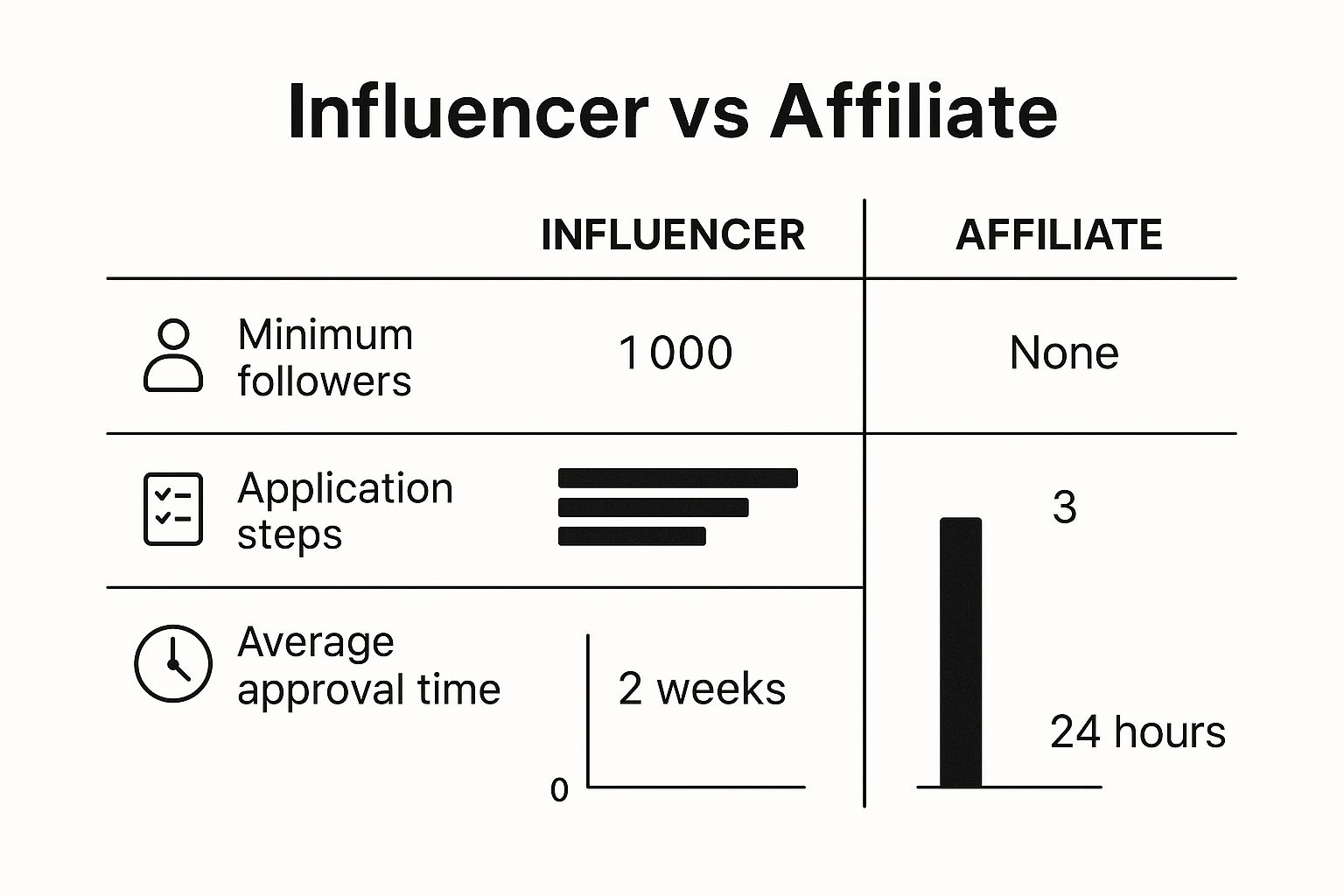
The data makes it pretty clear: the Affiliate program is much easier and faster to get into. The Influencer program, however, demands that you already have an established social media following and involves a more thorough review.
The core difference in tooling is this: Influencers build a destination (their storefront), while Affiliates create pathways (their links). One focuses on brand curation, the other on direct conversion.
Which Program Should You Choose?
So, how do you decide between the Amazon Influencer and Affiliate programs? It really boils down to one simple question: where is your audience, and how do you talk to them? The right choice depends almost entirely on your platform, your content style, and what your followers expect from you.
Let's get practical and look at a few common creator types. This should make it much clearer which path is the best fit for you.
The Social Storyteller Profile
If you live and breathe on visual, personality-driven platforms, the Influencer Program was practically made for you.
- YouTubers: Think about "haul" videos, daily vlogs, or "get ready with me" content. The Influencer storefront is a perfect, seamless extension of your brand. Instead of juggling a dozen links, you can point viewers to one simple URL in your description that has everything you mentioned.
- Instagrammers & TikTokers: When your whole game is built on Reels, Stories, and eye-catching posts, a shoppable photo or a curated storefront is way more powerful than a clunky text link. It just fits the flow of the platform.
The program’s visual tools are a natural match for the fast-paced, "shop the look" vibe of social media. The numbers back this up, too. A recent survey found that 59% of social media users bought something after seeing an influencer recommend it. And get this: a massive 94% of those shoppers in the U.S. made the final purchase on Amazon, proving how dominant the platform is for influencer-driven sales. You can dig into more stats about Amazon's role in influencer marketing on Repricer.com.
The Niche Authority Profile
If your home base is a blog or website where you've built trust through deep, written content, then the Affiliate Program (Amazon Associates) is going to be your best friend.
- Niche Bloggers: Do you run a site dedicated to in-depth product shootouts, detailed reviews, or long-form guides like "The Best Espresso Machines Under $500"? Affiliate links are your bread and butter. You can weave them right into your articles, catching readers at the exact moment they're ready to buy.
- SEO Specialists: For creators who are masters of search engine optimization, the Affiliate Program is a much more sustainable, long-term play. Your well-crafted articles can rank on Google for years, pulling in passive income from organic traffic long after you've hit "publish."
The choice really hinges on your core strength. Are you better at sparking an impulse buy with a compelling video? Or do you excel at guiding a thoughtful, well-researched decision with a detailed article? The first is perfect for the Influencer Program; the second is a classic fit for the Affiliate Program.
The Hybrid Strategy: When to Use Both
Here's the thing: you don't always have to pick a side. In fact, many of the most successful creators mix and match.
A YouTuber, for instance, might heavily promote their Influencer storefront in their videos and channel description. At the same time, they could run a companion blog where they embed traditional affiliate links into their written reviews. This hybrid approach lets you catch every opportunity, using the right tool for the right platform and meeting your audience wherever they happen to be.
A Balanced Look at Strategic Trade-Offs
Let's be real: every business decision involves a trade-off, and choosing between Amazon's Influencer and Affiliate programs is a big one. This isn't just about how you'll make money; it's about shaping your entire content creation process and deciding where you want your brand to be in a few years.
At its core, this is a choice between quick wins versus long-term stability, and borrowing an audience versus building your own.
The Influencer Program is incredibly appealing because of its passive income potential. Imagine creating a great shoppable video that Amazon places on a popular product page—that single video could earn you money for months or even years. But there's a catch, and it's a big one.
Navigating Platform Dependency
When you're an influencer, you're at the mercy of social media algorithms. Your entire income stream can be dictated by a sudden change in how TikTok or Instagram decides to show content. One day you're getting massive views, and the next, your reach is cut in half. You're building your business on rented land.
On the other hand, the Affiliate Program's biggest advantage is ownership. Your blog or website is an asset that you control. The content you publish today can attract organic traffic through SEO for years to come, giving you a stable foundation that isn't dependent on the whims of a social platform. The trade-off? It takes a ton of upfront work to build that authority and start ranking on Google.
The core trade-off is clear: Influencers accept algorithm volatility in exchange for rapid, visually-driven monetization tools. Affiliates invest in the slow, steady work of SEO for greater long-term stability and platform control.
From a brand perspective, the money is flowing toward influencers. In 2025, a whopping 59% of marketers are planning to increase their influencer budgets. Why? The return is hard to ignore, averaging $5.20 in revenue for every $1 spent. You can dig into more of these influencer marketing benchmarks on InfluencerMarketingHub.com.
Ultimately, the best choice depends on how you see these programs fitting into your larger multi-channel marketing strategies. Think about your long-term goals—not just your content style today—to build a sustainable business.
Still Have Questions? Let's Clear Things Up
When you're weighing the Amazon Influencer and Affiliate programs, a few questions always seem to pop up. Getting these sorted out early on can save you a lot of headaches and help you pick the right strategy from the get-go.
Can You Join Both Programs?
This is probably the most common question I hear. The short answer is: yes, absolutely. Amazon has no problem with you being both an Associate (the official term for an affiliate) and an Influencer.
In fact, many of the most successful creators do exactly this. It allows you to play to the strengths of each platform. You can direct your social media followers to your curated Storefront while using specific affiliate links for products you review in-depth on your blog.
How Do Commissions and Sales Work?
Another point of confusion is often the money. Do Influencers get paid more than Affiliates, or vice-versa? Nope. The commission structure is exactly the same for both programs. Your earnings are based on the product category—like 10% for Luxury Beauty or 3% for Home—not which program sent the click.
What about that scary rule where you have to make three sales? That only applies to the Affiliate program. If you don't generate three qualifying sales within the first 180 days, Amazon will shut down your account. But don't panic; it's not a lifetime ban. You can simply re-apply once your site is getting more traffic. It’s just Amazon's way of weeding out inactive accounts.
The big takeaway here is that these programs aren't an either/or choice. Think of them as two different tools in your monetization toolbox. Combining them lets you build a more robust strategy—engaging your social audience with a beautiful storefront and converting blog readers with direct, contextual links.
Knowing these details from day one helps you build a smarter, more effective monetization plan, whether you see yourself as an influencer, an affiliate, or a bit of both.
Ready to manage your own team of brand advocates and creators on Amazon? Coral provides the tools you need to recruit, track, and pay your partners, turning one-time collaborations into long-term growth. See how it works at https://coral.ax.