What Is Amazon Creator Connections? Your Step-by-Step Guide
Category: What is amazon creator connections
What Is Amazon Creator Connections And Why It Changes Everything
Imagine a matchmaker who doesn’t just find you a date but introduces you to someone whose entire friend group is already looking for a partner just like you. That’s the core idea behind Amazon Creator Connections. It’s not just another influencer platform; it's a system designed to connect brands with creators whose audiences are primed to buy on Amazon. While many brands approach it like a standard social media tool, its true power comes from tapping into Amazon’s vast pool of customer data.
This platform looks beyond vanity metrics like follower counts and likes. Instead, it focuses on a creator's proven ability to drive actual sales on Amazon. This is a direct answer to the creator economy's need for more reliable and effective tools. This shift toward performance-based results is a major change from traditional influencer marketing, where budgets are often gambled on potential reach instead of proven sales. Amazon Creator Connections is a key tool for brands using influencer marketing within the platform, a notable development in a global creator economy estimated to be worth $15 billion in 2022. You can learn more about the rise of influencer collaborations on bebolddigital.com.
Key Features That Set It Apart
What really makes this platform unique is its direct integration into the Amazon ecosystem. Think of it as a central meeting place where brands and creators connect based on shared interests and audience alignment.
Here is what the dashboard looks like for brands when they access the platform.
This interface is the command center for building campaigns, overseeing active partnerships, and checking performance metrics, all consolidated in one spot.
- Data-Driven Matchmaking: The platform uses Amazon’s shopping data to suggest creators whose followers have a purchase history in your product category.
- Performance-Based Commissions: You pay creators a commission on the sales they generate. This aligns everyone's goals and makes sure your marketing budget is tied to real outcomes.
- Integrated Tracking: All clicks and sales are tracked directly through Amazon, giving you clear, dependable ROI data without needing outside tools.
Grasping these fundamental features is essential. For brands, this isn't just about finding someone to post a photo; it’s about building profitable partnerships. You can get more details on managing these relationships by reading our guide on using Creator Connections for your brand. This approach changes your strategy from just hoping for sales to actively constructing them.
How The Platform Actually Works Behind The Scenes
Launching a campaign on Amazon Creator Connections is more than just posting a brief and hoping for the best. It’s a dynamic process where Amazon's powerful algorithm acts as a matchmaker, connecting brands with creators who are most likely to drive actual sales. Many brands get disappointing results because they miss the nuances of this system, treating it like a simple job board.
The platform looks far beyond surface-level metrics like follower counts. It analyzes a creator’s performance history, the purchasing habits of their audience, and even the quality of their past content to suggest the most effective partnerships. This means the system prioritizes creators with a proven history of converting viewers into customers on Amazon, not just those with large, passive audiences.
This infographic shows a simplified view of how the platform connects creators and brands.
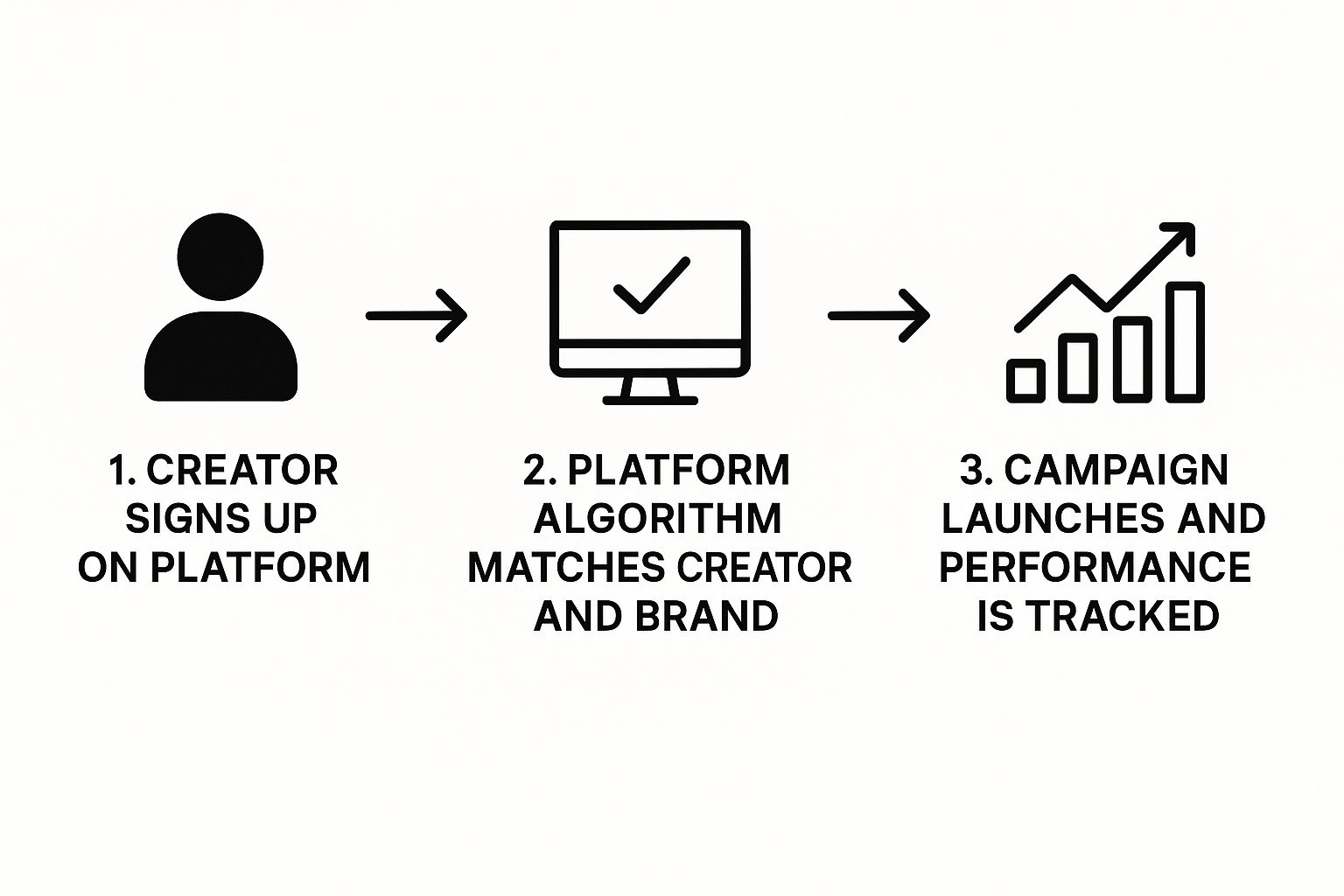
As the visualization shows, the platform is built around an algorithm that actively facilitates partnerships, rather than leaving discovery entirely up to manual searching.
To better understand how this differs from the traditional approach, let's compare Amazon Creator Connections with other influencer platforms.
| Feature | Amazon Creator Connections | Traditional Platforms |
|---|---|---|
| Creator Matching | Algorithm-driven based on Amazon sales data and audience purchase history. | Manual search and filter based on public metrics like follower count and engagement rate. |
| Payment Model | Primarily commission-on-sale. You only pay when a creator generates a sale. | Upfront fees, flat rates per post, or a mix of both. Payment is not always tied to performance. |
| Performance Tracking | Direct integration with Amazon Attribution for precise, real-time sales tracking. | Relies on third-party tools, UTM codes, or creator-provided screenshots. Data can be less accurate. |
| Audience Focus | Focuses on creators whose audiences have a demonstrated history of buying on Amazon. | Focuses on creators with large or highly engaged audiences, regardless of their purchase intent. |
| Risk for Brands | Low financial risk, as payment is directly tied to a successful sale. | Higher financial risk due to upfront payments with no guarantee of ROI. |
This comparison highlights that Amazon Creator Connections is fundamentally a performance-based tool designed to drive sales, whereas traditional platforms often focus more on brand awareness and reach.
Smart Campaign Strategies
Simply launching a campaign can attract a flood of requests from creators who haven't read your brief and are only interested in a free sample. To avoid this, successful brands use a smarter approach. One highly effective tactic is to include an external link in your campaign brief, directing interested creators to a sign-up form on your own landing page.
This extra step helps filter out low-effort applicants and ensures you connect with creators who are genuinely invested in a partnership. It also allows you to gather more specific information and confirm that their audience truly aligns with your brand.
Budgeting for Success
Another counterintuitive but effective strategy relates to your campaign budget. When setting up a campaign, don't be afraid to set a high budget. The platform operates on a commission-on-sale model, meaning you only pay when a creator actually generates a sale.
Your budget is not an upfront cost; it's a cap on potential commissions. A high budget signals a lucrative opportunity to creators, motivating them to produce high-quality content. If a campaign is wildly successful and you sell out of inventory, you won't be charged for the unused portion of your budget. This performance-based model minimizes risk while maximizing motivation for your creator partners.
Why Performance Tracking Changes Your Entire Approach
Remember when influencer marketing felt like shouting into the void and hoping for an echo? Those days of crossing your fingers are over, thanks to the tracking capabilities inside Amazon Creator Connections. The platform’s ability to provide detailed performance insights completely shifts how brands manage collaborations, moving them from uncertainty to confident, data-backed decisions.
This level of transparency is what makes the platform so effective. The real game-changer with Amazon Creator Connections is its detailed performance tracking, something that simply wasn't available in Amazon's earlier influencer tools. Before, brands might work with influencers through storefronts but had very little insight into how an individual creator actually contributed to sales. Find out more about the history of Amazon's tools for influencers on influencer-hero.com. Now, you can see real-time data on clicks, conversions, and revenue tied directly to each partner.
Metrics That Truly Matter
With this data, you can finally move past vanity metrics and zero in on what actually grows your business. The platform gives you the power to:
- Identify Top Performers: See exactly which creators are not just creating buzz but are driving real sales. This allows you to build stronger, long-term relationships with your most effective partners.
- Optimize in Real Time: Discover which pieces of content connect most with customers and tweak your strategy accordingly. You can put more resources behind what works and stop what doesn't, making your budget work harder.
- Calculate True ROI: Measure the direct financial results of every campaign. This clarity makes it simple to justify your marketing spend and scale your programs with confidence.
A Practical Example of Data-Driven Decisions
Imagine you partner with three different creators to launch a new product. One creator has a massive following but generates very few sales. The other two have smaller, more niche audiences but drive a significant amount of revenue.
Using the analytics dashboard, this difference becomes crystal clear. The data guides you to invest more in the creators who convert, even if their follower counts are smaller. This approach builds a sustainable growth engine powered by genuine partnerships that deliver measurable results, transforming your influencer program from a cost center into a dependable profit driver.
Avoiding The Spam Trap That Kills Most Campaigns
Here's a tough lesson many brands learn the hard way: simply posting a campaign on Amazon Creator Connections and waiting for the magic to happen often ends in disappointment. You're likely to be flooded with requests from creators who haven't read your brief, all looking for free samples with little to no intent to promote your products. This low-effort rush can quickly drain your time and inventory.

Successful brands, however, use a structured approach to attract serious, high-quality partners while filtering out the opportunists. The key is to change your mindset from casting a wide net to building a deliberate qualification process. This method protects your budget, your brand's reputation, and makes sure you only work with creators who are genuinely invested in a partnership. It all begins with adding one extra step to your application process.
The Power of an External Link
The single most effective tactic to sidestep the spam trap is to embed an external link within your Amazon Creator Connections campaign brief. Instead of allowing creators to apply directly through the Amazon platform, you guide them to a custom landing page or a dedicated sign-up form.
This simple action acts as a powerful filter. Creators just looking for a quick freebie won't bother with the extra step. But those who are truly interested in a partnership will take the time to click your link and provide the specific information you need. This strategy allows you to:
- Verify genuine interest by asking for a small amount of effort.
- Gather more specific information about a creator's audience and content style.
- Ensure they have read and understood your campaign requirements.
- Start building a direct relationship with potential partners outside of the platform.
Set Your Budget High and Without Fear
Another tactic that might seem counterintuitive is how you set your campaign budget. Many brands set their budgets low, worried about high commission costs. However, since you only pay commissions on actual sales, a low budget can signal to top-tier creators that the opportunity isn't very promising.
Instead, set a high campaign budget. This doesn't mean you'll spend that amount; think of it as a spending cap, not an upfront cost. A high budget communicates confidence in your product and makes your campaign more appealing to high-performing creators. It motivates them to create their best work, knowing the potential reward is significant. In reality, your true budget is limited only by your inventory. If a campaign is so successful that you sell out, you've achieved a fantastic result without ever risking the full budget.
To help you put these ideas into practice, here is a checklist for setting up your campaigns for success. It outlines best practices and common mistakes to avoid when creating your campaign brief.
Campaign Setup Best Practices Checklist
Essential elements for creating effective Creator Connections campaigns that attract quality influencers
| Campaign Element | Best Practice | Common Mistake |
|---|---|---|
| Application Process | Require creators to apply via an external link to a form or landing page. | Allowing direct applications on the platform, which invites spam. |
| Campaign Budget | Set a high, aspirational budget (e.g., $10,000+) to signal a valuable opportunity. | Setting a low budget (e.g., $500), which deters top-tier creators. |
| Product Information | Provide detailed product descriptions, key selling points, and target audience insights. | Vague or generic product details that don't give creators enough to work with. |
| Creator Requirements | Clearly define your ideal creator: niche, audience demographics, and content style. | Leaving requirements open-ended, resulting in mismatched applications. |
| Content Guidelines | Offer clear creative direction, including dos and don'ts, key messages, and call-to-actions. | Providing no creative guidance, leading to off-brand content. |
| Commission Rate | Offer a competitive commission rate that motivates creators to prioritize your campaign. | Offering a low rate that makes the effort not worthwhile for experienced creators. |
By following this checklist, you can craft a campaign that not only stands out but also attracts the right kind of partners. A well-structured brief is your first line of defense against low-quality applications and the foundation for a successful influencer marketing program on Amazon. This approach aligns incentives and helps you connect with creators who will genuinely move the needle for your brand.
The Budget Strategy That Most Brands Get Completely Wrong
What if you could run an influencer campaign where you only pay for actual sales, not just potential reach? That's precisely the model Amazon Creator Connections offers through its commission-based structure, but many brands misunderstand how to best use this powerful feature. The most common mistake is setting a timid budget out of fear, which can accidentally signal a low-value opportunity to top-tier creators.
The smart strategy is actually the opposite of what you might think: set a high campaign budget. This isn't about spending more; it's about signaling potential. Since you only pay commissions on verified sales, your budget acts as a ceiling, not an upfront expense. A campaign with a $10,000 budget is far more appealing to a high-performing creator than one with a $500 budget, motivating them to produce their best work for a greater possible reward. Your real risk is tied to your inventory, not the budget number itself.
Aligning Incentives for Success
This performance-based system creates a win-win scenario that fixed-fee models rarely achieve. Creators are directly motivated to drive sales because their earnings depend on it. This naturally aligns their goals with yours. When a creator succeeds, you succeed, making the partnership a true collaboration instead of a simple transaction.
For example, a brand selling running shoes could set a high budget and a competitive commission rate. This encourages fitness creators to produce authentic, high-effort content—like detailed video reviews or training tutorials—because they know a successful promotion will be financially rewarding. The brand only pays for the resulting sales, turning its marketing spend into a direct and measurable source of revenue.
Budgeting Based on Inventory
Instead of tying your budget to traditional advertising spend, successful brands base it on their inventory capacity. Think about the maximum number of units you could realistically sell through a highly successful campaign. Set your budget to reflect that potential.
This approach ensures you’re prepared for a great outcome while giving creators the confidence to invest their time and energy. If a campaign is so effective that you sell out, you've achieved the best possible result without ever paying for the unused portion of your budget. This method removes the financial risk of traditional influencer marketing and replaces it with a performance-driven model that rewards actual results.
How Amazon Attribution Connects All Your Marketing Dots
The real power of Amazon Creator Connections isn't just finding great influencers; it's how the platform works with Amazon's larger advertising system. This link is forged by Amazon Attribution, a measurement tool that gives you a full picture of your customer's journey, from their first look at an influencer's post to their final purchase on your product page.

Think of Amazon Attribution as the control center for your marketing. It doesn't just count sales from Creator Connections; it shows you how those sales relate to your other channels, like PPC campaigns, social media ads, and even blog posts. This connected data offers deep insight into which touchpoints are actually convincing customers to buy.
Using Cross-Channel Data to Your Advantage
With this complete view, you can make smarter, more data-backed decisions for your entire marketing strategy. The information gathered from Creator Connections campaigns can directly feed into and improve your other efforts. For brands that want to get this right, learning the details of Amazon Attribution links is a solid first step to tying all these channels together.
Here’s how you can put this connected data to work:
- Optimize Ad Spend: If you notice a certain creator's content drives high-quality traffic that converts well, you can start targeting similar audiences with your PPC campaigns. This helps cut down on wasted ad spend and makes your overall campaigns more effective.
- Refine Your Messaging: Attribution data can show you which content formats—like video reviews, tutorials, or lifestyle photos—connect most with your buyers. You can then use these findings to shape the creative direction for all your marketing, including your product listings and A+ Content.
- Improve Inventory Planning: By watching real-time sales data from successful influencer campaigns, you can get better at forecasting demand for your products. This helps you avoid running out of stock during big promotions, so you can fully capitalize on the excitement your creator partners generate.
This integrated method provides a major edge over using influencer platforms that operate in a silo. Brands that treat influencer marketing as a separate task are missing out on important data that could make their entire Amazon strategy stronger. By connecting all your marketing dots, you stop running isolated campaigns and start building a cohesive, data-driven engine for growth.
Real Success Stories And What Actually Works
Knowing the theory is a good start, but seeing real-world results is what truly shows the potential of Amazon Creator Connections. A successful campaign isn't just about launching it; it's about structuring it in a smart way to attract the right partners and get results you can actually measure. Let's look at what has consistently delivered for brands.
Best Practices From Successful Campaigns
Brands that get the most out of the platform share a common mindset: they focus on quality, not quantity. They know that a handful of genuinely motivated, well-matched creators will deliver better results than a hundred creators who are only in it for a free product.
Here are the tactics that make the difference between a successful campaign and one that falls flat:
- Create a Vetting Process: A common issue brands face is dealing with spam applications. To sidestep this, smart brands add an external link to their campaign brief that leads applicants to a form. This simple extra step weeds out low-effort creators and ensures you connect with partners who have actually read your requirements and are truly interested.
- Set an Ambitious Budget: This might sound counterintuitive, but setting a high campaign budget, like $10,000 or more, works wonders. Since you only pay commissions on sales, this isn't an upfront cost. Instead, a high budget signals a serious opportunity, catching the eye of top-tier creators who are driven by real earning potential. Your actual payout is limited by your inventory, not a fixed budget.
- Focus on Long-Term Relationships: While one-off campaigns can provide a quick boost, the real value is in building lasting partnerships. A 2023 case study with a footwear brand saw an immediate sales jump from a Mother's Day campaign that used a unique promo code. Even better, some of the user-generated content from that campaign is still featured on their product pages today, adding social proof that builds trust with new customers at no extra cost.
Why Different Product Categories Need Different Approaches
The strategy that works for a beauty brand probably won't be the right fit for a company selling tech gadgets. A skincare brand, for instance, might find success with creators who make "Get Ready With Me" videos. In contrast, a brand selling running shoes would benefit more from teaming up with fitness influencers who create training tutorials.
The key is to understand where your target audience seeks out recommendations. If you're looking for more guidance, our detailed guide covers how to find Amazon influencers that are a perfect match for your specific niche. By adapting your strategy to your product and audience, you can build authentic campaigns that connect with potential buyers and turn creator collaborations into a dependable sales channel.
Ready to build your own network of passionate brand advocates and drive long-term growth? Discover how Coral can help you manage and scale your affiliate program on Amazon.