7 Steps to Launch Your Amazon Ambassador Program in 2025
Category: Ambassador program
Beyond One-Off Posts: Why Your Amazon Brand Needs an Ambassador Program Now
In the crowded Amazon marketplace, visibility is everything. While many brands focus on PPC ads and one-off influencer collaborations, the real long-term growth engine lies in building a dedicated community of advocates. This is where a strategic ambassador program comes in, transforming creators and loyal customers from short-term promoters into a consistent, high-converting traffic machine driving sales directly to your Amazon product pages.
An effective program is not just about sending free products; it is about building lasting relationships, fostering genuine brand love, and most importantly, creating a trackable sales channel that you control. When managed correctly, your ambassador program becomes a powerful asset, consistently generating word-of-mouth marketing and authentic content that resonates far more than traditional ads. Without proper tracking, however, you are flying blind, unable to identify which partners drive sales and which campaigns perform best.
Throughout this guide, we will walk you through the seven essential steps to create, launch, and optimize a high-performance ambassador program for your Amazon brand. We will highlight how tools like Coral, which integrates with Amazon Attribution, are crucial for tracking every click and sale to measure your true return on investment. This article provides a clear, actionable blueprint to build a community that not only loves your products but also becomes a predictable and scalable source of revenue for your brand. Get ready to move beyond isolated campaigns and build a sustainable engine for growth.
1. Starbucks Partner Program
Starbucks has pioneered one of the most effective employee-centric ambassador programs in modern business. Dubbed the "Partner Program," it treats every employee, from baristas to corporate executives, as a partner in the company's success. This approach is built on a simple yet powerful principle: genuine brand advocacy starts from within. By investing heavily in employee satisfaction, benefits, and culture, Starbucks cultivates an environment where its partners naturally become its most passionate and authentic ambassadors.
This model is exceptionally relevant for Amazon brands looking to build a sustainable ambassador program. Instead of focusing solely on external influencers, consider your internal team or your most loyal customers first. When employees feel valued, they are more likely to share positive experiences and product insights authentically on social media, in community forums, and with friends and family. This internal advocacy creates a powerful ripple effect, driving organic traffic and building trust far more effectively than a traditional paid ad. The goal is to build a community that genuinely wants to see your Amazon brand succeed.
How to Apply the Starbucks Model to Your Amazon Brand
To emulate this strategy, focus on creating an unparalleled experience for your initial group of ambassadors. This could be your own small team or a select group of "superfans." Equip them with deep product knowledge, exclusive perks, and a direct line of communication with your brand. Encourage them to share their honest experiences, directing their audience to your Amazon listings.
It's crucial to empower these internal advocates while providing clear guidelines. This ensures their content remains on-brand without stifling their unique voice. For a structured approach, consider outlining expectations in a formal agreement. You can find excellent examples and guidance by reviewing a brand ambassador contract template, which can be adapted for both internal and external partners. This formalizes the relationship and clarifies deliverables, compensation, and brand messaging.
The following infographic breaks down the core features, benefits, and potential risks of adopting an employee-first ambassador program model.
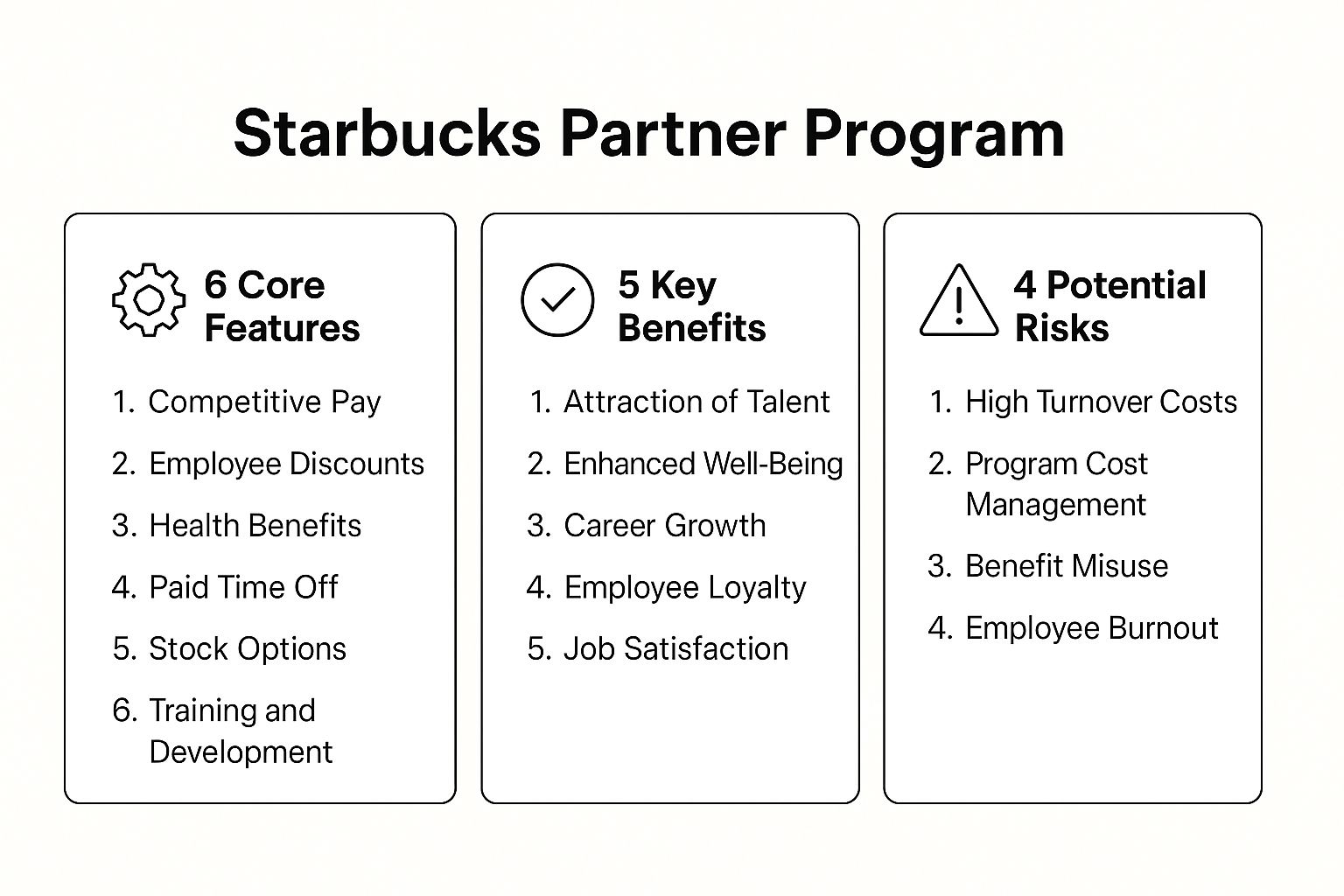
The key takeaway from this model is that the initial investment in your team's satisfaction yields significant returns in authentic marketing and brand loyalty, though it requires a genuine, long-term commitment to your internal culture.
Tracking and Optimization
For an Amazon-focused ambassador program, the final step is meticulous tracking. You need to know which ambassador's activities are driving traffic and, more importantly, converting to sales on your product detail pages. This is where tools like Coral become indispensable. By creating unique, trackable links for each ambassador, you can monitor performance, attribute sales accurately, and identify your most effective partners. This data allows you to optimize your program by rewarding top performers and refining your strategy based on what truly resonates with customers and drives sales on Amazon.
2. Microsoft MVP (Most Valuable Professional) Program
Microsoft’s Most Valuable Professional (MVP) Program is a premier example of an expertise-driven community ambassador program. It recognizes and rewards independent technology experts and community leaders who passionately share their knowledge of Microsoft products. Unlike a typical influencer program, the MVP model isn't about paying for promotion; it's about honoring and empowering genuine advocates who are already contributing to the ecosystem. MVPs receive exclusive access to Microsoft products, direct lines of communication with product teams, and an invitation to the global MVP Summit, fostering a deep, collaborative relationship.
This model provides a powerful framework for an Amazon brand's ambassador program, particularly for brands with technical or niche products. The core idea is to identify and empower your most knowledgeable and influential customers, the "experts" in your product category. These individuals are often already creating content, answering questions in forums, or leading community discussions. By formalizing a relationship with them, you can amplify their authentic voice to drive highly qualified traffic directly to your Amazon listings. Their credibility builds immense trust, which is a critical factor in converting browsers into buyers on a crowded marketplace like Amazon.
How to Apply the Microsoft Model to Your Amazon Brand
To build a similar ambassador program, start by identifying the "MVPs" within your customer base or niche. Look for people who are creating detailed product reviews, publishing "how-to" guides, or actively helping others in relevant online communities. Invite them into an exclusive, tiered program that rewards their expertise and contributions. Provide them with early access to new products, in-depth technical information, and a direct feedback channel to your brand. This makes them feel valued and transforms them into a voluntary extension of your product development and marketing team.
The goal is to equip these expert ambassadors to create high-value content that educates potential customers and directs them to your Amazon store. For example, a brand selling specialized camera gear could partner with professional photographers who create in-depth tutorials and reviews. These ambassadors would then share their unique, trackable Amazon links within their content. A clear agreement is vital here, outlining the non-monetary value you provide (like products and access) and the types of community contributions expected in return.
Tracking and Optimization
For this expertise-focused ambassador program to succeed, precise performance tracking is non-negotiable. You must be able to measure which ambassador's content is effectively driving traffic to your Amazon product pages and, most importantly, which traffic converts into sales. This is where a dedicated tool is essential. By using a platform like Coral, you can generate unique, trackable links for each of your "MVP" ambassadors. This allows you to see exactly who is sending converting customers to your Amazon detail page. This data empowers you to optimize your strategy by identifying your most influential experts, understanding what content resonates most with buyers, and refining the program to maximize your return on investment.
3. Sephora Beauty Insider Community
Sephora transformed its customer loyalty program into a powerful, tiered ambassador program known as the Beauty Insider Community. This model excels by rewarding customers not just for purchases, but for their engagement and advocacy. It operates on different levels (Insider, VIB, Rouge) where customers unlock progressively valuable perks, exclusive access, and personalized experiences as their spending and participation increase. This system turns everyday shoppers into dedicated brand advocates who feel a genuine sense of belonging and status.

The brilliance of this model for an Amazon brand is its focus on community building around your products. Instead of one-off influencer campaigns, you cultivate a loyal base of customers who are motivated to share their authentic experiences. They write detailed reviews, create user-generated content like tutorials, and provide peer-to-peer recommendations within the community, all of which builds social proof. This constant stream of authentic content can be a powerful engine for sending qualified traffic directly to your Amazon product detail pages, creating a self-sustaining marketing ecosystem.
How to Apply the Sephora Model to Your Amazon Brand
Start by segmenting your customer base to identify your most engaged and loyal buyers. You can create a tiered ambassador program that offers escalating rewards based on their level of advocacy. For instance, a "Bronze" tier could offer early access to new products, while a "Gold" tier might receive free products to review and a higher commission on sales they generate. The key is to make each tier feel aspirational and valuable.
Foster a sense of community by creating an exclusive space for your ambassadors, such as a private Facebook group or a dedicated Discord server. Encourage them to share tips, post reviews, and interact with your brand directly. Providing them with exclusive content and inside information makes them feel like true partners. This approach ensures their promotional efforts are genuine, as they are rooted in a real connection to your brand and its products. Calculating the return on these community-building efforts is vital for long-term success, and you can explore more about measuring the effectiveness of such programs by learning about influencer marketing ROI.
Tracking and Optimization
For a tiered ambassador program driving traffic to Amazon, precise tracking is non-negotiable. You must be able to differentiate the performance of each tier and each individual ambassador within those tiers. This is where a dedicated platform like Coral becomes essential. You can create unique, trackable links for every ambassador, allowing you to see exactly who is sending traffic and which of those visitors are converting to sales on your Amazon listings. This granular data empowers you to optimize your program effectively, rewarding your top-performing advocates and understanding which promotional strategies resonate most with your target audience.
4. Adobe Creative Residency
Adobe takes a unique, high-investment approach to brand advocacy with its Creative Residency program. Instead of a traditional influencer or affiliate model, Adobe provides a select group of emerging artists and creators with financial support, mentorship, and access to its suite of tools for one year. These residents are tasked with pursuing a personal creative project, documenting their process, and sharing their journey with the broader community. The result is a powerful, authentic showcase of what is possible with Adobe products, driven by genuine creative passion rather than explicit promotion.
This residency model offers a profound lesson for any brand building an ambassador program: empower your advocates to create, not just to sell. For an Amazon brand, this means shifting focus from simple product shout-outs to supporting creators in developing high-value content where your product plays a natural, essential role. This approach builds deep brand affinity and positions your products as tools for creativity and problem-solving, generating traffic to your Amazon store that is highly engaged and primed for conversion. It’s about sponsoring the artist, not just the advertisement.
How to Apply the Adobe Model to Your Amazon Brand
To adapt this strategy, identify a small group of talented micro-influencers or creators whose work aligns perfectly with your brand's ethos and target audience. Instead of a simple commission-per-sale arrangement, offer a more substantial partnership. This could involve providing a "creative grant," a consistent supply of your products, or access to exclusive resources to help them produce a specific project, like a video series, a detailed blog tutorial, or a unique art piece.
The key is to give them genuine creative freedom. Encourage them to document their entire process, from ideation to the final result, and share it with their followers. Their authentic journey becomes the marketing content, naturally integrating your product and directing their audience to your Amazon listings. This method transforms your ambassadors into true partners invested in creating something meaningful, which builds far more trust and credibility than a standard sponsored post.
The following video from Adobe showcases the spirit of the Creative Residency and the power of empowering creators.
The core takeaway is that a deep investment in a few key creators can yield incredibly authentic and engaging content that drives long-term brand loyalty, though it requires a higher initial investment and a willingness to relinquish some creative control.
Tracking and Optimization
Even with a content-first ambassador program, precise tracking is essential for success on Amazon. You need to understand which creator's projects and content pieces are effectively driving qualified traffic to your Amazon product detail pages and converting into sales. By using a tool like Coral, you can assign unique, trackable links to each creative partner. This allows you to monitor clicks, attribute sales accurately, and see which creative concepts resonate most with the audience. This data is invaluable for optimizing your program, helping you decide which partnerships to renew and what types of creative projects deliver the best return on your investment.
5. Nike Run Club Pace Groups
Nike has mastered the art of community-driven marketing with its Nike Run Club (NRC) Pace Groups. This initiative is a powerful example of an ambassador program that leverages the passion of local enthusiasts to build a global community. Instead of relying on celebrity endorsements alone, Nike empowers dedicated runners in cities worldwide to become Pace Group Leaders. These ambassadors receive Nike gear, training, and support to organize and lead group runs, effectively turning their personal passion for running into a tangible, local extension of the Nike brand.
This community-centric model is highly effective for Amazon brands aiming to create a groundswell of authentic support. The core idea is to identify and empower individuals who are already natural leaders within your niche. For an Amazon seller, this could mean finding the most active participants in a hobbyist Facebook group or the most knowledgeable reviewers of products similar to yours. By equipping these micro-influencers to lead, you foster genuine communities around your brand, driving both engagement and targeted traffic directly to your Amazon product pages. This strategy builds brand loyalty and creates a self-sustaining marketing engine.
How to Apply the Nike Model to Your Amazon Brand
To implement this strategy, start by identifying potential community leaders among your customer base or within relevant online forums. These are individuals who naturally share their expertise and rally others. Reach out and offer them an official role as a brand ambassador, providing them with free products, exclusive information, and the tools to build a community. This could involve creating a dedicated social media group, hosting local meetups, or running online workshops.
Your role is to support these leaders without micromanaging them. Provide flexible guidelines that allow them to adapt their approach to their specific community's culture. This autonomy is crucial for authenticity. Encourage them to share their experiences and direct their followers to your Amazon listings. The goal is to create a network of passionate advocates who organically promote your products because they genuinely believe in your brand and its mission.
The key takeaway from the Nike model is that investing in community leaders cultivates deep-rooted brand loyalty and organic growth. It's a strategy built on empowering passionate individuals, which in turn creates a powerful and authentic marketing force for your brand on Amazon and beyond.
Tracking and Optimization
A community-driven ambassador program needs robust tracking to measure its impact on your Amazon sales. You must be able to attribute traffic and conversions back to specific ambassador-led activities. Tools like Coral are essential for this purpose. By generating unique, trackable links for each of your community leaders, you can monitor which groups, events, or posts are most effective at driving customers to your Amazon store. This data-driven approach allows you to see which ambassadors are performing best, enabling you to reward them accordingly and refine your community-building strategy for maximum ROI.
6. HubSpot Partner Program
HubSpot has mastered the B2B affiliate and partner landscape with a program that is less about one-off commissions and more about creating a powerful ecosystem. The HubSpot Partner Program certifies agencies, consultants, and service providers, empowering them to resell, implement, and service HubSpot’s software suite. This model is built on mutual growth: partners gain a valuable service offering, training, and support, while HubSpot expands its market reach through a network of trusted experts. This creates a scalable, high-value ambassador network built on expertise and shared success.
This strategy offers a powerful lesson for any Amazon brand aiming to build a sophisticated ambassador program. Instead of focusing solely on individual creators, consider building a network of certified experts or specialized partners. These could be industry-specific bloggers, product review sites, or even other complementary brands that serve the same audience. By equipping these partners with deep product knowledge, exclusive resources, and a clear incentive structure, you transform them from simple affiliates into genuine advocates who can speak authoritatively about your products, driving highly qualified traffic to your Amazon store.
How to Apply the HubSpot Model to Your Amazon Brand
To replicate HubSpot’s success, focus on a value-exchange model. Start by identifying potential partners who are already experts in your niche. Offer them more than just a commission; provide them with in-depth training on your products, early access to new launches, and co-branded marketing materials. Create a tiered system that rewards top performers with better commissions, exclusive access, or official "certified partner" status. This fosters a sense of prestige and motivates partners to invest more deeply in promoting your brand on Amazon.
Your goal is to make your partners feel like an extension of your team. Give them the tools and knowledge they need to succeed, and they will become your most effective sales force. A structured approach is key, which involves more than just sending out links. You need a system to manage relationships, track performance, and provide ongoing support. To manage these complex partnerships effectively, it’s worth exploring different tools. For a deeper dive into the systems that can power such a program, you can learn more about affiliate management software.
Tracking and Optimization
For a partner-based ambassador program driving traffic to Amazon, precise tracking is non-negotiable. You need to understand which partners are generating the most valuable traffic and which campaigns lead to actual sales on your product detail pages. Without this data, you cannot reward top performers or identify underperforming strategies. This is where a dedicated platform like Coral is essential. By providing each partner with unique, trackable links, you can attribute every click and sale with absolute certainty. This granular data allows you to optimize your partner incentives, refine your marketing assets, and scale your program with confidence, knowing exactly what drives your success on Amazon.
7. Patagonia Environmental Activism Network
Patagonia has redefined the modern ambassador program by anchoring it to a powerful, singular mission: environmental activism. Instead of focusing on direct product sales, Patagonia's network is built around professional athletes, environmental activists, and dedicated customers who authentically embody and advocate for the brand's core values. This purpose-driven model connects the brand with its community through shared beliefs, focusing on powerful storytelling, grassroots activism, and environmental stewardship, which in turn fosters unparalleled brand loyalty and authentic promotion.

This values-first approach is highly relevant for Amazon brands seeking to build a deeply engaged community. By identifying a mission that resonates with your target audience, you can create an ambassador program that transcends simple transactions. Ambassadors become true partners in a shared cause, whether it's sustainability, ethical sourcing, or community support. Their content naturally integrates your products into a larger narrative, driving traffic to your Amazon store page not just to buy a product, but to support a brand that stands for something meaningful. This mission-driven advocacy builds a resilient brand identity that is difficult for competitors to replicate.
How to Apply the Patagonia Model to Your Amazon Brand
To adopt this strategy, your brand must first define and commit to a core mission beyond profit. This mission should be authentic and genuinely reflected in your products, operations, and community engagement. Once established, recruit ambassadors who are not just influencers, but passionate advocates for that specific cause. For example, a brand selling eco-friendly kitchen products could partner with zero-waste bloggers to promote sustainable living, directing followers to their Amazon listings as part of a larger conversation.
Empower these ambassadors with the freedom to tell genuine stories. Support their activism, feature their work, and connect them with resources that amplify their message. While direct sales are a goal, the primary focus should be on building a narrative that aligns your brand with the cause. This approach fosters a community that is loyal to your mission, leading to sustained, high-quality traffic to your Amazon product pages from an audience that is already invested in your brand's ethos.
The key takeaway is that aligning your ambassador program with a genuine purpose can create a powerful marketing engine rooted in authenticity and shared values, driving long-term growth and brand equity.
Tracking and Optimization
Even within a purpose-driven framework, tracking performance is essential for sustainability and growth. For an Amazon-focused ambassador program, you must understand which mission-oriented stories and campaigns are resonating most with your audience and converting into sales. This is where a dedicated tracking platform becomes critical. By using a tool like Coral, you can provide each ambassador with unique, trackable links. This allows you to measure which content drives the most engaged traffic to your Amazon detail pages and which narratives lead to the highest conversion rates. This data empowers you to double down on effective messaging, reward your most impactful ambassadors, and prove the ROI of your values-first marketing strategy.
Ambassador Program Features Comparison
| Program | Implementation Complexity 🔄 | Resource Requirements ⚡ | Expected Outcomes 📊 | Ideal Use Cases 💡 | Key Advantages ⭐ |
|---|---|---|---|---|---|
| Starbucks Partner Program | High due to extensive benefits and long-term cultural investment | Significant investment in employee programs and benefits | Increased employee loyalty, authentic advocacy, organic word-of-mouth | Building internal culture to drive customer-facing advocacy in F&B | Authentic brand advocacy, strong culture, cost-effective vs traditional ads |
| Microsoft MVP Program | Moderate to High; strict selection and management process | Considerable resources for management, product access, and events | Deep loyalty among tech leaders, valuable product feedback, expert content | Engaging and recognizing expert community contributors in tech | High-quality technical community building, global reach, cost-effective targeting |
| Sephora Beauty Insider Community | Moderate; requires sophisticated tech platform and tier management | High costs for rewards, events, and technology infrastructure | Increased customer lifetime value, user-generated content, emotional brand connection | Customer loyalty and advocacy through tiered rewards in beauty | Strong emotional connection, rich data for personalization, repeat purchases |
| Adobe Creative Residency | High; selective, resource-intensive with mentorship and stipends | High cost for stipends, mentorship, and resources | Authentic, high-quality creative content; inspiring marketing stories | Supporting emerging creatives to showcase tools and build brand affinity | Unique creative collaborations, brand storytelling, community inspiration |
| Nike Run Club Pace Groups | Moderate; ongoing local coordination and training required | Continuous product investment, support, and promotional gear | Grassroots community growth, authentic feedback, local brand presence | Building local sports communities and product ambassadors in athletics | Genuine community engagement, cost-effective local marketing, product feedback |
| HubSpot Partner Program | High; multi-tier certification, training, and partner support | Significant investment in partner enablement and events | Expanded sales reach, partner-driven growth, ecosystem development | B2B channel partner certification and market expansion in software/marketing tech | Recurring revenue, deep market penetration, strong partner ecosystem |
| Patagonia Environmental Network | High; values alignment, activism support, and storytelling | Significant financial and resource commitment for causes | Powerful storytelling, loyal purpose-driven customers, brand differentiation | Purpose-driven marketing with environmental activism in outdoor apparel | Authentic brand purpose, emotional connection, attracts value-driven consumers |
Turn Your Program into a Perpetual Sales Engine
Building a successful ambassador program is not a "set it and forget it" task; it's the beginning of a powerful, long-term asset for your Amazon brand. As we've explored through examples like Sephora's community-driven model and HubSpot's partner ecosystem, the most effective programs are living, breathing entities. They transform one-time customers into passionate advocates and isolated influencers into a unified sales force. This is your opportunity to move beyond the ever-increasing costs and transactional nature of traditional advertising and build something more sustainable and authentic.
The journey we've outlined provides a clear roadmap. It all starts with defining what success looks like for your specific brand. From there, you must meticulously identify and recruit individuals who don’t just have an audience, but whose values and voice genuinely align with your products. This initial groundwork is crucial; a mismatch here can undermine the entire structure. Once you have your founding members, empowering them becomes your top priority. This means providing clear guidelines, high-quality creative assets, and, most importantly, effortless tools that make promoting your products a seamless experience.
From Manual Effort to an Automated Machine
The true power of an ambassador program for an Amazon seller is unlocked when it evolves from a series of manual campaigns into a perpetual sales engine. This engine's primary function is to consistently drive qualified, high-intent traffic directly to your Amazon product detail pages. Every post, story, or video created by your ambassadors acts as a new entry point for potential customers, creating a vast network of inbound traffic that you own and control. This strategy directly impacts your organic ranking on Amazon, as increased external traffic is a significant signal to Amazon's A10 algorithm that your product is relevant and in demand.
However, traffic without data is just noise. The critical component that turns this engine from a sputtering motor into a fine-tuned machine is tracking. Without knowing which ambassadors are driving sales, which channels are most effective, and which content converts best, you are flying blind. This is where meticulous performance measurement becomes non-negotiable.
The Non-Negotiable Role of Data and Optimization
To truly master your ambassador program, you must commit to a data-first approach. Every link your ambassadors share must be a trackable one. This is how you differentiate between ambassadors who generate vanity metrics (likes and comments) and those who generate actual revenue.
Here are the key takeaways for creating a data-driven program:
- Track Everything: Utilize Amazon Attribution to its fullest potential. Every single campaign, creator, and content piece should have a unique, trackable link. This provides indisputable evidence of what’s working.
- Segment and Analyze: Don't just look at overall program ROI. Dig deeper. Which ambassador type performs best? Do Instagram Reels outperform TikTok videos for your specific product? This level of insight allows you to double down on your most profitable activities.
- Foster a Feedback Loop: Use the data to provide constructive feedback to your ambassadors. Show them what’s converting. An ambassador who sees their efforts translate into measurable sales is more motivated and better equipped to create effective content in the future.
By embracing this cycle of empowering, tracking, analyzing, and optimizing, you create a system that almost runs itself. New ambassadors are onboarded into a proven structure, existing ones are continually improving their performance based on real data, and your brand reaps the rewards of a consistent, scalable flow of sales. This isn't just another marketing channel; it's a competitive moat, a community of advocates that becomes one of your most valuable assets on the Amazon marketplace.
Ready to build your own perpetual sales engine on Amazon? A successful ambassador program relies on seamless tracking and management, which can be complex to handle alone. Coral simplifies the entire process, allowing you to generate trackable Amazon Attribution links in seconds, manage payouts, and get the clear data you need to scale your program effectively.