Top Brands That Work With Influencers in 2025 | How They Succeed
Category: Brands that work with influencers
Influencer marketing has moved from a trendy buzzword to a core growth channel. For many brands, the question isn't if they should work with creators, but how and where to find the right partners. This guide is built to answer that exact question by providing a curated look at the top platforms where you can find and collaborate with creators. We cut straight to the chase, showing you exactly where the most successful brands that work with influencers are building their partnerships.
This isn't just a list; it's a practical playbook. We'll explore seven powerful platforms, from social media-native marketplaces to enterprise-level partnership management systems. Each section is designed to give you a clear, actionable overview so you can quickly identify the best fit for your business goals, whether you're a small ecommerce store or a growing enterprise brand.
For every platform, you will find:
- A breakdown of how it works and what makes it unique.
- Key features for finding and managing creator relationships.
- Ideal use cases to help you match the platform to your needs.
- Direct links and screenshots to help you get started immediately.
Our goal is simple: to help you skip the guesswork and start building profitable influencer campaigns. Let's dive into the platforms that connect brands with creators effectively.
1. TikTok Creator Marketplace
The TikTok Creator Marketplace (TCM) is the platform’s official, built-in solution for connecting brands with creators. Instead of searching externally, brands can use this integrated hub to discover partners, manage campaigns, and analyze results directly within the TikTok ecosystem. This makes it an essential tool for any brand serious about leveraging TikTok’s massive, engaged audience.
What makes TCM stand out is its reliance on first-party data. Brands can filter creators by audience demographics, interests, location, and even past performance metrics that are only available through TikTok’s official channels. This data-driven approach removes much of the guesswork from finding the right influencer.
Key Features and Workflow
The platform streamlines the entire collaboration process from start to finish. Brands can post campaign briefs, invite specific creators, negotiate terms, and manage content approvals all in one place.
- Creator Discovery: Use advanced filters and TikTok's own recommendations to find creators who align with your brand values and target audience.
- End-to-End Campaign Management: Send briefs, chat with creators, approve content, and handle payments without leaving the platform.
- Performance Analytics: Access real-time data on reach, engagement, and conversions to measure the direct impact of your influencer campaigns.
- Content Amplification: Easily boost a creator's post as a Spark Ad, which runs the ad from the creator's account, adding authenticity and often improving performance.
Pros and Cons
| Pros | Cons |
|---|---|
| Official TikTok Data: Access to accurate, first-party creator and audience analytics. | Eligibility Requirements: Not all brands and creators can join immediately; access can be limited. |
| Seamless Workflow: Manages the entire campaign lifecycle within one platform. | TikTok-Centric: Primarily designed for TikTok campaigns, offering limited cross-platform utility. |
| Integrated Ad Boosting: Low-friction process to turn organic content into high-performing Spark Ads. | Varying Features: New tools and features are often rolled out gradually by region or account type. |
Actionable Tip: To maximize your impact on the platform, your influencer strategy should align with your sales channels. For brands leveraging TikTok's e-commerce features, it's crucial to understand the strategies for selling on TikTok Shop to turn creator-driven views into direct revenue. This synergy between content and commerce is where brands find the most success.
Website: creatormarketplace.tiktok.com
2. Instagram’s Creator Marketplace (Meta Business Suite)
As a direct competitor to TikTok’s offering, Instagram’s Creator Marketplace is Meta's native platform for connecting brands with creators. Integrated within the Meta Business Suite, it provides a centralized environment for brands to discover talent, manage partnerships, and run campaigns directly on Instagram. This eliminates the need for third-party tools and streamlines influencer marketing for the platform’s vast user base.
What makes Instagram’s marketplace powerful is its direct integration with Meta’s advertising ecosystem. It uses machine learning and first-party data to recommend creators whose audiences match a brand's ideal customer profile. This data-driven approach helps ensure that collaborations are not only authentic but also highly targeted for maximum impact.
Key Features and Workflow
The platform is designed to manage the entire influencer collaboration process, from initial outreach to paid amplification, all within Meta's familiar business environment. Brands can set up projects, invite creators, and track communications efficiently.
- Advanced Creator Discovery: Search for creators using specific filters for audience demographics (age, gender, location, interests) and creator attributes.
- Partnership Messages Inbox: A dedicated inbox keeps all creator communications organized and separate from other business messages.
- Structured Project Briefs: Send detailed project requirements, including deliverables, timelines, and compensation, directly to creators.
- Built-in Partnership Ads: Seamlessly transition a creator’s organic post into a high-performing partnership ad, amplifying its reach to a wider, targeted audience.
Pros and Cons
| Pros | Cons |
|---|---|
| Native Integration: Reduces compliance issues and simplifies the content approval workflow. | Limited Access: The platform is still rolling out and may not be available in all regions or to all brands yet. |
| Seamless Paid Amplification: The easiest path to turn influencer content into official partnership ads. | Complex Interface: Requires navigating the Meta Business Suite, which can have a steep learning curve for new users. |
| Growing Creator Pool: The number of available creators is expanding as the platform becomes more widely available. | Instagram-Focused: Primarily built for Instagram campaigns, with less utility for multi-platform strategies. |
Actionable Tip: Before reaching out, use the marketplace's discovery tools to analyze a creator's audience demographics against your own customer data. A high audience match percentage is a strong indicator of a successful partnership. For a deeper dive into discovery tactics, it's helpful to review a guide on how to find Instagram influencers to refine your search strategy even further.
Website: business.facebook.com (Marketplace is inside Meta Business Suite)
3. Amazon Creator Connections
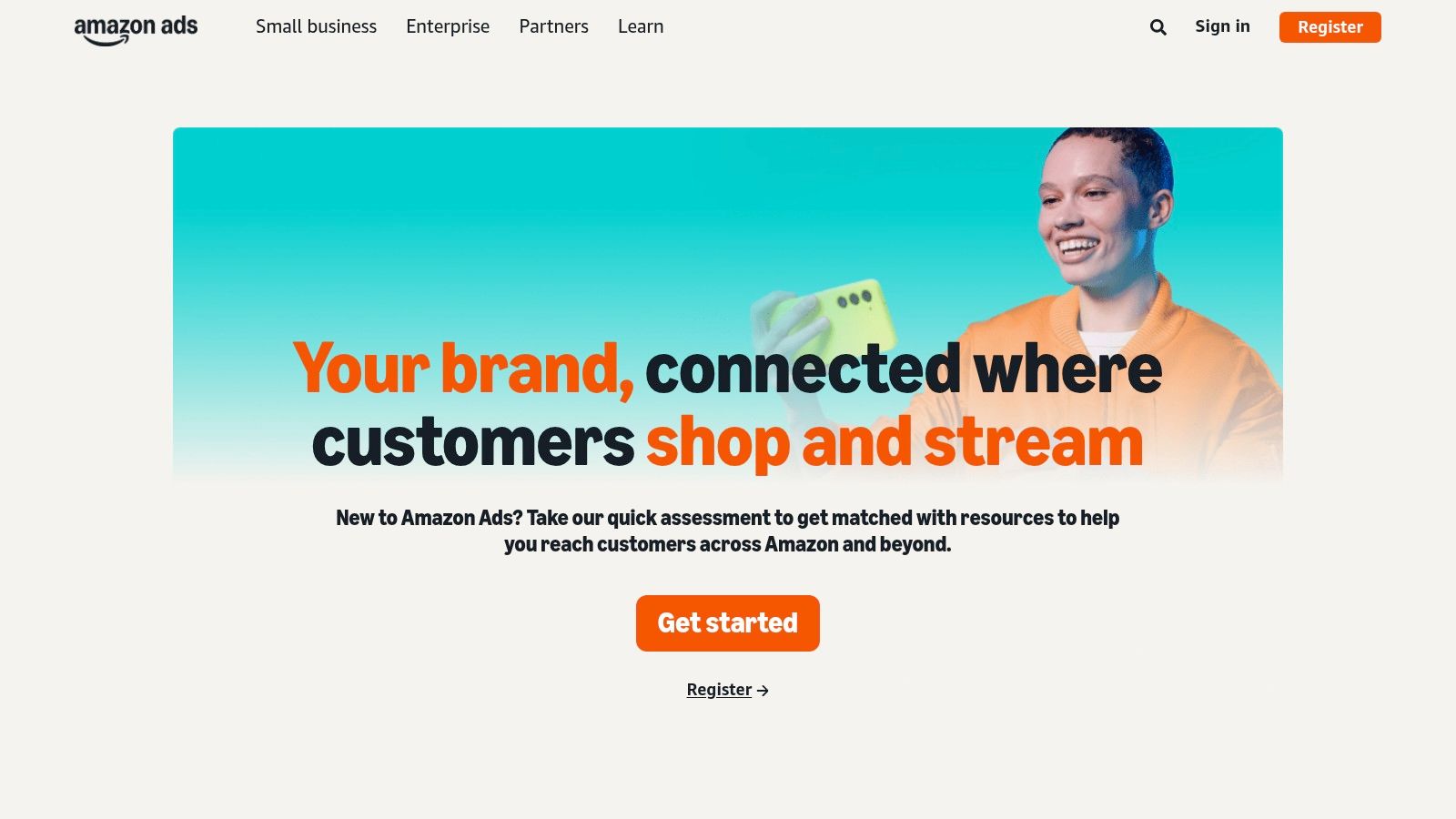
Amazon Creator Connections is the e-commerce giant’s in-house tool designed to bridge the gap between its sellers and influential creators. Instead of relying on third-party platforms, brands can post campaign briefs and commission offers directly within the Amazon ecosystem, allowing creators to discover and apply for partnerships. This direct integration makes it a powerful asset for brands looking to tie influencer content directly to product listings and measure on-platform conversions.
What makes Creator Connections unique is its tight integration with the Amazon shopping journey. Brands can easily track performance within the Amazon Ads Console, attributing sales directly to specific creator campaigns. This removes the guesswork often associated with influencer ROI and provides clear, actionable data.
Key Features and Workflow
The platform simplifies how brands that work with influencers can manage collaborations focused on driving Amazon sales. It facilitates everything from initial outreach to performance tracking, keeping the process contained and efficient.
- Campaign Briefs: Brands create and post detailed campaign opportunities, outlining commission rates, content requirements, and product details.
- Creator Discovery: Influencers and creators can browse these briefs and apply to campaigns that align with their audience and niche.
- Integrated Performance Tracking: Monitor clicks, sales, and commissions directly within the Amazon Ads Console, providing a clear view of campaign impact.
- Support for Shoppable Media: The tool is designed to support various Amazon-centric content formats, including Amazon Live streams and shoppable storefronts.
Pros and Cons
| Pros | Cons |
|---|---|
| Direct Amazon Integration: Tightly links influencer activity to sales and analytics. | Controlled Access: Eligibility is managed by Amazon, and access is rolled out in phases, so not all sellers can join. |
| Performance-Based Model: Primarily uses a clear, pay-for-performance commission structure. | Limited Targeting: Lacks some of the advanced creator and audience targeting filters found in specialized platforms. |
| Supports Amazon Commerce: Built to enhance Amazon Live, storefronts, and other on-platform media. | Amazon-Centric: Exclusively focused on driving traffic and sales within the Amazon ecosystem. |
Actionable Tip: For brands aiming to maximize their returns from Amazon Creator Connections, it's also valuable to explore comprehensive strategies to boost sales on Amazon overall. A successful creator campaign should be one component of a broader, well-optimized sales funnel on the platform. To dive deeper into the platform, you can learn more about Amazon Creator Connections and how it fits into this strategy.
Website: advertising.amazon.com
4. Shopify Collabs
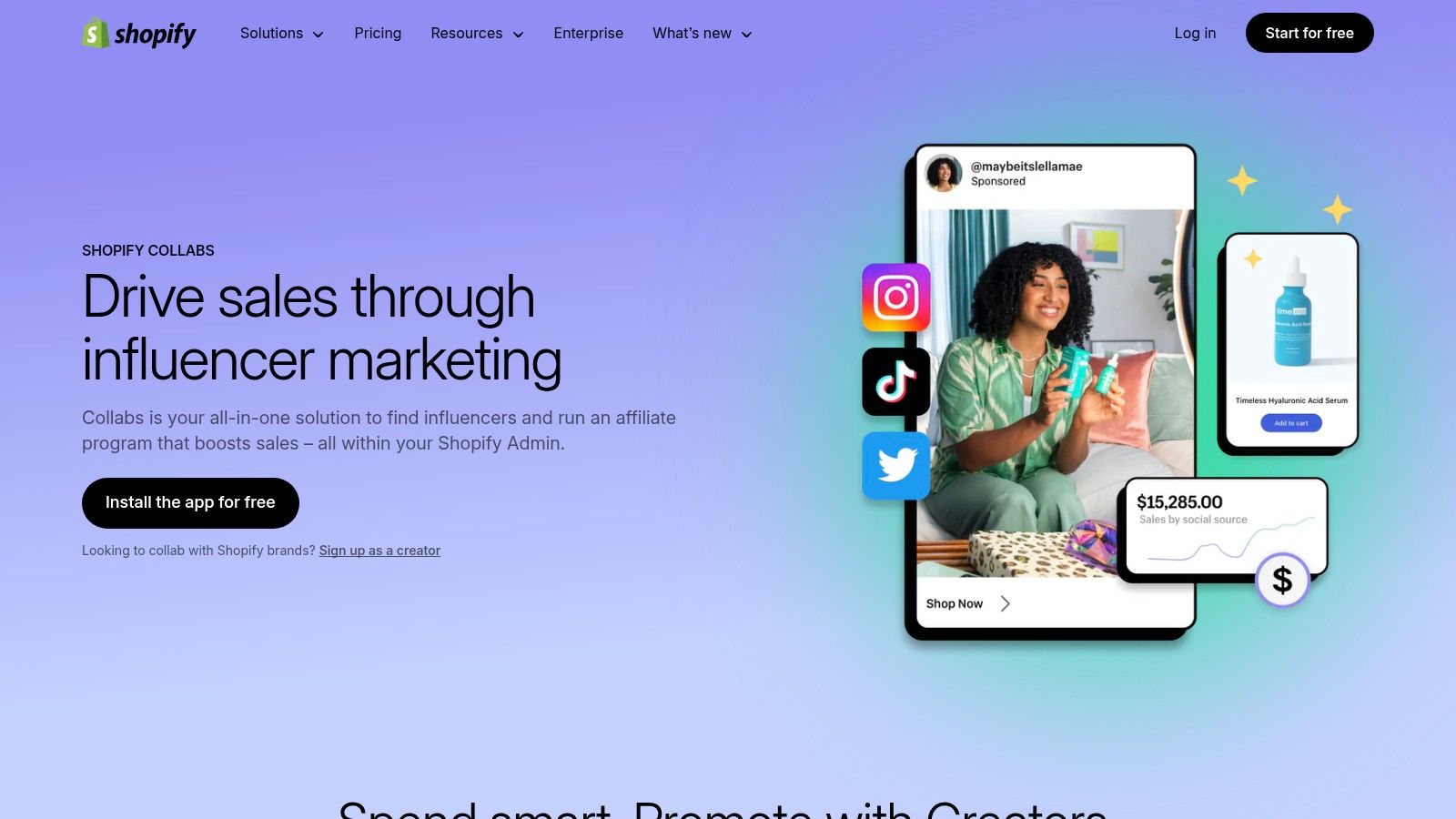
For direct-to-consumer (DTC) brands running on Shopify, Shopify Collabs is the platform’s native solution for building and managing influencer and affiliate partnerships. It directly integrates into the Shopify ecosystem, allowing merchants to connect with creators, manage gifting, track affiliate commissions, and automate payouts without relying on third-party apps. This seamless integration makes it a go-to for brands wanting to scale their creator programs efficiently.
What sets Shopify Collabs apart is its direct link to a brand’s sales data. Unlike external platforms, it offers clear attribution, allowing merchants to see exactly which creators are driving sales through unique discount codes and affiliate links. This streamlines the process of recruiting, managing, and rewarding partners, making it an essential tool for brands that work with influencers to grow their e-commerce presence.
Key Features and Workflow
The platform simplifies every step of the collaboration journey, from discovery to payment, all within the familiar Shopify dashboard. Brands can set up open-access affiliate offers, invite specific creators, and track performance with ease.
- Creator Recruitment: Post a public application page or search the Collabs network to find creators who align with your brand.
- Gifting and Affiliate Management: Easily send products to creators and generate unique discount codes or commission links to track sales.
- Automated Payouts: Handle commission payments directly through your Shopify account, ensuring timely and accurate compensation.
- Shopify Flow Integration: Automate repetitive tasks like sending welcome emails or approving applicants, freeing up time to focus on building relationships.
Pros and Cons
| Pros | Cons |
|---|---|
| Native Shopify Integration: Seamless setup and management directly within your e-commerce platform. | Shopify-Exclusive: Only available to merchants using the Shopify platform, limiting its use for other e-commerce sites. |
| Unified Tracking: Centralizes gifting, affiliate links, and commission tracking in one place. | Variable Creator Quality: The open network means creator sign-up rates and quality can vary. |
| Scalable Automations: Use templates and Shopify Flow to manage a growing creator program efficiently. | Limited Discovery Features: The creator search functionality is less advanced than dedicated influencer marketing platforms. |
Actionable Tip: For brands leveraging Shopify Collabs, understanding effective strategies is crucial. Beyond just setting up an affiliate offer, it’s important to know how to hire influencers and increase Shopify sales by building authentic, long-term partnerships. Check out this detailed Shopify Collabs guide to optimize your program setup for maximum impact.
5. impact.com Partner Marketplace
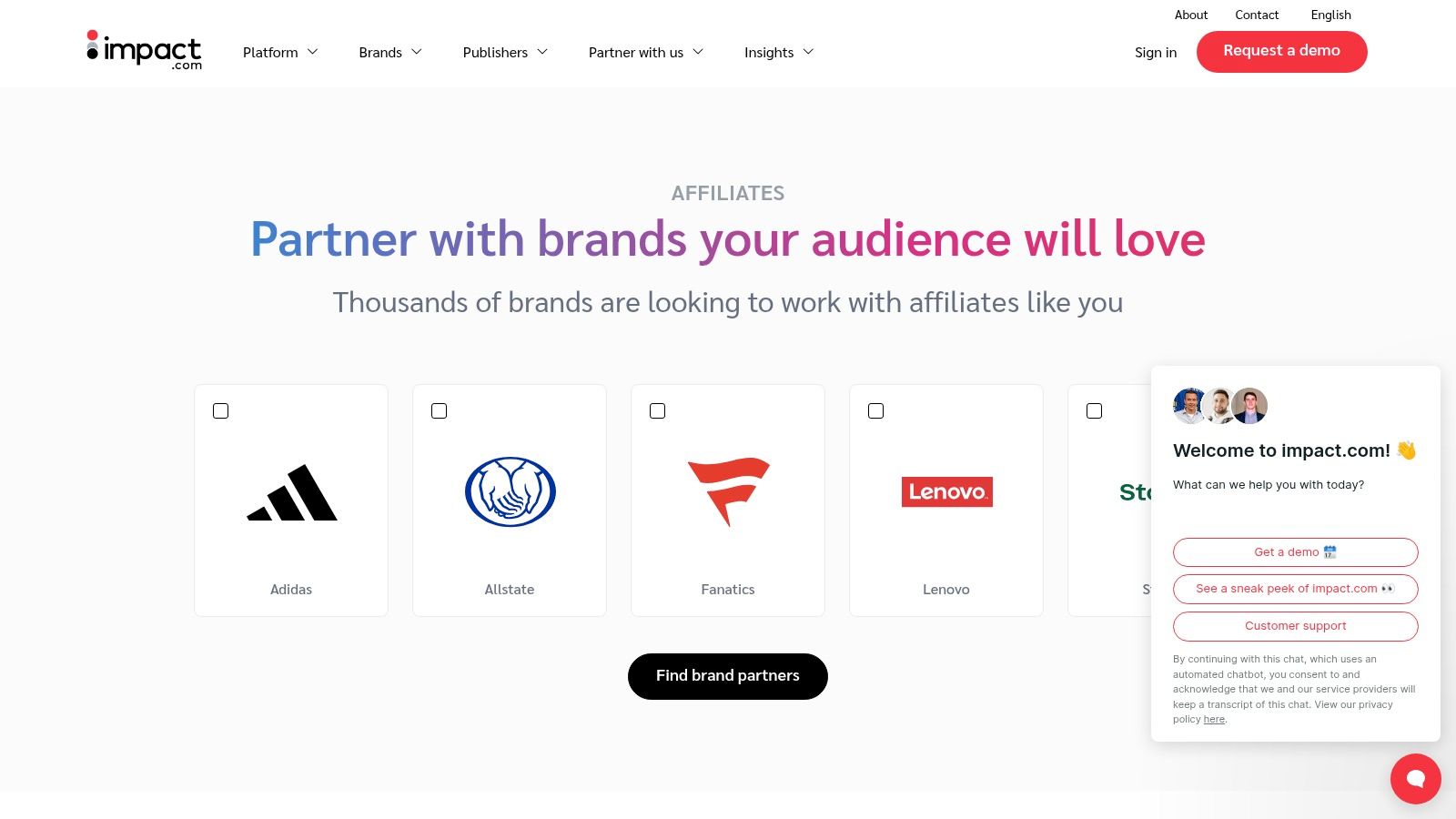
impact.com is one of the largest and most established partnership marketplaces, connecting creators and affiliates with thousands of global brands. It operates less like a one-off campaign platform and more like a hub for building long-term, performance-based affiliate partnerships across sectors like retail, beauty, finance, and travel. For influencers looking for stable, scalable monetization, impact.com is a go-to resource.
What sets impact.com apart is its enterprise-grade infrastructure and sheer scale. Influencers can discover and apply to programs from many of the world's most recognizable brands, all managed through a robust platform known for its reliable tracking and dependable payouts. This makes it ideal for creators who treat their work as a serious business and want a platform that does the same.
Key Features and Workflow
The platform is built to manage the entire lifecycle of affiliate partnerships, from discovery and application to tracking and payment. It gives creators the tools needed to manage a diverse portfolio of brand collaborations.
- Global Advertiser Marketplace: Access and apply to thousands of brand partnership programs in a centralized directory.
- Flexible Payment and Currency Support: Receive payments through various methods and in multiple currencies, a key feature for global creators.
- Centralized Campaign Management: Apply to programs, track link performance, monitor earnings, and get paid all within one dashboard.
- Creator-Specific Listings: The marketplace often curates and suggests campaigns based on your profile, audience, and performance history.
Pros and Cons
| Pros | Cons |
|---|---|
| Broad Brand Access: Features a massive selection of well-known brands, especially in the US. | Variable Program Approval: Getting accepted into brand programs is not always instant and depends on brand criteria. |
| Mature Reporting & Payments: Offers dependable, detailed analytics and a history of reliable payouts. | Complex for Beginners: The interface can be overwhelming for those new to affiliate marketing compared to simpler platforms. |
| Ideal for Long-Term Partnerships: Well-suited for scaling affiliate relationships beyond single campaigns. | Feature Availability: Advanced campaign tools and features can depend on your account type or require add-ons. |
Actionable Tip: When applying to programs on impact.com, treat your profile as a professional resume. Clearly outline your audience demographics, engagement rates, and content niche. Brands often review applications manually, so a detailed and professional profile significantly increases your chances of approval for top-tier programs.
6. CJ (formerly Commission Junction)
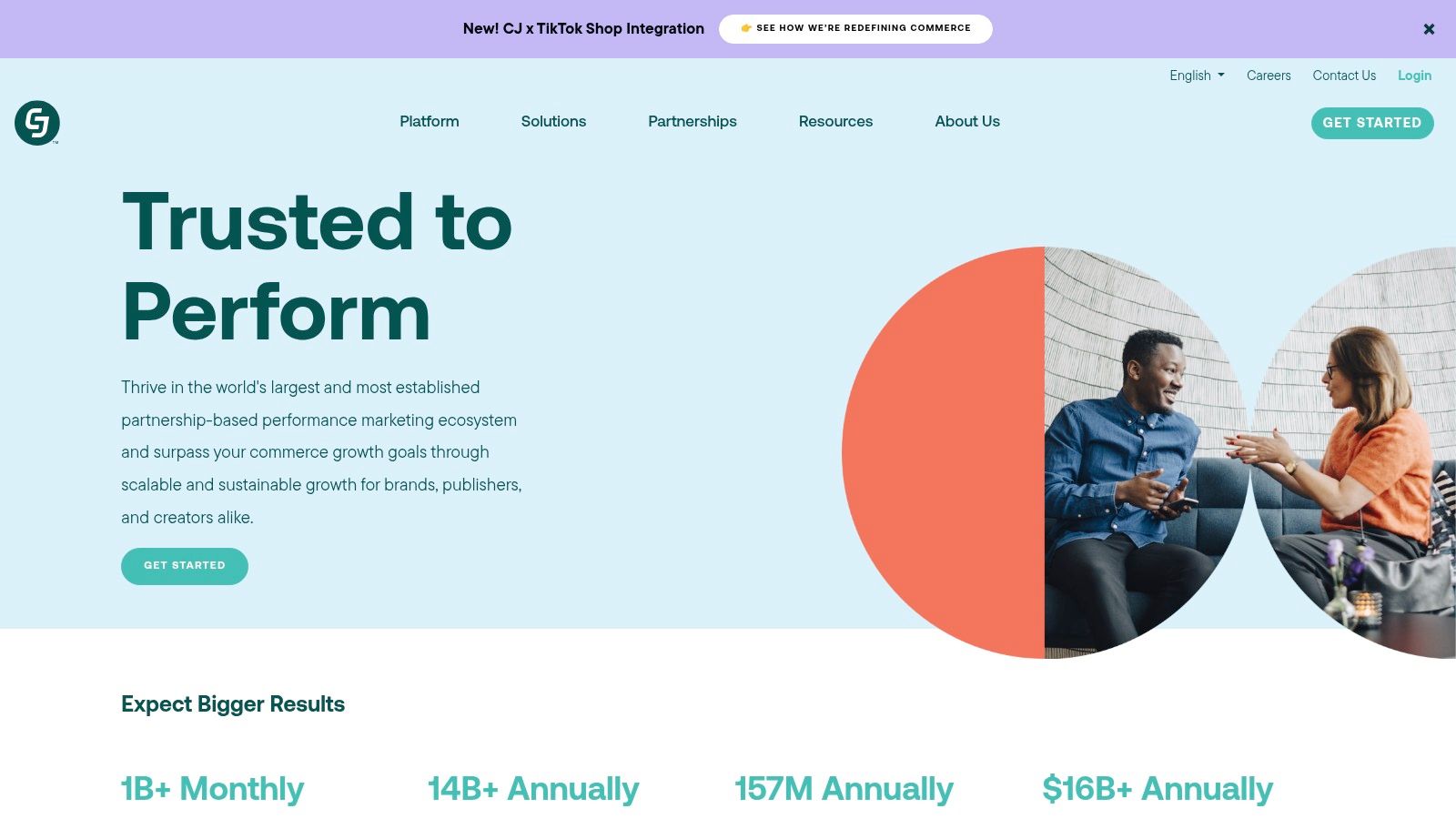
CJ, formerly known as Commission Junction, is one of the world's largest and oldest affiliate marketing networks. It serves as a vast marketplace connecting creators and publishers with thousands of prominent brands, making it an essential platform for influencers looking to monetize their content through performance-based partnerships. Instead of one-off sponsorships, CJ focuses on long-term affiliate relationships where creators earn commissions on sales they drive.
What sets CJ apart is its access to an extensive roster of premium, enterprise-level brands that might otherwise be difficult to partner with directly. The platform provides a robust, reliable infrastructure for tracking links, managing payments, and analyzing performance, offering a more structured approach for serious influencers and brands that work with influencers on a scalable level.
Key Features and Workflow
CJ is built to manage the entire affiliate lifecycle, from discovery to payment. Influencers can join for free and then apply to individual brand programs that fit their niche and audience.
- Advertiser Discovery: Browse a comprehensive directory of brands across virtually every vertical, from retail and travel to finance and tech.
- Advanced Linking Tools: Create deep links that send users to specific product pages, and utilize widgets to build dynamic product showcases.
- Robust Reporting: Access real-time transaction data and detailed analytics to monitor performance, identify top-performing links, and optimize your strategy.
- Content Certification: A program that allows select creators to pre-negotiate terms and get faster access to brand collaborations, streamlining the partnership process.
Pros and Cons
| Pros | Cons |
|---|---|
| Access to Premium Brands: Partner with well-known, global advertisers like Barnes & Noble, Office Depot, and Priceline. | Individual Program Approval: Creators must apply to and be approved by each brand individually, which can be time-consuming. |
| Mature and Reliable Tracking: Industry-leading technology ensures accurate tracking and timely commission payments. | Complex Interface: The platform can feel overwhelming for beginners due to its extensive features and data-rich dashboard. |
| Strong Reputation: As a long-standing network, CJ is trusted by both advertisers and publishers for its professionalism. | Stricter Standards: Many top-tier brands have high standards for traffic and content quality, making it competitive for new influencers. |
Actionable Tip: When applying to brand programs on CJ, don't just submit a generic request. Customize your application by describing your audience, your content strategy, and how you plan to promote the brand. Mentioning specific campaign ideas shows you've done your research and significantly increases your chances of approval.
Website: www.cj.com
7. Collabstr
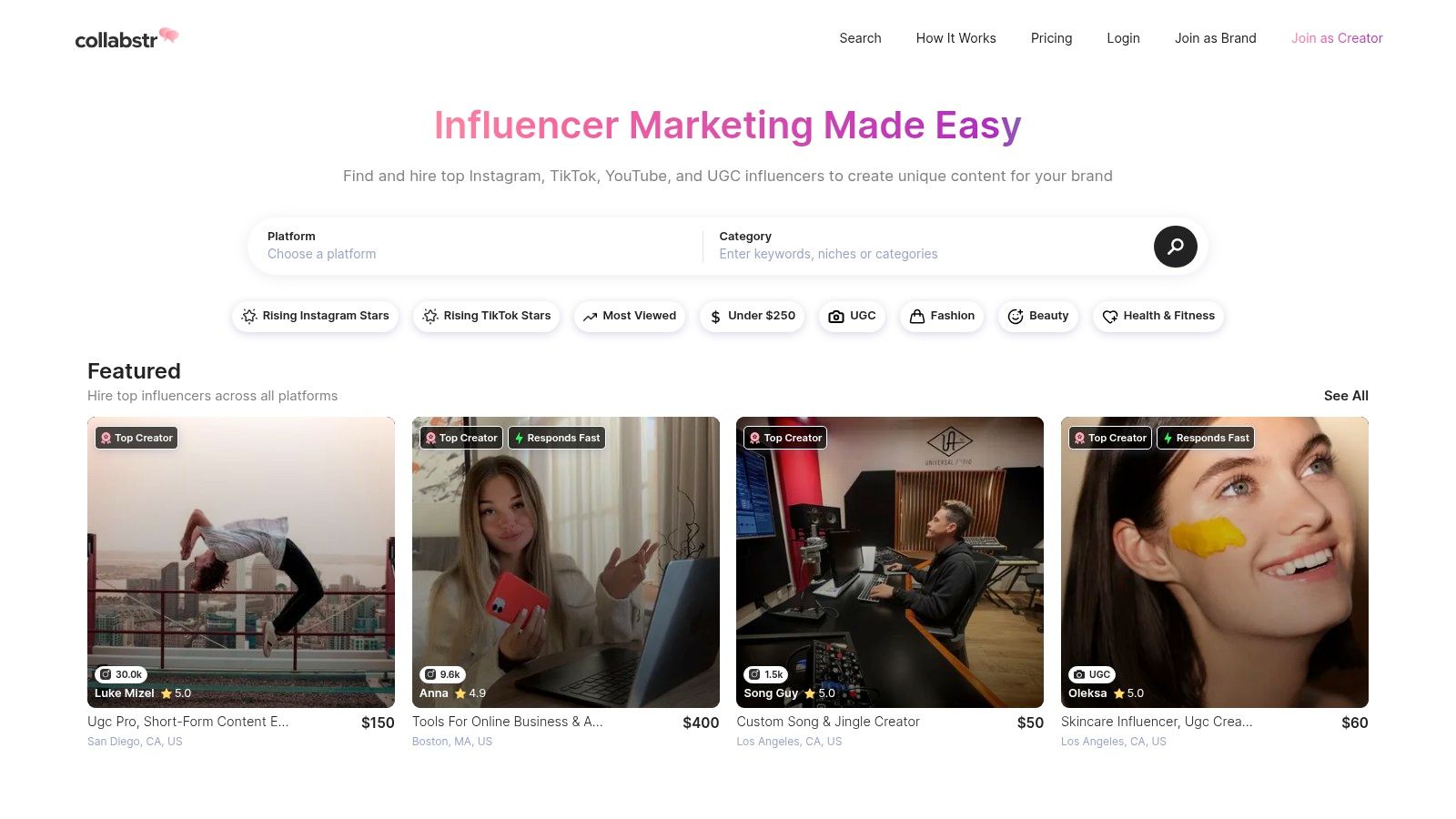
Collabstr is a streamlined, self-serve marketplace connecting brands with influencers across TikTok, Instagram, and YouTube. It functions like an e-commerce store for creator content, where brands can browse creator profiles, see transparent pricing upfront, and purchase sponsored posts or user-generated content (UGC) directly. This model makes it particularly effective for direct-to-consumer and small to medium-sized businesses looking for quick, contract-free collaborations.
What makes Collabstr stand out is its simplicity and speed. Brands can find and hire an influencer in minutes, without lengthy negotiations or subscription commitments. Each creator maintains a public "storefront" detailing their services, rates, and audience metrics, removing the guesswork often associated with influencer outreach and making it easier for brands that work with influencers to budget effectively.
Key Features and Workflow
The platform is designed for fast, transactional collaborations, focusing on getting content produced efficiently. Brands simply find a creator, add their desired service to the cart, and place an order.
- Public Creator Storefronts: Browse thousands of vetted creators with transparent, fixed pricing for different content packages like Instagram Stories, TikTok videos, or UGC bundles.
- Secure Escrow Payments: Funds are held by Collabstr and only released to the creator once the brand approves the submitted content, ensuring protection for both parties.
- In-Platform Management: Handle all communication, brief submissions, content approvals, and payments directly within the Collabstr dashboard.
- No Subscription Required: Brands can start browsing and placing orders without a monthly fee, making it accessible for single campaigns or initial tests.
Pros and Cons
| Pros | Cons |
|---|---|
| Speed and Transparency: Upfront pricing allows for quick sourcing and campaign execution. | Hands-On Logistics: Brands are responsible for coordinating and shipping their own products to creators. |
| No Monthly Subscription: Pay-per-project model is ideal for brands with smaller budgets. | Limited Deep Analytics: Focuses more on the transaction and less on in-depth, long-term campaign analytics. |
| Simple, User-Friendly Workflow: The process is intuitive, especially for one-off or small-batch content orders. | Variable Creator Quality: As an open marketplace, vetting creators for brand fit is still crucial for success. |
Actionable Tip: Use Collabstr to quickly source a high volume of user-generated content for your ad creatives. Instead of ordering a single sponsored post, purchase UGC packages from several micro-influencers. This provides a diverse library of authentic assets you can test in your paid social campaigns to see what resonates most with your audience.
Website: https://collabstr.com
Top 7 Influencer Marketplace Comparison
| Platform | 🔄 Implementation Complexity | ⚡ Resource Requirements | 📊 Expected Outcomes | 💡 Ideal Use Cases | ⭐ Key Advantages |
|---|---|---|---|---|---|
| TikTok Creator Marketplace | Medium - native within TikTok, some access limits | Moderate - requires TikTok-centric content | High - strong targeting & official analytics | TikTok-only campaigns and creator partnerships | Official data/tools, seamless TikTok workflow |
| Instagram’s Creator Marketplace | Medium-High - within Meta Business Suite | Moderate-High - Meta ecosystem navigation needed | High - smooth paid amplification | Instagram-focused campaigns and partnership ads | Native integration, partnership ads capability |
| Amazon Creator Connections | Medium - integration within Amazon Ads Console | Moderate - tied to Amazon seller/advertiser tools | High - measurable conversions on Amazon | Sellers wanting influencer links to Amazon products | Tight Amazon shopping integration, pay-for-performance model |
| Shopify Collabs | Low-Medium - native Shopify app | Low - minimal setup if on Shopify | Moderate - affiliate tracking and payout | DTC brands on Shopify needing affiliate programs | Native Shopify tracking and automated payouts |
| impact.com Partner Marketplace | Medium-High - platform with many features | Moderate-High - managing broad campaigns | High - scalable affiliate partnership growth | Brands seeking diversified affiliate programs | Wide brand variety, mature reporting & payouts |
| CJ (Commission Junction) | Medium-High - onboarding plus individual brand approval | Moderate - requires brand program applications | High - strong tracking and reporting | Publishers/creators targeting premium US brands | Large advertiser base, reliable tracking |
| Collabstr | Low - self-serve with public creator storefronts | Low - small batch orders with upfront pricing | Moderate - fast UGC sourcing | SMBs and DTC brands needing quick creator content | Transparent pricing, no subscription fee, escrow payments |
Building Your Influencer Program: From Discovery to Long-Term Partnership
Navigating the landscape of influencer marketing can feel overwhelming, but as we've seen, the right tools and strategies can transform it into a powerful growth engine for your brand. From the massive reach of the TikTok Creator Marketplace to the affiliate-focused precision of Amazon Creator Connections and the broad network capabilities of impact.com, there's a platform designed for every stage of your brand’s journey. The key is to move beyond simply finding creators and instead focus on building genuine, lasting partnerships.
The success of brands that work with influencers doesn't come from one-off campaigns. It comes from understanding that creators are strategic partners. They offer authentic connections to niche audiences, invaluable creative input, and a direct line to consumer trust. By leveraging these platforms, you gain the data, communication channels, and payment systems needed to manage these relationships efficiently and scale your efforts sustainably.
Key Takeaways for Your Brand
To translate these insights into action, keep these core principles at the forefront of your strategy:
- Define Your Goals First: Before you even log into a marketplace, know what you want to achieve. Is it brand awareness, direct sales, content creation, or market feedback? Your goal will determine which platform and which type of influencer is the best fit. A platform like Shopify Collabs is ideal for driving sales, while TikTok's Creator Marketplace excels at sparking viral awareness.
- Authenticity Over Audience Size: The examples we've explored show that the most impactful collaborations feel natural and genuine. Prioritize creators whose values and audience align with your brand, even if their follower count is smaller. Micro and nano-influencers often deliver higher engagement and a more dedicated community.
- Embrace a Multi-Platform Approach: Your customers aren't on just one platform, and your influencer strategy shouldn't be either. A tool like impact.com or CJ allows you to manage diverse partnerships across blogs, social media, and more, creating a cohesive brand presence wherever your audience spends their time.
Your Actionable Next Steps
With this knowledge, you're ready to build or refine your influencer program. Start by auditing your current needs. Are you a new Amazon seller? Amazon Creator Connections is your logical starting point. Are you a DTC brand looking to scale an established program? A robust platform like impact.com might be the upgrade you need.
Once you’ve selected a tool, dedicate time to exploring its features. Use the discovery filters to find a small, targeted group of potential partners. Don't send a generic mass message; craft a personalized outreach that shows you understand their content and audience. Propose a clear, simple first collaboration to test the waters. From there, you can nurture the successful relationships into the long-term, mutually beneficial partnerships that truly define what it means to be one of the successful brands that work with influencers.
Managing multiple affiliate and creator partnerships across platforms like Amazon, Shopify, and others can become complex. Coral simplifies this by unifying your various affiliate programs into a single, easy-to-use dashboard, providing clear analytics and streamlined payout management. See how you can save time and scale your partnerships by trying Coral today.