How to Find YouTube Influencers to Promote Your Amazon Products
Category: Find youtube influencer
Forget spending a fortune on ads that people just skip. The real secret to growing your Amazon brand on YouTube is to build genuine partnerships with creators. You want to find people whose audience is a perfect match for what you sell. Think of them less as advertisers and more as powerful advocates for your brand.
Why YouTube Is a Goldmine for Amazon Brands
Let's shift our thinking. Instead of one-off ad buys, the goal is to create real relationships with YouTube creators who genuinely love what you're doing. The loyal, engaged communities following niche YouTubers are often far more valuable than any broad, impersonal ad campaign for an Amazon brand.
Even creators with smaller channels—even those with just a few thousand followers—can drive incredibly targeted traffic to your Amazon listings. They've already built the trust, and that authenticity translates directly into sales. Focusing on these long-term, non-transactional relationships is how you scale your brand organically.
The Power of Niche Audiences
The magic isn't in massive subscriber counts; it's in the connection a creator has with their audience.
- Authentic Trust: Niche influencers are viewed as trusted friends, not paid shills. Their recommendations carry weight.
- Targeted Traffic: Imagine a creator who specializes in vegan baking or minimalist camping gear. Their audience is already primed and interested in products just like yours.
When you partner with them, you're tapping into a voice their community already listens to and respects.
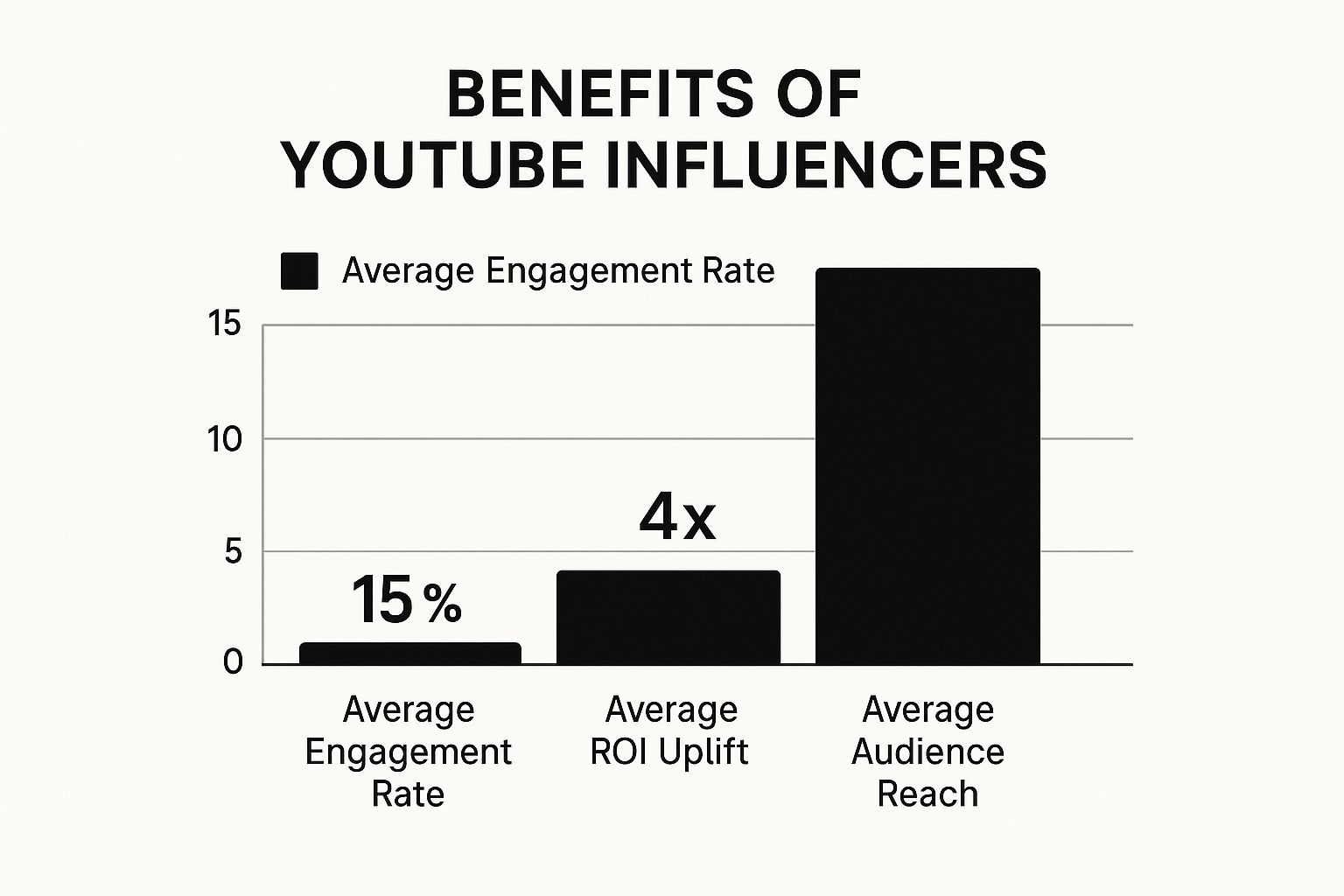
With over 2.53 billion people using YouTube every month, you can be sure your audience is on there, no matter how specific your niche is.
A solid influencer partnership can completely change the game for your Amazon business. A great place to start is by getting a handle on the basics of YouTube affiliate marketing, which is the foundation for building these profitable collaborations.
How to Find the Right Creators in Your Niche
Finding the perfect YouTube partner for your Amazon brand isn't about chasing the biggest names. It's about finding the right ones. Often, your best bet lies with smaller, very targeted influencers—creators with a few thousand dedicated followers who trust them like a friend, not a celebrity.
A great starting point is to simply think like your customer. Head over to YouTube and search for the exact phrases they would. If you're selling hiking gear, try searching "ultralight backpacking essentials" or "best budget camping tents." This immediately surfaces the creators who are already deep in your world.
Building a Real Connection First
Once you’ve got a shortlist of promising channels, resist the urge to jump straight into a sales pitch. The goal here is to build a genuine connection, and that takes a little groundwork.
- Browse and Follow: Subscribe to influencers and content creators in the niche your Amazon brand is selling in.
- Enable Notifications: Turn on notifications so you know when new content is published. This allows you to comment among the first ones and start being recognized by the creator.
- Contribute to the Conversation: For one or two weeks, leave thoughtful comments. Don't just say "Great video!" Ask a relevant question or praise a specific point they made. Your goal is to become a familiar, positive face in their community.
This approach lays a foundation of familiarity, so when you do eventually reach out, you’re not just another cold email in their inbox.
Making the Final Call
After a week or two of consistent interaction, it’s time to look for contact details. You can usually find an email address in their channel’s "About" section. If not, it's easy to find it on their other social media channels, like an Instagram or TikTok profile.
To help you vet these creators, use this simple checklist. It'll help you spot the partners with real potential and steer clear of those who might not be a good fit.
Identifying High-Potential Micro-Influencers
| Evaluation Criteria | What to Look For | Red Flags |
|---|---|---|
| Audience Engagement | Genuine comments and discussions; creator responds to their community. | Generic comments ("nice video!"), low comment-to-view ratio. |
| Content Quality | Clear audio and video; authentic, unscripted presentation style. | Poor production; content feels overly corporate or like a constant ad. |
| Niche Relevance | The creator is a true enthusiast in your product category. | Broad, unfocused content that jumps between unrelated topics. |
| Follower Trust | Comments show followers ask for and act on their recommendations. | A history of promoting questionable products or services. |
Finding someone who feels like a natural extension of your brand is the ultimate goal. The right influencer doesn't just show off your product; they genuinely believe in it. For a deeper dive, check out our complete guide on how to find an Amazon influencer.
Don't Just Pitch—Build a Real Connection First
Think about it from the creator's perspective. Their inbox is flooded with cold pitches every single day. Most of them get ignored. The partnerships that truly succeed—the ones that feel authentic to their audience—start with a real relationship, not a copy-and-pasted template.
So, before you even think about asking for a promotion, your only job is to get on their radar in a natural way. You’ve already spent one to two weeks becoming a familiar face by commenting on their videos. Now it's time to reach out directly.
How to Engage Without Being Annoying
When you approach them, the goal is to be non-transactional. You're establishing a relationship based on the fact that you like their content and think they might genuinely like your product.
- What to avoid: "Great video! I have a product I want you to promote."
- What to do instead: "I've really been enjoying your videos on [topic]. I run an Amazon brand called [Your Brand] and I think you might love our [product]. I'd be happy to send one over for you to try, no strings attached."
See the difference? The second example is a genuine offer, not a demand. You're transitioning from a valued community member to a potential partner.
Your first goal is to establish a conversation. Your second is to make sure they enjoy using your product. Your goal is not to make them post about it—that should be their idea.
How to Write an Outreach Email That Actually Gets a Response
Once you've spent a week or two genuinely engaging with their content, it's time to reach out. The trick is to send a message that feels personal, not like a robotic, transactional email blast.
First things first, you need their business email. You can usually find this in the "About" tab on their YouTube channel. If not, check their other social profiles like Instagram or TikTok; it's often linked there.
Your first message needs to be short and sincere. Start by mentioning a specific video or something you genuinely enjoyed about their work. This simple step proves you’re a real fan and not just another brand trying to get something from them. After that, you can transition to your offer.
Make an Offer They Can't Refuse (Because It's Free)
The heart of your initial outreach is a simple, no-strings-attached offer. Let them know you think they might love your product and you'd be happy to send one over for them to try out, completely free.
Here’s the most important part: explicitly state that you expect absolutely nothing in return. Make it clear you are not asking them to post if they accept the free product.
Your goal isn't to get them to post. It's to start a conversation and get your product into their hands. If they love it, they will likely post about it anyway.
This no-pressure approach is a game-changer. It builds trust right away by showing you're confident in your product's value and you respect their creative integrity. For some great starting points, check out our guide on influencer outreach email templates.
The power of this genuine connection is huge. Think about giants in the beauty world like James Charles, who has over 24 million subscribers. He built his entire brand by showcasing products he truly believes in. An authentic recommendation is marketing gold.
From Positive Feedback to a Profitable Partnership
So, you've sent your product out and now you're holding your breath. The good news? When you've picked the right creator and have a genuinely great product, getting an organic mention is a real possibility. A YouTuber who truly loves what you sent will be eager to show it off to their audience.
This is the moment you've been working towards. When they feature your product, they will probably ask you for a link to share in their content. It’s time to move this from a friendly product seeding to a real, money-making partnership.
Formalize the Relationship with Affiliate Commissions
Instead of just paying for a single shout-out, this is the perfect time to suggest an affiliate marketing deal. It's a classic win-win scenario. The influencer earns a commission on every single sale they generate, and you only pay for actual results. It’s a performance-based model that encourages authentic promotion.
Your first goal was just to start a conversation. Then, you needed them to actually like the product. Now, the final goal is to build a partnership where their success directly translates to your success.
To keep things simple and professional, you can use a tool like Coral to manage the entire process. It makes it easy to automate payments and gives influencers an easy-to-use interface to see the sales they've generated. This level of transparency is key for building trust and turning what could have been a one-off mention into a long-term, profitable relationship for your Amazon brand.
Answering Your Top YouTube Influencer Questions
Getting started with influencer partnerships always brings up a few key questions. If you're an Amazon brand, you're likely wondering about everything from the initial outreach to actually seeing a return on your investment. Let's break down the common hurdles so you can move forward with confidence.
How Much Should I Pay a YouTube Influencer?
This is the big one, but the answer might surprise you. With the relationship-first approach we've been talking about, the initial conversation doesn't even mention payment. You're leading with a genuine offer: a free product, no strings attached.
If the creator genuinely loves your product and features it, that's your green light to talk business. The best starting point? An affiliate commission on sales they drive. This keeps your risk incredibly low and ties compensation directly to performance, which is a win-win for everyone.
What if They Take My Product and Never Post?
It happens, and you need to go into this expecting that it might. It's just part of the process. Remember, your first goal is not to get a post; it's to establish a conversation and get your product into the hands of an expert in your niche.
A great product in the right hands is your best bet for a feature. If they don't post, you've still made a positive contact within your niche. You can send a polite follow-up just to confirm they received the item, but never apply pressure or ask why they haven't posted.
Think of it this way: you've introduced your brand to a key player. That alone has value. Pushing for a mention when they aren't feeling it will only burn that bridge for the future.
How Can I Track Sales From a YouTube Influencer?
This is where a good affiliate program becomes essential. It's the cleanest, most transparent way to see the impact of a collaboration.
Once a creator is on board, you can offer them affiliate marketing fees so that they get a commission for each sale they generate. They'll use a unique, trackable link (like one managed through an affiliate platform) to include in their video description.
To handle this like a pro, dedicated platforms like Coral are the way to go. They automate commission payouts and provide influencers with their own dashboard to see their earnings in real-time. That transparency is huge for building trust and turning a one-off video into a lasting, profitable partnership.
Ready to turn those influencer connections into profitable, long-term partnerships? With Coral, you can easily create and manage your own affiliate program for your Amazon brand. Automate payments, give creators a dashboard to track their success, and build a network of advocates who love your products. Start your free plan with Coral today.