How to Find Amazon Influencer: Your Ultimate Guide
Category: How to find amazon influencer
Finding the right Amazon influencer is so much more than a numbers game. It's about finding a genuine creator who can build a bridge between your product and an audience that's ready to buy. These influencers use their own personalized storefronts and on-site video reviews, creating a seamless path from discovery to checkout. For a complete walkthrough, you can explore our full guide on finding Amazon influencers.
Why the Right Amazon Influencer Changes Everything
Unlike a typical social media personality, an Amazon influencer operates right where the magic happens—directly within the marketplace. This is a crucial distinction. Their recommendations feel less like a sponsored post and more like getting solid advice from a friend who’s an expert shopper.
Their followers aren't just scrolling casually; they're on Amazon with a purpose, already in a buying mindset. This makes these influencers incredibly effective at converting warm interest into actual sales. This is why I always tell brands to focus on the creator's audience trust, not just their follower count. A smaller, tight-knit community that hangs on a creator's every word will always deliver better results than a massive, passive audience.
The Power of Authentic Connection
A real partnership is what drives real revenue. Simple as that. When an influencer genuinely loves and uses your product, their excitement is palpable, and their audience picks up on it immediately. That kind of authenticity builds a level of trust that no traditional ad can ever hope to achieve.
This isn't just a niche strategy; it's a huge part of modern marketing. The influencer marketing industry is projected to hit a staggering $32.55 billion market size this year. What's more, over 80% of marketers agree that it’s a highly effective strategy. Amazon influencers are a particularly potent piece of that puzzle because they connect with shoppers who are already primed to make a purchase.
Your goal should be to move beyond one-off transactions. You want to build a strategy that drives real, sustainable revenue. Finding the right influencer is the foundational first step.
Ultimately, a strong influencer partnership means you aren't just paying for a post. You're investing in a long-term brand advocate. This shifts the entire dynamic from a quick transaction to a collaborative relationship that can pay dividends for your brand for years to come.
Finding Influencers in the Wild: Social Media Scouting
The best influencers for your brand are probably already out there, talking about products just like yours. The trick is knowing how to find them. Your first strategy should be manual research on social media platforms like TikTok, Instagram, and YouTube.
Get specific. Look for hashtags that signal real buying intent, like #amazonfinds, #founditonamazon, and #amazonmusthaves. This is your direct line to creators who are already skilled at sending their followers to Amazon. When you land on a promising profile, don't get distracted by a big follower number. Dig into their comments. Are people having real conversations, or is it just a sea of fire emojis and bot comments?
Let the Algorithms Do the Heavy Lifting
Here’s a simple but powerful trick: once you find an ideal influencer who really fits your brand’s vibe, follow them. This one small action teaches the platform’s algorithm exactly what you’re searching for. Before you know it, social media features that suggest who else you should follow will start populating your feed with a whole network of similar creators. The platform basically starts scouting for you.
This whole process works best when you have a clear goal from the start.
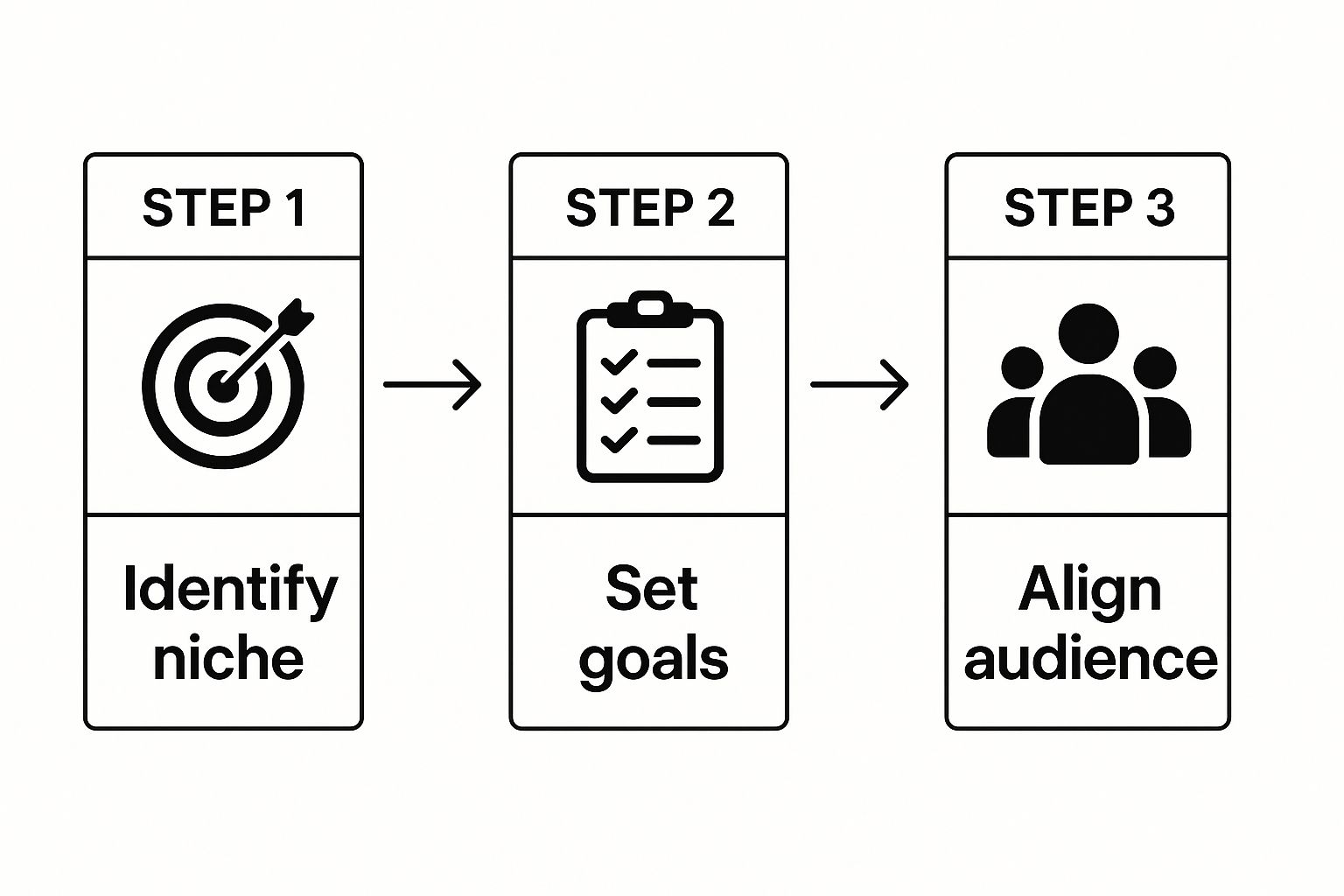
As you can see, you need to know your niche and what you want to achieve before you even start looking. With that clarity, you can begin building a solid list of potential partners.
When you're sorting through that list, remember that follower count is just a vanity metric. To even get into the Amazon Influencer Program, creators need a decent following, but the numbers can be deceiving. I’d much rather work with an influencer who has a 5% engagement rate on a 500-follower account than one with a 0.5% rate on a 5,000-follower account. Real connection beats a massive, passive audience every time. You can read more about why engagement is so crucial on Influencer Hero.
Once you've found someone promising, approach them directly with a DM. Make it personal. This isn't the time for a generic copy-paste message. Mention a specific video or post of theirs you genuinely liked. The goal is to establish a relationship with them, not make it transactional. Focus on the value for them and their followers, not just on what you want from them.
This is how you start a real conversation, not just a transaction. It’s the first step to finding a true brand advocate who is genuinely excited to work with you.
Crafting Outreach That Builds Real Partnerships
The best collaborations start with a real conversation, not a cold, transactional pitch. Once you've zeroed in on a creator you're genuinely excited about, it's time to make contact. But forget the copy-paste templates. Your first DM or email needs to show you've actually done your homework.
Show them you’re a real fan. Mention a specific post or video that resonated with you. Something like, "I loved your recent video on #amazonfinds for small apartments—the way you showcased that storage hack was brilliant!" This simple touch immediately separates you from the dozens of generic messages flooding their inbox every day.
After you've made that personal connection, you can briefly explain why your product is a perfect fit for their audience. Frame it as a partnership that offers genuine value to their followers, not just a sales pitch for your brand.
Moving Beyond Manual Outreach
While personalized DMs are fantastic for kicking things off, they just don't scale. As you grow, you'll need smarter tools to manage your expanding network of creators. This is where dedicated platforms can be a game-changer.
For instance, Amazon’s own Creator Connections platform lets you post campaign briefs to attract talent who are already vetted and active within the Amazon ecosystem. It's a great place to find people already looking for opportunities like yours.
The most successful brands transition from one-off campaigns to building a sustainable network of advocates. This creates a long-term engine for sales and word-of-mouth growth.
Ultimately, your goal is to build an army of affiliates who consistently and authentically promote your products. This is where specialized tools like Coral come in. They are built specifically to help you recruit, manage, and pay your affiliates all from one central dashboard.
For more inspiration on structuring those crucial first messages, these influencer outreach email templates are a fantastic resource.
Scaling Up: How to Find Amazon Creators with the Right Platforms
When you're ready to move beyond hunting for influencers one by one, dedicated platforms are a game-changer. These tools are specifically designed to connect you with creators, but you need to make sure to find the ones that can focus on Amazon.
The most straightforward option is Amazon's own Creator Connections. It's less of a search engine and more of a matchmaking service. You post a detailed campaign brief, and interested creators who are already part of the Amazon Influencer Program apply directly to you. To get the best talent, be upfront and clear about what you need—content requirements, compensation details, and what makes your brand special.
Look for Creators Who Know How to Sell on Amazon
Here’s the thing: not all social media influencers know how to succeed on Amazon. It's a unique ecosystem. You need people who can create content that doesn't just get views, but actually drives sales on the platform.
The Amazon Influencer Program has evolved, giving creators powerful tools to do just that. They can now create shoppable videos that live right on your product detail pages—a placement proven to lift conversion rates. They can also post vertical videos to Amazon’s Inspire Tab, which is fantastic for discovery and getting your products in front of new shoppers.
You can see some great examples of this in action and get a feel for what works by checking out these video content insights.
Your goal is to find creators who are masters of video. They need to be able to grab attention on the Inspire feed and then create compelling content that seals the deal right on your product page.
Once you start finding these creators, you'll need an efficient way to manage them. This is where a platform like Coral comes in. It’s built to help you turn those one-off collaborations into a thriving affiliate army.
Instead of constantly searching for new faces, you can build a sustainable program with advocates who promote your products over the long term. You can set up a simple landing page to onboard creators from Creator Connections or other platforms, making it easy to manage your growing team, track performance, and handle payments all in one spot. To see how it all connects, take a look at our guide on the Amazon Associates app integration.
Building Your Affiliate Army with Smart Tools
Manual outreach and one-off campaigns are fine when you're just getting started. But to really scale, you need to think beyond single sponsored posts. The real magic happens when you build a scalable, long-term program that turns individual creators into a loyal affiliate army.
This is about creating a system that consistently drives traffic and sales, not just a temporary spike. Instead of just paying for one video, you're building a network of advocates who become genuine partners. That’s how you build a sustainable growth engine for your brand on Amazon.
From Individual Creators to a Thriving Network
Making this shift from one-off deals to a full-blown program almost always requires dedicated tools. Discovery platforms are great for finding people, but an affiliate management tool is what you need to actually build and nurture that network over time.
This is where a platform like Coral really shines. It provides the backbone for organizing your entire program. You can quickly set up a branded landing page where creators you find on social media or through Creator Connections can apply to work with you. It instantly makes your outreach feel more professional and streamlines how you bring new talent on board.
The most successful brands don't just find Amazon influencers; they build a community around their products. An organized affiliate program gives creators a clear reason to stick with you and keep promoting your stuff.
With a tool like Coral, everything is in one place. You can manage your entire army from a single dashboard, set custom commission rates for different affiliates, and track performance with pinpoint accuracy using Amazon Attribution. It even automates payments. This frees you up from drowning in spreadsheets so you can focus on what actually matters: building relationships.
This strategy works especially well for recruiting micro and nano-influencers. These smaller creators often have incredibly engaged audiences. By using Coral to find influencers and build an army of affiliates, you’re creating a powerful and resilient marketing channel that fuels your brand’s growth for the long haul.
Answering Your Top Questions About Amazon Influencer Marketing
As you start diving into the world of Amazon influencers, you're bound to have some questions. It's totally normal. Let's walk through some of the most common things brands ask about—from costs and roles to tracking what actually works.
How Much Do I Need to Budget for an Amazon Influencer?
Honestly, there's no single price tag. The cost can swing pretty wildly depending on who you're working with.
You'll find plenty of micro-influencers who are genuinely excited about your product and are happy to work on a commission-only basis. This is a great, low-risk way to get started. They earn a cut of the sales they generate, so you only pay for performance.
But when you start talking to bigger creators—the ones with large, dedicated followings and a proven history of driving sales—they'll often require an upfront flat fee on top of their commission. The price they quote will usually depend on a few things:
- Audience Size: More followers typically means a higher fee.
- Engagement: A creator with a super-engaged community that trusts them is far more valuable than one with millions of passive followers.
- Content Format: A full-blown YouTube review video is a much bigger lift (and costs more) than a quick shout-out in an Instagram Story.
The best approach? Just have an open conversation about expectations from the get-go. You can usually find a payment structure that feels fair to both of you.
What's the Real Difference Between an Amazon Influencer and an Associate?
This is a great question. Think of an Amazon Influencer as a supercharged version of an Amazon Associate. They both earn commissions by promoting products, but the tools they get to use are on different levels.
An Associate gets basic affiliate links. They can drop these on their blog, in an email newsletter, or on social media. It's a simple, effective way to earn from product recommendations.
An Influencer, on the other hand, gets access to a more powerful, integrated toolkit. The star of the show is their custom Amazon Storefront (like amazon.com/shop/influencerhandle). This acts as their personal, curated shop on Amazon, which makes their recommendations feel more official and builds a ton of trust. Influencers can also get featured in high-value spots on Amazon itself, like in product page videos or by hosting Amazon Live streams.
How Can I Actually Track the ROI of My Influencer Campaigns?
You absolutely need to know if your investment is paying off. The most direct way to measure your return on investment (ROI) is by giving each creator their own unique affiliate links or Amazon Attribution tags. This setup allows you to see precisely how many clicks and, more importantly, how many sales each influencer is driving.
One of the best tools for this is the Amazon Brand Referral Bonus program. It actually gives you a bonus—real money back—on sales that come from your off-Amazon marketing. It’s a direct financial incentive to work with influencers and provides a crystal-clear way to measure their impact on your sales.
Before you kick off any campaign, decide what success looks like. Are you chasing sales? Website traffic? Brand awareness? Set your key performance indicators (KPIs) from day one. It's the only way to know what's working so you can double down on it and refine your strategy.
Ready to stop juggling spreadsheets and turn your influencer outreach into a well-oiled affiliate program? Coral is designed to help you recruit, manage, track, and pay your creators all from one place. It's time to build your army of brand advocates. Get started with Coral today.