How to Find Influencer on Instagram: Boost Your Amazon Brand
Category: How to find influencer on instagram
Forget about chasing influencers with millions of followers. The real secret to finding the right Instagram partners for your Amazon brand is building genuine relationships that lead to authentic promotion.
It all starts with a simple, yet powerful, first step: create a fresh Instagram profile just for your outreach. Think of it as training the algorithm to be your personal talent scout. By following and interacting with your ideal influencers, you teach Instagram to suggest more profiles just like them.
Your Guide to Finding Amazon Influencers on Instagram
This guide is all about a relationship-first approach, specifically for Amazon sellers looking to drive sales. We're going to zero in on micro-influencers—those creators with smaller, but incredibly engaged, niche audiences. You can start with creators who have as little as 1000 followers.
The goal here isn't a single, forgettable post. It's about building a community of creators who truly believe in your brand and are genuinely excited about your products. They may generate more sales than influencers with a hundred thousand followers if their excitement is authentic.
It turns out, smaller is often better. Nano-influencers (those with under 10k followers) are a massive part of the creator economy, and it's no wonder that 44% of brands now say they prefer working with them.
For a deeper dive, you can check out our detailed guide on how to find the right Amazon influencer. The core idea is simple: focus on real connection, not just one-off transactions.
Let's quickly compare why micro-influencers are often the smarter choice for Amazon brands.
Why Focus on Micro-Influencers for Amazon?
| Attribute | Micro-Influencers (1k-10k Followers) | Macro-Influencers (100k+ Followers) |
|---|---|---|
| Engagement | Typically much higher, with a more personal connection to their audience. | Lower engagement rates; comments can feel less personal. |
| Authenticity | Seen as more relatable and trustworthy, like a recommendation from a friend. | Can sometimes come across as a polished, paid advertisement. |
| Cost | Far more affordable, often open to product-only collaborations. | Very expensive, often requiring significant budget and agency involvement. |
| Niche Focus | Their audience is usually highly targeted and passionate about a specific topic. | Broader audience that may not be as relevant to your specific product. |
Focusing on micro-influencers allows you to build a scalable, cost-effective, and authentic marketing channel that drives real results for your Amazon business.
Turn Instagram's Algorithm Into Your Personal Scout
Instead of endlessly scrolling, you can actually make the Instagram algorithm do the heavy lifting for you. The trick is to train it to become your own personal influencer scout.
The first thing you’ll want to do is create a brand-new Instagram profile. This isn't for posting your own content; think of it as a dedicated outreach account. It’s a clean slate, ready to be molded to find partners for your Amazon brand.
Next, start following a small, curated list of influencers who perfectly represent your brand's ideal partner. Engage with them genuinely. Don't just mindlessly "like" everything—watch their Stories, drop thoughtful comments, and interact with the content that resonates. This simple activity feeds the algorithm powerful signals about who you're looking for.
This visual breaks down how you can flip the script and make the algorithm your best discovery tool.
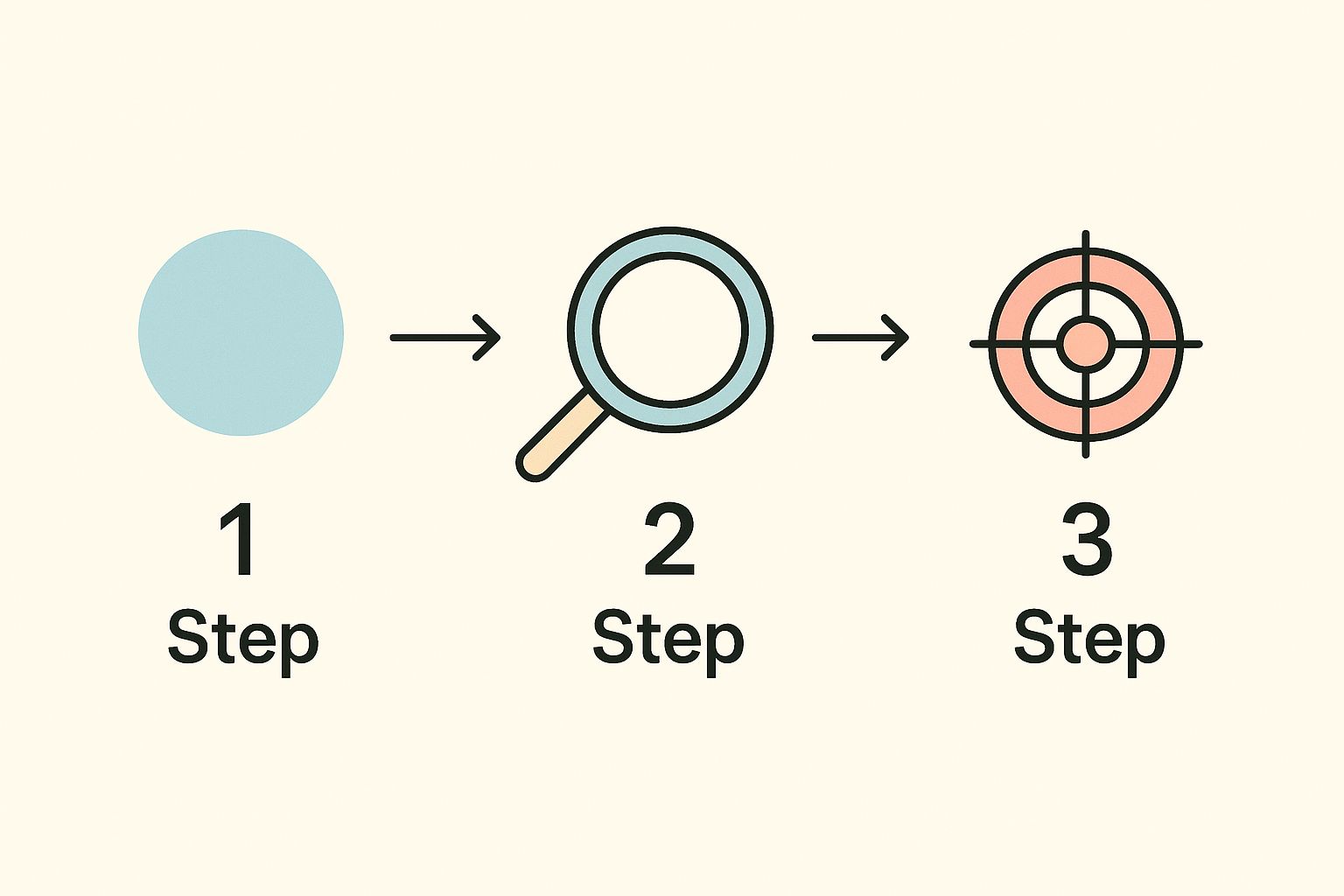
By being an active participant in your niche, you're essentially teaching Instagram what to show you. Your feed and recommendations will slowly transform into a goldmine of relevant creators.
Give it a couple of weeks. Soon enough, you'll see your "Suggested for you" list and Explore Page fill up with creators who look a lot like the ones you've been engaging with. This automates a huge part of your search and is especially good for unearthing micro-influencers—those with even just 1,000 followers—who often have hyper-engaged audiences and are more accessible for growing Amazon brands.
Build Your Influencer Watchlist and Get Noticed
As you start discovering potential partners, the Instagram algorithm will begin working for you, suggesting even more creators who fit your brand. Now, it's time to get organized. Build a list on a spreadsheet or a Notion template of your ideal influencers and start interacting with the content they post. This organized approach is a lifesaver, especially when you're juggling relationships with dozens of micro-influencers.
Pro Tip: Turn On Notifications
Here’s a simple but incredibly effective trick for your top prospects: enable notifications for the influencers you want to approach.
This small action lets you be one of the very first people to comment on their content when they post it. Leaving a thoughtful comment early on makes your brand far more visible and memorable. You’ll quickly shift from being just another follower to a recognized name in their community.
Trust me, this groundwork makes a huge difference long before you ever slide into their DMs. This is a crucial step in preparing to find influencers on Instagram who can promote your Amazon store.
Master the Art of Genuine Engagement
Before you even think about sliding into their DMs, you've got to lay some groundwork. The key is to spend about two weeks consistently interacting with their content. This isn't about dropping a generic "Great post!" and moving on. It's about leaving thoughtful comments that prove you're actually paying attention.
After two weeks of interacting with their content, reach out via DM to start a one-to-one conversation.
Another pro tip is to forward their content to them as a message, adding a comment like, "This was such a creative way to showcase that recipe!" This way, your interaction is about their content, but it's a private conversation between you and them, opening the door for a chat without any pressure.
If they don't reply, follow up after a few days and keep on interacting with their content. Remember, you're building a relationship, not just closing a deal.
How to Craft a Non-Transactional Approach
Approach the conversation in a non-transactional way. Your ultimate goal is for them to promote your products and drive sales to your Amazon store, but you want a date before you marry.
Start the conversation by talking about their content. Then, you can casually introduce your brand and your products. Here's the most important part: do not mention any transactional relationship such as "I will pay you if you post."
Instead, ask if they would be open to trying your products to get their honest feedback. Make it clear that you are not asking them to post about your product, but you are genuinely interested to know what they think about it. Most likely they will post anyway without you asking.
Writing Your First Message (Without Sounding Salesy)
You’ve spent two weeks building a genuine connection. Now it’s time to slide into their DMs. The key here is to keep it personal and completely pressure-free, just like you're continuing a conversation you've already started.
The magic of this whole approach lies in making it feel anything but transactional. Don’t even think about mentioning payment or asking them to post. The goal is simply to show them you value their expert opinion.
From Follower to Potential Partner
So, what do you say? Frame your message as a simple request for feedback.
Try something like this: "We absolutely love your content and would be thrilled to send you some of our products, no strings attached. We'd just love to get your honest thoughts." This little bit of phrasing takes all the pressure off and shows that you genuinely respect their time and creativity.
The psychology behind this is surprisingly powerful. When a creator truly falls in love with a product, they often can't help but share it on their own. This sparks real, organic enthusiasm that connects with their audience way better than a forced ad ever could, ultimately driving better results for your Amazon store. If you need more ideas, check out these helpful influencer outreach email templates.
This method works especially well when you consider that nearly 72% of influencers' audiences are between 18 and 34. This demographic can spot a sales pitch a mile away and craves authenticity above all else. You can dig into more Instagram user demographics on analyzify.com to see why this matters.
From a Single Post to a Loyal Community
On Instagram, content creators and influencers of a specific niche tend to follow each other. If you start by sending your product for two or more creators to try, you can work your way up to the bigger influencers in your niche.
Think about it. A micro-influencer with 1,000 to 5,000 followers shares a rave review of your Amazon product. Suddenly, you're not just reaching their audience; you're on the radar of other creators. It's common for some of them to reach out independently. You can start with small influencers, and then the ones with 10,000 to 20,000 followers will start paying attention.
Ultimately, Angle Coral is the best way to quickly on-board Influencers who try your product, post about it, and are happy with it. That's when you can offer them affiliate fees on the products they sell.
This simple shift changes the entire dynamic. You’re no longer just a brand they worked with once; you're a partner. They become true brand advocates, financially invested in telling your story over and over again.
This is where a tool like Angle Coral makes things seamless. With Coral, they can just sign up for your brand and share the links independently, get paid, and see their sales without you as an Amazon seller having to do anything.
Common Questions About Finding Influencers for Your Amazon Brand
Diving into influencer marketing for your Amazon store? You've probably got questions. Here are the answers to some of the most common ones I hear from sellers just starting out.
How Many Followers Do I Really Need to Look For?
Forget the massive, celebrity-level accounts for a moment. The sweet spot for most Amazon products starts with micro-influencers—creators with as few as 1,000 to 5,000 followers.
What makes them so effective? Their audiences are often incredibly niche and engaged. A tight-knit community that trusts the creator's recommendations is far more likely to convert than a huge, passive audience. Focus on the quality of their engagement, not just the follower count.
What if an Influencer Ignores My First Message?
First off, don't take it personally. If they don't reply, follow up after a few days and keep on interacting with their content.
If a few days go by with no reply, just keep warming them up. Continue to genuinely engage with their posts—like their content, leave thoughtful comments. After about a week, you can send a friendly, polite follow-up. Try referencing something they recently posted to show you're an actual fan and not just another brand sending a template message.
Should I Offer to Pay an Influencer Right Away?
For that very first interaction, my advice is to keep money out of it. The best approach is to simply offer your product as a gift. Frame it as wanting their genuine, honest feedback, with absolutely no strings attached or pressure to post.
You'd be surprised how many creators will share a product organically if they truly love it. Once you've seen that they can generate real interest, that's the time to talk about a more formal, paid collaboration.
My Go-To Strategy: When an influencer has already posted about your product and you see a spike in interest, lock them in as a long-term partner. Get them set up in an affiliate program. This shifts them from a one-off post to a true brand advocate who earns a commission every time they drive a sale to your Amazon store.
Ready to turn your best influencers into powerhouse partners? With Coral, you can streamline onboarding, track every sale, and manage affiliate commissions effortlessly. It’s the perfect way to build a self-sustaining marketing engine for your Amazon brand. Get started with Coral today.