YouTube and Affiliate Marketing Done Right
Category: Youtube and affiliate marketing
If you’re a creator, you’ve probably heard about affiliate marketing. When you pair it with YouTube, you’ve got a seriously effective way to earn an income simply by recommending products you genuinely use and trust.
It all boils down to placing special affiliate links in your video descriptions. When a viewer clicks your link and makes a purchase, you earn a commission. The best part? It doesn't cost your audience a single extra penny. This approach turns your passion into a real, sustainable business built on the trust you’ve already earned with your community.
Why YouTube and Affiliate Marketing Is a Winning Combo
Let's be honest, traditional ads can be annoying. What makes YouTube affiliate marketing so different is that the recommendations are woven right into the helpful content your audience is already watching. This isn't some interruptive pre-roll ad; it's a natural part of the value you provide.
The magic really happens because of video itself. You’re not just telling people about a product; you’re showing them. Think about it. When you unbox that new piece of gear, walk through a software's features, or share how a product solved a problem for you, you're building a connection that a simple blog post just can't match.
A recommendation from a creator you follow feels less like an advertisement and more like getting a great tip from a friend. That personal touch is what really convinces people to buy.
Before we dive deeper, let’s quickly break down why YouTube is such a powerhouse for affiliates.
Why YouTube Is a Game-Changer for Affiliate Marketing
| Benefit | Impact on Affiliate Success |
|---|---|
| Visual Demonstration | Showing a product in action builds immense trust and answers questions before they're even asked. Viewers see real-world results. |
| High Engagement | The YouTube community is active and vocal. Comments and questions let you engage directly with potential buyers and guide them. |
| Evergreen Content | A great review or tutorial can continue generating views and affiliate income for years, unlike a temporary social media post. |
| Search Engine Power | YouTube is the world's second-largest search engine. People actively search for reviews and "how-to" content, leading them directly to your videos. |
| Authentic Connection | Video lets your personality shine through, creating a stronger, more personal bond with your audience that makes your recommendations more impactful. |
As you can see, the platform is practically built to make authentic product recommendations succeed.
The Power of Video in Driving Sales
Video is just incredibly persuasive. It gives you the space to show off a product’s features, explain its benefits, and demonstrate how it works in a way that feels dynamic and real. This builds a ton of confidence and clears up any doubts a viewer might have.
Here are a few classic examples you see all the time because they just work:
- Tutorials: A clear, step-by-step guide on how to use a complex software tool is the perfect setup for an affiliate link to that software.
- Product Reviews: An honest, in-depth review of a new drone—complete with awesome flight footage—gives viewers everything they need to make a decision.
- Comparison Videos: A "Top 3" video comparing different microphones, with actual audio samples, is a huge service to your audience and makes it easy for them to choose and buy through your link.
This strategy is right in line with where the entire industry is headed. The global affiliate marketing world is expected to hit $18.5 billion by 2025, and video is a massive piece of that pie. It’s no secret that video marketing significantly boosts conversion rates, making YouTube an essential channel for anyone serious about affiliate income. If you want to see more data, you can explore these affiliate marketing statistics from Hostinger.
At the end of the day, successful YouTube affiliate marketing isn’t about just pushing products. It's about serving your audience with genuinely helpful content that solves a real problem for them—and your affiliate product is simply the solution you’re recommending.
Finding a Niche That Actually Makes Money

Before you even think about hitting record, you need to ask yourself a tough question: is my passion profitable? A successful YouTube and affiliate marketing channel is built at the intersection of what you genuinely love and what an audience is actively looking for. It’s a delicate balance.
Too many creators jump into a niche that’s either way too broad ("lifestyle") or has no obvious way to make money. The goal isn't just to talk about your interests; it's to become a trusted voice in a specific area where you can naturally recommend products that genuinely help your viewers.
How to Know if Your Niche Has Potential
Don't just go with your gut. You need to use real data to confirm people are actually searching for the content you want to create. This validation step is what separates the creators who get traction from those who don't.
A simple, yet powerful, starting point is right on YouTube. Go to the search bar and start typing keywords related to your idea. Pay close attention to the autocomplete suggestions. These are direct clues into what real users are searching for right now. If you type "drone" and see suggestions like "best drone for beginners" or "drone videography tips," you've found a pocket of demand.
You can also use a tool like Google Trends to see if interest in your topic is steady or just a passing fad. You want to build your channel on solid ground, not on a topic that will be irrelevant in six months.
A profitable niche isn’t just about what you love; it’s about what a specific audience is actively searching for solutions to. Your content becomes the bridge between their problem and an affiliate product’s solution.
Once you’ve got a good feeling about the audience, it's time to see what products you can actually promote.
Choosing the Right Affiliate Partners
This is a huge part of the equation. Picking the right affiliate partners is about more than just grabbing the highest commission. Your credibility is everything. If you promote junk, your audience will see right through it, and you'll lose their trust for good.
Start with what you already know, use, and love. Nothing sells better than authentic enthusiasm for a product that has personally worked for you. From there, you can branch out and explore different kinds of affiliate programs.
Here are a few common routes to take:
- Big Box Retailers: Amazon Associates is the classic example. The commissions might be on the lower side, but the sheer volume of products means you can find something relevant for almost any niche. If you’re reviewing tech, kitchen gadgets, or books, it’s a no-brainer. We actually have a great resource on affiliate marketing for Amazon if you want to dive deeper.
- Affiliate Networks: Think of platforms like ClickBank or ShareASale as middlemen connecting you with thousands of brands. These networks are fantastic for finding new products, and they often offer higher commissions, especially for digital goods like software or online courses.
- Direct Partnerships: As your channel grows, don't be afraid to reach out to brands directly. This can lead to much better deals, custom discount codes for your viewers, and a real relationship with the company you're promoting.
The affiliate industry is bigger than ever, with an estimated 81% of brands running their own programs. Some of the most profitable areas tend to be in education, travel, and beauty, which just goes to show how critical it is to pick the right lane from the very beginning. By carefully choosing your niche and your partners, you're building a solid foundation for everything that comes next.
Creating YouTube Content That Naturally Sells
Here's the secret to making affiliate marketing work on YouTube: stop trying to sell. Seriously. Your real job is to be a trusted resource, the go-to person who solves a problem or answers a question for your audience. People are on YouTube to learn or be entertained, not to watch commercials. The second your video feels like a sales pitch, you’ve lost the very trust that makes this whole thing profitable.
The best affiliate promotions don't even feel like promotions. They feel like a natural, helpful part of the conversation. When you recommend something, it should be the logical conclusion to the problem you've just helped your viewer solve.
Choose Video Formats That Build Trust
Some video formats are just built for this. They let you demonstrate a product's value in a real-world setting, which is infinitely more powerful than just talking about it.
- Honest Product Reviews: I'm talking about truly honest reviews. Go way beyond the spec sheet. Share what you loved, what you didn't, and who the product is actually for. A balanced review, flaws and all, builds way more credibility than a gushing, one-sided promo. For example, if you’re reviewing a new camera, show some raw, unedited footage straight from the device.
- Helpful Tutorials: "How-to" videos are an absolute goldmine for affiliate links. If you're teaching someone to edit a photo in specific software, linking to that software is the most natural next step for them. You’re not selling; you're providing the tool they need to get the job done.
- Comparison Videos: Content like "The Best..." or "Product X vs. Product Y" is incredibly helpful for viewers who are stuck and can't decide. You’re doing the hard work for them, and they'll thank you by using your link when they're ready to buy.
A viewer who walks away from your video having learned something or feeling confident in a decision is far more likely to trust your recommendation. Your first job is to help. The sale is a byproduct of that help.
Weave Promotions into Your Narrative
How you bring up a product makes all the difference. Don't just stop your video and say, "And now, a word from our sponsor..." That’s a commercial break. Instead, make the product part of the story.
Let's say you're filming a "day in the life" vlog as a photographer. You can casually mention the camera bag you rely on and explain why—maybe it's the only one you found that's light enough for a 10-hour shoot. It’s a brief, organic mention backed by a real-world reason. That makes the affiliate link in your description feel like a helpful resource, not a hard sell.
The industry sees this trend, too. By 2025, YouTube is expected to be a massive channel for affiliate marketing, with 60% of top affiliates already calling it their primary platform. What's more, shorter videos (under 10 minutes) that include affiliate links can see engagement jump by 40%. You can discover more YouTube affiliate insights from WeCanTrack to see just how powerful concise content can be.
Nail the Small Details That Matter
You don't need a Hollywood budget, but a little bit of professionalism goes a long way in building trust. When your videos look and sound good, people take your advice more seriously.
Focus on these production basics:
- Clear Audio: This is non-negotiable. Muffled, crackly audio is an instant deal-breaker for viewers. A decent entry-level microphone is one of the smartest investments you can make.
- Good Lighting: People need to see you and the products clearly. You can achieve a professional look with a simple three-point lighting setup or even just a good ring light.
- Stable Footage: Nobody likes watching shaky, handheld video. A tripod is a simple tool that makes your shots look instantly more stable and professional.
Getting these details right signals to your audience that you care about the quality of your content. That respect for their viewing experience translates directly into them respecting—and trusting—your recommendations.
Getting Your Videos Seen: Optimizing for Views and Clicks
You can create the most amazing video in the world, but if nobody finds it, those affiliate links aren't going to get any love. This is where a little know-how in YouTube SEO becomes your secret weapon for a successful youtube and affiliate marketing strategy. It’s all about making sure your videos pop up when the right people are searching.
Remember, YouTube is basically the world's second-biggest search engine. The words you use in your title, description, and tags are the clues you give the algorithm. Get these right, and you'll attract viewers who are genuinely interested and far more likely to click your links and make a purchase.
Finding the Keywords People Actually Use
Keyword research sounds intimidating, but it doesn't have to be. Your best starting point is YouTube's own search bar. Just start typing a broad topic—say, "beginner camera"—and pay close attention to the suggestions that pop up. Phrases like "best beginner camera for vlogging" or "beginner camera settings" aren't just guesses; they're what real people are actively looking for.
These longer, more specific phrases are called long-tail keywords, and they are gold. They usually have less competition and attract a much more targeted viewer. Think about it: someone searching for a specific camera review is much closer to buying than someone just browsing a general topic.
The real goal here is to get inside your audience's head. Find the exact words they use when they're stuck, and create the video that provides the perfect answer. That’s how you build trust and earn that eventual click.
Once you’ve locked in your main keyword, you'll want to sprinkle it naturally into your video's title and description. This tells both YouTube and your viewers that your video is exactly what they're looking for.
The Art of the Clickable Title and Thumbnail
Your title and thumbnail are your video's billboard. They have to work together to stop the scroll and make someone choose your video over all the others. A great thumbnail makes a visual promise, and the title confirms it.
For thumbnails, simple and bold wins. Use bright, high-contrast colors, text that's easy to read even on a tiny phone screen, and whenever it makes sense, include a human face showing some emotion. A cluttered thumbnail is a skipped thumbnail.
Your title needs just as much attention. Of course, you’ll include your keyword, but you also need to spark some curiosity or promise a clear benefit. Instead of a boring "Canon M50 Review," try something with more punch, like "Canon M50 Review: Is It Still Worth Buying in 2024?"
Key things to remember for a great title:
- Lead with your keyword: Helps with search ranking.
- Add a hook: What's in it for the viewer? Why should they care?
- Use numbers: "5 Mistakes to Avoid" or "Top 3 Gadgets" almost always grab attention.
- Keep it punchy: Make sure the most important info isn't cut off on mobile view.
When you nail these elements, you’re not just appeasing the algorithm. You're connecting with a real person, inviting them to watch your content and, hopefully, check out the awesome products you recommend.
Tracking Your Results and Scaling Your Income
Making great videos is just the starting point. If you really want to succeed with YouTube affiliate marketing, you have to get comfortable with your data. Flying blind is a surefire way to waste time and effort. The real magic happens when you connect the dots between your YouTube performance and your affiliate sales.
When you dig into the numbers, you stop guessing and start knowing. You'll see exactly which videos are driving sales, what products your audience actually loves, and where your most valuable viewers are coming from. This isn't just about collecting data; it's about gaining the clarity you need to double down on what works and refine everything else.
Connecting Your Analytics
First things first, you need to become familiar with two key data sources: your YouTube Analytics and your affiliate program's dashboard. Each one tells a different part of the story.
YouTube Analytics shows you everything about viewer behavior. You'll want to keep a close eye on your video's Click-Through Rate (CTR), Audience Retention, and especially the Traffic Sources report. This report tells you how people found your video—was it through YouTube search, suggested videos, or an external site? It’s a goldmine of information.
Affiliate Dashboard is where the money is. Here, you'll track the hard numbers: clicks on your affiliate links, your conversion rate (the percentage of clicks that become sales), and of course, your total earnings.
A video with high watch time that also gets a ton of affiliate clicks? That’s your winning formula right there.
Essential Metrics for YouTube Affiliate Success
To truly understand performance, you need to look at KPIs from both platforms together. This table breaks down the most important metrics to watch.
| Metric | Platform | Why It Matters |
|---|---|---|
| Click-Through Rate (CTR) | YouTube Analytics | Shows how compelling your title and thumbnail are. A low CTR means people aren't even clicking to watch. |
| Audience Retention | YouTube Analytics | Reveals how engaging your video is. If people drop off before you mention the product, you won't get clicks. |
| Traffic Sources | YouTube Analytics | Tells you where your audience is coming from. This helps you understand viewer intent and optimize for discovery. |
| Link Clicks | Affiliate Dashboard | The most direct measure of interest. It tells you how many people were intrigued enough by your pitch to check out the product. |
| Conversion Rate | Affiliate Dashboard | The ultimate success metric. It shows the percentage of clicks that resulted in a sale, indicating the quality of your traffic. |
| Earnings Per Click (EPC) | Affiliate Dashboard | A quick way to see which links are the most profitable. It helps you prioritize your promotions. |
By monitoring these metrics, you can spot trends, identify your strongest content, and make data-backed decisions instead of just guessing what your audience wants.
Interpreting Your Data for Growth
Don't just stare at the numbers; ask what they’re trying to tell you. Let's say a video gets a ton of views but almost no affiliate clicks. What happened? Maybe your call-to-action was weak, or you buried the link too deep in the description.
The goal isn't just to gather data, but to turn that data into actionable insights. Ask "why" behind every number. Why did this video convert at 8% while another only converted at 2%? The answer is your roadmap to more income.
This chart is a perfect example of how clicks, conversions, and revenue are all connected.
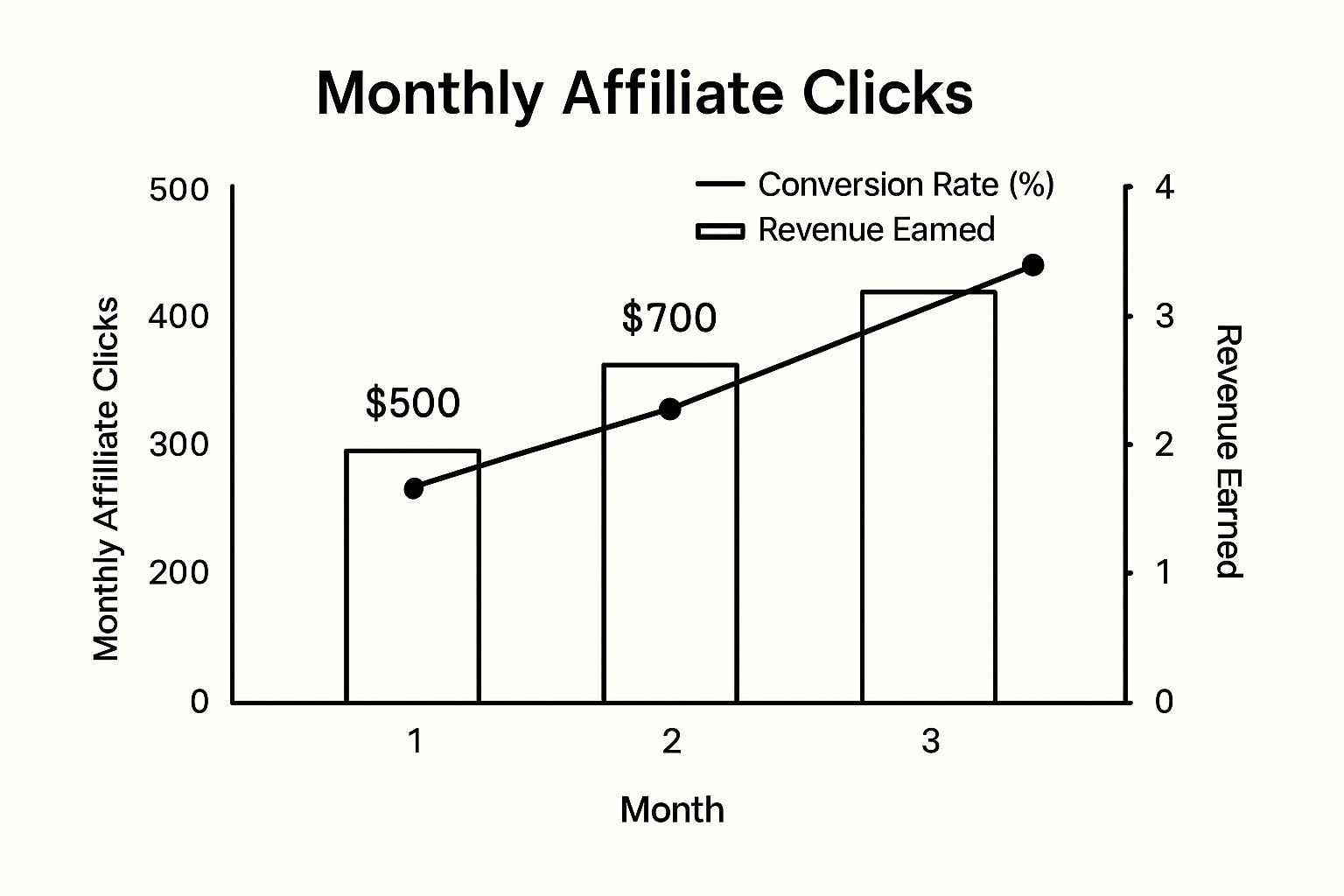
Notice how even with fewer clicks in the second month, a stronger conversion rate led to more revenue. This proves that attracting the right audience is far more important than just getting more clicks.
Smart Strategies to Scale Your Income
Once you’ve identified your top-performing videos and products, it's time to scale up. This goes way beyond just dropping a few more links in your video descriptions.
Build Simple Landing Pages For your absolute best-selling products, consider creating a dedicated landing page. Instead of sending viewers straight to a cluttered product page, you guide them to a focused page that you control. This page can highlight the product's benefits, feature your review, and have one clear, powerful call-to-action. It's a simple step that can give your conversion rates a serious boost.
Diversify Your Partners Never put all your eggs in one basket. Relying on a single affiliate program leaves you vulnerable if they suddenly change their commission rates or terms. Branch out. Look for other affiliate networks or even direct partnerships with brands to create more stable and resilient income streams. For a closer look at this, check out our complete guide to YouTube affiliate marketing.
Promote Across Platforms Your best YouTube videos are valuable assets, so treat them that way! Share your top-performing affiliate content everywhere—on your other social media channels, in your email newsletter, or even embedded in a blog post. This gives your best work a longer shelf life and drives new viewers and customers back to your most profitable videos.
Common Questions About YouTube Affiliate Marketing
Diving into YouTube and affiliate marketing for the first time usually sparks a few key questions. Getting these sorted out early on can save you a ton of guesswork and help you build your strategy on a solid foundation.
Let's start with the big one: disclosure. Do you really have to tell people you're using affiliate links? Yes, you absolutely must disclose it. Regulatory bodies like the Federal Trade Commission (FTC) in the United States have clear guidelines on this. They require you to be upfront with your audience whenever you could earn a commission from their purchases.
But this isn't just about checking a legal box—it’s about trust. Your audience will always appreciate the honesty.
A quick verbal heads-up at the start of your video, like, "Hey everyone, just a quick note that the links in the description are affiliate links," is a great way to do it. You should also pop a written disclaimer right into your video description. This kind of transparency builds credibility and makes your relationship with your viewers that much stronger.
Do I Need a Huge Audience to Start?
This is probably the biggest myth that stops people from even trying. The answer is a hard no. You don't need a massive subscriber count to make affiliate marketing work. In fact, I've seen smaller channels with super-engaged, niche audiences outperform huge ones time and time again.
It makes sense when you think about it. A channel with 2,000 subscribers who hang on your every word about a specific topic is way more valuable than one with 100,000 subscribers who barely pay attention. Brands and affiliate programs are far more interested in your engagement quality than your vanity metrics.
Your goal isn't to reach everyone; it's to reach the right people. A loyal, niche community will always be more profitable than a massive, disengaged one. Start building trust with the audience you have, and the income will follow.
Another common question is all about the money: how and when do you actually get paid? This really depends on the affiliate program you join.
- Payment Thresholds: Most programs won't cut you a check until you've earned a certain amount, like $50 or $100.
- Payment Cycles: Payouts are usually monthly, but often on a Net-30 or Net-60 schedule. This just means you'll get paid 30 or 60 days after the end of the month in which you made the sales.
- Cookie Duration: This is crucial. It's the timeframe after a viewer clicks your link during which you get credit for a sale. This can be as short as 24 hours for Amazon or as long as 30-90 days for other programs.
For example, it’s worth taking the time to understand the Amazon affiliate marketing program, as its 24-hour cookie window and different commission rates are a bit unique. The bottom line? Always read the terms and conditions for every single program you join.
Ready to manage your affiliate partnerships like a pro? Coral provides the essential tools to recruit, track, and pay your creators, all in one place. Turn your best customers into your most powerful advocates by building an affiliate program that scales with your brand. Start for free with Coral today