Your Guide to Affiliate Email Marketing: Answering Your Top Questions
Category: Affiliate email marketing
Imagine having a direct line to your most loyal followers—an audience that wants to hear from you and trusts your recommendations. That's what affiliate email marketing offers. This guide answers your most pressing questions about how to do it right, from navigating legal disclosures to automating your campaigns for maximum ROI, so you can sidestep common pitfalls and turn your email list into a powerful revenue engine.
Why Affiliate Email Marketing Is a Game-Changer

Think about it: you’re not just shouting into the void of social media. You're sending carefully chosen product ideas straight to the inboxes of people who asked to be there. This isn't just marketing; it's a conversation with a high-intent audience, making it an incredibly powerful way to drive real revenue.
And the numbers back this up. The global email marketing scene is on track to be worth a staggering $36.3 billion by 2033, and open rates are still solid at an average of 35.63%. It's a clear signal that email is here to stay as a core part of any smart marketing plan. You can see more details in this breakdown of email marketing statistics from Hostinger.
Building a Program That Actually Works
But sending a few links here and there won't cut it. To really succeed, you need a solid system for compliance, tracking, and managing your partnerships.
This means getting a handle on a few key things:
- Sending affiliate emails legally with all the right disclosures.
- Tracking performance accurately so you know what's really working.
- Automating your campaigns to grow your program without burning out.
The real goal here is to build something sustainable. A program that not only brings in sales but also strengthens the trust you have with your subscribers. That’s how you turn your email list into your single most valuable affiliate asset.
This is where platforms like Coral come in. They take the headache out of the technical side, helping you run a successful affiliate program for your ecommerce brand by handling things like link generation and putting all your performance data in one place. When the tech is streamlined, you can get back to what you do best: building great relationships and creating content that converts.
Q&A: Your Affiliate Email Marketing Questions Answered
Let's dive into the questions that brand managers and creators ask most often.
How do I legally send affiliate emails?
The short answer: Be upfront and honest.
The Federal Trade Commission (FTC) has clear rules about this, and it all comes down to transparency. You must clearly disclose that you have a financial relationship with the brands you're promoting. This isn't just a suggestion—it's the law.
Don't hide your disclosure in tiny font in the footer where no one will see it. It needs to be clear and conspicuous, ideally placed close to the affiliate links themselves. Something simple and direct works best:
- "Just so you know, the links in this email are affiliate links. It means I might earn a small commission if you buy something, at no extra cost to you. I only recommend products I genuinely use and love!"
- "Quick heads-up: This email contains affiliate links. Your support helps me keep creating helpful content like this."
This approach builds trust with your audience and keeps you compliant. A clear disclosure doesn't scare subscribers away—it proves you're an honest resource they can rely on. For more ideas on how to connect with partners, check out these super useful influencer outreach email templates.
What's the best way to track affiliate email performance?
If you can't measure it, you can’t improve it. Open rates and click-throughs are nice, but they don’t tell the whole story. The metrics that truly matter are your conversion rate and Earnings Per Click (EPC). These are the numbers that tell you if your campaigns are actually generating revenue.
For brands selling on Amazon, the real challenge is connecting a click in an email to a purchase on the Amazon platform. This is exactly what Amazon Attribution was built for.
However, trying to manage this manually by creating unique tracking links in a spreadsheet for every affiliate and campaign is a recipe for disaster. It's slow, prone to human error, and simply doesn't scale. Our guide on affiliate link tracking goes into more detail on why this is so critical.
The best way to track performance is with an automated system that eliminates manual work and provides a clear, real-time view of your campaign ROI. It cuts out tedious tasks and gives you the accurate insights needed to scale your program with confidence.
Take a look at how different the two approaches are.
Comparing Affiliate Email Tracking Methods
| Feature | Manual Tracking | Integrated Platform (like Coral) |
|---|---|---|
| Efficiency | Highly time-consuming; requires constant manual input. | Automated and instant; links are generated on the fly. |
| Accuracy | Prone to human error (copy-paste mistakes, typos). | High accuracy; eliminates manual errors. |
| Scalability | Becomes unmanageable with more than a few affiliates. | Easily scales to hundreds or thousands of partners. |
The difference is night and day. An integrated system doesn't just save time—it provides the reliable foundation needed to actually grow your program.
Can I automate affiliate email campaigns?
Yes, and you absolutely should if you want to scale. Automation is what turns your affiliate email marketing from a manual task into a consistent, self-running revenue machine. You can build a system that talks to your audience and drives affiliate sales 24/7, without you having to hit "send" every single time.
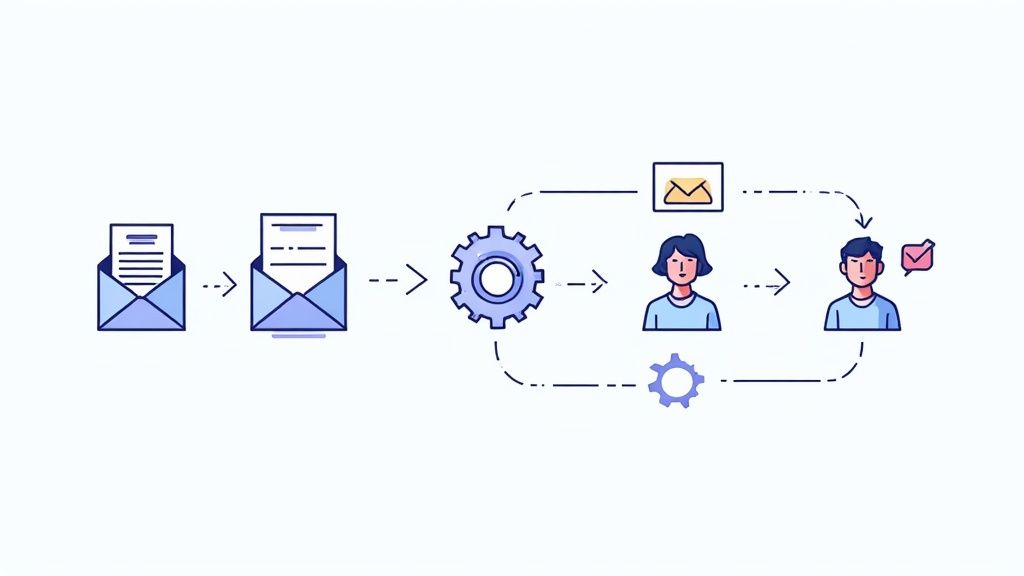
Here are a few powerful automated workflows you can set up:
- The Welcome Drip: A series of emails to onboard new subscribers, building trust before introducing your go-to affiliate products.
- The Post-Purchase Helper: After someone buys one of your own products, you can send an email suggesting complementary affiliate products that make their original purchase even better.
- Smart Segmentation: Automatically tag subscribers based on the links they click. This lets you send them affiliate offers they’re genuinely interested in, which always performs better.
If you want to get into the nitty-gritty of how these continuous processes work, check out this excellent guide on automated email marketing campaigns.
How does Coral make affiliate email marketing easier than traditional methods?
Simply put, Coral takes all the messy, manual work out of the equation and puts it into one clean, easy-to-use platform. It directly addresses the biggest challenges of traditional affiliate email marketing.
Here’s how Coral simplifies the entire process and maximizes your ROI:
- Automated Tracking: Forget about spending hours fumbling with spreadsheets to generate hundreds of Amazon Attribution links. Coral automates the entire link creation process for every creator and every campaign, eliminating human error and saving you countless hours.
- Simplified Compliance: While Coral doesn't provide legal advice, it promotes best practices by creating a transparent system where commission structures and performance are clear. This helps foster the trust needed for affiliates to properly disclose their relationship with you. A solid affiliate agreement template is also key.
- Centralized Dashboard: Coral gives you a single dashboard where you can see clicks, conversions, and revenue as they happen. This cuts out the guesswork and provides the clear, reliable data you need to make smart decisions and grow your affiliate program.
In short, Coral transforms a complex, time-consuming process into a streamlined, scalable revenue channel.
Setting Your Affiliates Up for Success
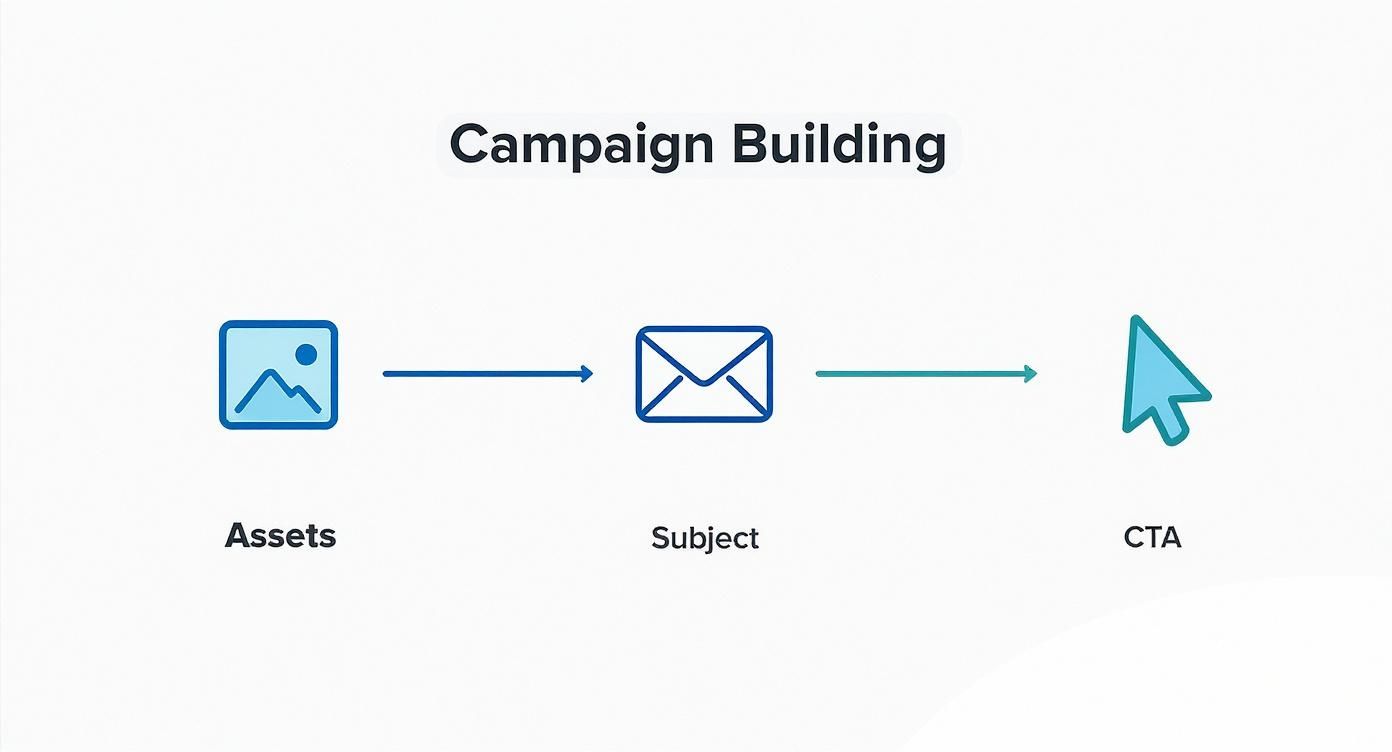
To get your partners genuinely excited to promote you, you need to be crystal clear about their commissions from day one. But beyond the money, you need to arm them with assets that make shouting about your products a no-brainer.
Here’s what I mean:
- High-Resolution Images and Banners: Give them a folder full of professional product photos, lifestyle shots, and ready-to-use banners.
- Pre-Written Email Copy: Don't just give them one email. Offer a few different angles and copy variations they can tweak to match their own voice.
- Ready-to-Go Templates: Share HTML or easy-to-use drag-and-drop templates that plug right into the most popular email platforms.
The easier you make it for affiliates to promote you, the more they will. Your job is to eliminate every single roadblock between their audience and your product.
This isn’t just a nice-to-have; it's a must. Email is a powerhouse for top affiliates. In fact, affiliates who jump on email marketing see a 66.4% higher conversion rate than those who stick to other channels. You can discover more insights about these affiliate statistics to see just how big of a deal this is.
Of course, all this planning is for nothing if you don't have the right people on your team. If you haven't started recruiting yet, our guide offers some real-world advice on how to recruit affiliates who are a perfect fit for your brand. Get them the right assets and clear incentives, and you’re building the foundation for a seriously profitable partnership.
Ready to stop juggling spreadsheets and start scaling your affiliate program? Coral centralizes your affiliate management, automates tracking, and gives you the clarity to grow. Get started with Coral today.