How to Recruit Affiliates That Actually Drive Sales
Category: How to recruit affiliates
Before you even think about outreach, you need to build an affiliate program that people are genuinely excited to join. This isn't about just throwing up a sign-up form; it's about creating an offer so compelling that the best partners in your niche see it as a no-brainer.
This foundational work is what separates the programs that attract top-tier creators from those that just… exist.
Build a Program That Top Affiliates Want to Join
You can’t just launch a program and expect high-quality partners to line up. The best recruitment strategies start with a solid foundation—one that makes a partnership with your brand a clear and compelling choice. It’s less about a hard sell and more about creating a genuine opportunity that aligns with a creator’s audience and goals.
The first step is getting crystal clear on who your ideal partner is. Are you trying to attract:
- Niche bloggers who write those super in-depth product reviews?
- YouTubers with a loyal following who create tutorials or unboxing videos?
- Social media influencers who can showcase your product authentically on Instagram or TikTok?
Knowing exactly who you're targeting helps you tailor every single part of your program to attract them specifically.
Design a Competitive and Clear Offer
Your commission structure and cookie policy are the first things a potential partner will look at. A competitive rate isn't just a number; it's a signal that you value their work. While what's "competitive" varies by industry, transparency and fairness are universal.
Likewise, a longer cookie duration—think 60 or 90 days—is a massive incentive. It tells the affiliate you're rewarding them for their influence throughout the entire customer journey, not just for that final click. For a great real-world example of how to present this information clearly, check out Naturalwrite's affiliate page.
This whole process, from identifying your ideal partner to building a program that wins them over, is a strategic flow.
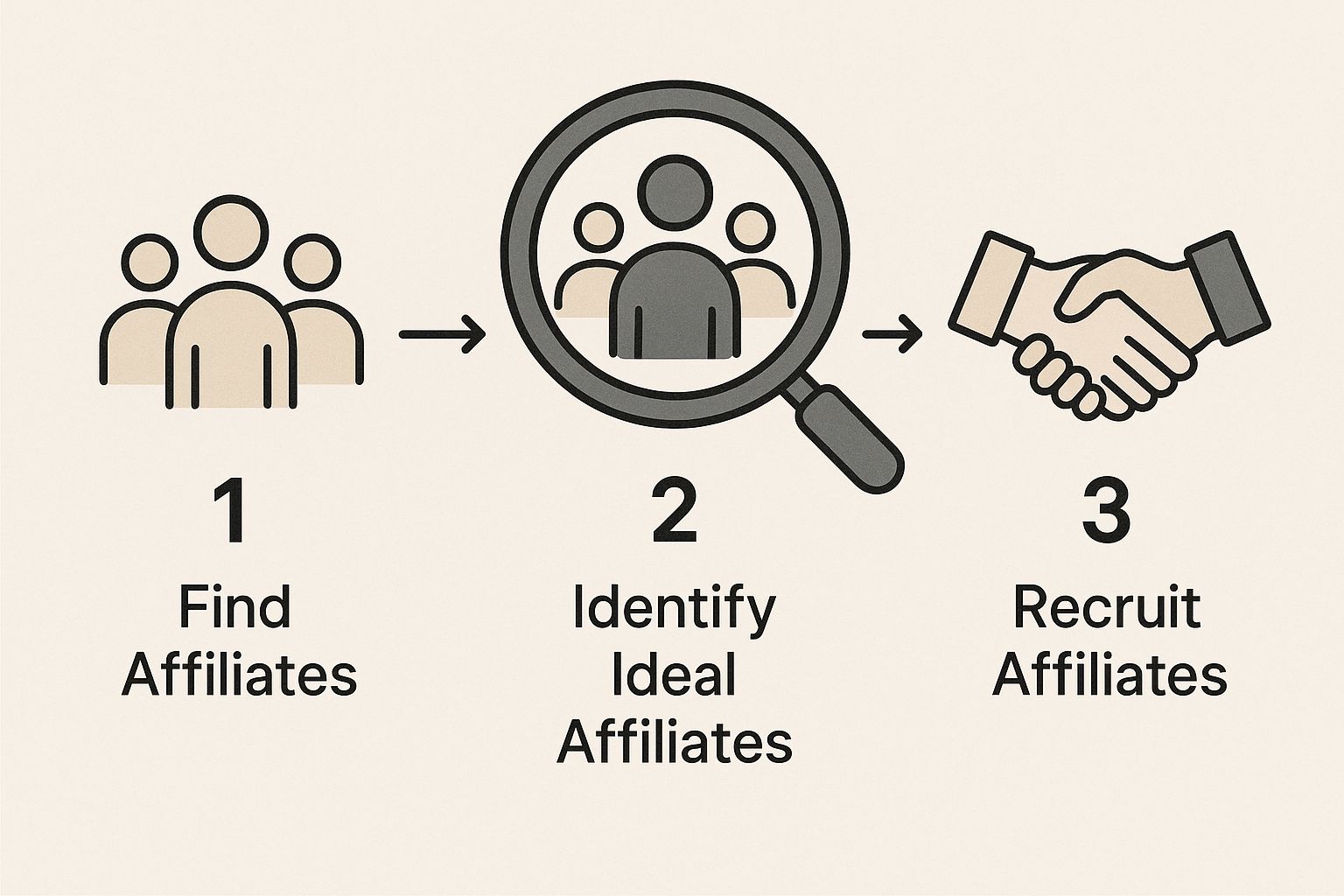
As you can see, understanding who you want to attract comes before you build the program itself. This way, you’re creating something they actually want.
Your Most Critical Recruitment Tool
A polished, dedicated affiliate landing page is absolutely non-negotiable. This is your main sales pitch to potential partners. It needs to clearly spell out the benefits, commission rates, payment terms, and ideally, provide a library of ready-to-use marketing assets.
To stand out, you need to look professional. With the global affiliate marketing industry projected to hit $31.7 billion by 2031, the competition is fierce. In fact, over 80% of advertisers already have affiliate programs. A dedicated landing page is your ticket to being taken seriously. You can dive deeper into these trends in our guide to affiliate marketing for ecommerce.
To truly attract the best, your offer needs to be more than just a commission rate. It’s a complete package. Here’s a breakdown of what a genuinely irresistible offer looks like.
Your Irresistible Affiliate Program Offer
| Component | Why It Matters for Recruitment | What Top Programs Offer |
|---|---|---|
| Competitive Commission | It’s the headline. This is the first thing partners check to see if the opportunity is worthwhile. | 15-30% on digital products, 5-10% on physical goods. Some use tiered rates to reward top performers. |
| Long Cookie Duration | A longer window (e.g., 60+ days) shows you value the partner's entire funnel, not just last-click. | 30, 60, or even 90-day cookie windows are common incentives. |
| Dedicated Landing Page | This is your professional storefront. It builds trust and makes information easy to find. | A clean, dedicated page with FAQs, benefits, and a simple sign-up form. |
| Marketing Creatives | Providing ready-made assets (banners, copy) lowers the barrier to entry for affiliates. | A library of high-quality banners, email templates, and product photos. |
| Reliable Tracking | Partners need to trust that every sale they generate will be credited to them. | A well-known, reliable platform (like Coral!) that provides a clear dashboard. |
| Dedicated Support | Knowing a real human is there to help builds a strong, long-term relationship. | A dedicated affiliate manager or a responsive support email address. |
Putting these elements together shows potential affiliates you’re serious about their success, which in turn drives your own.
A frictionless application process is crucial. If it’s confusing or takes forever to fill out, you’ll lose the best applicants before they even finish signing up. Keep it simple, clear, and quick.
Where to Find and Vet Your Ideal Partners
Let's be honest, the perfect affiliate partners rarely just stumble upon your program. If you build it, they won't necessarily come. You need to shift from a passive "wait-and-see" approach to actively hunting for the right people. This means figuring out where your ideal partners hang out online and then strategically finding those who have the potential to become genuine advocates for your brand.
One of the most powerful—and surprisingly underused—tricks is to simply see who's already working with your direct competitors. Grab an SEO tool and pull their backlink profile. This gives you a public list of every website sending traffic their way. You’re essentially looking over their shoulder. Zero in on sites linking to their product pages or dedicated affiliate landing pages. These are bloggers and creators who are not only in your niche but are already comfortable with affiliate marketing.
You aren't just looking for any old link. You're searching for gold: high-quality review articles, "best of" lists, gift guides, and detailed comparison posts. These are the creators you want to get in touch with first.
Dig Into Social and Community Platforms
Beyond snooping on your competition, social media is an absolute treasure trove for finding partners. But this isn't about spamming DMs. It's about smart, strategic listening.
Start by searching relevant hashtags on platforms like Instagram and TikTok. For example, if you sell sustainable home goods, you should be living in tags like #EcoFriendlyHome or #SustainableLiving. See who’s already making authentic, beautiful content that vibes with your brand's mission.
And don't forget about the power of niche online communities. These are the digital campfires where your most passionate customers—and potential affiliates—are gathered.
- Subreddits: Find communities centered around your product category. Selling beauty products? A place like r/skincareaddiction is your starting point.
- Facebook Groups: Look for private groups where members are actively discussing the very problems your product solves.
- Discord Servers: Many YouTubers and creators run private servers for their superfans. Getting in there gives you a direct line to them and their most engaged followers.
These platforms are fantastic for discovering micro-influencers who have cultivated incredible trust with a smaller, dedicated audience. The same principles apply to finding advocates on bigger platforms, too. For instance, you can dive deeper into this in our guide on how to find an Amazon influencer.
Vetting Potential Partners Effectively
Finding someone is only half the job. You have to properly vet them to make sure they’re the right fit. Bringing on the wrong partner can be a headache, potentially damaging your brand's reputation and wasting everyone's time.
A partner with a massive following but zero real engagement is a huge red flag. Look for genuine conversations and questions in their comments, not just a high follower count. That's the sign of a real, trusting relationship with their audience.
Before you even think about reaching out, create a simple checklist to run every potential affiliate through. It doesn't need to be some complex document, but using it consistently will save you from major missteps.
Your Vetting Checklist:
- Brand Alignment: Does their content, tone, and overall aesthetic actually match your brand? If you sell a premium, high-end product, you probably don't want a partner whose whole platform is built around finding the cheapest discount codes.
- Audience Engagement: Look right past the vanity metrics. Do their followers actually comment, ask questions, and interact? A healthy engagement rate is typically around 1-3%, but the quality of that engagement matters more.
- Content Quality: Is their stuff actually good? Be critical. Look at their writing, photo quality, and video production. Is it professional and helpful, or just slapped together?
- Authenticity: Do their current promotions feel real, or do they look like a walking billboard for a dozen random products? You're looking for partners who are selective, because that's what builds trust with an audience.
This vetting process isn't just about avoiding spammy affiliates. It’s about being intentional, so you can focus your energy on building strong relationships with creators who will represent your brand well and drive sales that actually mean something.
Crafting Outreach Emails That Get Opened
Think of your outreach email as the first real handshake with a potential affiliate. Sending a generic, copy-pasted message is the quickest way to land in the trash folder. To actually recruit the partners you want, you need to write something that feels personal, shows you've done your homework, and respects their time.
The real goal here isn’t just to get a reply. It's to start a genuine conversation. You need to frame this as a true win-win, showing exactly how your product brings value to their audience. This simple shift in perspective shows them you see a real partner, not just another number on a spreadsheet.
The Anatomy of a Winning Outreach Email
A great outreach email isn't magic; it's a combination of a few key ingredients that work together to grab attention and get a response. It starts with a hook in the subject line and ends with a clear, easy-to-follow call to action.
Your subject line is the gatekeeper. Ditch the generic stuff like "Partnership Opportunity" immediately. Instead, aim for something personal and intriguing.
- Bad: "Affiliate Program Invitation"
- Good: "Love your review of [Competitor Product]!"
- Great: "A better tool for your audience, [Creator's Name]?"
Once they open it, that very first sentence is your chance to build a real connection. Mention something specific you saw in their content—a recent blog post, a YouTube video, even an Instagram story. It’s a simple gesture that proves you're not just blasting out emails to a list you bought somewhere.
After you've found a few potential partners, the next step is sending emails that actually get a response. You can find some excellent, ready-to-use examples and tips by looking at different influencer outreach templates.
The Follow-Up Is Where You Win
So many potentially great partnerships fizzle out simply because there's no follow-up. Creators are busy people. Your first email might have landed at the worst possible moment. A polite and persistent follow-up shows you’re genuinely interested and can seriously boost your response rate.
Give it about 3-5 business days before sending a gentle reminder. A simple, friendly nudge is often all you need to pop your original message back to the top of their inbox. The key is to be persistent, not a pest. Don't give up after one try.
Your outreach should focus on demonstrating value, not just asking for a promotion. Clearly explain why your product is a perfect match for their audience and how it helps solve a problem they frequently discuss.
It's all about aligning with people where they have the most engagement. Consider that 81% of brands now use affiliate marketing. With blogs being the top channel for 28% of them, content creators are still your most valuable targets.
For a deeper dive, check out our own resource on influencer outreach email templates to see these principles in action with real-world examples.
Set Up Your New Affiliates for Instant Success
Getting a creator to say "yes" is a huge win, but your work isn't over. Honestly, the most important part of recruiting affiliates starts after they agree to join. A clunky, confusing, or slow onboarding process can completely kill a new partner’s motivation before they even get started.
Your main goal here is to get them their first win—that first commission—as fast as humanly possible. This single moment is the best predictor of their long-term engagement and success with your program. A great onboarding experience is all about giving them both the tools and the confidence they need to start earning right away.
Create a "Welcome Kit" They'll Actually Use
The second an affiliate is approved, they should get a comprehensive "welcome kit." This isn't just one email; think of it as a carefully assembled package of everything they need to hit the ground running. It’s their personal launchpad for promoting your brand.
First and foremost, this kit must include their unique tracking link and login details for your affiliate platform. If you're using a platform like Coral, they can log in immediately to their dashboard, create custom links, and see how their work translates into real money. Don't make them dig around for this stuff.
Beyond the basics, your welcome kit needs to be loaded with high-quality marketing assets. This removes all the friction and makes it incredibly easy for them to create their first piece of content.
Your kit should definitely include:
- A library of beautiful product photos and videos they can use in blog posts, social media, and emails.
- Pre-written social media posts they can adapt to their own voice for different platforms.
- Compelling email copy with a few templates they can send to their list, highlighting your product's key benefits.
- Simple brand guidelines, like a one-pager on your logo usage, colors, and tone, to keep things consistent.
This is also a perfect time to show them how powerful their contributions are. When you explain how their authentic posts drive results—for instance, by understanding the benefits of user-generated content—you empower them and boost their impact.
Your Affiliate Onboarding Success Checklist
Your welcome kit and first emails should feel like a guided tour, not a data dump. I've found that a simple checklist is a fantastic way to structure this information. It makes it easy for affiliates to follow along and gives them a real sense of accomplishment as they get set up.
The single biggest goal of onboarding is to eliminate any question of "what do I do next?" Make their first step so obvious and easy that they can't help but take it.
I've put together a simple checklist to guide your onboarding. This ensures every new partner feels supported and ready to promote from day one, which is exactly what you want.
Your Affiliate Onboarding Success Checklist
| Onboarding Item | Its Purpose | How to Deliver It |
|---|---|---|
| Welcome Email | Sets a positive, professional tone and clearly outlines the next steps. | Send this automatically the moment they are approved. |
| Platform Login | Gives them immediate access to their dashboard, links, and performance tracking. | State it clearly in the welcome email with a direct login link. |
| Unique Tracking Link | This is the most critical tool they need to start earning commissions. | Highlight it prominently in the welcome email and make it easy to find in their dashboard. |
| Asset Library Access | Provides ready-to-use creative materials to make content creation effortless. | A simple link to a shared drive (like Google Drive) or a dedicated resource page. |
| First Steps Guide | A quick guide on exactly how to create their first promotional post. | A short PDF or a quick video tutorial linked directly in the welcome email. |
Getting this right is more important than ever. The affiliate marketing space is exploding—U.S. spending hit $9.56 billion in 2023 and is projected to climb to nearly $12 billion by 2025. With so much competition for top partners, a polished, supportive onboarding process is a major advantage. It shows you’re a professional partner worth their time and effort.
How to Keep Your Affiliates Engaged and Selling

Getting affiliates to sign up is a huge win, but that's really just the starting line. Your affiliate program isn't a "set it and forget it" machine. I've seen too many programs go quiet because they were left on autopilot. Think of it like a garden—it needs constant attention to actually produce anything.
The difference between a so-so program and a truly great one comes down to relationships. The best programs are built on actively keeping partners motivated, informed, and genuinely excited to promote your brand. This is how you turn a simple list of names into a powerhouse community that drives consistent sales.
Keep the Conversation Going
Regular communication is the absolute foundation of a healthy affiliate program. If the welcome email is the last time a partner hears from you, you’ve already lost. A dedicated affiliate newsletter isn't just a nice-to-have; it's an essential tool for keeping that connection alive.
This is your direct line to helping them succeed. Use it to share genuinely useful info, like:
- Product Updates: Let them know about new features, when a popular item is back in stock, or what's launching soon so they can get a head start.
- Promotion Tips: Share what’s working for others. Give them new angles for their content or a fresh batch of creative assets to use.
- Success Stories: Highlighting a top performer is a great way to show everyone else what's possible. It’s both aspirational and educational.
When you consistently communicate, you're sending a clear signal: you're invested in their success. That alone makes them want to stay invested in yours. It keeps your brand top-of-mind and gives them fresh fuel for their next piece of content.
Your goal isn't just to inform, but to empower. Every piece of communication should answer the question: "How does this help my affiliates make more money?"
Motivate with Smart Incentives
A standard commission rate is the price of entry, but smart, performance-based incentives are what really light a fire under people. This isn't just for your superstars; it's about motivating everyone. These structures reward extra effort and give partners clear goals to shoot for.
A tiered commission structure is a classic for a reason. For example, maybe your standard rate is 10%, but a partner can unlock a 15% rate after driving their first ten sales in a month. It turns selling into a bit of a game and shows everyone a clear path to earning more. With a platform like Coral, setting up custom commission rates for specific affiliates is straightforward, making these personalized incentives easy to manage.
Performance bonuses and sales contests are another fantastic tactic, especially for waking up partners who have gone dormant.
Bonus and Contest Ideas:
- First Sale Bonus: A simple cash bonus for any affiliate who makes their very first sale can be incredibly motivating.
- Monthly Sales Contest: Reward your top three revenue-generating affiliates for the month with a bonus or prize. A little friendly competition goes a long way.
- Content Creation Challenge: Offer a bonus to every single affiliate who publishes a new blog post or video about your product within a set timeframe.
These kinds of initiatives create excitement and a bit of urgency. They can shake up the leaderboard and remind everyone—new or old—that a little extra effort can lead to a bigger payday. It's this focus on the relationship that truly separates a good program from a great one.
Common Questions We Get About Recruiting Affiliates
When you're first figuring out how to recruit affiliates, it's totally normal for a lot of questions to come up. You'll probably wonder about commissions, what software to use, and what to do when your once-active partners go quiet. Let's tackle the most common questions affiliate managers have when building a program from the ground up.
How Much Commission Should I Really Offer?
I wish there was a magic number, but the "right" commission really depends on your business. You have to look at your product's profit margin, what's standard in your industry, and what your customer lifetime value is. The best place to start? A little competitive research. See what your direct competitors are offering their partners—that gives you a solid baseline.
If you just need a ballpark figure to get started, here’s what we typically see:
- Digital Products: A commission somewhere between 10% and 30% is usually very attractive.
- Physical Goods: Because of production and shipping costs, the range is often lower, sitting between 5% and 15%.
A smart move is to set up a tiered structure. For instance, you could offer a base 10% commission but bump it up to 15% once an affiliate drives 10 sales in a single month. This really motivates your top performers and gives everyone something concrete to shoot for.
What's a Good Cookie Duration?
From an affiliate's point of view, a longer cookie duration is almost always better. Think of it as a powerful recruiting tool. It shows potential partners that you respect their influence over the long haul, not just on the very last click before a purchase.
A 30-day cookie window is pretty standard and a perfectly fine place to start. But if you want a real competitive edge, offering 60, 90, or even 120 days can make you stand out and help you land more experienced, high-quality partners.
Should I Recruit Affiliates Myself or Use a Network?
This really boils down to a classic trade-off: control versus convenience.
When you manage your program in-house using software like Coral, you have total control. You get to hand-pick every partner, set custom commission rates, and you won't be paying any network fees. The flip side is that you're on the hook for all the recruiting, tracking, and payments yourself.
On the other hand, using an affiliate network like ShareASale or CJ Affiliate gives you instant access to their massive pool of affiliates and they handle all the backend tech. That convenience comes at a price, though. Networks usually take a cut of your sales or charge a monthly fee. Many brands start in-house to forge strong early relationships and then expand to networks later to scale up.
Your decision should really come down to your resources. If you have the time to invest in building relationships, the in-house approach offers more control and better margins. If you need a lot of affiliates fast, a network can give you a major head start.
How Do I Re-Engage Affiliates Who Have Gone Silent?
First off, don't just assume a quiet affiliate is a lost cause. They could just be swamped with other projects or feeling a little uninspired. The first thing I always do is reach out personally. A simple, friendly email just asking if they need any help or fresh creative assets can be enough to get the conversation going again.
If that doesn't work, you can try to spark some new interest with a special promotion. Offer a temporary commission boost for the next 30 days or launch a sales contest with a cash prize. Sometimes, all it takes is sharing a few success stories from your other active affiliates to give them the inspiration they need to jump back in.
Ready to build and manage your own powerhouse affiliate program? With Coral, you can create a branded landing page, onboard creators, set custom commissions, and track every sale with Amazon Attribution. Start your free plan today!