8 Essential Affiliate Marketing Tips for Beginners in 2025
Category: Affiliate marketing tips for beginners
Affiliate marketing is a powerful way for Amazon sellers to drive growth, turning passionate creators into a dedicated sales force. But where do you begin? For beginners, the landscape can seem complex. This guide cuts through the noise, offering clear, actionable affiliate marketing tips for beginners ready to build a profitable program from the ground up. We’ll skip the fluff and get straight to the foundational strategies that work.
These aren't just theories; they are the essential building blocks for creating a sustainable revenue stream and scaling your brand's reach. You'll learn how to choose the right niche, build authority, create compelling content, and select high-quality affiliate programs. We will also cover how to track performance, build an email list, and scale your efforts gradually for long-term success.
Many affiliate marketers start by creating content on a blog. For those looking to monetize their content efforts, a deeper dive into how to make money blogging for beginners can provide a comprehensive roadmap. Whether you're an Amazon FBA seller, a DTC brand owner, or a content creator, these tips will help you transform one-off collaborations into lasting, profitable partnerships. Let's get started.
1. Choose the Right Niche to Attract Your Ideal Audience
Selecting a profitable niche is the cornerstone of your entire affiliate marketing strategy. A niche is a focused, specialized segment of a larger market. Instead of trying to appeal to everyone, you target a specific audience with a shared interest, problem, or passion. This focus allows you to build authority and create highly relevant content that resonates deeply with your target customers.
The right niche strikes a crucial balance between your genuine interests, audience demand, and profitability. For example, Pat Flynn’s Smart Passive Income blog became a massive success by niching down into online business education, helping people create their own income streams. This specific focus is one of the most fundamental affiliate marketing tips for beginners because it defines who you will talk to and what you will promote.

Why Niche Selection is Critical
A well-chosen niche makes every other aspect of affiliate marketing easier. It helps you create content that solves specific problems, attract a loyal following, and promote products that your audience genuinely needs. Trying to sell everything to everyone often results in selling nothing to no one. Focusing on a niche like "sustainable home goods for families" is far more effective than a broad "home goods" approach.
Actionable Steps to Find Your Niche
Follow this process to identify and validate a profitable niche:
- Brainstorm from Your Passions: Start by listing your hobbies, skills, and topics you genuinely enjoy. Authenticity is key, and it’s easier to create compelling content about something you love.
- Analyze Market Demand: Use tools like Google Trends to see if interest in your potential niche is stable or growing. Look for "evergreen" topics that have consistent demand year-round.
- Evaluate Profitability: Research affiliate programs related to your niche. For Amazon sellers using Coral, check the commission rates for relevant product categories. High-ticket items or products with recurring commissions can be especially lucrative.
- Assess the Competition: Use tools like SimilarWeb or Ahrefs to analyze competitor websites. Look for gaps in their content or underserved audience segments that you can target.
2. Build Trust and Authority First
Trust is the currency of affiliate marketing. Before you can successfully promote products, you must first establish yourself as a credible and authoritative source in your niche. This means consistently providing valuable, honest content that genuinely helps your audience solve problems, rather than just pushing for a sale.
Building authority is a long-term strategy that pays massive dividends. For example, Gary Vaynerchuk built a loyal following with Wine Library TV by offering authentic, expert wine advice long before he promoted other ventures. This focus on value first is one of the most critical affiliate marketing tips for beginners because it creates an audience that listens to, respects, and ultimately acts on your recommendations.

Why Building Trust is Non-Negotiable
An audience that trusts you is far more likely to convert. When people see you as a reliable expert, your affiliate links become helpful recommendations instead of intrusive advertisements. This foundation of trust leads to higher engagement, better conversion rates, and a loyal community that will support your work for years to come. Neglecting this step is a fast track to being ignored.
Actionable Steps to Build Credibility
Follow these steps to establish yourself as a trusted authority in your niche:
- Provide Value Consistently: Create in-depth, helpful content like tutorials, detailed reviews, or case studies that solve a real problem for your audience. Be the go-to resource in your field.
- Be Radically Transparent: Always disclose your affiliate relationships clearly and prominently. Honesty about how you earn money builds respect and reinforces your credibility.
- Promote Products You Believe In: Only recommend products or services you have personally used and can vouch for. Your audience can spot an inauthentic promotion from a mile away.
- Engage With Your Community: Actively respond to comments, answer questions in emails, and participate in discussions. Building a relationship shows you care about more than just making a commission.
3. Focus on Quality Content Creation
Content is the vehicle that delivers value to your audience and naturally incorporates your affiliate promotions. Quality content educates, entertains, or solves problems for your target audience while seamlessly integrating product recommendations. The goal is to provide genuine value first, making affiliate promotions a natural and helpful extension of that value.
This approach builds trust and positions you as a go-to authority in your niche. For example, Brian Dean's Backlinko provides incredibly detailed SEO guides that naturally recommend specific tools. This focus on value-driven content is one of the most crucial affiliate marketing tips for beginners because it turns a one-time visitor into a long-term, loyal follower who trusts your advice.

Why Quality Content is Your Greatest Asset
High-quality content is the engine of your affiliate marketing business. It attracts organic traffic from search engines, builds a relationship with your audience, and gives you a platform to recommend products authentically. Instead of just pushing a sale, you are guiding your audience toward solutions they are already looking for. This helps establish credibility and significantly improves conversion rates.
Actionable Steps to Create High-Converting Content
Follow this process to develop content that drives both engagement and affiliate sales:
- Create Comprehensive Buyer's Guides: Develop in-depth articles or videos that compare multiple products, highlight pros and cons, and help the user make an informed purchasing decision.
- Use a Mix of Content Types: Diversify your content to keep your audience engaged. Create tutorials, reviews, listicles, and case studies to appeal to different preferences. For video content, explore our guide on affiliate marketing for YouTube.
- Optimize for Search and User Experience: Use relevant keywords to attract organic traffic, but always prioritize readability and user engagement. Use clear headlines, short paragraphs, and high-quality images.
- Include Personal Experience and Honesty: Share your genuine thoughts and experiences with the products you promote. An honest review, including any potential drawbacks, builds far more trust than a purely positive one.
4. Start with High-Quality Affiliate Programs
Not all affiliate programs are created equal. Partnering with the right company is a crucial step that can make or break your initial success. High-quality affiliate programs are offered by reputable businesses that provide fair commissions, reliable tracking, timely payments, and products that genuinely benefit your audience. This focus on quality is one of the most important affiliate marketing tips for beginners.
Choosing established programs means you are aligning with brands that already have consumer trust, which can significantly boost your conversion rates. For example, the Amazon Associates program is a popular starting point due to its vast product selection and brand recognition. Similarly, networks like ShareASale connect you with thousands of credible merchants, providing a reliable foundation for your affiliate business.
Why Program Quality is Critical
A high-quality program provides the support and resources you need to succeed. They often offer marketing materials, dedicated affiliate managers, and transparent reporting dashboards. This support system is invaluable, especially when you are just starting. It ensures you are paid correctly for your referrals and have the tools to promote their products effectively. When looking for partnerships, exploring an example like Outbrand's Affiliate Program can provide insight into what a well-structured program offers.
Actionable Steps to Select the Best Programs
Follow this checklist to evaluate and choose affiliate programs that set you up for success:
- Read the Terms and Conditions: Before applying, thoroughly review the program's rules, commission structures, and payment terms. Pay close attention to any restrictions on promotional methods.
- Evaluate Reputation and Reliability: Research the company's reputation among other affiliates. Look for reviews or discussions in forums to ensure they pay on time and offer good support.
- Compare Key Metrics: Analyze commission rates, cookie duration (the longer, the better), and minimum payout thresholds. Some programs offer recurring commissions, which are ideal for building a stable income.
- Check for Affiliate Resources: The best programs provide you with creative assets like banners, email templates, and product links. This support makes it easier to launch your promotional campaigns and is a key factor in successful e-commerce affiliate marketing.
5. Learn and Implement SEO Basics
Search Engine Optimization (SEO) is the engine that drives free, consistent traffic to your affiliate content. SEO is the practice of optimizing your website and content to rank higher in search engine results like Google. For an affiliate marketer, this means potential customers find your reviews and recommendations when they are actively searching for solutions or products to buy.
Mastering SEO is one of the most impactful affiliate marketing tips for beginners because it creates a sustainable source of high-intent visitors without paying for ads. For example, sites like Wirecutter dominate search results for "best headphones" or "best coffee maker" by creating in-depth, SEO-optimized reviews that capture traffic from people ready to make a purchase.
Why SEO is a Game-Changer
Effective SEO ensures your content gets seen by the right people at the right time. Instead of pushing your message out, you pull in an audience that is already looking for what you offer. This organic traffic is highly valuable because the user's search query shows clear intent, leading to higher conversion rates for your affiliate links. A well-ranked article can generate passive income for months or even years.
Actionable Steps for SEO Success
Follow this process to start driving organic traffic to your affiliate site:
- Conduct Keyword Research: Use tools like Ahrefs or Google Keyword Planner to find terms your target audience is searching for. Focus on "long-tail keywords" (e.g., "best lightweight stroller for travel") which have lower competition and higher purchase intent.
- Optimize Your Content (On-Page SEO): Include your target keyword in your page title, meta description, headers (H1, H2), and naturally throughout your content. Create comprehensive, helpful articles that fully answer the user's query.
- Focus on Technical Health: Ensure your website is mobile-friendly and loads quickly. A good user experience is a crucial ranking factor and keeps visitors from leaving your site before clicking your affiliate links.
- Build Quality Backlinks: A backlink is a link from another website to yours. Earn them by creating valuable content that others want to reference or by guest posting on reputable blogs in your niche.
6. Track Performance and Optimize Data-Driven Decisions
Success in affiliate marketing isn't about setting and forgetting; it requires continuous monitoring, analysis, and optimization. This means tracking key performance indicators (KPIs) like click-through rates, conversion rates, and earnings per click. By analyzing this data, you can identify what's working, what isn't, and make informed decisions to improve your strategy. This data-driven approach transforms guesswork into a predictable path toward higher profits.
Making informed optimizations is one of the most crucial affiliate marketing tips for beginners because it separates stagnant campaigns from those that scale successfully. For instance, Authority Hacker’s detailed case studies show how they use performance data to build, test, and grow their niche sites, proving that measurable results are the foundation of long-term success. Your affiliate dashboard is a goldmine of information waiting to be used.
Why Data-Driven Optimization is Critical
Without tracking, you're flying blind. You won't know which content pieces drive the most sales, which traffic sources are most valuable, or which promotional tactics resonate with your audience. Data allows you to double down on effective strategies and eliminate or adjust underperforming ones. This systematic process of refinement ensures you are always improving your return on investment and maximizing your affiliate income.
Actionable Steps to Track and Optimize
Follow this process to turn your performance data into profit:
- Set Up Foundational Tools: Immediately install Google Analytics and set up Google Search Console for your website. These free tools provide invaluable insights into user behavior, traffic sources, and keyword performance.
- Use UTM Parameters: Create unique UTM tracking links for different campaigns, social media posts, or email newsletters. This allows you to accurately attribute clicks and conversions to specific sources, revealing your most effective marketing channels.
- Monitor Affiliate Metrics: Regularly check your affiliate program dashboard. Pay close attention to clicks, conversion rates, and earnings. Coral users can dive deep into their analytics to see which affiliates and products are driving the most revenue. You can learn more about how to track Amazon sales on coral.ax to get started.
- Analyze and A/B Test: Don't be afraid to experiment. Test different call-to-action buttons, content formats (reviews vs. tutorials), and promotional placements. Use the data to determine a clear winner and implement it across your site.
7. Build an Email List from Day One
Email marketing consistently delivers one of the highest returns on investment, making it a non-negotiable tool for serious affiliate marketers. Unlike social media followers or search engine traffic, your email list is an asset you own. It gives you direct, unfiltered access to your audience, free from the whims of changing algorithms. This direct line of communication is a powerful way to build trust and promote products effectively.
Building an email list is one of the most crucial affiliate marketing tips for beginners because it allows you to nurture relationships over time. Pat Flynn of Smart Passive Income and Brian Clark of Copyblogger built their empires by prioritizing their email lists, creating loyal communities that are highly receptive to their affiliate recommendations. This approach turns one-time visitors into long-term, engaged subscribers.
Why Building an Email List is Critical
An email list is your most valuable marketing channel. It allows you to segment your audience based on their interests and send targeted, personalized messages that solve their specific problems. This level of personalization dramatically increases engagement and conversion rates, making your affiliate promotions feel like helpful suggestions rather than just advertisements. You control the narrative and the timing, ensuring your message reaches the right people when they are most likely to act.
Actionable Steps to Build Your Email List
Follow this process to start building and nurturing your email list immediately:
- Create Valuable Lead Magnets: Offer a compelling freebie, like an ebook, checklist, or mini-course, in exchange for an email address. This incentive should provide a quick win and be directly relevant to your niche.
- Use Strategic Opt-in Forms: Place well-designed signup forms in high-traffic areas of your website, such as your header, sidebar, within blog posts, and as exit-intent popups.
- Set Up a Welcome Sequence: Automate a series of welcome emails to introduce new subscribers to your brand, provide value, and build an immediate connection.
- Segment Your Audience: Group subscribers based on their interests or actions. For unparalleled engagement and conversion rates, delve into this ultimate guide to personalized email success.
- Provide Consistent Value: Focus on sending helpful, informative content in your regular emails. Only include affiliate promotions when they genuinely serve your audience’s needs.
8. Start Small and Scale Gradually
One of the most common pitfalls for new affiliate marketers is trying to do everything at once. The most successful and sustainable approach is to start small by focusing on one platform, one niche, and a few select affiliate programs. This allows you to master the fundamentals and build a solid foundation before expanding, a key principle among the best affiliate marketing tips for beginners.
This focused methodology prevents overwhelm and helps you understand what works for your specific audience without spreading your resources too thin. For instance, Income School’s Project 24 teaches students to build one successful niche site at a time. Similarly, Michelle Schroeder-Gardner of Making Sense of Cents started with a single personal finance blog, mastering it before expanding into courses and other ventures.
This timeline visualizes a phased approach to building your affiliate marketing business, emphasizing a gradual, manageable progression from learning to scaling.
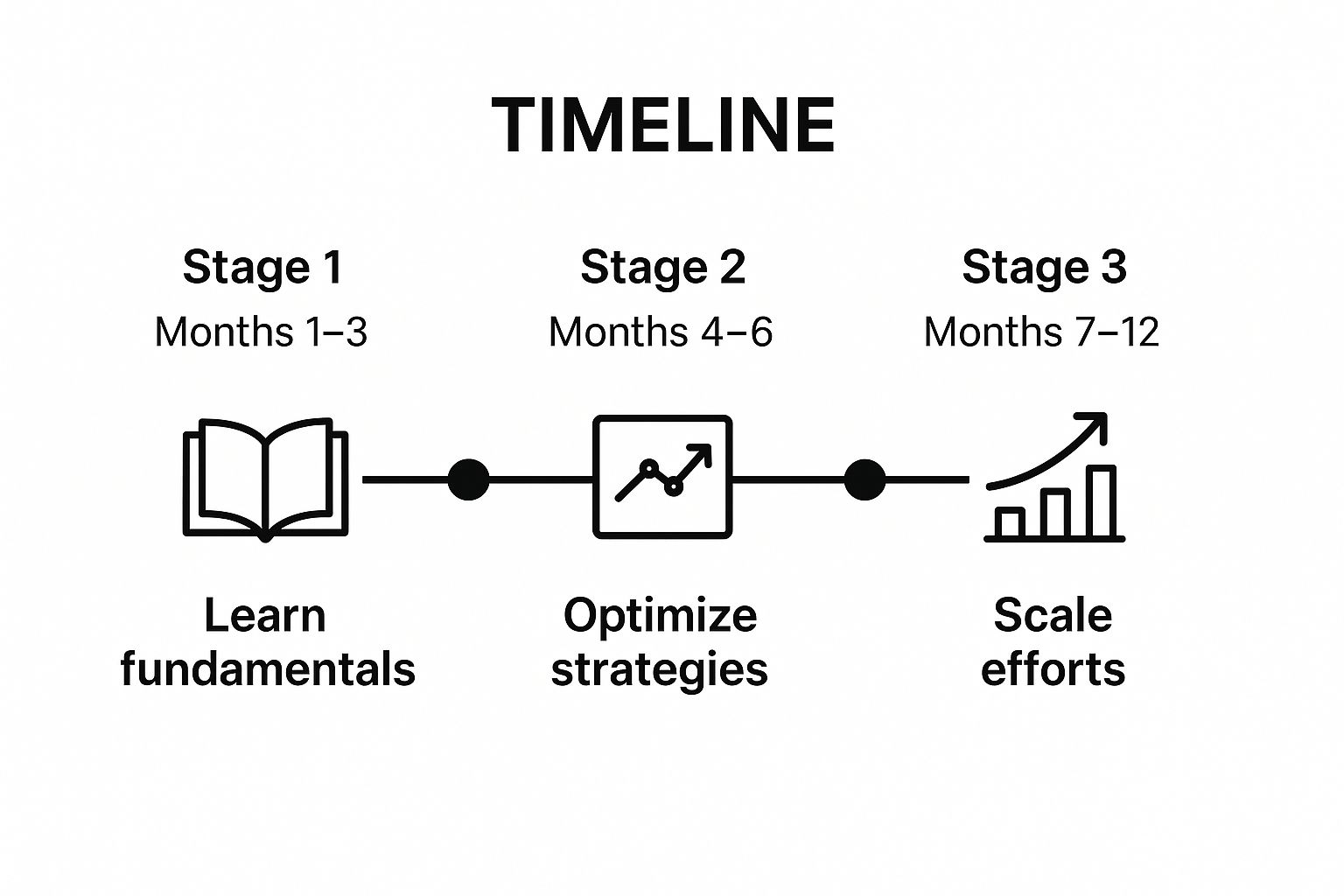
The key insight from this progression is that successful scaling is built upon a solid, optimized foundation, not rushed expansion.
Why Starting Small is Effective
A focused strategy enables you to become a true expert in your chosen area, build genuine authority, and deeply understand your audience's needs. Instead of juggling multiple social media platforms, content formats, and affiliate programs, you can dedicate your energy to mastering one traffic source and promoting a handful of products you genuinely believe in. This concentrated effort leads to faster learning and better initial results.
Actionable Steps to Start Small and Scale
Follow this process to build your affiliate business methodically:
- Choose One Primary Traffic Source: Decide whether you will focus on a blog (SEO), a YouTube channel, or a specific social media platform like Instagram or TikTok. Master creating content and driving traffic on that one channel first.
- Select 2-3 Core Affiliate Programs: Instead of signing up for dozens of programs, start with a few that are highly relevant to your niche. For Amazon sellers using Coral, this means promoting products you know and trust.
- Focus on One Content Format: Whether it's written articles, long-form videos, or short-form social posts, become proficient in one format before diversifying your content strategy.
- Document and Reinvest: Keep track of what works and what doesn't. Once you start generating revenue, reinvest a portion of your profits into tools or strategies that will help you scale the successful parts of your business.
Affiliate Marketing Tips Comparison Guide
| Strategy | Implementation Complexity 🔄 | Resource Requirements ⚡ | Expected Outcomes 📊 | Ideal Use Cases 💡 | Key Advantages ⭐ |
|---|---|---|---|---|---|
| Choose the Right Niche | Moderate: requires market research and analysis | Moderate: tools like Google Trends, SEMrush | Targeted audience, higher conversion rates | Starting affiliate marketing, audience targeting | Focused content, better SEO, strong trust |
| Build Trust and Authority First | High: long-term consistent effort | High: ongoing content creation and engagement | Higher loyalty, sustainable conversions | Building brand credibility, long-term growth | Higher conversions, audience retention |
| Focus on Quality Content Creation | High: diverse skills needed over time | High: writing, video, design resources | Improved SEO, engagement, authority | Driving organic traffic, educating audience | Better rankings, long-term traffic |
| Start with High-Quality Affiliate Programs | Moderate: research and vetting required | Moderate: selecting programs with good support | Reliable income, trusted brand conversion | Affiliate selection for beginners | Better commissions, support, brand trust |
| Learn and Implement SEO Basics | High: technical and ongoing learning | Moderate to High: SEO tools and skill investment | Free traffic, sustained organic growth | Increasing search traffic, keyword targeting | Long-term traffic, credibility |
| Track Performance and Optimize | High: setup and data analysis skills needed | Moderate to High: analytics tools and time | Data-driven improvements, higher ROI | Performance monitoring and scaling | Better decisions, issue identification |
| Build an Email List from Day One | Moderate: setup and continuous nurturing | Moderate: email marketing tools and content | High ROI, direct audience access | Retaining and converting audience | High ROI, owned traffic |
| Start Small and Scale Gradually | Low to Moderate: focused initial approach | Low to Moderate: fewer resources initially | Manageable growth, reduced risk | Beginners mastering basics before expanding | Lower risk, faster learning |
Launch Your Affiliate Program with Confidence
Embarking on your affiliate marketing journey can feel like navigating a vast new territory, but it doesn't have to be a shot in the dark. The strategies we've explored aren't just isolated tasks; they are interconnected pillars that form the foundation of a resilient, profitable affiliate program. From the initial, crucial decision of choosing the right niche to the ongoing discipline of tracking your performance metrics, each step builds upon the last, creating a powerful engine for brand growth and revenue generation.
Think of it as building a house. Your niche is the solid ground you build on. The trust and authority you cultivate are the sturdy framework. The high-quality content you create acts as the walls and roof, providing value and shelter for your audience. And your data-driven optimizations? That’s the continuous maintenance that ensures your house stands strong for years to come. These foundational affiliate marketing tips for beginners are designed to help you build that structure correctly from day one.
From Theory to Action: Your Next Steps
The true power of this guide lies not in just reading it, but in applying it. Knowledge without action is simply potential. To help you transition from learning to doing, here are your immediate next steps:
- Commit to One Action Today: Don't try to implement everything at once. Choose the one tip that resonated most with you. Is it setting up a basic email capture form? Or perhaps performing keyword research for your next blog post? Take that single, manageable step forward.
- Embrace the "Start Small" Philosophy: Your goal isn't to have a hundred affiliates by next month. Your goal is to onboard your first high-quality affiliate. Focus on finding one creator who genuinely aligns with your brand and work closely with them to build a successful partnership. This initial success will become the template for scaling later.
- Prioritize Authenticity Above All: Remember the core principle: build trust first. Every piece of content you produce and every affiliate you partner with should reflect your brand’s genuine voice and values. Your audience is smart; they can spot inauthenticity a mile away. Lasting success in affiliate marketing is built on real relationships and transparent value.
Mastering these concepts is not just about driving a few extra sales. It’s about creating a scalable, cost-effective marketing channel that is powered by genuine brand advocates. By focusing on building trust, creating valuable content, and making data-informed decisions, you are investing in a long-term asset for your Amazon business. You're turning customers and creators into a dedicated sales force that champions your products because they truly believe in them.
Ready to turn these strategies into a powerful, revenue-driving reality? Coral provides the essential tools to manage, track, and scale your own Amazon affiliate program with ease. Set up your branded landing page, onboard creators, and start building a thriving network of brand advocates today.