Ecommerce Affiliate Marketing A Practical Guide
Category: Ecommerce affiliate marketing
At its most basic, ecommerce affiliate marketing is just a partnership. You team up with external partners—think bloggers, social media influencers, or even other brands—and pay them a commission every time they send a paying customer your way.
Think of it as building a massive, enthusiastic sales team that you only pay after they've already made you money. It's a powerful, low-risk way to get your products in front of new audiences and drive real revenue.
A Low-Risk Way to Grow Your Brand
The beauty of this model is its simplicity. You're not paying for clicks or impressions; you're paying for results. This performance-based approach makes affiliate marketing one of the most cost-effective ways to acquire new customers, period.
This whole strategy really boils down to a partnership between three key players:
- The Brand (That's You): The online store selling the products, looking to boost sales and get the word out.
- The Affiliate Partner: A content creator, publisher, or influencer who promotes your stuff to their audience.
- The Customer: Someone in the affiliate's audience who finds and buys your product because of the affiliate's recommendation.
How the Partnership Actually Works
The whole system runs on unique, trackable links. You give each affiliate partner a special link that has their own unique ID baked into it. They then use this link whenever they create content about your product, whether it's a detailed blog review, a YouTube tutorial, or a quick Instagram story.
When a customer clicks that link and buys something from your store, some simple tracking tech gives that specific affiliate credit for the sale. In return for their hard work, you pay them a commission you both agreed on beforehand. This is usually a percentage of the sale, but it can sometimes be a flat fee.
This setup is a genuine win-win-win. Your brand gets a new sale with almost no upfront cost, the affiliate earns money for recommending products they believe in, and the customer discovers something new from a source they already know and trust.
The Power of a Genuine Recommendation
Let's be honest, traditional ads can be pretty jarring. Affiliate marketing works so well because it's built on trust and authenticity. When a blogger or influencer has spent months or even years building a loyal following, their recommendation feels less like a sales pitch and more like a helpful tip from a friend.
That word-of-mouth effect is incredibly powerful. When an affiliate is genuinely excited about your product, that enthusiasm shines through and leads to much better conversion rates. By finding the right partners, you can tap into passionate, niche communities that would be tough (and expensive) to reach otherwise.
If you're ready to go all-in, our complete ecommerce affiliate marketing guide breaks down even more advanced strategies for building a killer program. It’s a low-risk, high-reward model that helps you grow your marketing efforts efficiently, driving both sales and lasting brand loyalty.
How Affiliate Marketing Programs Work
Think of ecommerce affiliate marketing like following a trail of digital breadcrumbs. The whole system is designed to track a customer from an affiliate's recommendation all the way to a purchase on your site. It’s a beautifully simple process, and it’s what makes this performance-based channel tick.
It all starts with something called an affiliate link. This isn't your average URL. It has a special tracking code attached, unique to each partner, acting like a digital fingerprint. When an affiliate shares this link on their blog, YouTube channel, or social media, that unique ID is ready to get to work.
When someone clicks that link, a tiny file called a tracking cookie is placed on their web browser. This cookie is harmless—it doesn't store personal data. It just acts as a little marker that tells your online store, "Hey, this person came from Affiliate X." This is the key to giving credit where it's due.
The Role of Tracking Cookies and Pixels
These cookies have a lifespan, often called a "cookie window," which might be 24 hours or could last as long as 90 days. If the customer buys anything from your site within that window, the cookie tells your system to credit that specific affiliate for the sale. This is huge, because it means partners get rewarded even if the customer takes a few days to make up their mind.
To seal the deal, a conversion pixel—a tiny, invisible bit of code—is placed on your "thank you" or order confirmation page. When that page loads after a purchase, the pixel looks for an affiliate tracking cookie. If it finds one, it confirms the sale, and the commission is officially logged for that partner.
This all happens instantly and invisibly in the background, connecting the dots from the initial click to the final purchase. The image below gives you an idea of what typical performance numbers look like along this journey.
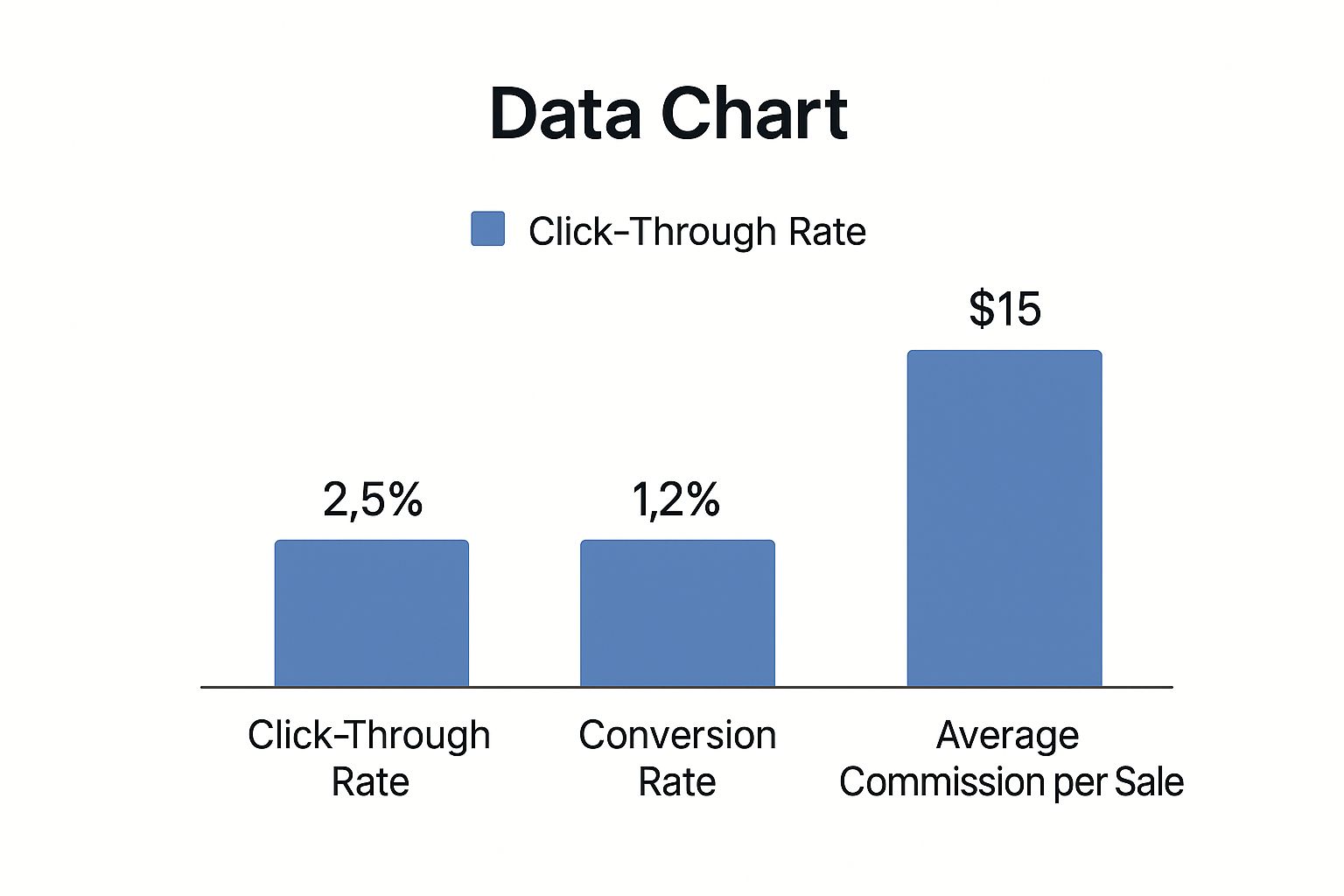
These benchmarks show that while you might get a lot of clicks, only a small percentage will turn into actual sales. That's exactly why picking the right commission model is so important.
Choosing the Right Commission Model
Once you've got tracking sorted, you need to decide how you're going to pay your affiliates. There are a few standard ways to do this, and the one you choose will have a big impact on who you attract to your program and how profitable it is.
The most common and effective model is Cost Per Sale (CPS), also known as Pay Per Sale (PPS). With this model, you pay affiliates a percentage of the revenue from every sale they send your way. It’s the definition of true performance-based marketing.
The affiliate marketing industry is massive—it's expected to hit $31.7 billion by 2031. And the CPS model is the undisputed king, used by over 80% of advertisers. Its popularity comes down to one simple fact: it aligns your goals perfectly with your partners' incentives. If you want to see more numbers behind the trend, you can read the full affiliate marketing statistics here.
Of course, CPS isn't the only game in town. Other models can work for different goals:
- Cost Per Lead (CPL): You pay a flat fee for every qualified lead, like someone signing up for your newsletter or requesting a demo. It’s a great way to grow your email list.
- Cost Per Click (CPC): You pay for every single click an affiliate sends to your website. This is much rarer for ecommerce because it’s high-risk—you're paying for traffic, not sales.
For almost every ecommerce brand, CPS is the way to go. It’s low-risk because you only pay when you actually make money.
Affiliate Marketing Commission Models Compared
To help you visualize the differences, here’s a quick breakdown of the most common commission structures.
| Model | How It Works | Best For | Risk Level for Merchant |
|---|---|---|---|
| Cost Per Sale (CPS) | Pay a percentage commission on each confirmed sale. | Driving direct revenue and maximizing ROI. | Low |
| Cost Per Lead (CPL) | Pay a flat fee for each valid lead generated. | Building an email list or generating user sign-ups. | Medium |
| Cost Per Click (CPC) | Pay a small fee for every click to your website. | Increasing brand awareness and website traffic. | High |
Ultimately, choosing the right structure is foundational. It ensures your ecommerce affiliate marketing program is appealing enough to attract great partners while remaining profitable and sustainable for your business in the long run.
Finding and Recruiting the Right Affiliates
Alright, you've got the foundation of your program built. Now comes the part that truly makes or breaks your success: finding the right people to partner with.
Let’s be clear. Your success in ecommerce affiliate marketing is all about the quality of your partners, not the quantity. It’s far better to have a small handful of incredible affiliates who are genuinely excited about your brand than a massive list of people who don't really care.
Think of it like building a championship sports team. You don't just sign anyone who can run. You scout for players who fit your team's culture, believe in the game plan, and have the specific skills to win. That's exactly what you're doing here—finding partners whose audience and values are a perfect match for yours.
This means you have to stop chasing numbers and start building real relationships. One trusted voice in your niche can drive more real sales than a hundred random affiliates ever could.
Where to Find Your Star Players
Finding great affiliates is a bit like being a detective, but the good news is they're often hiding in plain sight. Your ideal partners are already out there, creating content and earning the trust of the exact customers you want to reach.
Here are the best places to start your search:
- Niche Bloggers and Content Creators: Find the people who are consistently writing, filming, or podcasting about topics related to your products. If you sell high-end coffee beans, you want to find the bloggers who obsess over brewing methods.
- YouTube and TikTok Reviewers: Video is huge. Creators who unbox, test, and review products in your category are absolute gold. Their visual demonstrations can be the final push a customer needs to buy.
- Your Own Customer Base: Who loves your products more than your most loyal customers? These people are your best potential advocates because their recommendations are authentic. Send an email to your top customers inviting them to join—you might be surprised by who signs up.
- A Peek at the Competition: See who is already promoting your competitors. A little digging into who links to their sites can reveal a pre-vetted list of active, relevant publishers in your space.
Crafting an Outreach Message They'll Actually Read
Once you've got a list of potential partners, it's time to reach out. Please, don't send a generic, copy-pasted email. That's the fastest way to get ignored. Personalization is everything.
Your outreach should feel less like a cold business proposition and more like a personal invitation to collaborate. Show them you've actually looked at their work and see a genuine fit. This builds respect from the very first email.
A great outreach message doesn't need to be complicated. If you want to see exactly how it’s done, our complete guide on how to recruit affiliates has templates and strategies you can use right away.
First, introduce yourself and mention something specific you liked about their content. It proves you're not just spamming them. Then, quickly explain why you think your products would be a fantastic fit for their audience.
Keep it short and sweet, and focus on what's in it for them. Talk about your commission rates, the quality of your products, and any other support you offer. Make it a no-brainer for them to say "yes."
Here’s a quick checklist to follow:
- Personalize the Intro: Name a specific blog post or video.
- Explain the "Why": Why is their audience a perfect match? Be specific.
- Outline the Perks: Tell them about your commission and any other benefits.
- Keep It Simple: Don't drown them in details. Just start the conversation.
- Clear Call to Action: Tell them what to do next, like signing up or hopping on a quick call.
Building your affiliate army isn't a one-and-done task. It's an ongoing process of finding great people, reaching out, and nurturing those relationships. When you focus on genuine partnerships, you create a powerful marketing channel that brings steady, long-term growth to your brand.
Optimizing Your Program for Better Performance
Getting your affiliate program off the ground is a fantastic first step, but it’s really just the starting line. The real magic happens when you stop seeing your program as a "set it and forget it" channel and start treating it like a living, breathing engine that needs regular tune-ups. Real success in ecommerce affiliate marketing comes from rolling up your sleeves, digging into the data, and using what you find to empower your partners.
Think of yourself as the coach of a sports team. You wouldn’t just send your players onto the field without a game plan or a scoreboard. It's the same idea here. By keeping a close eye on your program's performance, you can spot your star players, figure out which plays are working, and make smart adjustments to get the most out of every commission dollar.
This constant cycle of analysis and improvement is what separates a decent program from a truly great one. It's how you move beyond just passively paying out commissions and start building a reliable, high-growth revenue stream for your brand.
Analyzing Key Performance Metrics
Your affiliate dashboard is practically a treasure map, but you need to know which landmarks to follow. Don't get distracted by flashy but meaningless numbers; zero in on the data that actually moves the needle for your business.
Here are the metrics that really matter:
- Top-Performing Affiliates: Find the top 5-10% of your partners who are bringing in the lion's share of the sales. These are your VIPs, and they've earned your extra attention and support.
- Conversion Rate: This number shows you how good an affiliate is at turning their traffic into actual paying customers. A high conversion rate is a great sign of a strong audience match.
- Average Order Value (AOV): Are certain affiliates consistently driving bigger sales? This tells you who is attracting your most valuable customers.
- Top-Selling Products: See which of your products are flying off the shelves thanks to your affiliates. You can use this intel to build targeted promotions around your proven winners.
Focusing on these core numbers gives you a clear, instant picture of who your best partners are and what they're doing right. This data-first mindset is the bedrock of smart program management.
Advanced Optimization Tactics
Once you’re comfortable with the basics, it's time to pull some more advanced levers to really kick things into high gear. These strategies are all about motivating your partners, jumping on market trends, and making your program the one everyone wants to join.
One of the most effective tools in your arsenal is a tiered commission structure. Instead of a one-size-fits-all flat rate, you can reward your best affiliates with better commissions as they hit sales goals. For instance, an affiliate might start at a 10% commission but jump to 15% once they pass $1,000 in sales. It’s a powerful incentive that keeps your top performers pushing harder.
Another fantastic tactic is running seasonal campaigns. Get your affiliates excited about big shopping events like Black Friday or Valentine's Day. Give them custom banners, exclusive discount codes, and curated gift guides to share with their audience. Timely promotions like these can create a huge spike in sales.
Adapting to Modern Consumer Habits
The way people discover and buy products is always evolving, and your affiliate strategy has to evolve right along with it. Right now, the two biggest game-changers are the explosion of mobile shopping and the unstoppable rise of video content.
The industry is leaning heavily into video-first content, and for good reason. On top of that, with mobile commerce now making up 74% of all global e-commerce sales, a clunky mobile experience is a deal-breaker. Your affiliates are promoting you on platforms like TikTok and Instagram, so your landing pages have to look and work perfectly on a phone screen.
To give your partners the best shot at success, it helps to offer them some pointers on effective ecommerce social media marketing strategies. A mobile-first mindset is absolutely essential to winning over today's shoppers. You can get a much deeper look into these trends and how they're shaping the future of ecommerce affiliate marketing in our detailed article.
What's Next? Emerging Trends in Affiliate Marketing
The world of ecommerce affiliate marketing never stands still for long. What worked last year might be old news today. To stay ahead of the curve, you have to keep an eye on where the industry is heading.
One of the biggest game-changers right now is Artificial Intelligence. AI isn't just a buzzword anymore; it’s a seriously practical tool that can supercharge your affiliate program. It helps you do everything from spotting shady, fraudulent clicks to analyzing which partners are actually driving sales. This means you can make smarter, data-backed decisions instead of just guessing.
A great way to keep your program fresh is to encourage your affiliates to experiment with new tech. For example, things like AI faceless video generator tools can help them create compelling content much faster.
Authentic Voices are Winning
We're also seeing a huge swing toward micro- and nano-influencers. These are the creators who have smaller but incredibly loyal audiences. They might not have millions of followers, but their word is gold to their community.
Partnering with these creators lets you tap into niche communities with a level of trust that’s almost impossible to buy. Their endorsement feels less like a paid ad and more like a genuine tip from a trusted friend.
This move toward authenticity is also shaking up the kind of content that works. Live shopping streams on platforms like TikTok and YouTube are quickly becoming a major source of affiliate sales. These live events are interactive, create a real sense of urgency, and let creators show off products in real-time, which often leads to fantastic conversion rates.
New Platforms and Global Growth
The places where affiliates reach their audience are changing, too. Of course, blogs and the usual social media platforms are still important. But you also need a strategy for short-form video, podcasts, and even private communities on places like Discord.
On a bigger scale, affiliate marketing is no longer a niche strategy—it’s going global. More and more businesses worldwide are making it a core part of their sales plan. It's a cost-effective and scalable way to build that all-important trust between your brand and your customers. You can discover more insights about affiliate marketing growth on wecantrack.com.
At the end of the day, staying competitive means embracing change. By adopting AI, partnering with genuine influencers, and showing up on new platforms, you'll set your affiliate program up for real, long-term success.
Got Questions About Ecommerce Affiliate Marketing? We’ve Got Answers.
Diving into the world of affiliate marketing can bring up a lot of questions. It's a whole new way of thinking about sales. To help you get your bearings, let's walk through some of the most common things brands ask when they're starting out.
How Much Should I Pay Affiliates?
This is the big one, and the honest answer is: it depends. There’s no universal rate, as commissions can swing wildly based on your industry and product margins.
For most physical products, a good starting range is somewhere between 5% and 15% of the sale. If you're selling digital goods or subscriptions with less overhead, you'll often see much higher rates. The real goal is to find that sweet spot—a commission that’s attractive enough to get great partners on board but also makes sense for your bottom line.
Is This Really a Strategy for Small Brands?
Absolutely. In fact, you could argue affiliate marketing is perfect for small and growing brands. It’s a pay-for-performance game. You only pay when you actually get a sale, which means you can grow your reach without needing a massive upfront ad budget.
Affiliate marketing truly levels the playing field. It lets smaller brands with amazing products build a team of genuine advocates who are excited to share what they love, helping you compete with the big guys.
Do We Really Need an Affiliate Disclaimer?
Yes, 100%. This part is non-negotiable. The Federal Trade Commission (FTC) is very clear that affiliates must disclose their relationship with you. Their audience needs to know they’ll earn a commission if someone buys through their link.
A great way to handle this is by giving your partners clear guidelines and even some pre-written disclosure text to use. It protects them, it protects you, and most importantly, it builds trust with your customers by being upfront and transparent.
Ready to turn your brand's biggest fans into your most powerful sales force? Coral gives you everything you need to build, manage, and scale a killer affiliate program right on Amazon. Start your free plan today and see how easy it is to grow with Coral.