How do Pinterest affiliate programs work for an Amazon US Brand?
Category: Affiliate programs for pinterest
Think of Pinterest as a visual search engine where millions of people go to plan their lives, find inspiration, and, most importantly, shop. As an Amazon brand owner, tapping into that mindset with your own affiliate program is a smart, visual-first way to drive sales.
Instead of just hoping people find your products, you empower creators to turn that inspiration into a direct sale. It’s all about giving your brand ambassadors special trackable links they can weave into their beautiful Pins. When their followers click your creator's link and buy your product on Amazon, the creator earns a commission, and you get a sale.
This isn't just another version of the standard Amazon Associates program. This is about building your own private network of creators and having direct control over those partnerships to grow your Amazon brand.
How Pinterest Affiliate Programs Work for Amazon Brands
For an Amazon brand, an affiliate program on Pinterest becomes a highly structured sales channel. You're not just throwing links out there; you're building a system that taps directly into how people use the platform. And the numbers back this up—a staggering 80% of weekly Pinterest users have discovered a new brand or product on the platform. They’re there to shop.
The whole system hinges on unique, trackable links. When you bring a creator on board, you give them a custom URL for your Amazon product. That link is tagged with special tracking codes, ensuring they get credit for every sale they send your way.
This simple flow chart breaks down the journey from discovery to purchase. It’s a clean, direct path.
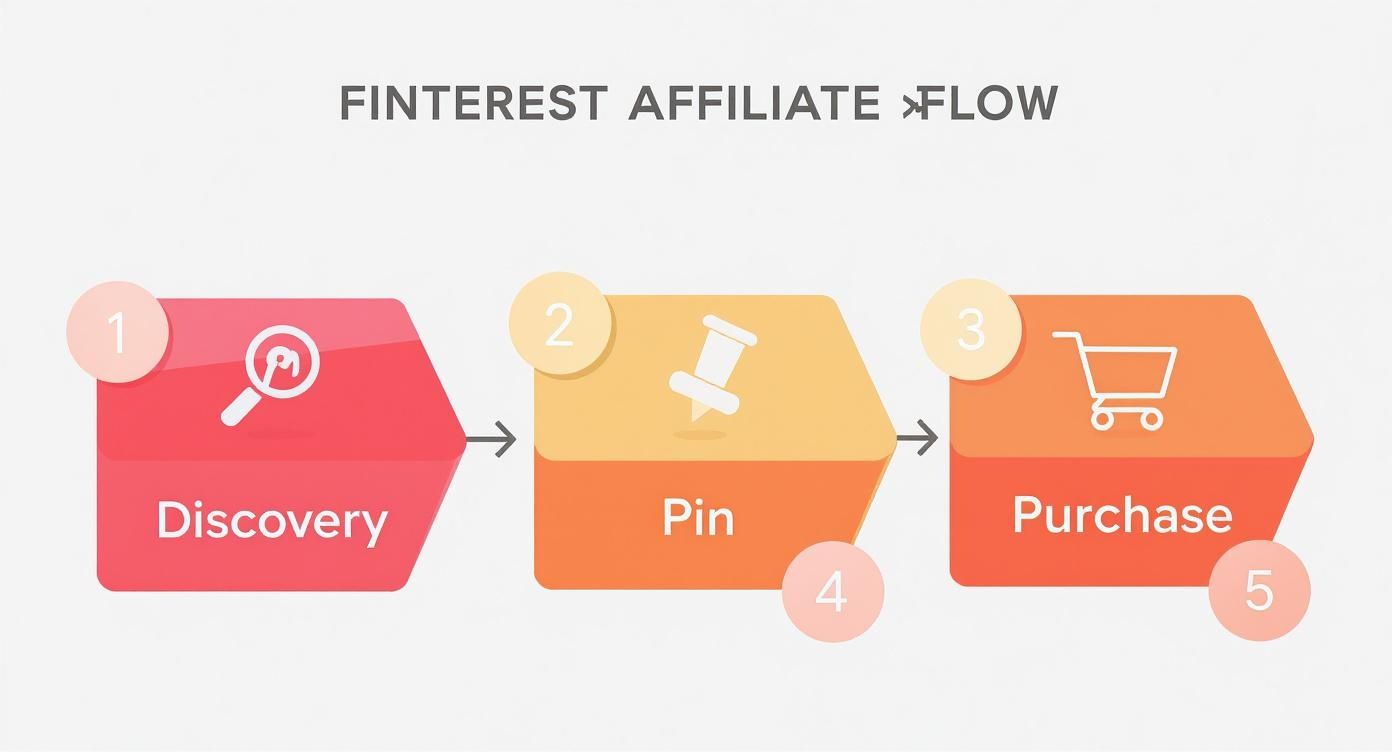
As you can see, a single inspiring Pin can catch a shopper's eye and lead them straight to your Amazon product page, closing the gap between seeing something they love and buying it.
To help visualize how this all fits together, here’s a quick breakdown of the key components.
Key Elements of a Pinterest Affiliate Campaign for Amazon Brands
| Component | Role for Your Amazon Brand |
|---|---|
| Amazon Product Listings | The final destination. These need to be optimized with great images, compelling copy, and good reviews to convert the traffic your affiliates send. |
| Pinterest Creators (Affiliates) | Your brand storytellers. They create authentic content that showcases your product in a real-world context, building trust with their audience. |
| Trackable Affiliate Links | The backbone of your program. These links, often generated by affiliate software and tracked via Amazon Attribution, ensure every sale is credited correctly. |
| Engaging Pinterest Content | The hook. This includes high-quality Pins, Idea Pins, and well-organized Boards that capture a user's attention and spark their interest. |
| Clear Disclosure (#ad, #sponsored) | A non-negotiable for trust and compliance. This builds transparency with the audience and keeps you on the right side of FTC guidelines. |
Each piece plays a crucial role in creating a smooth and effective system that drives real results for your brand.
The Customer and Creator Journey
Let's walk through how this looks in practice for everyone involved. It’s a surprisingly simple process.
For the Creator: Your affiliate will create a Pin using a stunning image or video of your product in action. They’ll write a compelling description and, most importantly, add your unique affiliate link. They must also add a clear disclosure like #ad or #affiliatelink to stay compliant and be upfront with their audience.
For the Customer: Someone is browsing Pinterest for "modern kitchen gadgets" or "boho home decor." They stumble upon your creator's Pin, love what they see, and click the link. Boom—they land directly on your Amazon product page, ready to buy.
For You (and Attribution): Behind the scenes, your affiliate software, working with Amazon Attribution, logs the click and the subsequent purchase. It then automatically assigns the commission to the right creator. It's clean, accurate, and hands-off.
This direct-to-creator model gives you so much more influence over your brand's story and how your products are presented, a significant step up from the one-size-fits-all approach of a massive, open affiliate network.
What products work best for Pinterest affiliates?
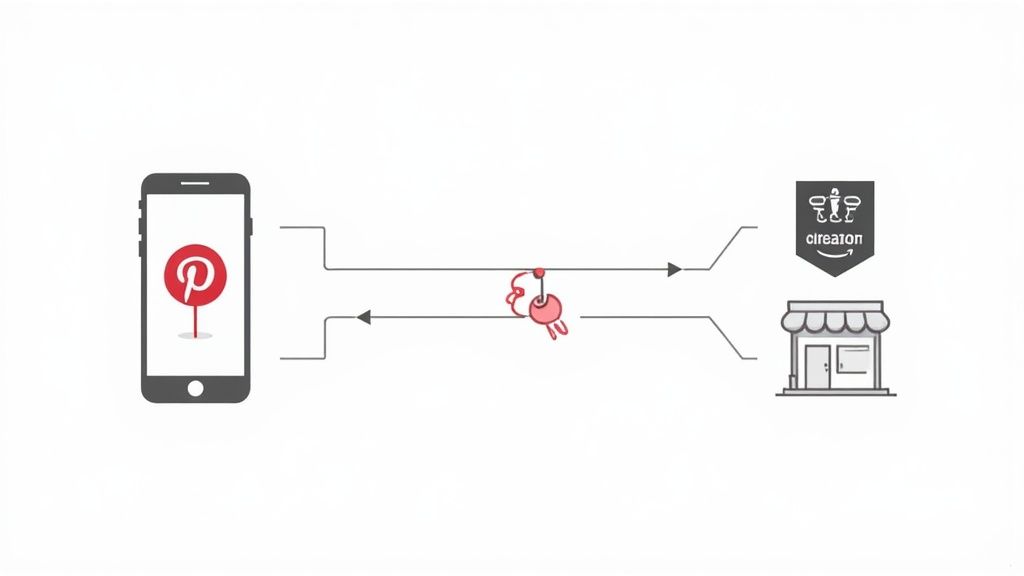
Let's be honest—not every product in your Amazon US catalog is going to fly off the shelves on Pinterest. This platform is all about visual discovery, so you need to lead with products that are easy on the eyes and spark inspiration.
Think about why people are on Pinterest in the first place. They're looking for home decor ideas, the latest fashion trends, beauty tutorials, and their next DIY project. If your brand lives in one of those worlds, you’ve got a serious advantage. Products that just look good—say, a beautifully designed kitchen gadget or a colorful set of art supplies—are prime candidates for your affiliate program.
Finding Your Most "Pinnable" Products
Dig a little deeper into your product list and look for items that your affiliates can easily build great content around. The goal is to give them products that naturally fit into the formats that perform best on Pinterest.
Your best bets will be products that shine in:
- How-To Guides and Tutorials: Can your product be the hero of a step-by-step guide? Imagine a baking supply brand being featured in an Idea Pin titled "10 Steps to the Perfect Sourdough."
- "Before and After" Reveals: This format is pure gold for home organization, cleaning supplies, and beauty products. An affiliate could create a compelling Pin showing a cluttered pantry transformed with your storage containers.
- Seasonal and Trending Content: Get ahead of the calendar. If you sell outdoor gear, make sure your affiliates are promoting it before the summer rush. The same goes for holiday decor, back-to-school items, and other seasonal buys.
When you focus on products that help tell a visual story, you're not just giving your affiliates something to sell—you're giving them something to inspire with. That’s what truly connects with the Pinterest audience.
The numbers back this up. A staggering 85% of weekly Pinners have actually bought something because of Pins they saw from brands. And they're not just making small purchases; Pinterest shopping baskets are often 30% larger compared to other social platforms.
This really drives home how crucial it is to choose the right products and understand good niches for affiliate marketing. The most successful products will be the ones that feel right at home in the beautiful, aspirational world your affiliates and their followers have built.
How do I optimize pins for affiliate links?
Anyone can create a Pin, but making one that actually drives clicks and sales for your Amazon products is another story. The best-performing Pins aren't a happy accident; they’re a thoughtful blend of great visuals, smart copy, and a real understanding of what makes someone on Pinterest stop scrolling.
It all starts with the visual. Since over 80% of Pinterest users are on their phones, a vertical format is non-negotiable. Stick to a 2:3 aspect ratio (think 1000x1500 pixels) to take up as much screen space as possible. Use crisp, high-quality images or short, snappy videos that show your product in a way that feels aspirational or solves a clear problem.
Nail Your Keywords and Copy
Once you have a thumb-stopping visual, you need to write copy that helps people find it. Pinterest is basically a visual search engine, so thinking about SEO is crucial.
Start by using Pinterest's own search bar. Type in terms related to your Amazon product and see what suggestions pop up. If you're promoting a high-end coffee maker, you might search for "espresso machine at home" or "coffee bar ideas" to see what your audience is actually looking for.
Now, weave those keywords into your Pin's text:
- Pin Title: Keep it clear and intriguing. "The Ultimate Guide to At-Home Lattes" will get more clicks than "Coffee Machine Model X."
- Pin Description: This is where you can add more context and keywords. Talk about who the product is for and what it helps them do. Affiliates must also add their disclosures here, like #ad or #affiliate.
Your copy should gently nudge the user to take the next step. A simple call-to-action (CTA) like "Shop the look" or "Click for the recipe" tells them exactly what to do. For a full walkthrough on this, you can learn how to post affiliate links on Pinterest and get the best results.
The most effective Pins feel less like ads and more like genuine solutions. When you frame a product as the answer to a question or the key to a goal, you grab a Pinner's attention in a much more authentic way.
Finally, add your affiliate link to the "destination link" field. Always use the full, direct URL. For Amazon brands, this needs to be a trackable link. It's worth learning how to deep link to Amazon, as sending users directly to the product page inside the Amazon app can seriously boost conversion rates.
By combining killer visuals with search-friendly copy, your creators can build Pins that don't just inspire—they convert.
What is a good way to track and measure Pinterest affiliate success?
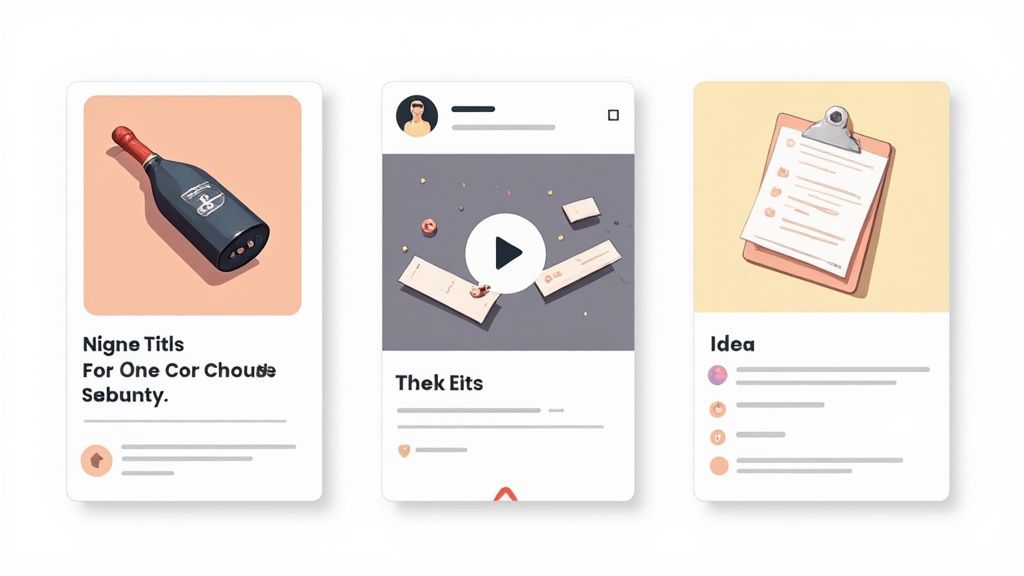
Running an affiliate program without solid tracking is like flying blind. You're putting in the work, but you have no real idea which creators, Pins, or strategies are actually ringing the register. This is where a dedicated tracking system becomes essential.
For Amazon US brand owners, the key to unlocking this data is Amazon Attribution. This is Amazon's in-house measurement tool, and it's built specifically to show you how your off-Amazon marketing—like your affiliates' Pinterest content—translates into sales and other actions on your product pages.
By creating unique Attribution links for each creator, you can stop guessing. These links essentially tag every click, letting you follow a customer’s path from the moment they tap on an inspiring Pin all the way to a final purchase in your store.
Key Metrics to Keep Your Eye On
Once your creators start sharing their links, the data will begin to flow in. By combining the reports in your affiliate software with the insights from Amazon Attribution, you get a complete picture of what's working.
You'll want to focus on a few critical metrics:
- Clicks: This is your baseline. How many people are clicking on an affiliate's tracked link from Pinterest?
- Add to Carts: A fantastic indicator of high purchase intent. This tells you how many shoppers added your product to their cart after clicking a Pin.
- Detail Page Views: This shows the raw traffic landing on your Amazon product page from a creator's efforts.
- Total Sales: The bottom line. This is the total revenue generated by each affiliate, proving the program's ROI.
- Conversion Rate: This percentage is crucial. It tells you exactly how effective an affiliate’s traffic is at turning into paying customers.
This data-driven approach means you can finally answer the big questions with confidence.
With precise tracking, you can connect the dots between a beautiful Pin and a confirmed sale. It's how you identify your star creators and double down on the content strategies that actually make you money.
Remember, the potential here is massive. Pinterest's ad audience has swelled to about 340 million users worldwide, marking a 10.6% year-over-year jump. That's a huge, engaged market for your affiliates to tap into. If you want to get into the nitty-gritty of the mechanics, it's worth understanding the fundamentals of effective affiliate link tracking.
How does Coral enhance Pinterest affiliate success?
Getting an affiliate program started on Pinterest is one thing. Actually managing it once you have more than a handful of creators is a completely different story. It can quickly spiral into a nightmare of spreadsheets, manual link generation, and endless back-and-forth.
This is where a dedicated platform saves you time and resources. Think of it as the central hub for your program. It automates all the tedious, repetitive work—like creating unique affiliate links, tracking sales, and handling payouts. This frees you up to do what really moves the needle: building relationships with your best creators and fine-tuning your content strategy.
Get Everything in One Place
The real game-changer is having a single dashboard for everything. A centralized platform pulls all your data together, giving you a clear line of sight from a Pin all the way to a sale on Amazon.
This is especially powerful when it's integrated with Amazon Attribution. You get clean, consolidated reports that tell you exactly what’s working.
- See which Pinterest creators are your real top-performers.
- Pinpoint the specific types of Pins that are actually converting.
- Finally understand the true ROI of your affiliate spending.
A dedicated platform turns your affiliate efforts from a collection of one-off campaigns into a measurable and scalable sales channel.
Armed with these insights, you can stop guessing and start making smart decisions. You’ll know exactly which partners and what kind of content to double down on. The whole operation just runs smoother, letting you scale your program without drowning in busywork.
If you want to see how this looks in action, check out an affiliate platform designed for Amazon brands.
Common Questions About Pinterest Affiliate Programs
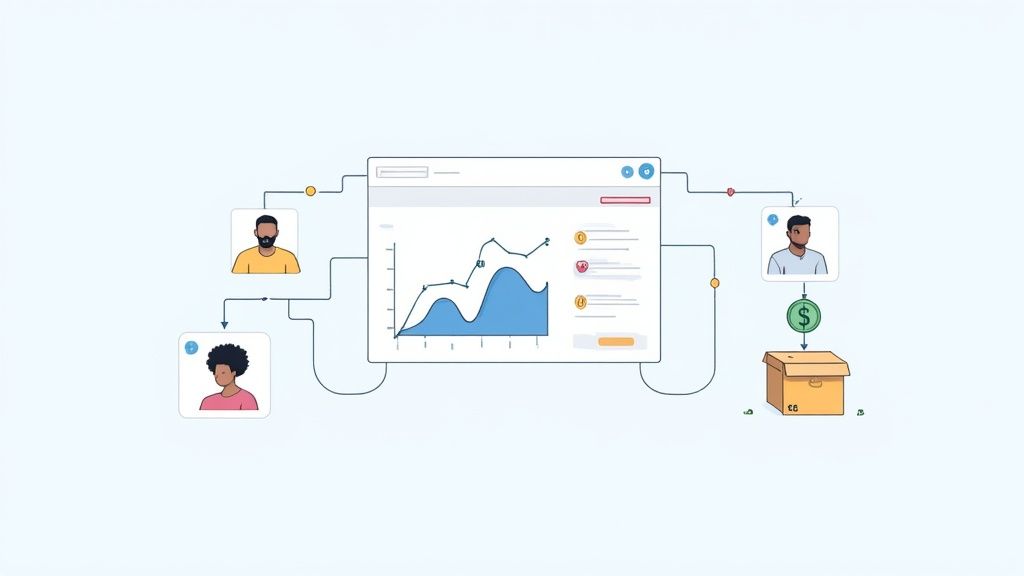
If you're an Amazon brand just dipping your toes into the world of Pinterest affiliates, you probably have a few questions. Let's clear up some of the most common ones so you can build a creator-driven sales channel with confidence.
Is It Permitted to Use Affiliate Links on Pinterest?
Yes, absolutely. Pinterest is affiliate-friendly, but they are sticklers for transparency, and for good reason—it protects the user experience.
Your creators simply need to disclose their relationship with you. This is usually done by adding a quick hashtag like #ad, #sponsored, or #affiliatelink right in the Pin's description. It’s a small step that keeps everyone compliant with both Pinterest’s rules and FTC guidelines.
Do Affiliates Need a Website to Promote My Brand?
Not at all. While having a blog can be a huge plus for detailed product reviews and tutorials, it's definitely not a deal-breaker for promoting your Amazon products on Pinterest.
The main thing your creators need is a Pinterest account with an engaged following that trusts their taste. They can link a Pin directly to your Amazon product page using their unique affiliate link, making it super easy for their audience to go from inspiration to purchase.
How Much Do Pinterest Affiliates Typically Earn?
This one is entirely up to you. As the Amazon brand, you control the commission structure. You set the rate—typically a percentage of the sale—which is the biggest factor in an affiliate's potential earnings.
An affiliate's total income is a mix of your commission rate, your product's price point, and how good they are at creating Pins that drive sales. For a deeper dive, you can explore some actionable strategies to earn money on Pinterest, including affiliate marketing. Top creators in popular niches can earn a substantial income, while others might just bring in a nice side hustle.
Ready to turn your Pinterest strategy into a scalable and measurable sales channel? Coral is an affiliate platform built for Amazon brands, helping you recruit creators, track sales with Amazon Attribution, and automate payouts, all in one place.