How to Get Influencers to Promote Your Product Today
Category: Influencer marketing
Forget just sending out free samples and hoping for the best. To really make an impact, you need to build real partnerships with creators whose audiences hang on their every word. It's about moving past one-off endorsements and creating genuine brand advocates who deliver tangible results.
Why Influencer Partnerships Are Your New Growth Engine
Let’s be honest, how do you shop? You’re probably more likely to trust a recommendation from a friend or an expert you follow than a slick, traditional ad. That simple, human element of trust is exactly why influencer marketing works so well. It gives you a direct line to your target customers through voices they already know and respect.
This whole strategy hinges on authenticity and social proof. When an influencer shares a real, honest experience with your product, it doesn't feel like a sales pitch—it feels like a helpful tip from a trusted source. This connection is powerful. In fact, 49% of consumers make a purchase based on an influencer's post at least once a month.
The Move Toward Real Connections
The era of chasing huge celebrity endorsements with millions of followers is winding down. Today, the smartest brands prioritize genuine alignment over sheer reach. What many are finding is that smaller, niche creators often pack a much bigger punch.
"A smaller influencer with an engaged and committed following usually adds more value than a huge influencer with a passive audience."
The numbers back this up. The global influencer marketing market is expected to balloon to $32.55 billion by 2025. More than 80% of marketers already say it’s a highly effective strategy for them. A massive part of this growth comes from the rise of nano- and micro-influencers. In 2024, they made up a staggering 75.9% of Instagram's influencer base, proving that brands are all-in on highly engaged, authentic communities.
To help you figure out where to focus your efforts, here’s a quick breakdown of the different influencer tiers.
Key Influencer Tiers and Their Strengths
Choosing the right type of influencer can feel overwhelming, but it really comes down to your goals and your budget. This table should help you quickly see the strengths of each tier.
| Influencer Tier | Follower Range | Best For | Typical Engagement Rate |
|---|---|---|---|
| Nano | 1k - 10k | Hyper-targeted niche campaigns, high authenticity, budget-friendly product seeding | 5% - 10% |
| Micro | 10k - 100k | Building strong community trust, driving conversions in specific niches | 3% - 6% |
| Macro | 100k - 1M | Broad brand awareness campaigns, reaching a large, diverse audience | 1% - 3% |
| Mega | 1M+ | Maximum reach, celebrity-style endorsements, large-scale product launches | < 1% |
As you can see, a smaller follower count often comes with much higher engagement. Don’t just look at the numbers; think about the quality of the connection that influencer has with their audience.
It's a Partnership, Not a Transaction
The most successful influencer campaigns are built on mutual respect and value, not just a one-time payment. When you treat creators as true partners, you get more than just access to their audience—you get their creative genius and genuine enthusiasm for your brand. This approach helps build lasting relationships that can evolve into powerful, long-term brand ambassadorships.
If you want to get a stronger handle on the bigger picture, it’s worth digging into some expert resources. A great starting point is exploring some of the top marketing books, including those on digital influencer marketing. Building a solid foundation of knowledge will help you create partnerships that are both effective and built to last.
Finding Influencers Who Genuinely Fit Your Brand
The success of your entire campaign really boils down to one thing: finding partners who are a genuine match for your brand. It’s tempting to get dazzled by big follower counts, but the right influencer is so much more than that. They're a creator whose audience looks just like your ideal customer and whose values line up with your own.
Getting past those vanity metrics is the first real step. You've got to build a partnership that feels authentic, because that's what drives actual results.
So, where do you start? Think like your customer. Where do they spend their time online? Who do they actually listen to for recommendations? Instead of just plugging in broad keywords, you need to dive into the niche communities and specific hashtags where your people are hanging out. Honestly, a creator with a smaller, super-engaged following in your specific niche will almost always deliver more value than a mega-influencer with a generic audience.
Looking Beyond Follower Counts
Let's be real: high follower numbers can be a total illusion. To get a true sense of an influencer's potential, you have to dig into the metrics that show a healthy, thriving community. A creator's real power is in their ability to get people talking and, more importantly, taking action.
Here’s what you should be looking at instead:
- Engagement Rate: Are people consistently liking, commenting, sharing, and saving their posts? A rate above 3% is a pretty good benchmark, though it definitely varies between niches and platforms.
- Audience Demographics: Do their followers actually match your target customer? Think age, location, and interests. Most serious creators will have a media kit with all this data ready to go.
- Content Quality and Voice: Take a good look at their content. Does the style, tone, and quality feel right? You want a voice that feels authentic and complements your brand’s own messaging, not clashes with it.
Focusing on these deeper metrics helps you find people who won't just post about your product, but who will become true advocates for your brand.
Vetting Potential Partners The Right Way
Okay, you've got a shortlist. Now the real work begins. This is where you separate the pros from the pretenders.
A great place to start is their comment section. Look for real conversations, not just a bunch of "Great post!" comments and emoji spam. Then, check out their past brand collaborations. Did they feel natural and well-integrated, or was it just another soulless ad? This gives you a huge clue as to how they’ll represent your brand.
Brands are taking these partnerships more seriously than ever, and for good reason. Recent data shows 80% of brands plan to either maintain or increase their influencer marketing spend in 2025. Nearly half are boosting their budgets by 11% or more. This isn’t just about spending more; it’s about a strategic shift toward finding creators who deliver a solid return, especially in that micro to mid-tier range.
As you think about who to partner with, you might even consider new frontiers like the evolving landscape of AI social media influencers to see what's possible.
For a deeper dive into building out your roster, check out our guide on how to find the right creators: https://coral.ax/blog/how-to-find-instagram-influencer
Crafting an Outreach Message That Gets a Reply

Alright, you've done the hard work of finding creators who are a perfect match for your brand. Now comes the moment of truth: the first message. This is where a potential partnership either sparks to life or gets buried in a crowded inbox.
Let's be real—top-tier influencers get bombarded with hundreds of pitches every single day. A generic, copy-paste message isn't just ineffective; it’s a one-way ticket to the trash folder.
Your outreach has to feel personal and professional right from the jump. Think of it less like a sales pitch and more like starting a real conversation. It’s all about showing you’ve done your homework and respect their time and creativity.
Nail the Subject Line
Before an influencer even thinks about your pitch, they see the subject line. This is your one and only chance to earn a click instead of an instant delete.
Forget generic titles like "Collaboration Opportunity." They scream mass email. You need something that feels like it was written just for them.
Try one of these angles:
- Be Specific and Personal: "Loving your recent hiking series, [Influencer Name]!"
- Hint at Mutual Value: "Partnership idea for your community"
- Show You're a Fan: "Big fan of your [specific content] – have a product you might love"
Personalize Your Pitch
Once they've opened your email, that personal touch needs to continue. The very first paragraph should make it crystal clear that you know who they are and genuinely appreciate their work. Reference a specific video, a recent post, or a story that caught your eye.
This isn't about flattery; it's about respect. It shows you see them as an individual creator, not just another name on a spreadsheet. That small effort builds an immediate connection and makes them much more likely to keep reading.
A personalized message shows respect for the influencer's craft. It communicates that you're seeking a true partner, not just a billboard, which is the foundation of any successful collaboration.
After that brief intro, introduce your brand and, most importantly, explain why you think their audience would genuinely love your product. You have to connect the dots for them. For instance, if you sell sustainable coffee, point out how it aligns perfectly with their eco-conscious lifestyle content.
This is your shot to show that this isn't just a random ad placement—it's a natural fit for them and their followers.
Make a Clear and Simple Offer
Don't beat around the bush or make the influencer guess what you’re after. Once you've established that connection, lay out the collaboration you have in mind clearly and simply.
Be upfront about the compensation. Are you offering free products, a flat fee, an affiliate commission, or a mix? Ambiguity just creates friction and makes you seem disorganized. A straightforward proposal respects their time and lets them quickly decide if the opportunity is a good fit. This kind of transparency is key to building trust from day one and getting that enthusiastic "yes!" you're looking for.
If you need a little help getting started, checking out some proven influencer outreach email templates can provide a great foundation that you can then customize for your own brand.
Structuring a Partnership That Benefits Everyone
So, you've got an enthusiastic "yes" from an influencer. That's fantastic. Now comes the crucial part: building a deal that feels like a true partnership, not just a one-off transaction. This is where you shift from casual conversation to concrete collaboration.
The goal here is to craft an arrangement that works for both of you. Think about what you really want to achieve. Are you laser-focused on driving immediate sales? Or is your main priority to get your brand name in front of as many new eyes as possible? Your answer will shape the entire offer.
Exploring Modern Compensation Models
Gone are the days when a simple flat-rate payment was the only option. Today’s influencer deals are much more creative and flexible. Brands and creators are finding that hybrid and performance-based models often create a much better dynamic.
Let's look at a few popular approaches to see what might fit your campaign.
Common Influencer Compensation Models
Here’s a quick breakdown of the different ways you can compensate influencers. Choosing the right one really depends on your budget, your goals, and the influencer you're working with.
| Compensation Model | How It Works | Best Suited For |
|---|---|---|
| Free Product (Gifting) | You send your product to the influencer for free, with no obligation for them to post (though it's hoped they will). | Building relationships with nano-influencers, launching new products, and gathering authentic user-generated content. |
| Affiliate Commissions | The influencer gets a unique link or discount code. They earn a percentage of every sale that comes through their code. | Sales-driven campaigns where ROI is the top metric. It’s low-risk and directly ties payment to performance. |
| Flat-Rate Payment | A fixed payment for a specific set of deliverables (e.g., one Instagram post, three stories). | Brand awareness campaigns where reach and impressions are more important than direct sales. |
| Hybrid Model | A mix of the above. A common example is a lower base fee plus a commission on all sales generated. | The best of both worlds. It gives creators financial stability while also incentivizing them to drive conversions. |
Ultimately, a great partnership is built on mutual value. When you get creative and flexible with your compensation, you're showing influencers you're invested in their success. That's what makes them want to pour their best creative energy into your brand.
Aligning Your Offer With Campaign Goals
The way you structure your payment should directly tie back to what you’re trying to accomplish.
If you’re launching a new skincare line and need to see a direct return, an affiliate-first model is a no-brainer. It gives creators a powerful reason to craft compelling content that actually convinces their audience to click "buy."
On the other hand, if you're a new brand just trying to create some buzz, a flat fee for a guaranteed number of high-quality posts makes more sense. This ensures you get the visibility you need without tying everything to immediate sales.
This image shows just how much engagement rates can vary by influencer size, which is super helpful when you're deciding where to put your money.
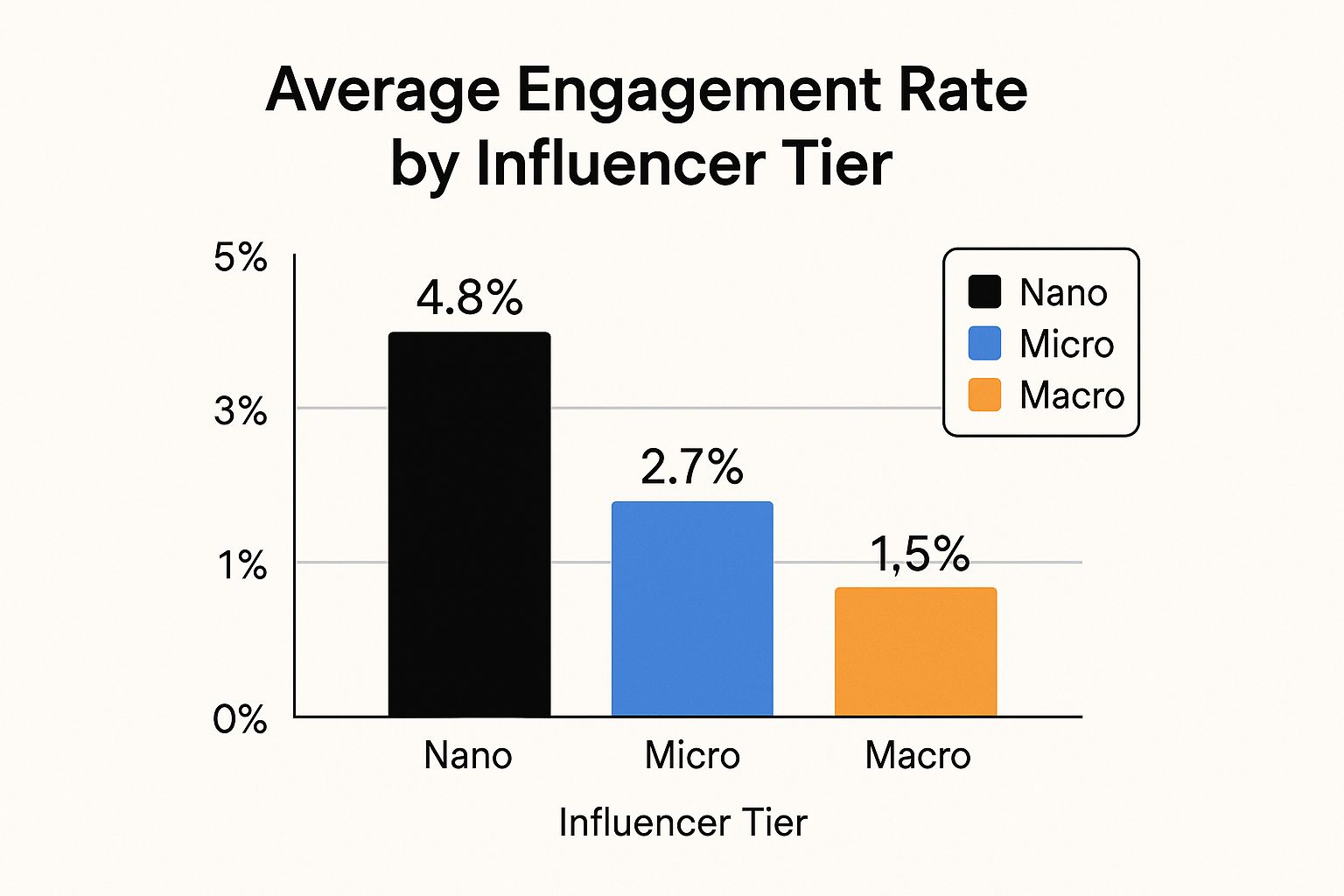
As you can see, smaller nano-influencers often deliver way higher engagement. This makes them incredibly powerful partners if you're focused on building trust and driving conversions.
The Power of Product Seeding and Long-Term Value
What’s really shaping influencer marketing right now? Cost-efficiency and smarter partnerships. Affiliate marketing, for instance, is exploding—creators are driving 71% more affiliate revenue than they did just a year ago.
And here’s something really interesting: even though 57% of creators have raised their rates, a massive 83% are still happy to work with a brand in exchange for free products if they genuinely love the company. This just goes to show how powerful authentic alignment is.
For the best possible ROI, many brands are shifting to ambassador programs. It’s been proven time and again that building long-term relationships consistently delivers better results than a string of one-off campaigns. You can discover more insights on the state of influencer marketing to see how these trends can help you build a smarter strategy.
Turning One-Off Campaigns into Lasting Relationships
Getting a great collaboration with an influencer is a fantastic win. But the real magic happens when you turn that single project into a long-term partnership.
The goal isn’t just to get a one-time product feature. It’s about building a team of genuine brand ambassadors who are truly invested in your success. Shifting your mindset from transactional to relational is what will create a sustainable growth engine for your brand.
Don't let the relationship fizzle out the moment the final post goes live. That's actually the perfect time to build on the momentum. A simple, personalized "thank you" can make a world of difference. Point out specific things you loved about their content—it shows you see them as a creative partner, not just a number on a spreadsheet.
Keeping the Partnership Alive
To keep your best creators in your corner, you have to think beyond the campaign deliverables. Make them feel like they’re part of your inner circle, like they’re on the inside track of your brand's journey.
Here are a few ways to make that happen:
- Offer Exclusive Access: Give your top influencers a sneak peek at new products before anyone else. This makes them feel special and gives them exciting, exclusive content for their audience.
- Feature Their Content: When you get a killer post, showcase it! Share their work on your brand’s social media, website, or in email newsletters (always with their permission, of course). It’s great exposure for them and validates their hard work.
- Create a Community: Think about setting up a private group on a platform like Slack or Geneva for your go-to partners. This helps build a real sense of community where they can connect, share ideas, and feel more connected to your brand.
When you consistently provide value outside of a paycheck, you show influencers you’re invested in their growth, not just your own.
The best influencer programs are built on reciprocity. When you support your creators' growth, they become more invested in yours. They'll start championing your brand with an authentic passion that money just can't buy.
From Promoter to Passionate Advocate
Ultimately, you want an influencer to talk about your product not just because they were paid, but because they genuinely love and use it. This is where you get that powerful, organic advocacy that truly connects with an audience.
Think of it as building a roster of superfans who just happen to have influential voices. For example, let's say you had a great campaign with a fitness influencer. Why not invite them to a virtual Q&A with your product development team? Giving them that behind-the-scenes look makes them feel like a true collaborator.
Yes, this long-term approach takes a bit more effort upfront. But the payoff is huge. You end up with a network of trusted advocates who provide ongoing social proof, a steady stream of authentic content, and consistent, long-term growth for your business. It’s the difference between renting an audience and actually building a loyal community.
Measuring the True Impact of Your Influencer Campaigns
So you’ve launched your influencer campaign. Great! But the real work is just getting started. If you’re not tracking your results, you’re essentially flying blind. You need to know what's working—and what isn't—to make smart decisions and prove these partnerships are actually worth the investment.
It's easy to get caught up in vanity metrics like likes and comments. While those numbers can feel good, they don’t tell the whole story. What you really want to know is how these collaborations are affecting your bottom line. That means digging into the data that connects an influencer’s content directly to sales.
Tracking What Truly Matters
The secret to getting this right is attribution. You have to be able to draw a straight line from an influencer’s post to a specific action, whether that's a click, a sign-up, or a purchase. This is where unique tracking links and codes become your best friend.
Here are the metrics that should be on your radar:
- Click-Through Rate (CTR): This tells you how many people were intrigued enough by an influencer's post to actually click the link to your product page. It’s a clear signal of how effective their call-to-action is.
- Conversion Rate: This is the big one—the percentage of those clicks that turn into actual sales. It’s the clearest indicator of an influencer's power to not just build awareness, but to drive real action.
- Sales Attributed: By giving each influencer a unique discount code or a custom affiliate link, you can track every single purchase they generate. This gives you concrete, undeniable data on the revenue they've brought in.
When you give each creator their own unique affiliate link, all the guesswork disappears. You can see exactly who is driving sales and which pieces of content are hitting the mark, which lets you double down on your most successful strategies.
This data-first mindset is what separates a good campaign from a great one. For a deeper dive, it’s worth understanding the nuances of measuring content performance effectively.
Calculating Your Return on Investment
Once you have this data in hand, figuring out your return on investment (ROI) is simple. You just compare the total revenue an influencer generated to what you spent on the collaboration—whether that was a flat fee, the cost of the products you sent, or the commissions you paid out.
For a complete breakdown of the formulas and strategies, check out our guide on calculating influencer marketing ROI. This analysis will help you spot your top-performing partners, fine-tune your approach for the next campaign, and confidently show anyone in your company the powerful business impact of your influencer program.
Frequently Asked Questions
What if I'm Starting With a Small Budget?
That's actually a great way to start. You don't need a massive budget to see real results. The key is to be strategic.
Your best bet is to focus on nano- and micro-influencers, those with follower counts between 1,000 and 100,000. Many of these creators are thrilled to work with brands they love in exchange for free products or a solid affiliate deal.
Look for creators whose audience is a perfect match for what you sell. A tight-knit, engaged following that hangs on every word an influencer says is infinitely more powerful than a huge, disengaged one. By offering a generous commission, you give them a real incentive to push for sales, tying your costs directly to revenue.
What Happens if a Campaign Doesn't Perform Well?
It happens to everyone. Not every collaboration is going to be a runaway success, and that’s okay. The first thing you need to do is dive into the data and figure out what went wrong.
Was the messaging a bit off? Did the call-to-action not land? Have an honest conversation with the influencer. They're the expert on their audience and can often offer incredible insights you might have missed.
Think of it as a valuable lesson, not a failure. Every campaign, good or bad, gives you data you can use to make the next one even better.
Ready to turn your most passionate customers and creators into your best salespeople? Coral provides everything you need to find, manage, and reward influencers for driving real sales on Amazon. Start building your affiliate army with Coral today.