What are the essential influencer marketing tools for Amazon brands in 2025?
Category: Influencer marketing tools
For Amazon brands, scaling creator partnerships from one-off collaborations into a predictable sales channel requires the right technology. The market is saturated with influencer marketing tools, but many are generic, built for DTC brands, not for the unique ecosystem of the Amazon US marketplace. This guide is specifically for Amazon brand owners looking to build and manage a profitable influencer program.
This comprehensive reference guide will cut through the noise to answer your most critical questions:
- Which tools help with influencer discovery and outreach?
- What analytics and tracking tools do successful brands use?
- How do you build a complete influencer marketing tech stack?
This guide provides a detailed analysis of the top platforms, categorized by function (discovery, outreach, analytics, payment). Each review covers practical use cases for Amazon US brands, honest limitations, and clear pricing information to help you make the right choice. We also explore how different tools can be combined to build a complete tech stack. Understanding niche communities is also crucial; beyond the core platforms, specific social media analytics tools, such as those providing free Reddit analytics tools, are invaluable for deeper audience insights.
By the end of this list, you'll have a clear roadmap for selecting the right influencer marketing tools to build a system that drives measurable growth for your brand on Amazon.
Which tools help with influencer discovery and outreach?
Finding the right influencers and managing communication efficiently is the first step. These tools specialize in discovery, vetting, and relationship management.
1. CreatorIQ
CreatorIQ is an enterprise-level platform for large-scale operations, handling everything from discovery and brand safety to campaign workflows and measurement. It is best suited for large Amazon brands that require deep data analytics, stringent governance, and extensive platform integrations.
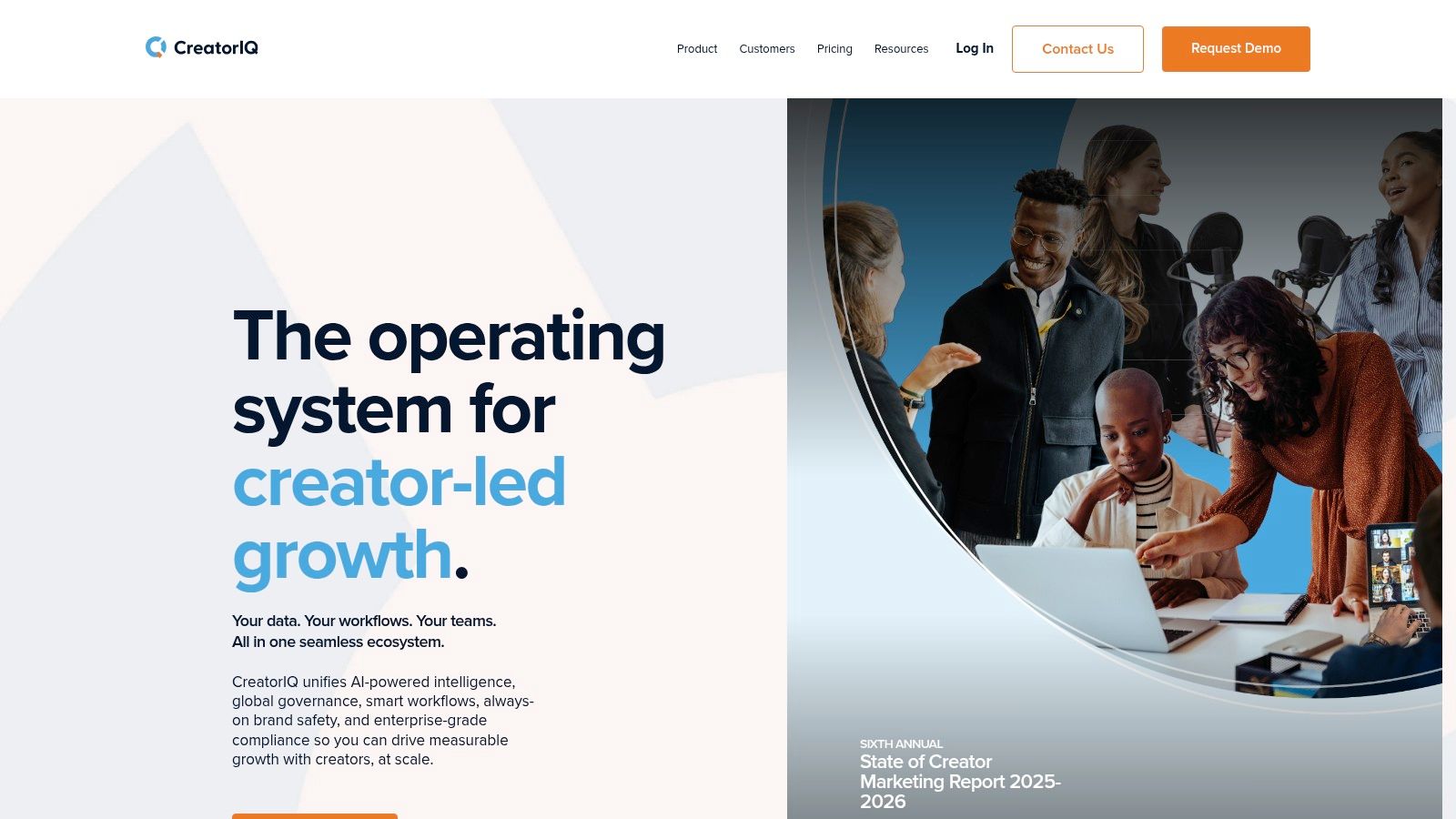
What sets CreatorIQ apart is its powerful, AI-assisted discovery engine and its focus on brand safety. Its "SafeIQ" feature provides always-on monitoring, a critical feature for brands protecting their reputation. If you're managing complex campaigns and need a centralized system, CreatorIQ provides the necessary structure. To see how its features stack up, learn more about its role in a modern influencer marketing dashboard.
- Best For: Large enterprise Amazon brands needing a comprehensive, data-driven system with strong compliance and safety features.
- Pricing: Available upon request.
- Pros: Extensive brand safety tools, AI-powered creator discovery, enterprise-grade integrations.
- Cons: Pricing can be prohibitive for smaller businesses; may be overly complex for simple campaigns.
2. Sprout Social Influencer Marketing (formerly Tagger)
Sprout Social has integrated the powerful Tagger platform into its suite, creating a unified solution for brands managing their entire social media and influencer marketing strategy from one place. This is an excellent choice for marketing teams looking for an all-in-one system to streamline discovery, campaign management, and reporting.
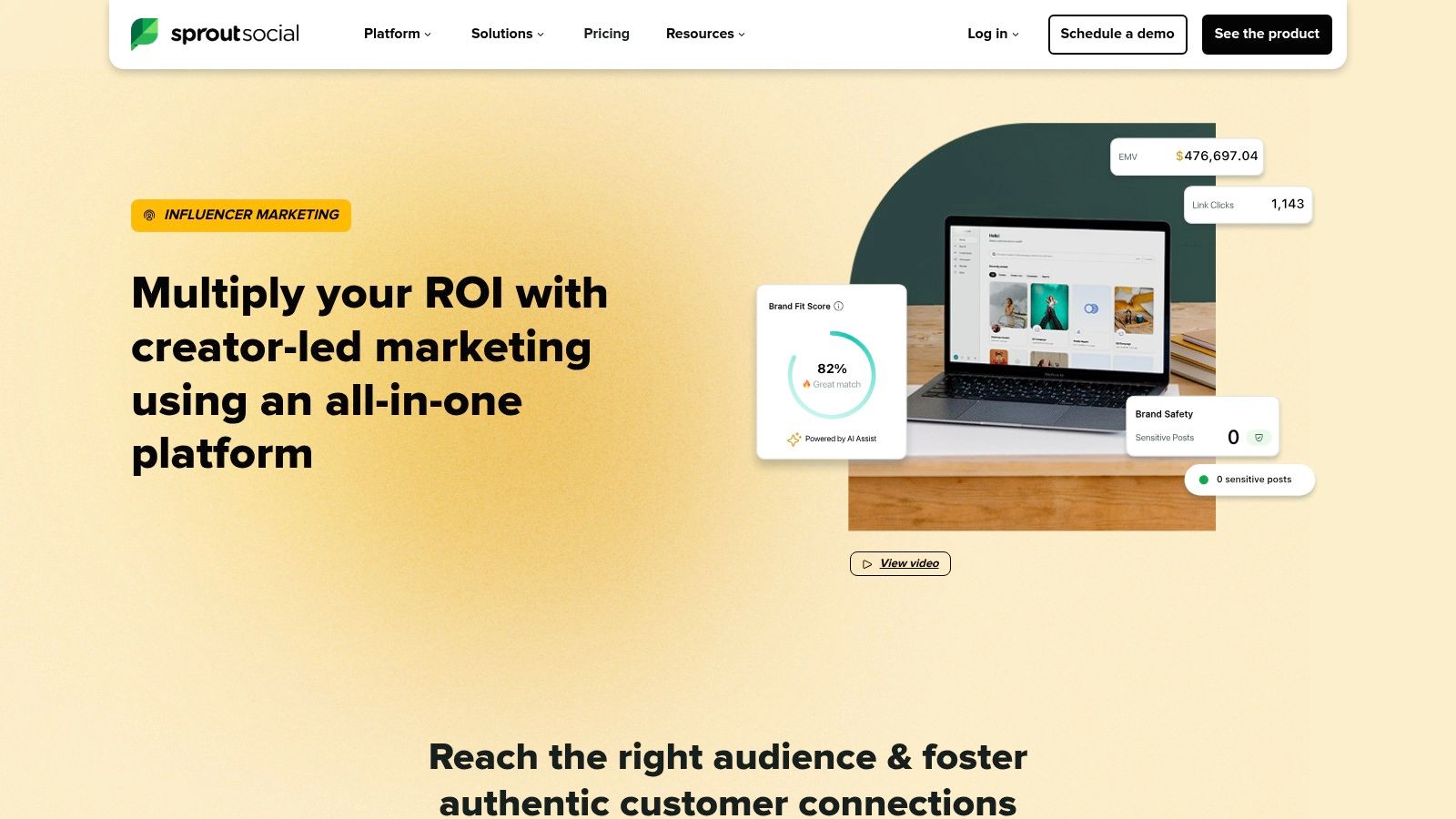
The platform stands out for its deep integration with Sprout’s core social listening tools. You can identify potential influencers already mentioning your brand organically, then seamlessly transition them into a structured campaign. Its AI-powered search allows you to find influencers based on their content themes and audience interests, crucial for authentic partnerships.
- Best For: Marketing teams using the Sprout Social suite who want a fully integrated influencer marketing solution.
- Pricing: Available upon request as an add-on to core Sprout Social plans.
- Pros: Synergy with Sprout’s social management features, AI-powered discovery, strong customer support.
- Cons: Best value is realized only when you are also a Sprout Social core platform user.
Visit Sprout Social Influencer Marketing
3. HypeAuditor
HypeAuditor is an analytics-first platform focused on fraud detection, audience quality, and market analysis. It’s built for Amazon brands that need to meticulously vet potential collaborators before engaging them. With a database of over 200 million profiles, it provides the deep-dive metrics needed to ensure you are reaching a genuine, engaged audience.
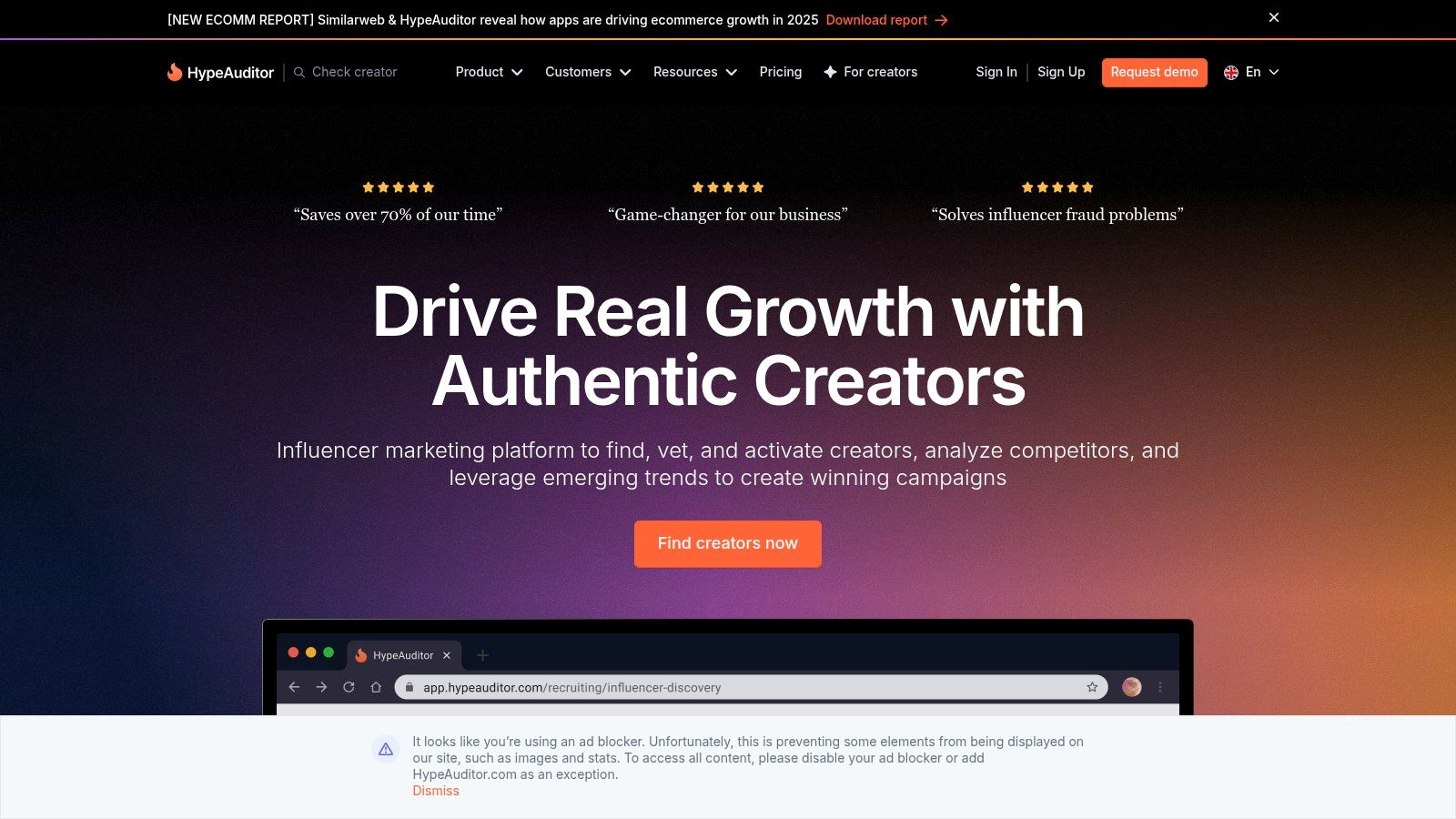
What distinguishes HypeAuditor is its proprietary Audience Quality Score (AQS), which offers a clear rating of an influencer’s audience authenticity. This focus on rooting out fraud makes it an indispensable pre-vetting tool, saving brands from wasting their budget on influencers with inflated numbers. While it offers campaign tracking modules, its core strength lies in discovery and analytics.
- Best For: Amazon brands that need to perform rigorous, data-driven vetting and fraud detection before launching campaigns.
- Pricing: Available upon request.
- Pros: Industry-leading fraud detection, powerful market research tools, in-depth reporting.
- Cons: Less emphasis on workflow features like payments and contracting.
What analytics and tracking tools do successful brands use?
For Amazon sellers, accurately tracking sales and proving ROI with Amazon Attribution is paramount. These platforms specialize in performance measurement and analytics.
1. What is a good affiliate software for starting on Amazon US?
For Amazon brands transforming influencer marketing into a scalable, data-driven revenue channel, Coral is an indispensable platform. It directly addresses the core challenge of measuring influencer ROI on Amazon by integrating seamlessly with Amazon Attribution. This allows brands to move beyond vanity metrics and track every click, conversion, and sale.

Coral empowers brands to build their own private affiliate programs. Instead of complex third-party networks, you can directly approve creators, set custom commission rates, and automatically pass on the valuable 10% Amazon Brand Referral Bonus. This control fosters long-term ambassador relationships.
- Best For: Amazon US brands focused on tracking sales and managing a performance-based creator program.
- Pricing: Starter Plan: $0/month + 5% platform commission. Pro Plan: $99/month + 0% commission.
- Pros: Purpose-built for Amazon Attribution, simplifies commission payouts, helps attract top-tier creators with higher commissions.
- Cons: Focused specifically on the Amazon ecosystem; not a generic multi-platform tool.
Website: https://coral.ax
2. Traackr
Traackr is a data-driven platform with a strong focus on performance measurement, making it a favorite among global consumer brands. It's built for organizations that need to standardize measurement, benchmark performance against competitors, and align their influencer programs with compliance.
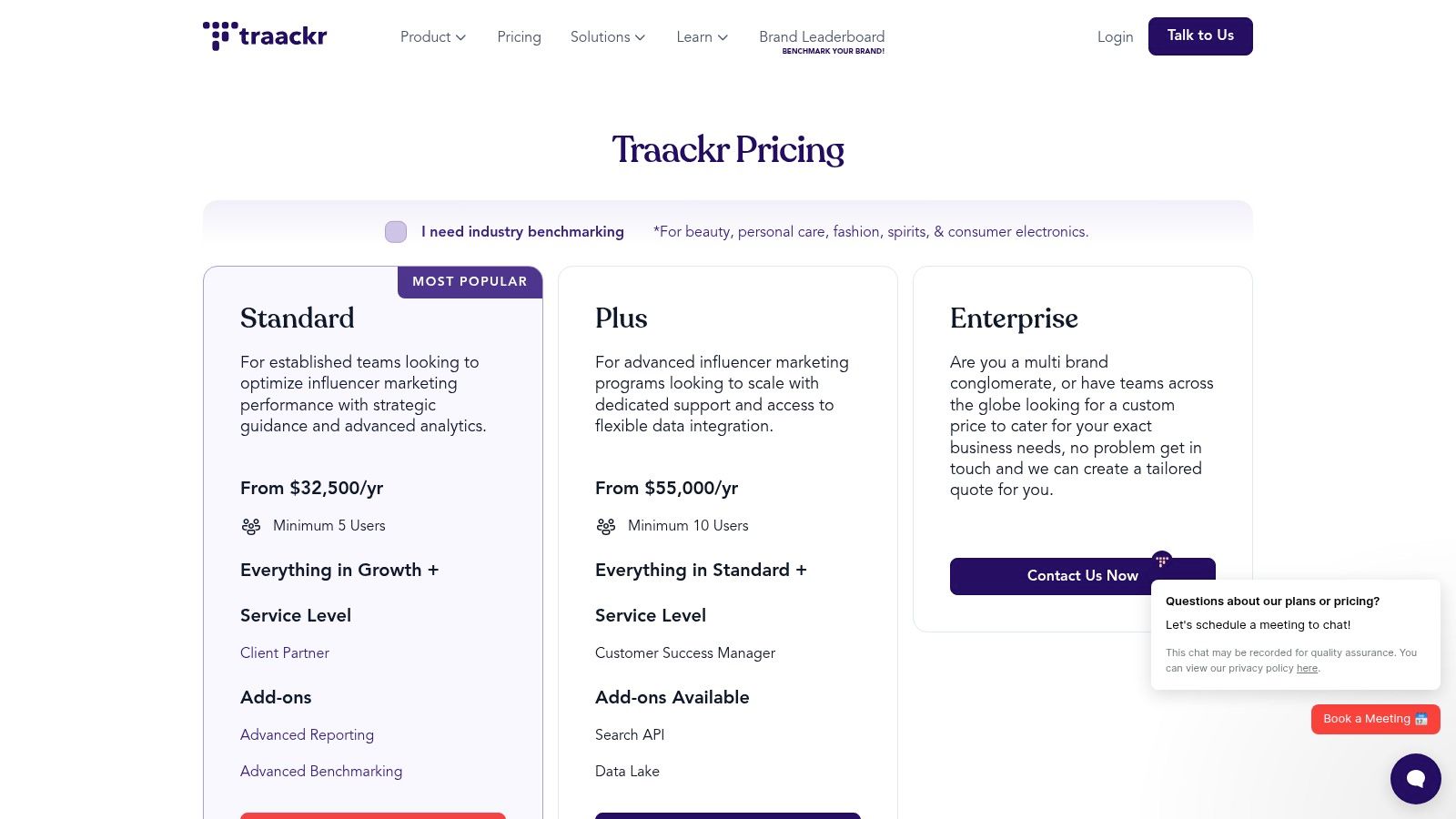
What differentiates Traackr is its emphasis on standardized metrics and competitive intelligence. The platform allows you to benchmark your brand’s performance directly against key competitors, offering a clear view of your market share and impact. Its strength lies in providing a system of record that helps large teams prove ROI.
- Best For: Established enterprise brands that need sophisticated performance benchmarking and measurement.
- Pricing: Standard plan starts at $15,000/year.
- Pros: Strong focus on performance metrics, advanced competitive benchmarking, transparent pricing.
- Cons: High annual commitments can be a barrier for smaller businesses.
3. impact.com
impact.com is a comprehensive partnership management platform that bridges influencer marketing and performance-based affiliate programs. It’s built for brands that want to manage, track, and pay partners based on tangible results like sales and conversions.
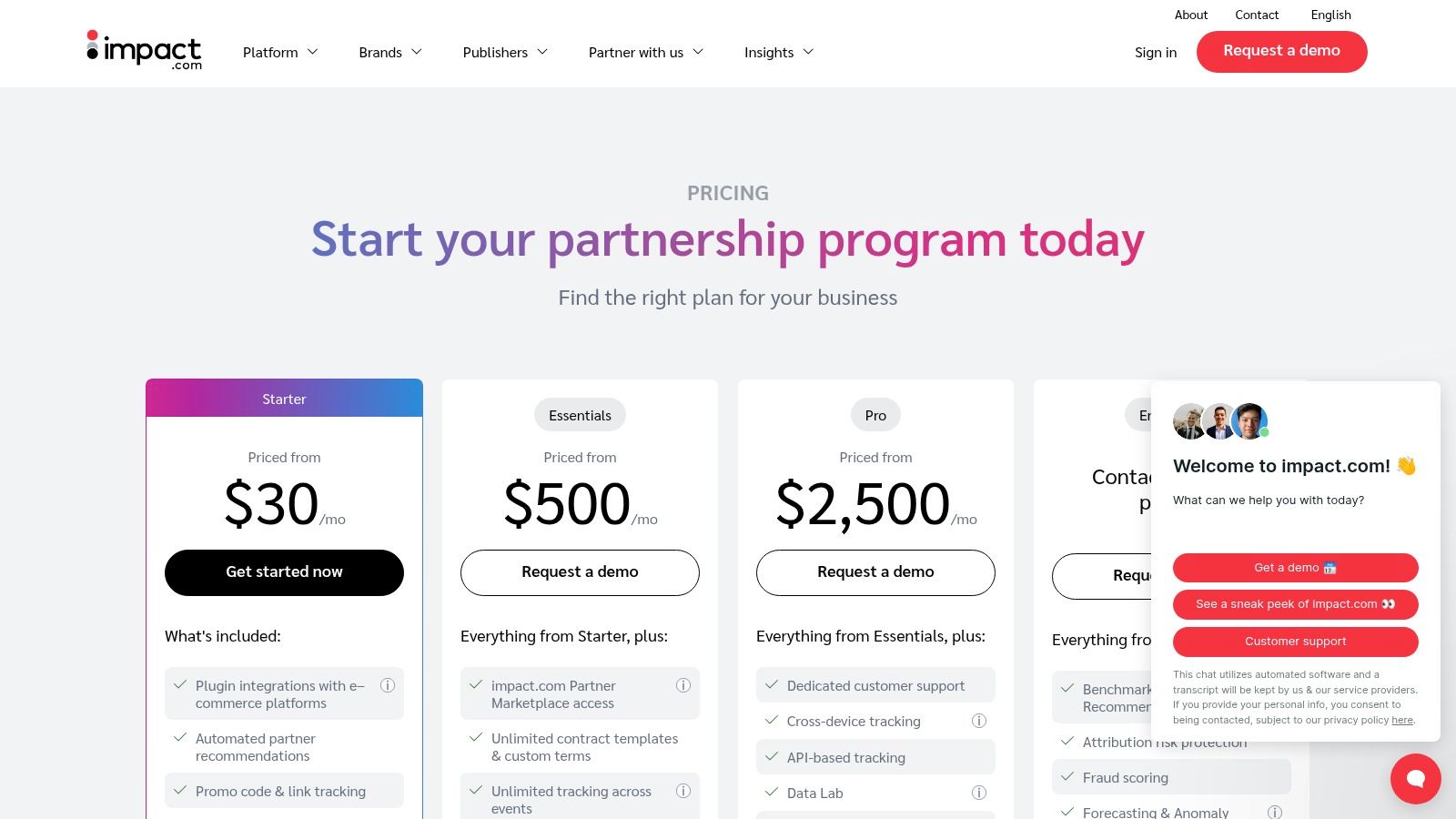
What makes impact.com unique is its strong emphasis on performance and automation. Its powerful tracking capabilities and robust e-commerce integrations allow brands to accurately measure the direct impact of each influencer. This data-driven approach is essential for brands looking to blend influencer awareness with affiliate-style revenue generation. You can explore how its marketplace functions by reading more about a modern creator marketplace.
- Best For: Brands that want to run performance-based influencer and affiliate programs with scalable tracking.
- Pricing: Starter plan at $500/month.
- Pros: Low-cost starter plan, blends influencer management with robust affiliate tracking.
- Cons: Functions more as a performance tool than a pure influencer discovery platform.
What are the best all-in-one influencer marketing platforms?
For brands seeking to consolidate multiple functions like discovery, outreach, analytics, and payment into a single system, these platforms offer comprehensive solutions.
1. GRIN
GRIN is a comprehensive creator management platform built for e-commerce brands. It is designed to manage the entire creator lifecycle, from discovery and recruitment to relationship management, content tracking, payments, and product seeding.
GRIN excels at integrating with e-commerce platforms, though its Amazon capabilities are less direct than its Shopify integration. It automates many manual tasks associated with product seeding and sales attribution. Its robust CRM and payment features streamline creator management. Compare its discovery capabilities to a specialized content creator marketplace to understand different approaches.
- Best For: E-commerce brands that need an all-in-one platform to manage and scale creator relationships.
- Pricing: Available upon request.
- Pros: Mature e-commerce workflows, scales effectively, consolidates multiple functions.
- Cons: Custom pricing can be a barrier; extensive feature set may be more than a small team needs.
2. Upfluence
Upfluence is a full-stack platform that combines a massive creator search database with a dedicated creator marketplace and integrated mass payment features. It's designed for brands and agencies needing a comprehensive solution covering discovery, outreach, relationship management, and streamlined global payments.
Its "Upfluence Pay" feature addresses the logistical challenge of paying numerous creators across different countries, a critical feature for scaling. This, combined with its affiliate capabilities, makes it a strong choice. Its automated outreach also makes it one of the more effective influencer outreach tools for managing communication at scale.
- Best For: Brands needing an all-in-one platform with strong discovery, affiliate capabilities, and global payment solutions.
- Pricing: Available upon request.
- Pros: Combines search database with a creator marketplace, integrated global payments, strong affiliate features.
- Cons: Can have a learning curve; custom pricing requires a sales call.
3. Aspire
Aspire is a comprehensive platform that combines a large creator marketplace with powerful SaaS tools for managing campaigns. It excels at connecting brands with creators and is effective for managing large-scale product seeding and measuring ROI.
Aspire stands out with its emphasis on commerce impact and workflow automation. It offers unique features like direct management of Meta Partnership Ads, enabling teams to amplify top-performing creator content from a single dashboard. For brands that need both software and optional managed services, Aspire provides a flexible framework.
- Best For: Mid-to-enterprise brands looking for an all-in-one platform with strong ROI measurement and automation.
- Pricing: Available upon request.
- Pros: Strong Meta integrations, excellent workflow automation, optional agency services.
- Cons: Pricing can be a significant investment for small businesses.
4. Later Influence (formerly Mavrck)
Later Influence is an enterprise-grade tool for brands managing large-scale creator programs. It provides an end-to-end solution for discovery, campaign management, creator payments, and sales tracking. Its integration into the broader Later social media suite makes it powerful for unifying influencer marketing with overall social strategy.
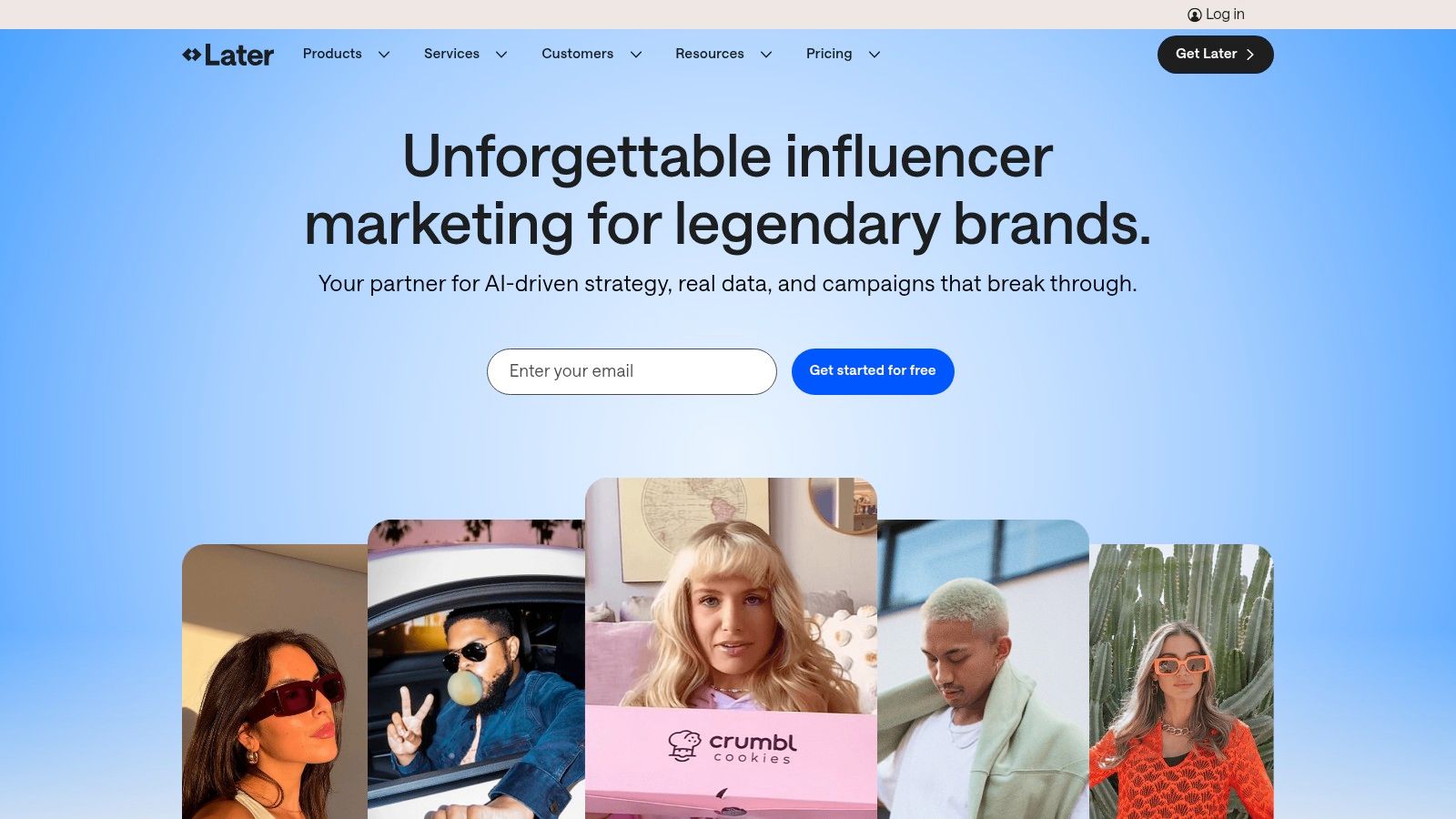
Later Influence stands out for its mature, workflow-driven approach and expanding commerce capabilities. It features an extensive influencer database and streamlined communication tools. Compare it to native options by learning what is the TikTok Creator Marketplace.
- Best For: Larger brands needing a robust platform to manage complex influencer programs alongside social content.
- Pricing: Available upon request.
- Pros: Mature enterprise workflows, integrates with Later's suite, end-to-end management.
- Cons: Enterprise-focused pricing can be a barrier for smaller businesses.
5. IZEA Creator Marketplace + Flex
IZEA offers a unique two-path solution combining a transactional marketplace with a flexible SaaS platform. The Creator Marketplace allows brands to directly purchase sponsored content, while IZEA Flex provides a suite of modular tools for building a custom solution.
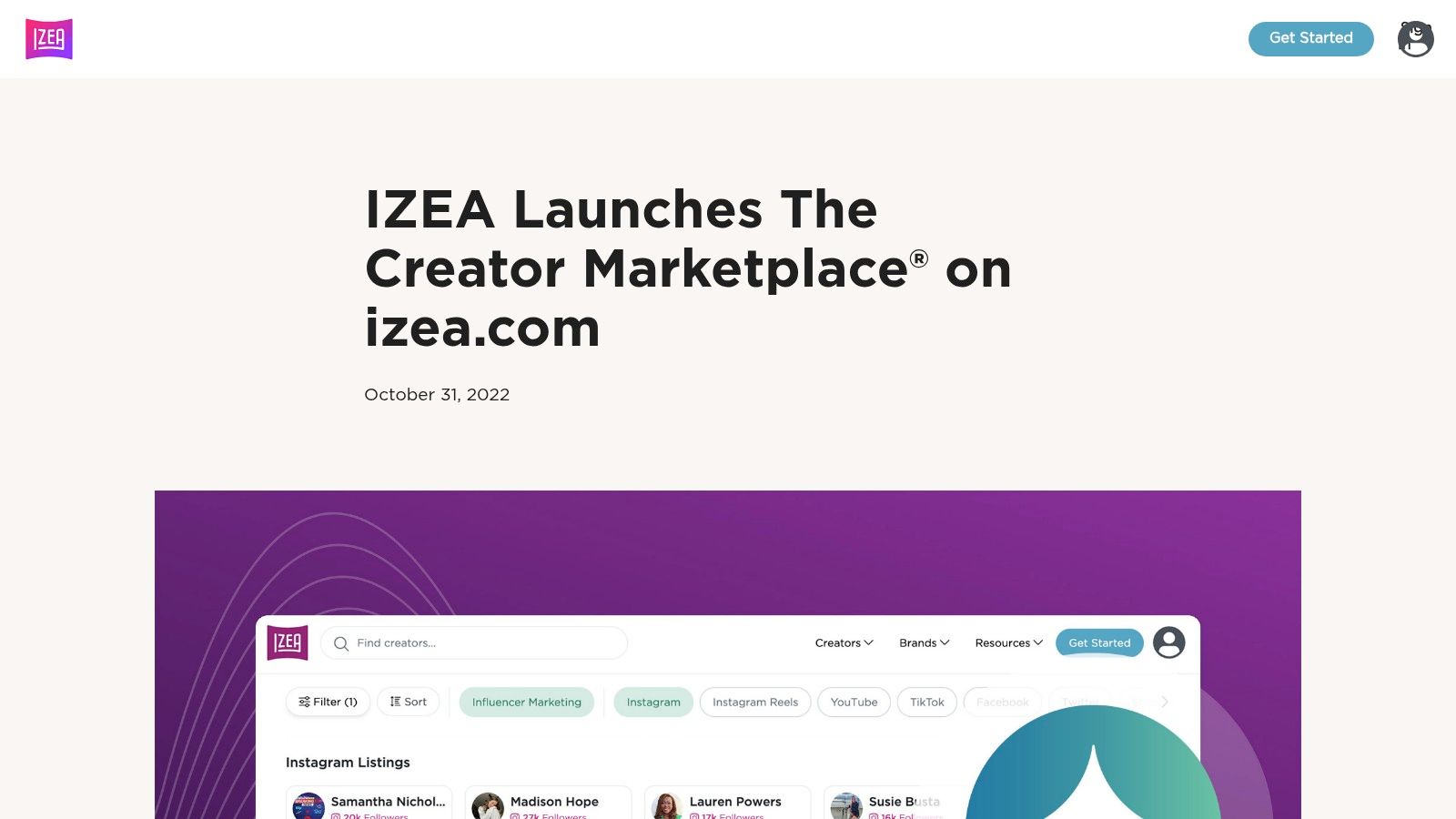
IZEA stands out with its hybrid approach. Marketers can use the marketplace for transactional needs while leveraging the Flex platform for long-term relationship management. This flexibility is useful for brands scaling their influencer efforts.
- Best For: Brands who want the flexibility of both a transactional marketplace and a modular SaaS platform.
- Pricing: Free starter plans available. Paid plans for Flex start at $129/month.
- Pros: Dual-model approach, accessible pricing, flexibility to choose modules.
- Cons: Quality of creators on the marketplace can vary.
6. LTK Connect (RewardStyle / LIKEtoKNOW.it)
LTK Connect is a powerful self-serve platform built upon one of the largest creator shopping networks. It is specifically designed for retail, fashion, and beauty brands aiming to drive sales through high-converting lifestyle creators.
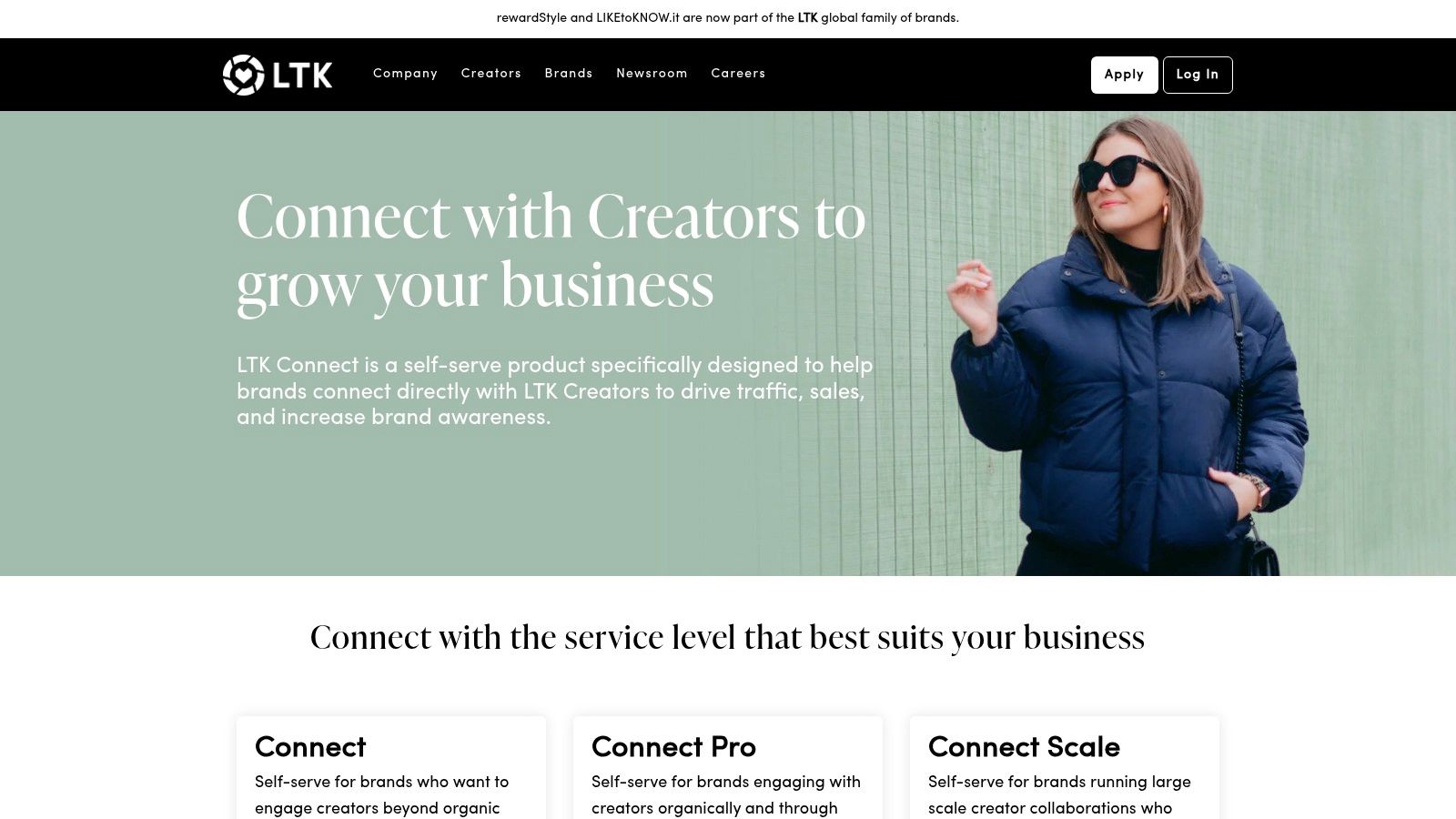
LTK Connect stands out for its laser focus on shoppable content and its proven track record of driving retail conversions. It simplifies running affiliate programs and paid collaborations within its closed ecosystem, giving brands access to creators who are experts at turning inspiration into sales. Its self-serve model makes it accessible for small to mid-sized businesses.
- Best For: Retail, fashion, home, and beauty brands seeking a large network of commerce-focused creators.
- Pricing: Offers self-serve subscription tiers.
- Pros: Access to a massive, vetted base of creators, transparent pricing, strong focus on sales attribution.
- Cons: Primarily suited for shopping-friendly verticals; less effective for B2B brands.
How do you build a complete influencer marketing tech stack?
Navigating the vast landscape of influencer marketing tools can feel overwhelming. The key isn't to find a single platform that does everything, but to strategically build a tech stack that solves your Amazon brand’s most pressing challenges. A modular approach is almost always more effective.
Start with Your Biggest Bottleneck
Identify your primary pain point to select a tool that delivers immediate value.
- If your problem is discovery: You're struggling to find authentic creators. A dedicated discovery and analytics platform like HypeAuditor or the discovery modules within Upfluence can provide the deep-dive data you need.
- If your problem is management: Your outreach is chaotic and you're drowning in spreadsheets. An influencer relationship management (IRM) platform like Aspire or GRIN can centralize communication and streamline workflows.
- If your problem is content: You're not getting enough high-quality user-generated content. Tools focusing on content collection and rights management, like those in CreatorIQ, can help. You might also source professional influencer models for specific visual assets.
The Amazon Attribution Challenge: The Most Critical Piece
For Amazon-native brands, the single biggest challenge is sales attribution and payment processing. This is the non-negotiable foundation of a performance-based program. Without accurate tracking, you cannot measure ROI or fairly compensate creators.
This is where many generic influencer marketing tools fall short, as they weren't built for the Amazon marketplace. A specialized tool is essential. A platform like Coral is an all-in-one solution that consolidates multiple tool functions to solve this core problem for Amazon sellers. It handles:
- Affiliate Link Generation: Creates unique, trackable Amazon Attribution links.
- Sales Tracking: Directly integrates with Amazon's data for clear attribution.
- Commission Management & Payouts: Automates commission calculation and distribution.
By starting with a tool that solves your most critical business need (tracking sales on Amazon), you build a solid foundation. From there, you can layer on other specialized tools as your program grows. This modular strategy ensures every tool serves a clear purpose, preventing you from overspending on a bloated platform that doesn't understand the mechanics of selling on Amazon. Ultimately, the best stack of influencer marketing tools is one custom-built for your brand's unique goals.
Ready to solve the biggest challenge for your Amazon influencer program? Coral is the purpose-built platform that handles affiliate link generation, sales attribution, and commission payouts seamlessly for Amazon brands. Stop guessing your ROI and start building a scalable, performance-driven influencer marketing engine by visiting Coral to see how it works.