Your Guide to Affiliate Marketing Software
Category: Affiliate marketing software
Think of affiliate marketing software as the central hub for your entire partner program. It’s the system that handles everything from tracking affiliate links to paying out commissions, letting you ditch the spreadsheets and manual work for good.
This kind of tool is what turns one-off collaborations into a powerful and scalable sales channel.
What Is Affiliate Marketing Software Anyway?
If you've ever tried to manage even a handful of partners with a spreadsheet, you know the headache. It’s messy, prone to error, and just doesn't scale. That's exactly the problem this software solves. It automates the whole lifecycle of an affiliate partnership.
The software gives each of your partners their own unique tracking links, automatically calculates the commissions they've earned, and makes sure they get paid correctly and on time. You get a clear, real-time picture of your program's performance, which frees you up to focus on what really matters: building great relationships with your affiliates.
If this is all new to you, our guide for a beginner affiliate marketer is a great place to start building a solid foundation.
At its core, the software operates on three key functions that work in concert.
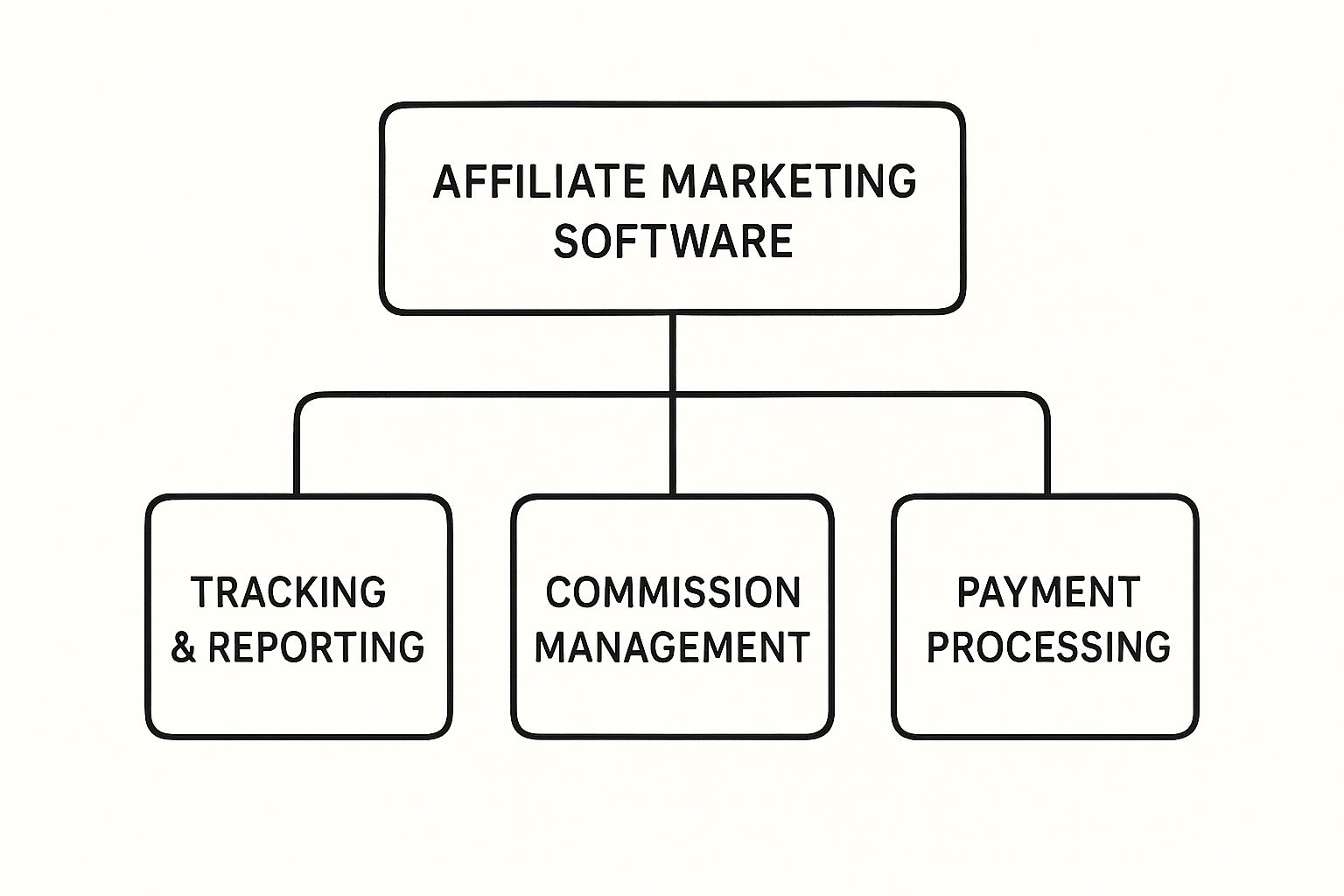
These three pillars—tracking, commissions, and payments—form the essential backbone of any successful affiliate program. It’s the infrastructure you need to create predictable, sustainable growth.
The Core Features Every Platform Needs

When you're shopping for affiliate marketing software, some features are absolute must-haves. Think of them like the engine and wheels of a car—without them, you're not going to get very far. These core functions are what make a program reliable, effective, and worth your investment.
To help you sort through the options, we've put together a checklist of the essential features you should look for. Each one plays a critical role in building a successful affiliate program from the ground up.
Essential Affiliate Software Features Checklist
| Feature | Primary Benefit |
|---|---|
| Real-Time Link Tracking | Instantly see which affiliates are driving sales and what campaigns are working best. |
| Customizable Commissions | Motivate affiliates by offering different rewards for different outcomes (e.g., leads vs. sales). |
| Automated Onboarding | Get new partners up and running quickly with self-serve sign-ups and instant access to resources. |
| Secure Payment Processing | Build trust and keep affiliates happy with reliable, on-time, and accurate payouts. |
Let's break down why these features are so important for managing and growing your affiliate program.
The Make-or-Break Features
At the top of the list is real-time link tracking. This isn't just a nice feature to have; it's the heart of the entire system. It tells you exactly which partners are sending you sales and when, giving you a clear, immediate picture of what’s working.
Next up, you need customizable commission structures. A one-size-fits-all approach just doesn't cut it in the affiliate world. Good software lets you create different reward tiers, like a flat fee for a new lead or a percentage of a sale, which helps you motivate all types of partners.
The ability to automate the affiliate sign-up process is a huge time-saver. The right software provides new partners with everything they need to start promoting your products right away, completely hands-free.
Finally, nothing builds trust like getting paid on time. Secure and integrated payment processing is essential. Your software must handle payouts accurately and on schedule, showing your partners that you value their hard work. This reliability is what turns a good partnership into a great one.
With the affiliate industry projected to hit $31.7 billion by 2031 and 81% of brands already running these programs, getting the foundation right is more important than ever. If you're looking for more details on tracking, check out our guide on free commission tracking software.
Advanced Tools for Scaling Your Program

Once you've got the basics down, the right affiliate marketing software can turn a small-time program into a serious growth engine. This is where advanced tools become non-negotiable for scaling up smartly and protecting your bottom line.
These sophisticated tools go way beyond just tracking links. They bring powerful features to the table that automate tedious jobs, fine-tune performance, and give you a real competitive advantage. It's what separates the good affiliate programs from the truly great ones.
Key Capabilities for Growth
Advanced platforms come loaded with tools built for optimization and security. For example, fraud detection is a must-have. These systems automatically spot and block fake clicks or shady commissions, saving you a ton of money on traffic that was never real. This feature alone can make your program significantly more profitable.
Another game-changer is deep linking. Instead of just dumping referred traffic on your homepage, affiliates can send potential customers directly to a specific product page. It’s a simple tweak that makes for a much smoother user experience and almost always results in higher conversion rates.
These advanced features are no longer just for massive enterprise companies. The market is now full of platforms that offer end-to-end management, making powerful tools like AI-driven analytics accessible to just about everyone.
Many platforms also support multi-tier commission structures. This setup lets you reward your top-performing partners for recruiting other affiliates, creating a network effect that can really accelerate your growth. Of course, knowing how to handle these features requires solid affiliate program management.
Why SaaS Businesses Play by a Different Set of Rules
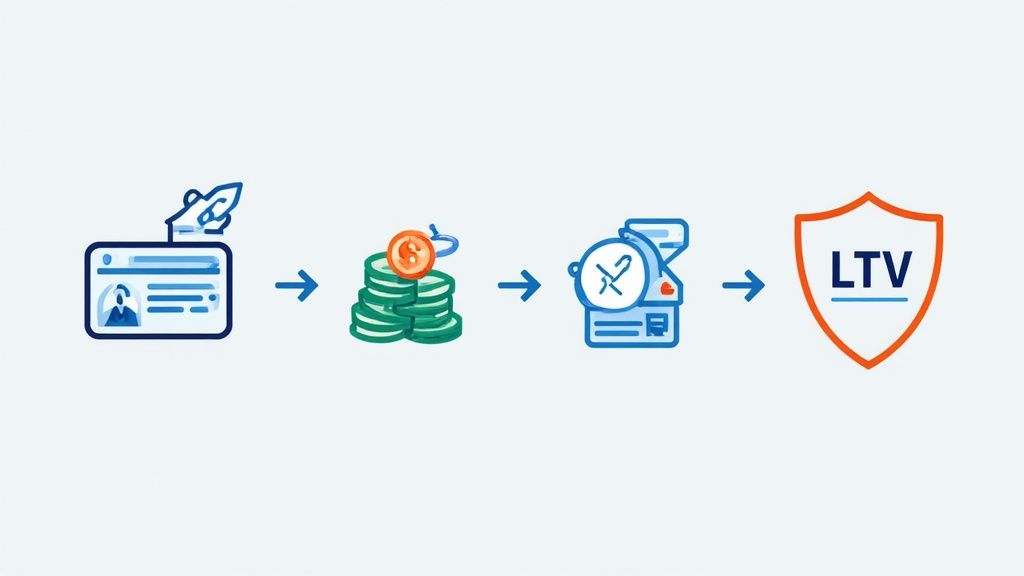
When you're running a SaaS company, affiliate marketing is a whole different ballgame. It's not about quick, one-off sales. It's about building long-term customer relationships that generate recurring revenue, month after month.
This is exactly where most generic affiliate platforms miss the mark. They're designed for e-commerce, where a single transaction is the end of the story. For a subscription business, the initial sale is just the beginning.
That’s why you need affiliate marketing software built specifically for the SaaS world. It understands and tracks commissions on monthly or annual renewals, which is absolutely essential for keeping your partners motivated and invested in your success. To see how powerful this can be, check out our guide on recurring commission affiliate programs.
Partners love SaaS programs for a reason. Commission rates often land between a generous 20% and 70%, and it's no surprise that 54% of SaaS marketers call affiliate marketing one of their most important acquisition channels. You can find more stats on why SaaS affiliate marketing is so effective on wecantrack.com.
A proper SaaS affiliate platform does more than just track renewals. It can handle tiered rewards when a customer upgrades their plan and provides analytics that focus on crucial metrics like Lifetime Value (LTV). Getting the bigger picture of your marketing efforts is always a good idea, and this guide to B2B SaaS marketing offers a great overview.
Ultimately, choosing a solution that's designed from the ground up for subscriptions isn't just a nice-to-have; it's a must.
How to Choose the Right Affiliate Software
https://www.youtube.com/embed/xDpx-Dwo2sg
Picking the right affiliate marketing software can feel like a huge commitment, but it doesn't have to be overwhelming. It really just comes down to knowing what you need and matching those needs to the right tool.
Think of it like this: you wouldn't buy a delivery van if you only need a scooter. By figuring out your specific goals first, you can find a solution that's a perfect fit for your business right now—and for where you want to go.
Pricing, Growth, and Tech: The Big Three
First up, let's talk about money. Do you feel more comfortable with a set, predictable flat monthly fee, or does a commission-based model that only costs you when you make a sale sound better? Neither one is inherently better; it’s all about your budget and what lets you sleep at night.
Next, consider your future growth. The platform that works for you today needs to keep up as you expand. Will it buckle under the pressure of more affiliates and a higher sales volume, or can it grow with you without forcing an expensive, premature upgrade?
Finally, integration is non-negotiable. Your affiliate marketing software has to play nicely with the tools you already use every day.
- E-commerce Platform: Does it connect without a headache to your Shopify, BigCommerce, or custom-built store?
- Marketing Tools: Can it talk to your email marketing platform or CRM to keep your data in sync?
- Payment Gateways: Does it work seamlessly with the payment processors you rely on to get paid?
Honestly, the best approach is to carefully weigh these three things—pricing, scalability, and integrations—against your business goals. This simple check ensures the software isn't just a temporary fix but a true partner in your long-term success.
Software Evaluation Criteria Comparison
Choosing a platform isn't a one-size-fits-all deal. A startup has very different priorities than a large, established company. This table breaks down how the importance of certain factors can shift depending on the size and scale of your business.
| Evaluation Factor | Importance for Small Business | Importance for Large Enterprise |
|---|---|---|
| Pricing Model | High (Budget is often tight; predictable costs are key) | Medium (Focus is more on ROI and value than raw cost) |
| Ease of Use | High (Limited resources for training and setup) | Medium (Dedicated teams can handle more complex systems) |
| Scalability | Medium (Important for growth, but immediate needs come first) | High (Must handle massive traffic and transaction volumes) |
| Integration | High (Needs to connect with existing, often limited, tools) | High (Crucial for syncing with a complex, multi-layered tech stack) |
| Customization | Low (Standard features are usually sufficient) | High (Requires bespoke solutions to fit specific workflows) |
| Support | High (Reliant on quick help to resolve issues) | High (Needs enterprise-level support and dedicated managers) |
As you can see, while some needs are universal, the emphasis changes. A small business might prioritize a simple, affordable tool, while an enterprise will focus on robust, custom solutions that can handle massive scale.
Many of the core principles for picking the right software are similar across different marketing disciplines. For another perspective, it can be helpful to see what to look for in SEO tools, as there's a lot of overlap in the evaluation process.
Common Questions About Affiliate Software
Thinking about affiliate software? You're not alone. Most brand owners have a few questions before they jump in. Let's clear up some of the most common ones so you can feel confident about your next move.
Can You Manage Affiliates Without Software?
Technically, yes—if you only have one or two partners and love spreadsheets. But once you start growing, tracking things manually becomes a nightmare. It’s incredibly time-consuming and almost guarantees you’ll make mistakes.
Misattributing a sale can seriously damage the trust you have with a partner. That's where affiliate marketing software comes in. It automates all the tedious work, gives you data you can actually trust, and frees you up to focus on building great relationships with your affiliates.
What Is the Difference Between a Network and Software?
This one trips a lot of people up, but it's pretty simple when you think about it.
- An Affiliate Network is like a giant, ready-made marketplace. Think of platforms like CJ Affiliate or Rakuten. They give you instant access to thousands of publishers, but you have less control, and it's not really your program.
- Affiliate Software is the tool you use to build your own private program. You recruit your own partners, control the branding, and build direct relationships. It's your house, your rules.
So, which one is right for you? It really boils down to your goals. A network gives you speed and a massive pool of potential partners. Software gives you control, stronger relationships, and a branded experience that's all your own.
A big part of this is understanding how sales are tracked. To get a better handle on that, check out our guide that breaks down what attribution modeling is and why it matters for your program.
How Much Do These Platforms Typically Cost?
The price tag on affiliate software can swing pretty widely. For startups and smaller brands, you can find solid entry-level plans that start around $50 to $100 per month.
For larger companies with more complex needs, the price can climb to several hundred or even thousands of dollars a month. It all depends on the features and scale you're looking for.
Ready to build an affiliate program for your Amazon brand that you actually control? With Coral, you get everything you need to find, track, and pay your partners—all in one place. Start for free and see how simple it can be. Launch your program with Coral today.