Amazon PPC Marketing vs Influencer ROI: A Long-Term Cost Comparison
Category: Amazon ppc marketing
As an Amazon seller, you're always figuring out the best place to put your marketing budget. It usually boils down to two main options: the direct, controllable results from Amazon PPC marketing or the long-term, compounding growth from influencer affiliate marketing.
PPC is great for getting your product seen right away. But with influencer marketing, you’re building something more permanent—a sales channel built on trust that can pay off for years to come. Affiliates, motivated by commissions, will keep posting about your product without you having to do anything further, creating a lasting asset for your brand.
PPC vs. Influencer Marketing: Which One Really Drives Better ROI?
When you're trying to build a brand that lasts, you have to look at the real return on your investment over time. Amazon PPC gives you a steady stream of traffic you can turn on and off like a faucet. The catch? The second you stop paying, your visibility vanishes.
Influencer marketing works differently. It creates assets that stick around. An influencer who earns a commission from your sales has a real reason to keep promoting your product in their content, long after you first connect with them.
Here's the fundamental difference:
- PPC: You're essentially renting temporary ad space.
- Influencer Marketing: You're building a lasting sales partnership that generates content and sales over the long term.
Thanks to modern attribution tools, tracking the ROI from an influencer campaign is just as clear as tracking PPC. You can see exactly what's working. If building that kind of long-term asset sounds right for your brand, our guide on how to find TikTok influencers is a great place to start.
2. Comparing Core Cost Models: TACoS vs. Affiliate Costs
To really get a grip on whether Amazon PPC or influencer marketing is right for you, we have to talk money. Specifically, how each one drains your budget and what that means for your bottom line. They're two completely different beasts when it comes to cost.
Amazon PPC Costs
With Amazon PPC, your go-to metric is Total Advertising Cost of Sales (TACoS). This isn't just about the sales you get from an ad click; it measures your total ad spend against your total revenue. It's a fantastic way to see if your ads are actually boosting your organic sales rank or just propping up your sales. A low TACoS is a great sign.
This is where your money goes in PPC—bidding on keywords to get your product in front of shoppers who are ready to buy.
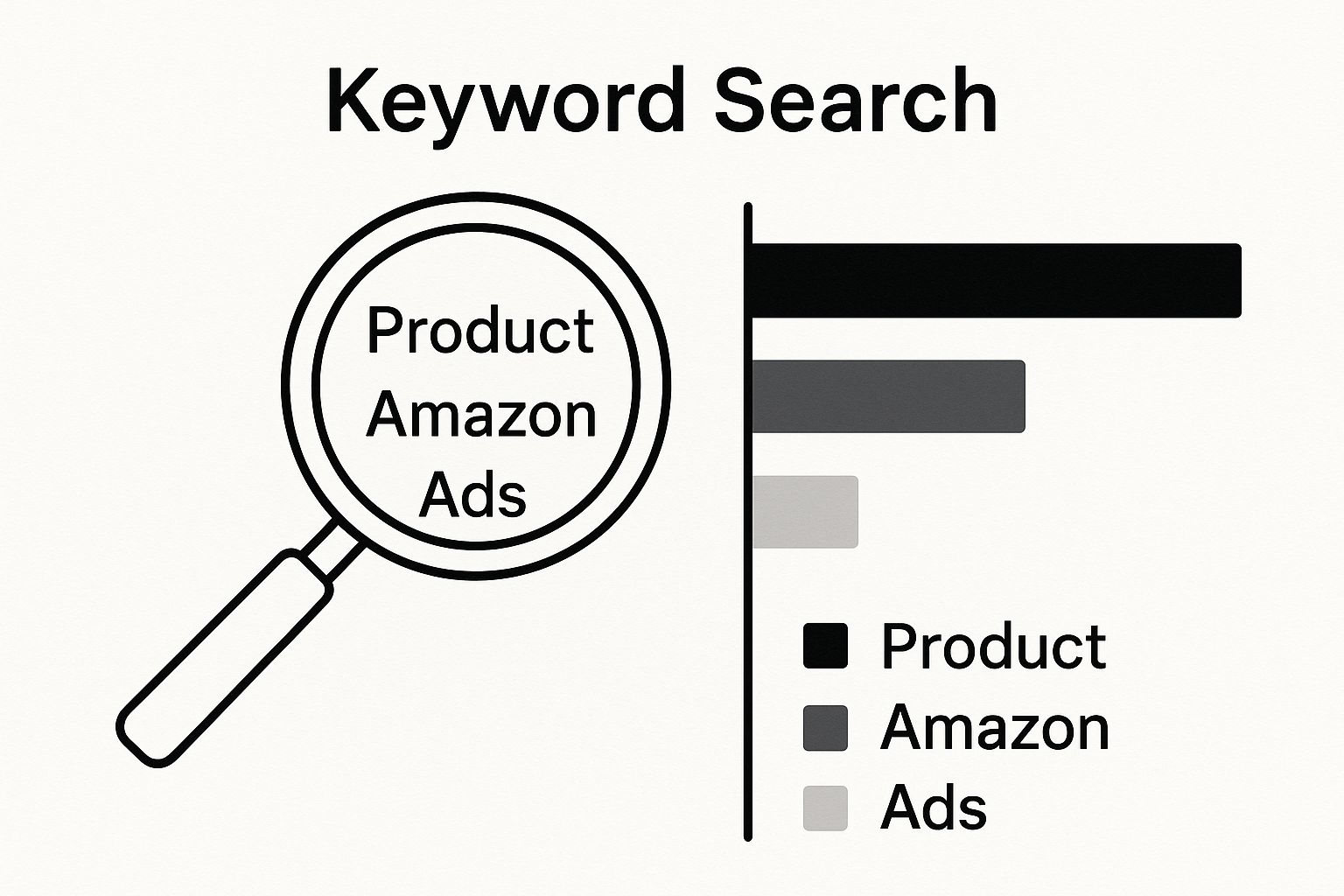
As the image shows, the cost is all about capturing that immediate search traffic. You pay to play, and when you stop paying, the visibility often stops too.
Influencer Affiliate Marketing Costs
Influencer marketing works on a different financial model. The total cost includes a couple of key components:
- The upfront cost of the product itself, which you'll send to the influencer to try.
- The affiliate commission, a percentage you pay only when they successfully drive a sale.
This table breaks down the fundamental differences in how you'll spend your money.
Cost Model Breakdown PPC vs Influencer Affiliate
| Metric | Amazon PPC Marketing | Influencer Affiliate Marketing |
|---|---|---|
| Initial Cost | Zero. Costs only accrue once ads run and get clicks. | Low. The cost of sending one or more units of your product. |
| Ongoing Cost | High. Requires a consistent daily or monthly budget to maintain visibility. | Low. Primarily performance-based commissions on sales. |
| Payment Trigger | Pay-Per-Click (PPC). You pay every time someone clicks your ad. | Pay-Per-Sale (PPS). You only pay a commission when a sale is made. |
| Core Metric | TACoS. Measures ad spend's impact on total sales. | ROI. Measures the return from the initial product cost and commissions. |
The key takeaway here is the payment structure. PPC is a tap you have to keep running, while influencer marketing is mostly about rewarding actual results.
The core difference is clear: PPC requires continuous spending for visibility, whereas affiliate marketing is primarily a pay-for-performance model. This distinction is crucial for understanding long-term return on investment, as affiliate content continues to work for you long after the initial setup.
A Head-to-Head ROI Scenario: 30% ACoS vs. 30% Commission
Let's get practical and run the numbers. Imagine you're splitting your marketing budget between two channels. You've got one campaign running on Amazon PPC with a target 30% Advertising Cost of Sale (ACoS). Your other campaign is with an influencer, where you’re offering a generous 30% commission on every sale they drive.
At first glance, a 30% ACoS and a 30% commission look identical on your profit and loss statement for a single sale. Both take the same chunk out of your margin. But this is where looking at the short-term picture can be deceiving—the long-term return on investment (ROI) for each is wildly different. With PPC, you're essentially renting traffic; the second you turn off your ads, the sales stop.
The Lasting Value of Influencer Content
Now, think about that influencer campaign. That 30% commission isn't just a cost; it's a powerful incentive. It blows the standard 4% from the Amazon Associates program out of the water, motivating creators to produce high-quality, evergreen content. We're talking about detailed YouTube reviews or in-depth blog posts that can rank in search results and continue driving sales for months, or even years, with no extra ad spend from you.
The real difference-maker here is longevity. PPC buys you a temporary spot in front of shoppers. A well-paid influencer builds a permanent sales asset for your brand.
This is where the true ROI of affiliate marketing really comes into its own. You're not just buying a sale; you're investing in content that becomes a passive sales engine. Using a platform like Coral makes this even easier. It leverages Amazon Attribution to let influencers and brands look at the same sales data and automates payments from brands to influencers based on the sales they generate. This setup allows you to offer competitive rates that rival your PPC costs but deliver far more lasting value.
The Enduring Value of Evergreen Content and Social Proof
Think of Amazon PPC marketing like renting a billboard. The moment you stop paying, your ad disappears. Influencer marketing is different; it’s more like commissioning a mural that becomes a permanent landmark for your brand.
A single, well-made YouTube review or an authentic blog post can climb the search rankings and stay there, sending a steady stream of traffic and sales your way for months or even years. This is what we call evergreen content, and it’s one of the best ways to build genuine brand authority and social proof.
Trading Rented Space for Owned Assets
This ongoing, passive traffic means your initial investment in an influencer keeps paying you back long after the campaign officially ends. It's a smart way to bring down your long-term marketing costs and improve your total advertising cost of sale (TACoS) as more organic sales roll in from that trusted content.
The real magic of influencer marketing lies in creating a lasting asset. PPC buys you a temporary slot in the spotlight, but influencer content can keep driving sales for years, turning a one-time expense into a long-term revenue engine.
The content influencers produce also builds a layer of trust that a simple ad just can't match. As of mid-2025, the average conversion rate on Amazon hovers around a healthy 10.33%. That number isn't just about ads; it’s heavily influenced by things like customer reviews and, you guessed it, compelling endorsements from trusted voices. For a deeper dive, check out these Amazon advertising stats and trends.
How Modern Tech Solves the Attribution Puzzle
For years, the biggest roadblock for brands using influencers off-Amazon was a simple, frustrating question: how do we actually track the sales and pay commissions? This murky data made it tough to stack up against the clear-cut, reliable numbers you get from Amazon PPC marketing.
Thankfully, that attribution gap is now a thing of the past. Today's platforms, like Coral, tap into Amazon Attribution to generate unique tracking links for every single influencer. This creates a shared, transparent dashboard where both the brand and the creator can see sales data pour in, in real-time. If you want to dive deeper into the mechanics, check out our guide on Amazon Attribution.
This shared data is the bedrock of trust. When influencers see their direct impact on sales, they’re far more driven to produce authentic, high-quality content that genuinely promotes your brand for the long haul.
These platforms also handle the nitty-gritty of commission payouts automatically, based entirely on those verified sales. This completely removes the administrative headache and makes it possible to offer high, motivating commissions (like the 30% we mentioned earlier) as a scalable and directly comparable alternative to your PPC budget.
Choosing the Right Strategy for Your Brand
So, which path should you take? The truth is, it's rarely an either/or situation. The smartest sellers I know don't just pick one; they blend both strategies based on what they need to accomplish right now.
If you're launching a new product or trying to figure out which ad creative works best, Amazon PPC marketing is your go-to. You get instant visibility and a flood of data, which is exactly what you need to make fast, smart decisions.
On the other hand, if your goal is to build a brand that lasts and generate sales that don't just disappear when you turn off the ads, influencer marketing is a much stronger play. This approach gives you lasting content and the kind of social proof that keeps paying you back for months and years.
My advice? Run a hybrid strategy. Kick things off with PPC to get that initial traction and gather crucial performance data. Once you have momentum, bring in influencers to build a solid foundation of trust and credibility. This one-two punch is how you build a seriously healthy and profitable Amazon business.
Curious about how this combined approach actually affects your profits? Check out our deep dive on calculating influencer marketing ROI to see the numbers for yourself.
Frequently Asked Questions
When Is Amazon PPC a Better Choice Than Influencer Marketing?
Think of Amazon PPC marketing as your go-to for immediate results. If you need to make something happen now—like launching a new product, testing a price change, or clearing out old inventory—PPC gives you the instant traffic and quick data you need. It's perfect for any time-sensitive goal where you can't afford to wait for visibility.
Can I Run Both PPC and Influencer Campaigns at the Same Time?
Absolutely. In fact, running them together is one of the smartest strategies you can use. Kick things off with PPC to get that initial traction and collect valuable keyword data right away.
At the same time, have your influencer campaigns build long-term brand credibility and a steady flow of organic traffic. The authentic content they create builds social proof, which can boost your organic ranking and, in turn, make your PPC campaigns even more effective down the road.
How Can I Justify PPC Spend with Rising Costs?
There's no denying it—costs are on the rise. The average cost-per-click (CPC) is now around $0.98, which is more than a 10% jump from last year.
To make the spend worthwhile, you have to be relentless about optimization. Focus your budget on high-conversion keywords that actually drive sales, not just clicks. Continuously fine-tune your campaigns for profitability. For a deeper dive, check out this guide on PPC strategy amid rising costs.
Ready to build a powerful, performance-based affiliate program that delivers long-term ROI? Coral gives you the tools to track sales, automate payments, and turn influencer partnerships into your most valuable marketing asset. Start for free on coral.ax and build your brand's army of advocates today.