How to become an amazon influencer: A Quick Start Guide
Category: Become an amazon influencer
So, you want to become an Amazon Influencer? The first thing to know is that this program lets you build your very own, personalized storefront right on Amazon's platform. It's a fantastic way to recommend products you genuinely love to your followers and earn commissions on any qualifying sales that come from it.
Essentially, it turns your social media influence into a real, potential income stream. Think of it as a specialized extension of Amazon's regular affiliate program, but built from the ground up for creators who already have an audience.
What Is an Amazon Influencer Really?
At its heart, being an Amazon Influencer means you're a content creator who Amazon has approved to get a unique, easy-to-remember URL for your own page. This isn't just about scattering random product links across the internet; it’s about carefully curating a trusted shopping spot for your audience. Your storefront becomes your digital boutique, filled with items you actually use and stand behind.
The program's popularity is no surprise when you look at the creator economy's explosive growth. The influencer market is projected to skyrocket from $1.4 billion to an estimated $32.55 billion by 2025. This makes sense, considering that over 59% of social media users admit to buying something based on an influencer's recommendation.
Key Features of the Program
The Influencer Program gives you a much more visual and organized way to promote products compared to the standard affiliate setup. Here’s what really sets it apart:
- Your Personal Storefront: This is your home base on Amazon. You can group your favorite products into "Idea Lists," like "My Go-To Skincare" or "Best Tech Gadgets Under $100," making it super easy for your followers to shop your recommendations.
- More Ways to Earn: You can make money beyond the usual affiliate commissions. Opportunities include creating shoppable photos, filming on-site product review videos, and even hosting your own Amazon Live streams.
- A Boost in Credibility: An official Amazon storefront adds a layer of legitimacy to your endorsements. It shows your audience you're a trusted source, which can make them much more confident when they decide to buy.
The real magic of the Amazon Influencer Program is how it shortens the journey from discovery to checkout. Your followers can see you recommend a product on Instagram or TikTok, and with just a couple of clicks, they're on a familiar, trusted platform adding it to their cart.
Amazon Influencer vs Amazon Associate at a Glance
While the Influencer program is a fantastic opportunity, it helps to understand how it differs from the standard Amazon Associate (or affiliate) program. They both let you earn commissions, but they're built for different types of creators.
Here's a quick breakdown of the main differences:
| Feature | Amazon Influencer | Amazon Associate |
|---|---|---|
| Primary Tool | A customizable storefront with a unique URL. | Individual affiliate links for specific products. |
| Who It's For | Social media creators with an existing following. | Bloggers, website owners, and publishers. |
| Monetization | Commissions from storefront, videos, photos, and livestreams. | Commissions from clicks on individual product links. |
| Approval | Requires an active social media account (e.g., Instagram, YouTube, TikTok). | Requires an active website or blog. |
Basically, if your audience lives on social media, the Influencer program is designed for you. If you run a blog or website, the traditional Associate program is likely the better fit.
Even if you're aiming for the Influencer program, getting a handle on the fundamentals of affiliate marketing is a smart move. This guide on how to become an Amazon affiliate offers some great background info on the whole ecosystem. And for a deeper dive, you can explore the key differences between the programs here: https://coral.ax/blog/amazon-influencer-vs-affiliate.
What It Takes to Get Approved
So, you're ready to jump into the Amazon Influencer program? Getting approved can feel a bit like a black box. Amazon is pretty quiet about its exact formula, but here’s what we know for sure: you need an active, public account on YouTube, Instagram, Facebook, or TikTok to even apply.
But let's clear up a common misconception right away. It's not all about the follower count. The Amazon review team is way more interested in the quality of your engagement than how many followers you have. They're looking for proof that you have a real community that actually listens to you.
Think about it this way: a creator with 2,000 followers who are constantly commenting, sharing, and chatting on their posts is far more appealing to Amazon than someone with 50,000 followers who are mostly silent. A small, dedicated audience is much more likely to trust a product recommendation and make a purchase.
Prepping Your Profile for Success
Before you even think about applying, spend some time getting your social media house in order. It’s like tidying up before company comes over—you want to make a great first impression. Your profile should instantly tell visitors (and Amazon's reviewers) who you are and what you're all about.
First, nail down your niche. Are you the expert on budget-friendly home decor? The person everyone asks about the latest tech gadgets? Maybe you're passionate about sustainable fashion. Having a clear, focused theme shows Amazon you’ve built a specific audience that they can market to.
Then, take a hard look at your content. Is it consistent? Is it high-quality? You don't need a Hollywood-level production setup, but your photos and videos should be clear, well-lit, and feel genuinely you.
Key Takeaway: Amazon isn't looking for another faceless billboard. They want trusted curators. Your profile needs to scream authentic influence and a real connection with the people who follow you.
Engagement Is Your Most Important Metric
Your engagement rate is the real currency here. It's the clearest sign of your actual influence, and you can bet Amazon's algorithms and human reviewers are looking for it.
They’re trying to spot signs of a healthy, interactive community. Here’s what they’re likely scanning for:
- Real Comments: Are people actually having conversations in your comment section? Thoughtful comments from a variety of followers—not just a bunch of fire emojis—prove people are paying attention.
- Shares and Saves: When people save your content or share it, they're saying, "This is valuable." It's a huge signal of trust.
- Genuine Interaction: Do you reply to comments? Do you answer DMs and questions? That back-and-forth is how you build a loyal community that sticks around.
You really don't need a massive following to get your foot in the door. I've seen countless creators get approved with just a few thousand highly engaged followers. For a deeper dive into the numbers, check out our guide on how many followers you need for the Amazon Influencer program.
Ultimately, if you focus on building that genuine connection first, you'll be setting yourself up for a much smoother and more successful application.
Your Guide to the Application Process
Ready to apply? Getting started with the Amazon Influencer Program is actually pretty simple. You'll kick things off on the official program homepage by hitting the sign-up button. The first real choice you have to make is which social media account you want Amazon to look at.
This is where you need to be strategic. If you're active on TikTok, Instagram, and YouTube, don't just pick the one with the highest follower count. Instead, choose the platform that truly shows off your niche and where your audience is most engaged. Amazon's team is looking for a real, interactive community, not just big numbers.
Trust me, a smaller, super-engaged audience on one platform is way more valuable than a huge, passive following spread across several.
Submitting Your Profile for Review
After you pick your best social profile, you’ll give Amazon permission to check out its basic info. From there, their system—and sometimes a real person—will review your account to see if it hits their benchmarks for follower numbers, content quality, and engagement rates.
They’re basically looking for a few key things.
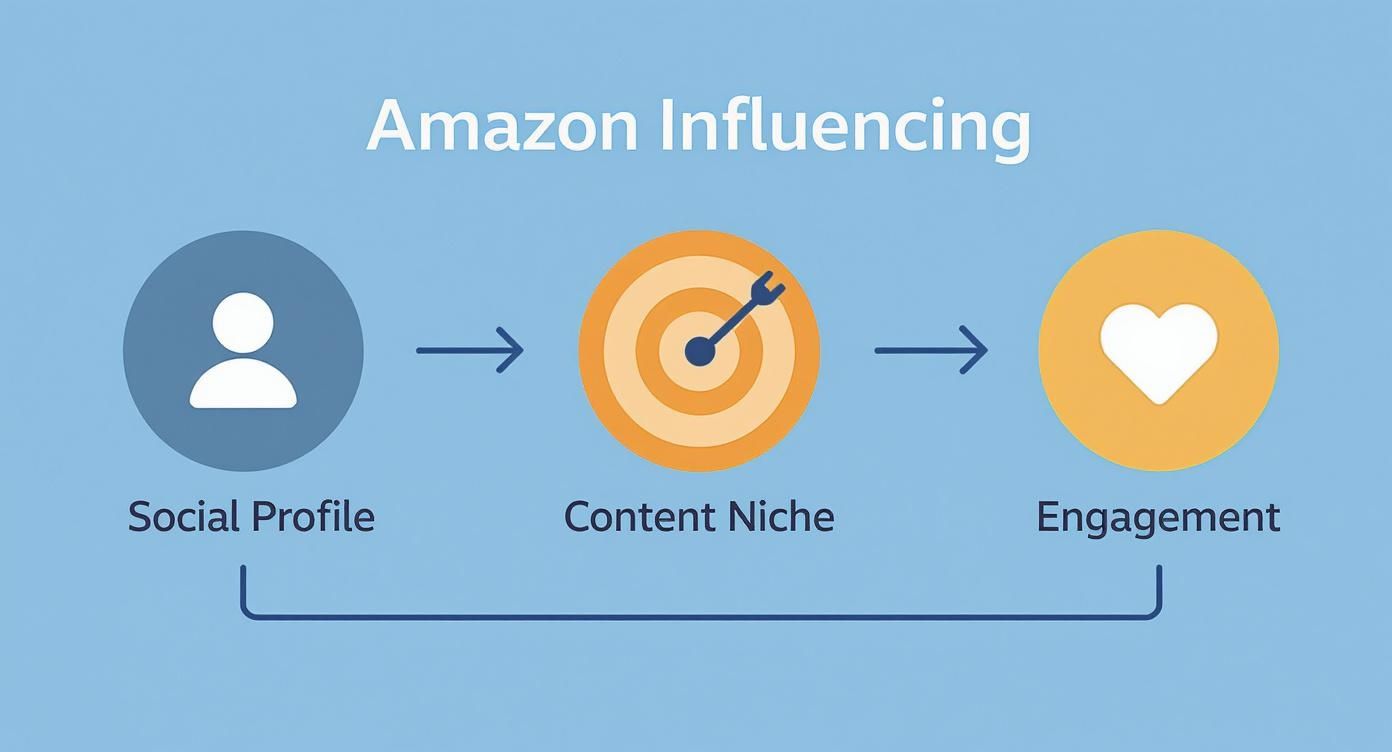
As you can see, it all comes down to having a cohesive profile, a clear niche, and an audience that actually cares about what you post. Each piece tells Amazon that you're a creator with real influence.
What Happens If You Are Not Approved
Getting a rejection email is a bummer, but it’s definitely not the end of the line. Think of it as feedback. Most of the time, it just means your account isn't quite meeting Amazon's (unspoken) engagement standards yet.
Don't give up. A rejection is a great excuse to take a hard look at your content strategy. Double down on creating valuable, niche-specific content that gets people talking and interacting.
You can—and absolutely should—reapply after you’ve spent a few weeks improving things. Focus on posting consistently, replying to comments, and making sure your content genuinely aligns with the kinds of products you’d feature in your storefront.
Plenty of successful influencers got a "no" on their first try, so don't let it stop you. For more great resources, check out the Amazon Influencer Hub for guides that can help make your next application a winner. Getting that approval is the first major step on your journey to become an Amazon Influencer.
Building a Storefront That Actually Converts
Getting that approval email is a fantastic feeling, but the real work starts now. Your Amazon storefront isn't just a grid of products; it’s a curated extension of your brand and a reflection of your expertise. If you just throw a bunch of random items on a page, you're not giving anyone a reason to click "buy."
The trick is to stop thinking like you're just listing products and start thinking about creating genuine solutions for your audience. What problems do they have? What are they trying to achieve? Your storefront should be their go-to resource, making their shopping experience not just easy, but genuinely helpful.
The Power of Themed Idea Lists
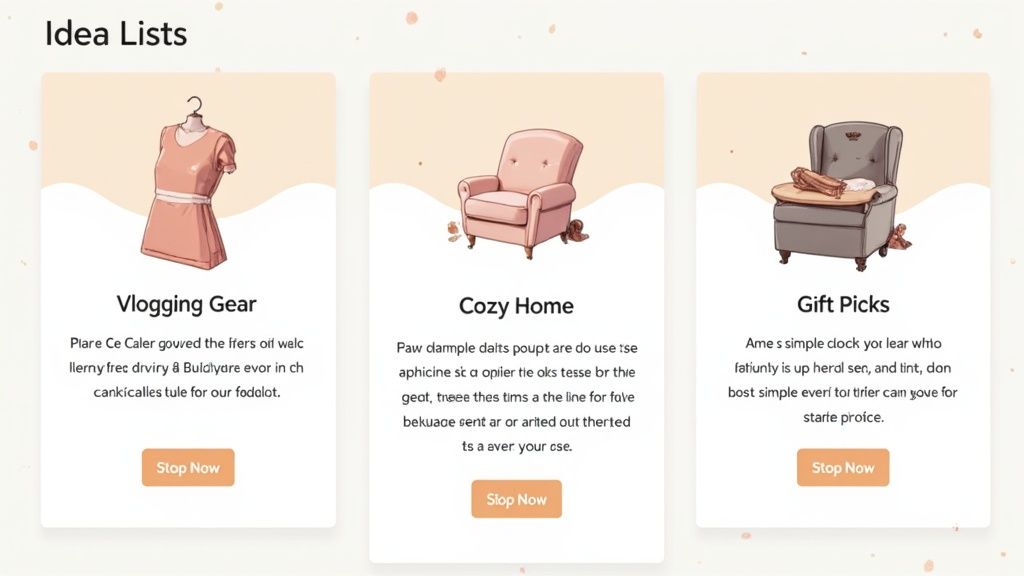
Your Idea Lists are the heart and soul of a great storefront. This is where you group related products into curated collections. Forget generic titles like "My Favorites." You need to get specific and create lists that serve a clear purpose or tell a story.
Think about why your audience follows you in the first place. Is it for your home decor advice? Your vlogging tutorials? Your honest skincare reviews? Whatever your niche, your lists need to lean into that trust.
Here are a few real-world examples of how this looks in practice:
- Solve a Problem: "My Hysterectomy Recovery Must-Haves" or "Everything You Need for Your First Apartment."
- Inspire an Aspiration: "Cozy Reading Nook Essentials" or "My Ultimate Vlogging Gear Setup."
- Target a Budget: "Affordable Home Finds Under $50" or "Best Skincare Dupes on Amazon."
Every list should feel like a personal recommendation from a trusted friend. This approach shows you get it—you understand their world. For a deeper dive into organizing your page for the best results, check out these detailed tips for creating a powerful Amazon store page.
Crafting Descriptions That Connect
Once your lists are set up, don’t just leave the description field blank. This little snippet of text is your chance to add your voice and give the collection some context. Instead of a bland "Products I love," explain why this list exists and who it's for.
A solid description sets the stage before anyone even looks at the products. For a list called "My Morning Routine Essentials," you could write something like, "These are the 5 products that help me start my day feeling energized. From my go-to coffee maker to the vitamin C serum I swear by, this list is all about a simple, effective morning."
Think of your storefront as your personal boutique. Every detail matters. Arrange your most popular items or products with the highest commission rates right at the top of your lists to catch your audience's eye immediately.
Promoting Your Storefront Authentically
A beautifully organized storefront is useless if no one sees it. But you can't just spam "link in bio" everywhere—that's a quick way to annoy your followers. The secret is to weave your storefront promotions naturally into the content you’re already making.
Here’s how the pros do it:
- Solve Problems in Your Content: Create a TikTok about organizing your home office. At the end, you can say, "I've linked my entire desk setup, including this monitor stand and my favorite ergonomic chair, in my Amazon Storefront under 'Home Office Finds.'" It feels helpful, not pushy.
- Use Instagram Stories: The link sticker is your best friend. Talking about your outfit of the day? Link directly to your "Fall Fashion Staples" Idea List. It's a direct, in-the-moment call to action.
- Add It to Your Email Signature: If you run a newsletter, drop a link to your storefront in the footer. It’s a low-key way to keep it top of mind for your most dedicated followers.
The best promotion never feels like a sales pitch. When you position your storefront as a valuable resource, your audience will actually want to check it out. That's how you go from just being an influencer to being an Amazon influencer who builds a sustainable income stream.
How to Maximize Your Earnings

Alright, so your storefront is up and running. That’s a huge first step! But getting it launched is one thing; turning it into a real income stream is another. A clean, organized page is your foundation, but the real money comes from digging into Amazon's more powerful monetization tools.
Think of your storefront as home base. Now, let’s talk about the strategies that will actually scale your earnings and turn this side hustle into something more.
Go Beyond Static Lists with Dynamic Content
Idea Lists are your bread and butter, but they're just the beginning. To really grab your audience's attention and drive sales, you need to bring your recommendations to life with interactive content. Amazon has built-in tools designed specifically for this.
Two of my favorites are:
- Shoppable Photos: This feature is a game-changer. It lets you tag products directly in your images. Imagine posting a photo of your styled living room—you can tag the rug, the coffee table, and the lamp. Followers can see the whole look and click to buy exactly what catches their eye. It’s a super smooth way to turn inspiration into a sale.
- On-site Video Reviews: This is where you can really shine. You can upload short, authentic video reviews directly to product pages. Here's the kicker: when any Amazon customer watches your review and buys the product, you earn a commission. Your content gets seen by people actively shopping, not just your followers. It's a massive opportunity.
Engage Your Audience in Real Time with Amazon Live
If you're comfortable on camera, hosting Amazon Live streams is one of the most direct ways to boost your earnings. It’s like having your own personal QVC show. You can demo products in real time, answer questions as they come in, and build a genuine connection that encourages people to buy on the spot.
As you talk, the products you're showing appear in a carousel right next to the video. This makes it incredibly simple for viewers to add items to their cart without missing a beat. Pro tip: theme your streams. Something like "My Top 5 Kitchen Gadgets" or "Unboxing My Latest Tech Haul" works really well.
Don't underestimate the power of live interaction. When a follower can ask you a question about a product's size or function and get an instant answer, their trust in your recommendation skyrockets. This direct engagement often translates into higher conversion rates.
Analyze Your Data and Double Down on Winners
Your Amazon reporting dashboard is your secret weapon. Don't just glance at the total income and call it a day. You need to dive into the analytics to see which products are actually selling and which of your lists get the most clicks. This data is pure gold—it tells you exactly what your audience loves.
For instance, if you notice a particular blender from your "Meal Prep Essentials" list is selling like crazy, that’s your signal. Film a short video review for it. Feature it in your next Amazon Live stream. Maybe even create a new Idea List dedicated to smoothie-making accessories. Follow the data.
So, how much can you actually make? It varies wildly. Influencers with smaller, highly-engaged followings might pull in up to $1,000 per month, while top-tier creators can earn significantly more. Commissions are just one piece of the pie; many influencers also get paid by brands for dedicated content. You can find a great breakdown of what's possible in this Amazon influencer earnings guide.
A strong Amazon presence also makes you more attractive for paid brand collaborations. To explore more ways to monetize your social media accounts, check out a complete guide to earning from social media. By using these tools strategically and paying close attention to what works, you can really scale your efforts and maximize your potential as an Amazon Influencer.
What to Do When You Hit a Wall
Every creator hits a plateau. It's inevitable. One month, you’re on top of the world watching your sales climb, and the next, you're refreshing your dashboard wondering if your links are broken. It’s a totally normal part of the ride when you become an Amazon Influencer, so don't let a slow spell get you down.
Honestly, the biggest struggle is often walking that tightrope between being authentic and actually making sales. Your audience follows you because you're real, and they can sniff out a hard sell a mile away. The secret? Focus on solving their problems, not just pushing products.
Instead of a generic post about a single item, build content around a real-life need. For example, a piece titled "My Hysterectomy Recovery Must-Haves" is incredibly specific and helpful, allowing you to weave in recommended products naturally. It's about service, not sales.
Another tricky area is getting brands to send you free products to review. It’s not as easy as it used to be.
How to Get Brands to Notice You
A few years ago, it felt like brands were handing out free stuff to almost anyone with a decent following. That landscape has completely changed. Rising costs have made companies much more careful about who they partner with.
Now, many brands want to see proof of performance before they'll send you anything. It’s a classic chicken-and-egg problem for newer influencers. If you want to learn more about where things are headed, check out this article on upcoming changes in influencer pay.
So, how do you break through? You have to build a solid track record on your own first.
Think of your Amazon storefront as your professional resume. Brands can literally see your sales data, watch your video reviews, and gauge your audience's engagement. A storefront that consistently performs is the ultimate proof that you can drive sales.
When you show up day after day, creating great content and proving you can convert viewers into buyers, you build the credibility that makes those brand partnerships happen. It’s about proving your value upfront, which is the best way to get past those early hurdles and build a business that lasts.
Got Questions? We've Got Answers
Stepping into the world of Amazon Influencers usually sparks a few questions. Let's tackle some of the ones that pop up most often.
So, What’s the Real Earning Potential?
Honestly, it's all over the map. Your income really depends on a few key things: the size of your audience, how much they engage with your content, your specific niche, and the kinds of products you're linking to.
Some influencers with a smaller but super-loyal following might pocket a few hundred dollars a month. On the other hand, creators at the top of their game can bring in thousands. The big secret? Consistency. Keep showing up for your audience, and your earnings will follow.
Do I Need a Million Followers to Get In?
Nope, not at all. This is probably the biggest myth out there. Amazon cares a lot more about quality engagement than just raw follower numbers.
Think about it: an account with a few thousand followers who genuinely listen and interact is way more valuable than an account with 100,000 followers who just scroll on by. Your goal should be to build a real community that trusts what you have to say.
The most important thing to remember is that genuine influence is your best currency. A loyal audience that actually takes your advice is exactly what Amazon is looking for.
What if My Application Gets Rejected? Can I Try Again?
Yes, absolutely! Getting rejected isn't a dead end—far from it. Many of today's most successful Amazon Influencers didn't get in on their first try.
Look at it as helpful feedback. Use the time to level up your content, find new ways to boost your engagement, and maybe even narrow down your niche. After a few weeks of solid effort, you should definitely apply again.
Ready to manage your creator partnerships with precision? Coral provides the tools you need to recruit, track, and pay your affiliates, turning your brand advocates into a powerful growth engine. Get started for free at coral.ax.