A Guide to Brand Affiliate Programs for Amazon Sellers
Category: Brand affiliate programs
A brand affiliate program is a direct partnership between an Amazon brand and the content creators or marketers who promote its products. Instead of getting lost in a huge, impersonal network like Amazon Associates, brands can build their own dedicated team of advocates. This allows you to offer custom commission rates, foster genuine relationships, and take full control over your brand message, driving targeted traffic directly to your Amazon listings.
What are brand affiliate programs?
For an Amazon seller, launching a brand affiliate program is a strategic move to own your marketing outside of Amazon's ecosystem. It’s about creating a private, invite-only partnership with creators—like YouTubers, bloggers, or TikTok influencers—who genuinely love and use your products.
These creators become your affiliates and receive unique tracking links to share with their audience. When a follower clicks that link and buys your product on Amazon, the creator earns a commission that you pay directly. It’s a clean, direct, and powerful system for growth.
This model is a significant upgrade from relying solely on massive networks like Amazon Associates. While the Associates program is a common starting point, a direct program gives a growing Amazon brand several key advantages:
- Greater Control: You set the commission rates, promotional guidelines, and messaging to ensure it perfectly aligns with your brand’s identity.
- Direct Relationships: You build real connections with your partners, turning them into long-term brand ambassadors instead of just names on a spreadsheet.
- Stronger Alignment: You can hand-pick creators whose audience is a perfect match for your ideal customer, leading to higher-quality traffic and more authentic promotions.
- Enhanced Data: You get much more insightful data on which partners and content are actually driving valuable customers to your Amazon listings, thanks to tools like Amazon Attribution.
How do brand affiliate programs differ from traditional affiliate networks?
For Amazon sellers, the choice between launching your own brand affiliate program and using a traditional network like Amazon Associates is a major strategic decision. It's not just about commission rates; it’s about who controls the brand, who owns the data, and how deep your relationships with creators can go.
Traditional affiliate networks are like giant marketplaces. They act as middlemen, connecting thousands of brands with a vast pool of creators and handling backend tracking and payments. It's convenient, but it places the network—not your brand—at the center. A direct brand affiliate program cuts out that middleman, letting you build one-on-one partnerships with creators who are genuinely passionate about what you sell. This distinction is critical when you consider who truly owns the relationship and the valuable data it generates.
Brand Affiliate Programs vs. Traditional Affiliate Networks
| Feature | Brand Affiliate Program (Direct) | Traditional Affiliate Network (e.g., Amazon Associates) |
|---|---|---|
| Relationship Control | Direct, one-on-one partnerships with creators. | Indirect. The network is the middleman. |
| Brand Messaging | Full control. You provide assets and talking points. | Little to no control. Creators grab a link and go. |
| Commission Rates | Flexible and competitive (typically 10-20%). | Fixed and low (often 1-4%), set by the network. |
| Data Ownership | You own all first-party performance data. | The network owns the data; you only get basic reports. |
| Creator Quality | Attracts high-quality, dedicated brand ambassadors. | Attracts a wide mix, including discount-focused publishers. |
| Strategic Insight | Deep analytics on creator and content performance. | Limited to high-level clicks and sales data. |
This table makes it clear: a direct program is about building a strategic asset, while a traditional network is more of a transactional, volume-based tool.
Brand Control and Messaging
With a traditional network, affiliates usually just grab a generic link and promote products however they see fit. This can lead to off-brand messaging or promotions focused solely on discounts, which can devalue your brand over time. You become just another product in a massive catalog.
A direct program flips that dynamic. You’re in control. You can arm creators with specific talking points, high-quality creative, and the product details they need to create promotions that feel authentic and aligned with your brand voice.
By fostering direct relationships, you transform affiliates from simple traffic generators into true brand ambassadors. They become an extension of your marketing team, invested in your success because they have a personal connection to your brand.
Commission Structures and Flexibility
One of the biggest limitations of large networks is their rigid commission structure. Amazon Associates, for example, sets commission rates by product category, giving you no control. These rates are often low (around 1-4%) and can be changed by Amazon without warning, creating instability for both you and your partners.
Direct brand affiliate programs put you in control of the finances. You can design custom commission structures that motivate creators and align with your business goals.
- Tiered Commissions: Offer higher rates to top performers when they hit sales targets.
- Flat-Fee Bonuses: Pay a bonus for specific actions, like a dedicated YouTube review.
- Hybrid Models: Combine a percentage of sales with a flat fee for content creation.
This flexibility allows you to offer more competitive rates—often in the 10-20% range—which attracts higher-quality, more motivated creators.
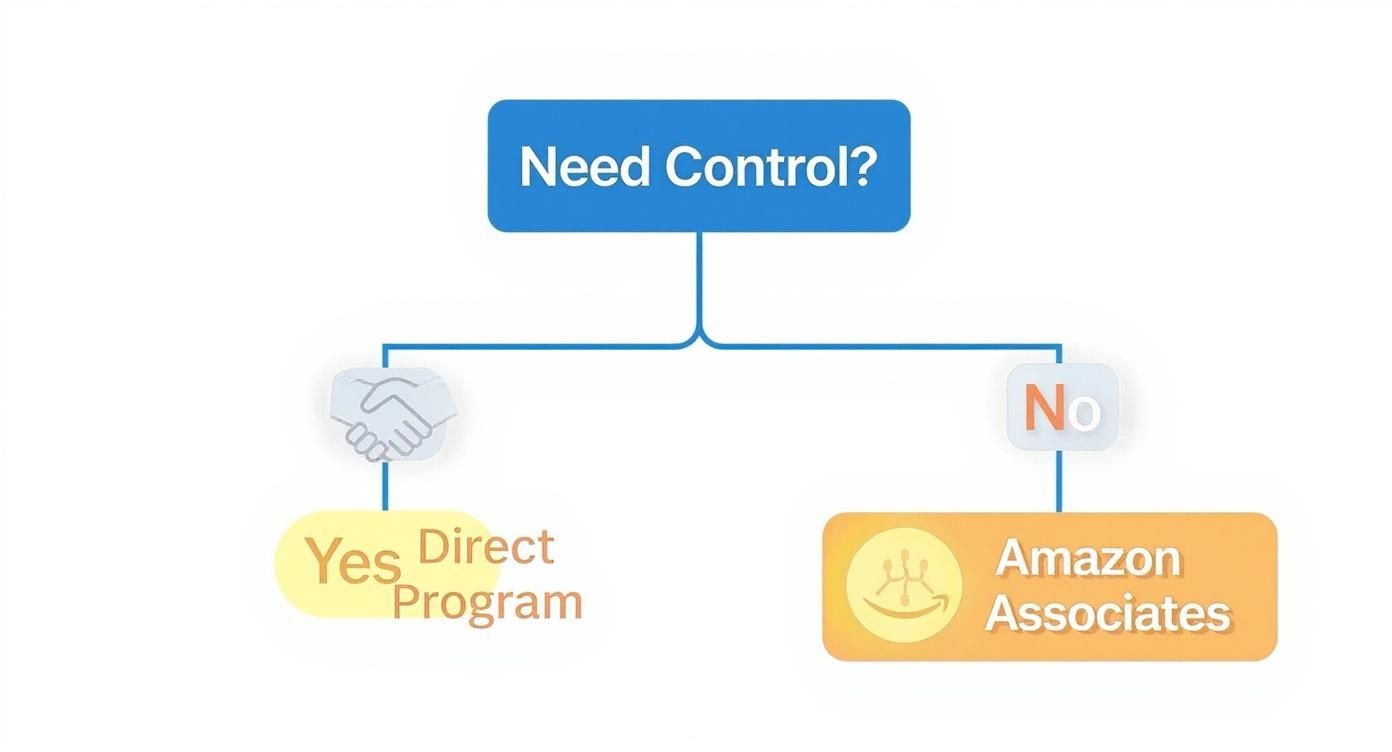
As you can see, if brand control is your priority, a direct program is the clear choice. For a deeper look at the software that powers these programs, our guide on the best affiliate marketing platforms is a great resource. Platforms like Coral are designed specifically for this, helping Amazon sellers launch their own programs while giving creators a transparent place to discover great brand partnerships.
What are the best brand affiliate programs for creators and marketers?
The best brand affiliate program doesn’t just offer a high commission; it builds an ecosystem where both the brand and the creator succeed. The top programs excel in three key areas: compelling commission structures, robust support systems, and unique creator benefits that foster loyalty.
Let's look at some real-world examples to see what makes a program truly successful.
Comparing Top Programs Across Industries
A high commission is a great start, but long-term partnerships are built on support, benefits, and a sense of shared purpose. Here’s a comparison of how leading programs in fashion, tech, beauty, and e-commerce structure their offerings.
| Industry | Example Program | Typical Commission | Key Creator Benefit |
|---|---|---|---|
| Fashion | Girlfriend Collective | 10% per sale | Access to a community of like-minded creators and brand mission alignment. |
| Tech | Anker | 5-10% tiered rate | Early access to new product launches and a dedicated affiliate support team. |
| Beauty | Fenty Beauty | Up to 10% per sale | High-quality creative assets, free products, and brand credibility by association. |
| E-commerce | Shopify | 20% recurring | Recurring revenue on subscriptions, building a stable income stream for creators. |
This comparison highlights that the most attractive brands with affiliate programs offer value beyond just a payout. They empower creators to grow their own brands alongside the company's.
Deconstructing Successful Program Models
Let's dig deeper into what makes these affiliate programs for ecommerce tick. Each one blends incentives and support in a way that’s perfectly tuned to its industry.
Fashion Example: Girlfriend Collective
Girlfriend Collective’s program is powerful because it’s anchored to a mission of sustainability and inclusivity.
- For the Brand: They attract creators who are genuine fans of their values, leading to authentic content that resonates with their target audience.
- For the Creator: Affiliates promote a brand they believe in, making the work feel natural. The 10% commission is solid, but the real draw is being part of a movement.
Tech Example: Anker
Anker, a leader in charging technology, runs a program focused on product expertise and being first to market.
- For the Brand: They leverage a network of tech reviewers for credible, detailed reviews. Early product access ensures Anker’s latest gadgets are featured on YouTube and tech blogs at launch.
- For the Creator: Getting products before anyone else is a huge advantage, enabling them to create timely, high-demand content. The tiered commission rate also incentivizes top performance. For brand affiliate programs to thrive, a crucial foundation involves a robust understanding of intellectual property protection to safeguard brand assets and reputation.
Beauty Example: Fenty Beauty
Fenty Beauty’s program excels at providing creators with the assets they need to produce stunning, high-converting content.
- For the Brand: By supplying professional creative assets and free products, Fenty ensures a consistent, premium brand image across all promotions.
- For the Creator: High-quality photos and videos save creators time and money. Fenty’s brand recognition also adds credibility, making their recommendations more impactful.
The common thread is a deep understanding of creator needs. The best programs don't just ask for a promotion; they provide the commissions, tools, and support that make the partnership a clear win for both parties.
Getting the commission structure right is essential. To build a model that attracts top-tier talent, check out our guide on commission structure examples for inspiration.
This is precisely what platforms like Coral are built for. We help Amazon sellers implement these strategies by connecting them with creators and managing the entire partnership. Coral gives you the power to build a program that can compete with the best in any industry.
How do you join and succeed in brand affiliate programs?
Launching a direct brand affiliate program is a game-changer for any Amazon seller focused on building a sustainable, off-Amazon marketing channel. Success comes down to setting clear goals, designing attractive commissions, finding the right partners, and tracking everything meticulously.

Let's walk through the key steps to launch a successful affiliate program for your Amazon brand.
Step 1: Set Clear and Measurable Goals
Before inviting a single creator, define what success looks like. Your goals will guide every decision, from commission structures to partner recruitment.
Common goals for Amazon brands include:
- New Customer Acquisition: Partner with creators whose audiences are new to your brand. Track success by measuring sales from new-to-brand customers.
- Increase Sales Velocity: Drive a high volume of sales to a specific ASIN to boost its organic ranking.
- Build Brand Awareness: Collaborate with creators to generate authentic content and social proof. Measure success through reach and engagement.
- Drive High-Margin Sales: Funnel traffic to your most profitable products to improve your bottom line.
Step 2: Design a Competitive Commission Structure
Your commission structure is the engine of your program. It must be competitive enough to attract top creators while remaining sustainable for your business. The standard Amazon Associates rate of 1-4% is your baseline—you must beat it.
Most direct brand affiliate programs for Amazon products offer 10-20%. Consider these structures:
- Flat Percentage: A simple and effective set rate (e.g., 15%) on every sale.
- Tiered Commissions: Motivate top performers with increasing rates based on sales volume.
- Flat-Fee Bonuses: Reward specific actions, like a dedicated YouTube review, in addition to sales commissions.
Remember to factor in the Amazon Brand Referral Bonus. Amazon gives you back an average of 10% of the sale price for driving external traffic. This bonus can directly offset your commission costs, allowing you to offer more attractive rates.
Step 3: Recruit the Right Creators for Your Brand
Quality over quantity is the golden rule. A few perfectly aligned micro-influencers will outperform a hundred unengaged partners. Your goal is to find creators whose audience mirrors your ideal customer.
Look for creators on platforms where your customers spend their time:
- YouTube: Search for "best [your product category]" or "[your product] review."
- TikTok & Instagram: Hunt for relevant hashtags and creators making authentic content in your niche.
- Blogs: Find niche bloggers who write detailed reviews and tutorials related to your industry.
When you reach out, personalize your message. Explain why you believe they're a great fit and highlight the benefits of your program. Building these relationships is the core of a successful brand affiliate program.
Step 4: Track Everything with Amazon Attribution
For any Amazon seller, Amazon Attribution is essential. It’s the only way to accurately track the performance of your off-Amazon marketing efforts. The tool lets you create unique tracking links for each creator and campaign.
With these links, you can see:
- Which creators are driving the most clicks and sales.
- Which social media platforms are performing best.
- Key metrics like add-to-carts, detail page views, and purchases.
This data is invaluable for optimizing your program and demonstrating ROI. For a deeper dive, check out our guide on how to start an affiliate program. The affiliate marketing world continues to prove its value, with brands seeing an average ROI of $15 for every $1 spent. You can find more insights on affiliate marketing ROI at affiliatestatistics.marketing.
Platforms like Coral help Amazon sellers harness this power by simplifying creator discovery, commission management, and Amazon Attribution integration, turning partnerships into a scalable and profitable growth channel.
Proven Strategies for Scaling Your Creator Partnerships
Launching your program is the first step; turning it into a sustainable growth engine is the next. Scaling your brand affiliate programs isn't about recruiting an endless stream of new partners. It's about deepening relationships with your existing creators and transforming them into long-term brand advocates.

To scale effectively, you must move beyond purely transactional relationships. Invest in your creators, make them feel valued, and show them they are a core part of your brand’s journey.
Implement Tiered Commissions to Incentivize Top Performance
A one-size-fits-all commission structure limits growth. Your top creators are valuable assets and should be rewarded accordingly. A tiered commission model is an excellent way to motivate your best partners.
This structure automatically rewards creators as they sell more, giving them a clear path for growth within your program.
- Bronze Tier (Entry Level): Start new partners with a competitive base commission, such as 10%.
- Silver Tier (Consistent Performers): When a creator hits a monthly sales goal (e.g., $1,000), automatically increase their commission to 15%.
- Gold Tier (Power Affiliates): For top performers driving significant volume (e.g., $5,000+ in monthly sales), offer your highest commission rate (e.g., 20%) plus exclusive perks like early access to new products.
This system gives creators a compelling reason to prioritize your products and fosters long-term loyalty.
A tiered commission structure communicates a message of partnership and shared success. When creators see a clear path to higher earnings, they become more invested in growing with your brand.
Blend Affiliate Programs with Influencer Marketing
The lines between affiliate and influencer marketing have blurred. Smart Amazon brands combine the two for a powerful synergy of authentic content and performance-based results. Instead of paying for a one-off post, offer influencers a hybrid deal: a flat fee for content creation plus a commission on every sale they drive.
This approach is highly effective. Blending influencer marketing with affiliate programs can boost affiliate-driven sales by up to 46%, increase average order values by 21%, and improve customer retention. If you want to dive deeper into the numbers, you can explore the full affiliate marketing statistics at DesignRush.
Reactivate Dormant Partners and Nurture Relationships
Not every creator will be a top performer immediately. Some valuable partners may become inactive. Don't let these relationships fade. A well-timed reactivation campaign can bring them back into the fold.
Send a personalized message, offer a temporary commission boost, provide fresh creative assets, or share information on your latest best-sellers. A little engagement can reignite a productive partnership.
Platforms like Coral are designed to manage this entire scaling process. From handling complex tiered commissions to providing the data needed to merge your affiliate and influencer strategies, Coral offers the tools Amazon brands need to build a high-performing partnership program and turn creator collaborations into lasting, profitable relationships.
What is a good affiliate software for starting on Amazon US?
For Amazon US sellers, choosing the right software is crucial for running a successful brand affiliate program. You need a platform that not only handles tracking and payments but also integrates seamlessly with Amazon's ecosystem. The key is finding a tool that simplifies the process for both you and your creator partners.
Can I run an affiliate program if I only sell on Amazon?
Yes, absolutely. In fact, it's one of the most effective strategies for scaling an Amazon-native brand. The entire system is designed to work with Amazon's tools.
The essential component is Amazon Attribution. This tool allows you to generate unique tracking links for each creator. When a shopper clicks that link and makes a purchase, the sale is correctly attributed, ensuring you can pay commissions accurately. This also makes you eligible for Amazon’s Brand Referral Bonus, a program where Amazon gives you a bonus for driving your own external traffic. This bonus can significantly offset your commission costs, making your program highly profitable.
What is a good commission rate for my affiliates?
There is no single "best" commission rate. It depends on your product margins, niche, and business goals. A good starting point is to align your affiliate commission with what you currently pay for customer acquisition through channels like Amazon PPC.
For physical products on Amazon, successful brand affiliate programs typically offer rates between 8% and 20%. This range is significantly more attractive to top-tier creators than the low single-digit rates of Amazon Associates. Consider a tiered structure to motivate your best partners—for example, start at 10% and increase to 15% after they reach a certain sales threshold.
How do I find the right creators for my Amazon brand?
Finding creators whose audience aligns perfectly with your ideal customer is critical. Focus on quality and relevance over follower count.
- Platform Searches: Manually search for relevant hashtags on TikTok and Instagram or product reviews in your category on YouTube. This helps you find creators already active in your space.
- Customer Analysis: Survey your existing customer list. Some of your most authentic advocates are people who have already purchased and love your products.
- Dedicated Platforms: The most efficient method is using a platform designed to connect Amazon brands with a pre-vetted network of creators. These platforms streamline discovery and recruitment, saving you significant time and effort.
The biggest mistake brands make is chasing big names. A micro-influencer with a super-engaged, niche audience will almost always drive more sales than a mega-influencer with a broad, lukewarm following. Authenticity is what moves the needle on Amazon.
What are the biggest mistakes to avoid when starting out?
Launching an affiliate program is exciting, but common pitfalls can derail your efforts.
- Offering Uncompetitive Commissions: Creators have options. If your rates aren't a substantial improvement over Amazon Associates, you won't attract top talent.
- Providing Zero Support: Don't just provide a link and disappear. Affiliates need creative assets, product information, and open communication to succeed.
- Focusing Only on Recruitment: While signing up new partners is important, the long-term value lies in nurturing the relationships you already have.
- Using Unreliable Tracking: Without accurate tracking via a tool like Amazon Attribution, you cannot properly credit sales. This erodes trust and is the quickest way to lose your best affiliates.
Ready to build, manage, and scale your own high-performing affiliate program on Amazon? Coral is the all-in-one platform that helps both brands launch successful affiliate programs and creators discover lucrative brand partnerships with Amazon sellers. Launch in minutes, set custom commissions, and track every sale with built-in Amazon Attribution. Start your free trial with Coral today.