Recruiting Top Cosmetics Affiliates on Amazon
Category: Cosmetics affiliates
Trying to sell cosmetics online can feel like selling ice cream in a snowstorm. How do you convince someone to buy a foundation they can't swatch, a serum they can't feel, or a fragrance they can't smell? The answer lies in building trust, and that’s where cosmetics affiliates come in.
Think of them less as advertisers and more as trusted beauty advisors. They are the content creators—the YouTubers, TikTokers, and Instagrammers—who bridge the gap between your Amazon store and a skeptical customer. Through authentic reviews, makeup tutorials, and real-world demonstrations, they provide the social proof that your product pages simply can't.
Why Authentic Cosmetics Affiliates Are Your Secret Weapon
Let's be honest, the biggest hurdle in online beauty sales is that sensory disconnect. A static product photo is fine, but it doesn't show how your serum gives that "glass skin" glow or how your concealer blends without creasing.
This is where affiliates shine. They aren't just pushing a product for a commission; they're demonstrating its value. A well-made video review from a creator their audience knows and trusts can answer dozens of unspoken questions. It builds a genuine connection that turns a hesitant browser into a confident buyer.
The Trust Factor in Beauty Marketing
In the beauty world, trust is the ultimate currency. Shoppers are savvier than ever and can spot an overly-produced, airbrushed ad from a mile away. They're turning to real people for real opinions.
When an affiliate they follow recommends your vitamin C serum, it feels less like an ad and more like a tip from a friend. This kind of authentic endorsement is powerful. It’s why the affiliate marketing industry is on track to balloon from $18.5 billion in 2025 to a massive $31.7 billion by 2031. It’s not just a trend; it's a fundamental shift in how people shop, with affiliate marketing already accounting for 16% of all ecommerce sales.
For a visual-heavy category like cosmetics, the impact is even more pronounced. Video content from affiliates can boost conversion rates by up to 49%. If you're interested in digging deeper into the numbers, these affiliate marketing statistics paint a very clear picture.
A single, honest video review from a trusted micro-influencer can often outperform a large, expensive ad campaign. Why? Because authenticity sells what slick marketing can’t: confidence.
Turning Skeptics into Loyal Customers
A well-run affiliate program does more than just drive traffic; it systematically guides potential customers from discovery to purchase. It’s about building a journey that feels natural and trustworthy.
Here’s a practical look at how affiliates can influence customers at every step.
How Affiliates Impact Your Cosmetics Sales Funnel
| Funnel Stage | Affiliate Contribution | Example Action |
|---|---|---|
| Awareness | Introduces your product to a new, relevant audience. | An affiliate features your new mascara in an unboxing or "new makeup releases" haul video. |
| Consideration | Demonstrates the product's benefits and shows how to use it. | The same affiliate creates a "Get Ready With Me" (GRWM) video, showing the mascara in action and comparing it to others. |
| Conversion | Provides a direct and easy path to purchase. | The affiliate shares their unique Amazon Storefront link in the video description, making it simple for viewers to buy. |
This process doesn't just end with a single sale. When a customer buys your product based on a recommendation and loves it, their trust grows—not just in the creator, but in your brand. That's how you create repeat buyers and build the kind of long-term loyalty that makes an affiliate program a truly scalable engine for growth.
Finding Beauty Influencers Who Fit Your Brand
Let’s be honest, finding the right cosmetics affiliates is more art than science. It's not about just chasing the biggest follower count. The real goal is to find creators whose entire vibe—their personal brand, their audience, their values—is a natural extension of your own.
Get this part wrong, and you're stuck with inauthentic promotions that fall flat, wasting your time and money.
So where do you start? The best place is often right under your nose, inside the Amazon ecosystem itself. Think about it. The most passionate people are already there, leaving detailed product reviews, asking smart questions in the Q&A section, and even making video reviews for products just like yours. These people are your future brand champions, hiding in plain sight.
Look for Genuine Brand Affinity First
Before you even draft an outreach email, your first job is to play detective. You're looking for creators who already have a genuine interest in your corner of the beauty world. A massive beauty guru who almost exclusively reviews high-end luxury brands probably isn't the right partner for your affordable, vegan skincare line, no matter how many millions of followers they have.
Authenticity is everything. It comes from a real connection. Here’s what to look for:
- Content Niche: Do they focus on clean beauty? Drugstore finds? Professional-grade makeup artistry? Their specialty needs to line up with your product's positioning.
- Audience Demographics: Dive into their comments. Who is their audience? If you're selling an anti-aging cream, an influencer with a mostly teenage following isn't your match.
- Engagement Quality: Big numbers can be deceiving. Look past the likes and see if people are having real conversations. Are they asking thoughtful questions about the products? That's the sign of a trusting, engaged audience.
When you prioritize this kind of alignment, you're not just "renting an audience." You're building a real partnership with someone who can talk about your product with genuine excitement.
A micro-influencer with 15,000 highly engaged followers who genuinely loves clean beauty will almost always outperform a mega-influencer with 2 million passive followers for a niche organic brand. It’s about the quality of the connection, not just the quantity of eyeballs.
Vetting Potential Cosmetics Affiliates
Okay, so you've got a shortlist of potential partners. Now it's time to dig a little deeper. This is the step that separates the successful affiliate programs from the ones that just fizzle out. You need to look for consistency, professionalism, and a solid history of creating quality content.
For a really detailed breakdown of this vetting process, check out our full guide on how to find Amazon influencers. It's packed with more strategies to help your search.
Let's walk through a quick scenario. Imagine you sell a line of cruelty-free, minimalist skincare. Here’s how you might size up two potential affiliates:
Comparing Two Potential Affiliate Partners
| Criteria | Affiliate A (Good Fit) | Affiliate B (Poor Fit) |
|---|---|---|
| Content Focus | Regularly posts about "no-makeup makeup" looks, vegan products, and simple skincare routines. | Posts a mix of everything: fast fashion hauls, dramatic makeup tutorials, and snack food reviews. |
| Audience Vibe | Comments show interest in ingredient lists, sustainability, and achieving a natural glow. | Comments are mostly generic ("Love this! 😍") or focused on the creator's outfit. |
| Brand Mentions | Already features other indie and cruelty-free brands. Their audience trusts these recommendations. | Promotes a new "must-have" product every day, often from large, mainstream corporations. |
| Professionalism | Has a clear media kit or contact information. Their Amazon Storefront is organized and up-to-date. | Their bio link is broken, and their content style is inconsistent from one post to the next. |
In this scenario, Affiliate A is the obvious winner. Their content, their audience, everything is perfectly primed for what your brand offers. A partnership with them would feel totally natural and credible.
On the other hand, a promotion from Affiliate B would feel forced and out of place, leading to poor results and maybe even hurting your brand’s reputation with their followers. Taking the time to do this careful vetting is the foundation for building a powerful network of cosmetics affiliates who will drive real, sustainable growth for your business.
Crafting Outreach That Actually Gets a Reply
Let's be honest, an influencer's inbox is a battlefield. It's overflowing with copy-pasted pitches that get deleted in seconds. If you want to stand out, your message needs to feel less like a mass email and more like a personal note from a genuine fan who just happens to run a fantastic cosmetics brand.
The goal here isn't just to get an "open." It's to kick off a real conversation. That means you have to ditch the templates and show them you’ve actually done your homework. Generic lines like "I love your content!" are dead on arrival. Specificity is what builds that instant connection.
Make Your First Sentence Count
Your opening line is everything. Don't waste that precious real estate introducing yourself or your brand. Instead, lead with something that proves you're a real follower, not just another brand manager scrolling through a list.
Reference a specific video, post, or story. Seriously, be specific.
- Instead of a generic opener, try: "Your latest TikTok on recreating that '90s grunge look was spot-on. The way you used that deep brown liner for the lips was genius!"
- Or something like: "I just finished your blog post on sunscreens for sensitive skin, and your breakdown of mineral vs. chemical filters was the clearest I've ever read."
This isn't complicated, but it makes all the difference. It shows you respect their craft and see them as a creator, not just an advertising slot. Right away, you've turned a cold pitch into a warm conversation.
Frame It as a Real Partnership
Once you’ve got their attention, you need to shift the focus. This isn't just about what you want; it’s about what you can build together. Remember, creators are entrepreneurs. They're asking themselves, "What's in it for me?" So, tell them, clearly and directly.
This is your moment to lay out the value you bring to the table. The beauty and skincare space is one of the most profitable areas in affiliate marketing for a good reason. The numbers don't lie: brands see an average ROI of $15 earned for every $1 spent on affiliate marketing. The potential is massive. Plus, with over half of affiliate traffic now coming from mobile, their on-the-go content is more valuable than ever. You can dig deeper into the profitability of beauty affiliate marketing to see the full picture.
Key Takeaway: A winning pitch isn't about what you can get from them. It's about what you can achieve together. Connect the dots between your shared values, your audience alignment, and the chance for them to introduce a truly great product to their followers.
Be Crystal Clear on the Details
Don't make potential cosmetics affiliates dig for the important stuff. Lay out the nuts and bolts of your proposed partnership in a way that’s easy to scan and understand.
Your Pitch Must-Haves
| Element | What to Include | Why It Matters |
|---|---|---|
| The Offer | State the commission rate upfront. Mention you'll be sending free products for them to try. | This is the bottom line for them. Being direct shows you’re a professional who respects their time. |
| The "Why You" | Briefly explain why their specific audience would genuinely love your product. | This reinforces your personalized approach and shows you're thinking strategically. |
| The Next Step | End with a simple, no-pressure call to action, like "If this sounds interesting, I'd love to chat more." | This makes it easy for them to say "yes" to a conversation without feeling locked in. |
Finally, have a follow-up plan, but don't be a pest. A single, friendly follow-up email a week later is totally fine. It shows you're still interested without coming across as desperate. The idea is to keep the door open, turning that first email into the foundation of a great long-term relationship.
Creating a Flawless Affiliate Onboarding Experience
You’ve got the “yes” from a great influencer. Fantastic! But don't celebrate just yet. The clock is now ticking. I’ve seen countless partnerships lose their spark because of a clunky or confusing onboarding process. A great first impression isn't just a nice-to-have; it sets the tone for a profitable, long-term relationship.
Your goal is simple: get your new cosmetics affiliates from an enthusiastic "I'm in!" to creating stellar content as fast as possible. This means getting rid of any friction, answering their questions before they even think to ask, and arming them with everything they need to succeed right out of the gate. Think empowerment, not inundation.
Assembling the Perfect Digital Welcome Kit
Forget about just sending a folder of random files. Your welcome kit should be a polished, professional "get started" package. It immediately shows you're organized, you value their time, and you're taking this partnership seriously. While a platform like Coral is a huge help in centralizing all this, you still need to pull the assets together.
This kit needs to be the single source of truth for your new partner. Here's what I always include:
Brand Guidelines: This goes way beyond your logo. It should cover your brand voice, color palette, and any important "dos and don'ts." For example, if you're a "clean beauty" brand, you'll want them using phrases like "ethically sourced" and avoiding misleading claims like "chemical-free."
Key Product Talking Points: Never assume an affiliate knows all the amazing things about your product. Give them a simple one-sheet with the top 3-5 selling points for the products they'll be promoting. Include key ingredients, the target skin type, and what makes your product a game-changer.
Unique Tracking Links: This is non-negotiable. Inside Coral, affiliates can generate their own Amazon Attribution links. Your welcome kit must have crystal-clear instructions on how to do this and a simple explanation of why it’s critical for getting paid.
A Clear Payout Schedule: Nothing builds trust faster than transparency about money. Clearly state when and how they get paid. Something as straightforward as, "Commissions are paid via PayPal on the 15th of each month for all sales from the previous calendar month" works perfectly.
Having this ready to go the moment they agree is a pro move. It impresses top-tier creators and cuts down on all those frustrating back-and-forth emails, letting them get straight to creating.
A well-structured onboarding process is a sign of a well-run affiliate program. It signals to creators that you're a reliable, professional partner worth investing their time and creative energy into.
This infographic breaks down the essential workflow for cosmetics affiliates, from understanding their audience to tracking their wins.
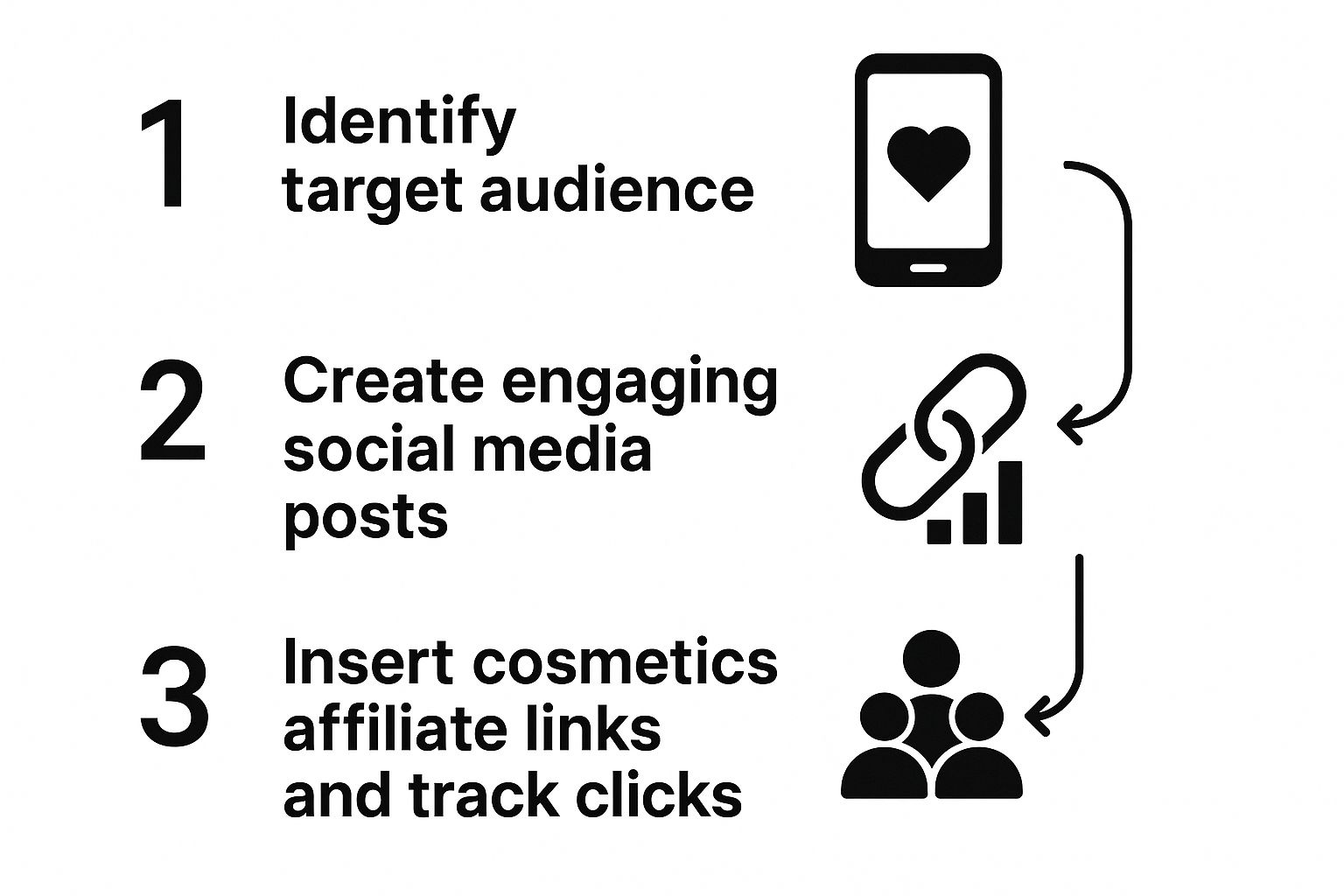
The real takeaway here is that affiliate marketing is a strategic cycle, not just a one-off post. It all starts with the audience, moves into creation, and is validated by measurable results.
Setting Expectations for a Healthy Partnership
The welcome kit is the first step, but the first few days are all about setting mutual expectations. This is where you lay the foundation for a relationship that lasts. Treat it like a conversation, not a list of demands.
First, give them a dedicated point of contact. Let them know exactly who to message with questions. This personal touch is huge and keeps them from feeling like just another number in a spreadsheet.
Next, have a casual chat about content. You should never dictate exactly what they create—authenticity is king, after all. But you can offer helpful suggestions. For instance: "Our community goes wild for before-and-afters of our acne-fighting serum," or "A 'Get Ready With Me' video featuring the new eyeshadow palette would be incredible."
Finally, make sure they know their way around the tools. Give them a quick tour of their Coral dashboard so they know exactly where to:
- Generate Tracking Links: Walk them through creating their very first Amazon Attribution link for one of your products.
- View Performance Data: Show them the dashboard where they can see their clicks, conversions, and commissions update in real-time.
- Check Payouts: Point out the section where they can track earnings and see when their next payment is scheduled.
Empowering your cosmetics affiliates with this knowledge right from the start is the best thing you can do for their success—and yours. It turns a simple transaction into a true partnership.
How to Manage and Scale Your Affiliate Program

So, you've recruited some talented cosmetics affiliates. That’s a fantastic start, but it's just that—a start. The real magic happens when you shift your focus from simply finding partners to actively managing and growing the program. Think of it like a garden; you can't just plant the seeds and walk away. Consistent care is what turns a few sprouts into a thriving, self-sustaining sales engine.
Your main job now is to drive performance. This means keeping a close eye on the numbers, making sure your partners stay motivated, and creating a community where your best affiliates feel like true insiders. This is exactly where a dedicated platform like Coral shines, swapping out messy spreadsheets for a clean, actionable dashboard.
Monitoring Performance and Providing Feedback
You can't fix what you can't see. Gut feelings about whether a partnership is "working" just don't cut it. You need to get into the data to understand the full story. Inside your Coral dashboard, you should be regularly checking a few key metrics for every single affiliate.
- Clicks: Is the affiliate actually sending traffic to your Amazon listings? This is the most basic sign of life.
- Conversion Rate: What percentage of that traffic is actually buying something? High clicks but low conversions can be a red flag, often signaling their audience isn't the right fit for your product.
- Revenue Per Affiliate: Who are your rockstars? This tells you who's truly driving sales.
This data isn't just for you—it’s a powerful tool for having productive conversations with your affiliates. For instance, if you see an affiliate getting great engagement on their posts but very few clicks, you could suggest they make their Amazon Attribution link more prominent. That kind of specific, data-driven feedback is gold and shows you're personally invested in their success.
Effective program management isn’t about micromanaging your affiliates. It’s about giving them the tools and insights they need to win, which in turn fuels your brand's growth.
Keeping Your Affiliates Engaged and Motivated
Motivation isn't a one-time thing. The initial buzz of a new partnership can fizzle out if you don't actively keep the relationship fresh and rewarding. This is where consistent communication and smart incentives come into play.
The global beauty and cosmetics market is massive—it hit $446 billion in 2023. To carve out your slice, your offer needs to be competitive. Commission rates for beauty products usually sit between 5% to 15%, but the top brands get creative with incentives to pull in and keep the best creators. It's this commitment to building real relationships that makes a program stand out.
Motivation Strategies That Actually Work
| Strategy | Description | Why It Works |
|---|---|---|
| Tiered Commissions | Set performance tiers (like $1,000 in monthly sales) that unlock a higher commission rate. | It gamifies the process and directly rewards your top sellers, giving everyone a clear goal to strive for. |
| Performance Bonuses | Offer a one-time cash bonus for hitting a specific sales milestone or for being the top-selling affiliate of the month. | This injects excitement and a bit of healthy competition into your affiliate community. |
| Exclusive Access | Give your best partners a sneak peek at new product launches before they go public. | It makes them feel like valued insiders and gives them fresh, exclusive content to share with their audience. |
These strategies do more than just nudge sales numbers up; they build genuine loyalty and a sense of community. For a deeper dive, our complete guide on how to manage affiliates effectively has even more techniques.
Ultimately, scaling your program means turning your best affiliates into your most passionate brand ambassadors. This is an ongoing cycle of coaching underperformers, celebrating your top partners' wins, and always looking for new ways to add value. When done right, your affiliate program can become your brand's most authentic and powerful marketing channel.
Your Top Questions About Cosmetics Affiliates, Answered
As you start building out your affiliate program, you're bound to run into some practical questions. It’s completely normal. You've got the big picture down—how to find, onboard, and manage creators—but now it's time for the nitty-gritty details.
Let's clear up some of the most common sticking points I see from Amazon sellers. We'll talk commissions, influencer size, sales tracking, and product seeding so you can move forward with total confidence.
What’s a Fair Commission Rate for Cosmetics Affiliates?
This is the million-dollar question, isn't it? The truth is, there's no single magic number, but a solid range for most cosmetics brands on Amazon is 8% to 15%.
Where you fall in that spectrum really comes down to your brand's position. If you're a newer brand trying to make a name for yourself, offering a higher rate—say, 12% to 15%—is a great way to catch the eye of top-tier creators. For more established brands with good name recognition, something closer to 8% or 10% is often perfectly competitive.
A strategy I always recommend is setting up performance-based tiers. It keeps everyone motivated. For instance:
- Starting Rate: 10% on all sales.
- Pro Tier: Bump them to 12% once they drive over $1,000 in sales that month.
- VIP Tier: Reward your top partners with 15% when they consistently bring in over $5,000 monthly.
This structure gives affiliates a clear path to earning more and directly rewards the people driving real results for your brand. It’s a win-win.
Should I Work with Micro-Influencers or Big Creators?
Honestly, the best answer is both. A truly effective affiliate program doesn't pit them against each other; it uses their unique strengths to create a powerful, well-rounded strategy.
Think of micro-influencers (usually those with 10,000 to 100,000 followers) as your sharpshooters. Their communities are incredibly tight-knit and often focused on a specific niche, like "cruelty-free makeup" or "skincare for sensitive skin."
When a micro-influencer recommends something, it feels less like an ad and more like a genuine tip from a trusted friend. This authenticity is why they often have such impressive conversion rates.
On the other hand, mega-influencers and big-name creators deliver massive reach. One post can put your brand in front of hundreds of thousands of new eyeballs. This is priceless for generating buzz, building brand awareness, and making a splash with a new product launch.
Your goal is to build a healthy mix—use large creators to shout from the rooftops and micro-influencers to seal the deal with targeted, high-trust recommendations.
How Do I Actually Track Affiliate Sales on Amazon?
This part is non-negotiable. Without accurate tracking, you're just guessing. You won't know your ROI, and you won't be able to pay your partners fairly. The gold standard for this is Amazon Attribution.
Amazon Attribution lets you generate unique tracking links for each affiliate and every campaign. When a customer clicks a creator’s link and makes a purchase, that sale is automatically credited back to them. No more guesswork.
This is where a platform like Coral becomes a lifesaver. It integrates directly with Amazon Attribution, so your affiliates can generate their own links right from their dashboard. It’s completely seamless. Every click and every purchase is tracked perfectly, giving both you and your partners full transparency. For a deeper dive into the technical side, our guide to affiliate marketing for Amazon breaks it all down.
Do I Really Have to Send Free Products to Every Affiliate?
In the beauty world, yes. It’s more than just a common courtesy; it’s essential for getting the authentic content you’re paying for. How can an affiliate genuinely review the texture of a foundation or the glow from a new serum if they've never actually held it in their hands?
Sending products is a fundamental investment in the partnership. It shows you’re serious and gives them the tools they need to create compelling reviews.
- For larger creators: This is a non-starter. They absolutely expect to receive products to test and feature.
- For smaller affiliates: While you might have a bit more flexibility, sending product is still the best way to build a strong relationship and ensure they can create high-quality, believable content.
Think of it this way: the cost of one bottle of serum could lead to content that drives thousands in sales. It’s one of the highest-ROI moves you can make in your affiliate program.
Ready to stop juggling spreadsheets and start building a powerful, automated affiliate program? Coral gives you all the tools you need to recruit, track, and pay your cosmetics affiliates in one simple dashboard. Start for free on coral.ax and turn your best creators into your strongest sales channel.