What Is a DTC Brand and How Do They Work
Category: Dtc brand
So, what exactly is a DTC brand?
In simple terms, a Direct-to-Consumer (DTC) brand makes its own products and sells them straight to customers. There are no traditional third-party retailers or wholesalers involved.
Think of it like buying produce directly from the farmer at a local market instead of from a giant supermarket chain. You’re getting it straight from the source. This direct connection is what the whole model is built on.
How the DTC Brand Model Works
At its heart, the DTC model is all about cutting out the middleman.
Normally, a brand would sell its products to a distributor. That distributor then sells to a retailer, and the retailer finally sells to you, the customer. A DTC brand skips all those extra steps and handles everything itself—from marketing and sales to customer service and shipping.
This gives the brand total control over the entire customer experience. Every touchpoint, from the first Instagram ad they see to the moment a package lands on their doorstep, is managed in-house. For a more formal breakdown, you can check out this definition of Direct to Consumer (DTC) brands.
DTC vs. Traditional Retail
When you put a DTC brand side-by-side with a traditional business selling through big-box stores, the differences are night and day. One owns the entire customer relationship from start to finish, while the other basically hands it off to someone else.
This image really highlights how a DTC brand’s direct approach changes everything, from its cost structure to its ability to build a loyal following.
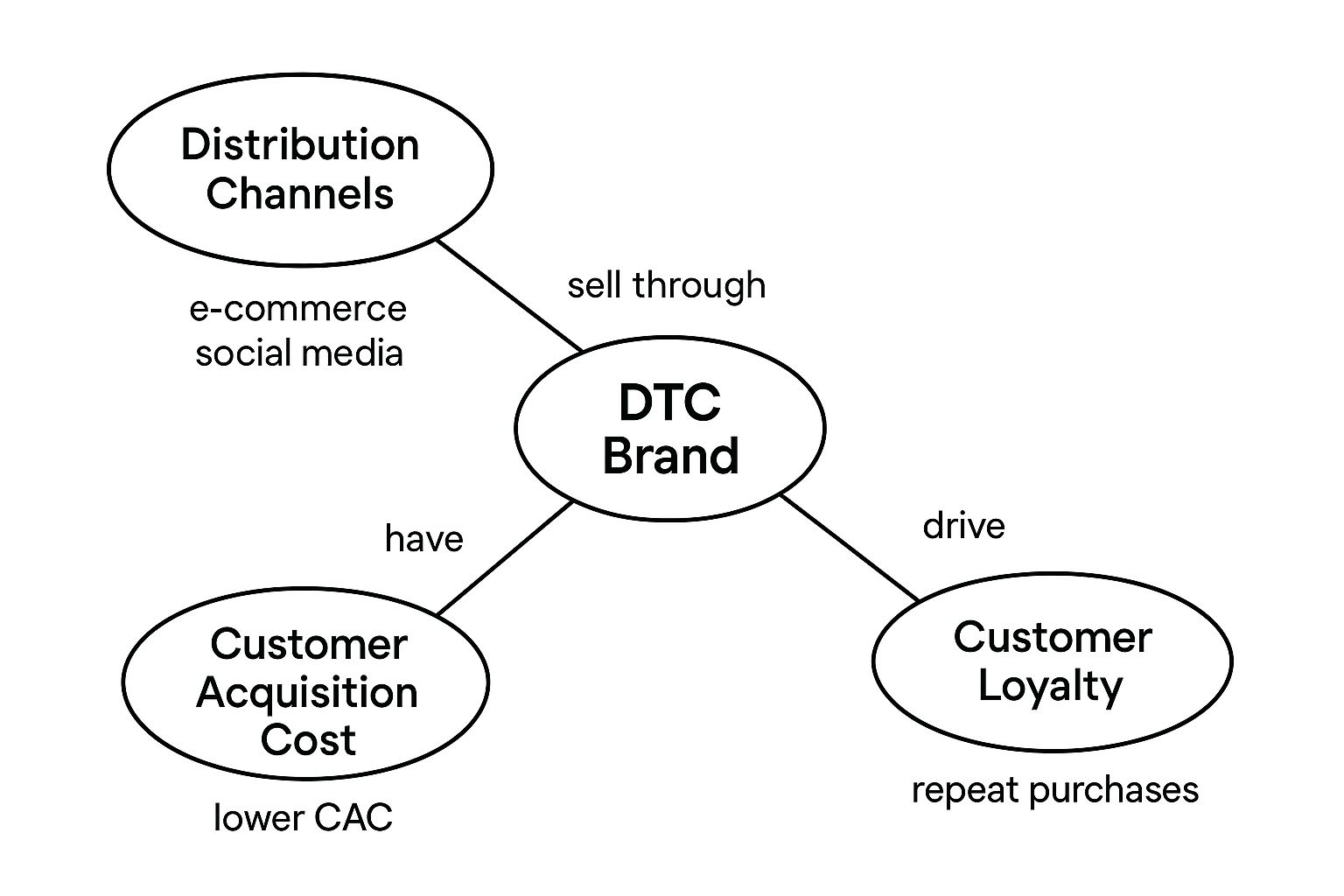
As you can see, by managing its own distribution, a DTC brand can often lower its costs and build much stronger relationships with the people who actually buy its products.
To make this even clearer, let's break down the core differences in a simple table.
DTC Brand vs. Traditional Retail: A Quick Comparison
| Feature | DTC Brand | Traditional Retail |
|---|---|---|
| Sales Channel | Sells directly to consumers online | Sells through middlemen like wholesalers and retailers |
| Customer Data | Owns all first-party customer data | Retailer owns the customer data, not the brand |
| Customer Relationship | Direct, personal, and continuous communication | Indirect relationship, filtered through the retailer |
| Pricing | More control over pricing and promotions | Limited control; must factor in retailer markups |
| Feedback Loop | Instant and direct feedback for product improvement | Slow, filtered feedback from retail partners |
| Brand Control | Full control over brand story and presentation | Brand image can be diluted by the retail environment |
This table shows just how different the two approaches are. One is about direct control and relationships, while the other relies on a network of partners.
The Power of Owning the Customer Relationship
The single biggest advantage of the DTC model is owning the customer relationship.
Because they interact directly with their audience, DTC brands collect incredibly valuable first-party data. We're talking about purchase history, browsing behavior, and direct customer feedback from reviews and surveys. This data is a goldmine. It allows brands to:
- Personalize Marketing: Forget generic ads. They can create campaigns that speak directly to what real customers want.
- Improve Products: Use direct feedback to quickly innovate and make products better. No more guessing games.
- Build a Community: Foster a tribe of loyal fans by engaging with them directly on social media, via email, and in forums.
This direct line of communication is something traditional retail models just can't offer. In that world, the customer data belongs to the retailer, not the brand making the product. If you're looking for a complete breakdown of this modern business model, our guide on what is a DTC brand has you covered.
The key thing to remember is that DTC isn’t just a sales channel—it’s a whole business philosophy. It’s about building a direct, data-driven, and authentic relationship with the people you serve.
The Three Pillars of the DTC Model
The magic of the DTC model isn't just about cutting out middlemen. It’s about completely rewriting the rules of how a brand connects with its customers. This entire approach stands on three core pillars that, when combined, give a DTC brand a serious edge in a noisy market. These are healthier profit margins, direct customer relationships, and complete brand control.

Once you understand these pillars, you see exactly why so many founders are choosing this path. Each one gives them a level of freedom and opportunity that the old-school retail model just can't match. Let’s dig into how each of them works.
Pillar One: Healthier Profit Margins
The most obvious win with the DTC model is financial. When you sell directly to your customers, you get to skip the markups that distributors and retailers tack on. In the traditional system, a product’s price gets inflated at every step so that everyone along the supply chain gets paid.
A DTC brand, on the other hand, keeps the full retail price. This isn't just about more money per sale; it creates a much healthier profit margin overall. That extra cash can be poured right back into the business—for better product development, smarter marketing, or creating an unforgettable customer experience.
Think about it: a skincare brand selling through a big department store might only pocket 50% of the sticker price. The DTC version of that same brand keeps close to 100% (minus its own operating costs), giving it way more fuel for growth.
Pillar Two: Direct Customer Relationships
This might be the most powerful pillar of all: owning the customer relationship. When a brand sells through another retailer, it’s cut off from its most valuable asset—customer data. The retailer owns all that info, leaving the brand guessing about who’s actually buying its products and why.
A DTC brand, however, gathers rich, first-party data from every single interaction. We're talking about everything from what people click on the website to the feedback they leave in a customer service chat. This direct line of communication is a total game-changer.
By owning the customer relationship, a DTC brand transforms guesswork into data-driven decisions. It can listen, learn, and adapt in real-time, building products that people actually want and fostering a loyal community around its mission.
This data allows a DTC brand to do things that are nearly impossible for a traditional one:
- Hyper-Personalization: They can customize marketing messages, recommend products, and create special offers based on what an individual customer has bought and shown interest in before.
- Rapid Innovation: Got an idea? Direct customer feedback can be used to quickly improve existing products or dream up new ones that solve a real problem.
- Community Building: Brands can talk directly to their fans, turning casual buyers into passionate advocates who feel like they're part of the story.
Imagine a DTC pet food company notices customers are constantly searching for "grain-free" options on its site. It can send a quick survey to its email list, confirm the demand, and launch a new grain-free line in a fraction of the time it would take a legacy brand.
Pillar Three: Complete Brand Control
The final pillar is having total control over your brand's story. In traditional retail, a brand's message gets watered down by the store it's in. It might be sitting on a shelf next to a competitor, put on sale without permission, or sold by a staff member who has no clue what the brand is all about.
A DTC brand controls every touchpoint. From the look and feel of the website to the tone of voice in its emails and the quality of the unboxing experience, the brand ensures everything feels consistent and authentic. This control is everything when it comes to building a strong, memorable brand that people connect with. It's how you build trust and stand out from the crowd.
Why DTC Is Reshaping Global Commerce
The move to a direct-to-consumer model isn't just a fleeting trend. It’s a seismic shift in how products are made, marketed, and sold across the globe. We're not talking about a small niche here; this is a powerful economic force, driven by what customers now expect from brands and the digital tools that finally let them connect directly.
The explosive growth we’re seeing in the DTC brand world is a clear sign that the old retail playbook is being tossed out. In its place is a more direct, authentic, and data-rich way of doing business.
This massive expansion is fueled by a perfect storm. Today’s consumers are looking for more than just a product off a shelf. They want a story, a connection, and an experience that feels like it was made just for them. On the flip side, the rise of e-commerce platforms, social media, and smart logistics has torn down the barriers to entry, making it easier than ever for a new DTC brand to launch and go head-to-head with industry giants.
The Staggering Growth of the DTC Market
Let’s talk numbers, because they really tell the story. The global Direct-to-Consumer market isn't just growing; it's accelerating at an almost unbelievable pace.
In 2024, the market hit an estimated USD 583.48 billion. But hold on, because it's projected to absolutely skyrocket to USD 2.75 trillion by 2033. That's a compound annual growth rate of 17.3%. This isn't just a little bump—it's a clear signal that both consumer behavior and brand strategy have fundamentally changed. You can dig deeper into these market projections and the forces behind them.
This growth is being pushed forward by a few key things:
- Going Digital: More people are online and comfortable buying things on the internet than ever before.
- Craving Personalization: Shoppers want products and experiences that feel unique to them, and DTC brands are built to deliver exactly that.
- Owning the Relationship: Brands want direct access to their customer data to build real, lasting loyalty, without a retailer getting in the middle.
This chart really puts the market’s powerful upward climb into perspective.

The data makes one thing crystal clear: this is a sustained economic shift, not some temporary bubble.
North America Is Leading the Pack
While the DTC movement is a global phenomenon, North America is unquestionably the dominant player. The region currently commands over 38.5% of the entire market share, making it the heart of DTC innovation. This leadership position comes from a few key advantages that have made it the perfect breeding ground for DTC success.
The DTC playbook being written in North America is basically a blueprint for the rest of the world. It shows what happens when you combine high digital literacy with a consumer culture that prizes authenticity—you get the perfect storm for direct-to-consumer brands to flourish.
Think about it. Widespread high-speed internet and a mature e-commerce infrastructure are huge factors. Shoppers are used to buying online, and the delivery networks are built to handle fast, reliable shipping.
On top of that, the powerful social media and digital marketing ecosystems give any new DTC brand the tools to find and connect with its ideal customers almost instantly. This blend of tech, infrastructure, and consumer habits has turned North America into a hotbed for DTC disruption.
Learning from the DTC Brands That Did It Right
Theory is great, but the real lessons come from seeing how successful DTC brands actually won over their markets. The companies that truly broke through didn't just sell stuff; they changed the game for their entire industry. By looking at how they did it, we can see the core DTC principles in action and figure out what it takes to build a brand people genuinely care about.
These pioneers built their empires by zeroing in on a specific problem, offering something nobody else could, and forging a real connection with their audience. They proved you don’t need a massive retail footprint to become a household name. Let's dig into the strategies of two iconic brands that perfectly capture the power of going direct.
Warby Parker: Taking on a Stale Industry
Remember what it was like buying glasses before Warby Parker? It was painful and expensive. A few big players controlled the whole market, keeping prices sky-high for no good reason. Warby Parker spotted a massive opportunity to flip this broken system on its head by selling stylish, quality glasses directly to people online for a tiny fraction of the cost.
Their pitch was simple but incredibly powerful. Why pay $500 for designer frames when you could get a great-looking pair for just $95? This wasn't just a sale; it was a direct challenge to the way the entire eyewear industry operated.
But their genius didn't stop with the price tag. They solved the single biggest reason people hesitated to buy glasses online: you couldn’t try them on. Their "Home Try-On" program, letting you pick five frames to test out at home for free, was an absolute game-changer. It took all the risk out of the equation and created a fun, memorable experience that everyone wanted to talk about.
Warby Parker’s success wasn’t just about cheap glasses. It was about seeing a huge customer frustration—overpriced frames and a terrible buying process—and using the DTC model to build a solution that was better, easier, and built around the customer.
To top it all off, they built their brand around a strong social mission. For every pair of glasses sold, they donate a pair to someone in need. This "Buy a Pair, Give a Pair" model struck a chord with shoppers who wanted to feel good about where their money was going. This mix of industry disruption, total convenience, and genuine purpose is a masterclass in modern DTC brand building.
Glossier: Building a Beauty Empire on Community
While Warby Parker shook up an industry with price and convenience, Glossier built its beauty empire on something else entirely: community. Founder Emily Weiss started with a massively popular beauty blog called "Into the Gloss." This gave her a direct line to what millions of women actually wanted from their makeup and skincare. She wasn't guessing what they needed—she was listening.
This community-first mindset became the bedrock of the entire company. Glossier didn't invent products and then go looking for customers. They built the audience first and then created products just for them. Their "skin first, makeup second" philosophy was a breath of fresh air in an industry obsessed with heavy, complicated cosmetics.
Glossier’s marketing was completely different, too. They mostly skipped traditional ads and instead let their own customers become their biggest advocates.
- User-Generated Content: They famously feature real customers, not models, on their Instagram, which feels way more authentic than a polished ad ever could.
- A Direct Feedback Loop: They actively use social media comments and reviews to decide what to make next, making their customers feel like part of the creative process.
- A Cult-Like Following: Those iconic pink bubble-wrap pouches and sticker sheets created an unboxing experience so fun and shareable that it drove a ton of organic word-of-mouth growth.
The result? A brand that feels less like a faceless company and more like a friend giving you a trusted recommendation. An incredible 70% of Glossier's online traffic comes from peer-to-peer referrals, proving just how powerful a community-driven model can be. These examples make it clear: a successful DTC brand is built on deeply understanding its customers and a relentless drive to solve their problems in a unique and honest way.
Your Guide to Building a DTC Brand
Launching a DTC brand that actually sticks is about so much more than just having a cool product and a website. It’s about creating an entire world built around your customer—from the very first idea that sparks your business to the moment the package lands on their doorstep.
This whole journey doesn't start with a product. It starts with a problem. The most powerful brands I've seen are the ones that pinpoint a real frustration people have and create a solution that genuinely improves their lives.
Finding Your Niche and Product-Market Fit
First things first: you have to find your corner of the market. Instead of trying to be everything to everyone, the best DTC brands zero in on a specific, passionate, and often underserved audience. That's your niche. A great product without a dedicated audience is just a hobby.
To nail down your niche, ask yourself a few honest questions:
- What problem am I really solving? Is this a genuine pain point people are actively trying to fix?
- Who am I solving it for? Get specific. "Millennial dog owners in urban areas" is a lot stronger than just "pet owners."
- Why is my solution the best one? Are you offering better quality, a more accessible price, unmatched convenience, or a totally unique experience?
Once you've got an idea, you have to validate it to find that sweet spot known as product-market fit. This is that magic moment where your product perfectly meets a real market demand. You can test the waters by setting up a simple landing page to collect email sign-ups or even run a small pre-order campaign. The goal is simple: get proof that people will actually open their wallets for what you're selling before you go all-in.
Creating a High-Converting E-commerce Website
Think of your website as your digital flagship store, your brand headquarters, and your number-one salesperson, all rolled into one. It can't just look pretty; it needs to be an effortless, intuitive, and persuasive experience that guides visitors from "just browsing" to "checkout complete" with zero friction.
As you build your site, you need to weave in effective e-commerce branding strategies that not only drive sales but also build a loyal following. This means crystal-clear product photos, compelling descriptions that tell a story, and a layout that’s a breeze to navigate. Pay special attention to the checkout process—make it dead simple and secure. A clunky checkout is the number one killer of sales.
Mastering Customer Acquisition
Okay, your digital doors are open. Now you need to get people inside. For a DTC brand, customer acquisition is all about finding your ideal audience where they already hang out online. You can't just build a website and cross your fingers.
Focus your energy on these key channels:
- Paid Social Ads: Platforms like Instagram and TikTok are gold mines for reaching niche audiences. You can use visually engaging ads to show your product in action.
- Search Engine Optimization (SEO): Getting your site to rank on Google for the keywords your target audience is searching for is a marathon, not a sprint. But it's a powerful way to attract organic traffic that's ready to buy.
- Content Marketing: Create blog posts, videos, or guides that actually solve problems for your audience. This builds trust and positions your brand as the go-to expert in your space.
This is also where thinking about different sales channels comes into play. While your own site is the mothership, other platforms can give you a major boost. For example, plenty of successful entrepreneurs have built an Amazon private label business to run alongside their DTC site, tapping into a massive, ready-made customer base.
Building a DTC brand is a marathon, not a sprint. The brands that win are the ones that relentlessly focus on delivering value at every single touchpoint, from the first ad a customer sees to the support they receive after purchase.
Nailing Logistics and Customer Service
At the end of the day, a beautiful website and clever marketing are worthless if the operational side of your business is a mess. The experience a customer has after they click "buy" is where you earn their loyalty for life. This boils down to two key things: getting the product to them reliably and being there to help when they need it.
The Direct-to-Consumer e-commerce market in the United States is absolutely exploding—it's projected to hit USD 239.75 billion by 2025. With that kind of growth, customer expectations are through the roof. A smooth, seamless operational experience isn't a bonus anymore; it's the bare minimum.
Solid logistics means fast, affordable, and transparent shipping. Your customers expect to know where their order is and when it will show up. On the flip side, world-class customer service should be responsive, empathetic, and empowered to solve problems on the spot. This is your chance to turn a potential hiccup into a moment that creates a fan for life.
The Future of Direct to Consumer
The early days of direct-to-consumer were all about the online store. But that's changing fast. The next big thing for any successful DTC brand isn't about choosing between a website and a storefront—it's about being everywhere your customers are. The DTC model is growing up, evolving from a simple e-commerce strategy into a fully-fledged, multi-channel experience.
What began as a way to cut out the middleman and sell online is now merging the best of both worlds. We're seeing more and more digital-first brands launching cool pop-up shops, opening permanent retail locations, and even striking smart partnerships with established big-box stores. This is all about meeting customers where they are, giving them the ease of online shopping and the hands-on experience of seeing a product in person.
Technology and Personalization Take Center Stage
Technology is the fuel for this whole evolution. The future of DTC is incredibly personal, and it's being built with tools that make the entire shopping experience smarter and more interesting. Brands aren't just shipping boxes anymore; they're creating unique journeys for each and every customer.
This shift is opening up some really exciting possibilities for brands to connect with people:
- AI-Powered Recommendations: Think of it as a personal shopper in your pocket. Artificial intelligence can look at a customer's habits and suggest products they'll actually want, which is way more effective than a generic "you might also like" banner.
- Augmented Reality (AR) Try-Ons: AR is a game-changer. It lets people use their phones to see how glasses look on their face, test out a new lipstick shade, or place a virtual sofa in their living room. It closes that nagging gap between "I wonder what this is like" and "I know this is right."
- Subscription Models: A huge piece of the puzzle involves new ways of doing business. Exploring the future trends in e-commerce subscriptions is a fantastic way for brands to create predictable revenue and build much stronger, long-term relationships with their customers.
The DTC brand of tomorrow won't just know what you bought—it'll anticipate what you need. By using technology to create smooth, personal, and memorable moments, brands can build connections that go way beyond a single transaction.
Global Growth and Shifting Values
The DTC movement is also going global, and fast. Emerging markets are becoming massive opportunities for growth. Just look at India, where the D2C market is projected to explode from USD 162.91 billion in 2024 to an incredible USD 595.19 billion by 2033. That tells you everything you need to know about the worldwide hunger for direct brand connections.
At the same time, what a brand stands for matters more than ever. Today's shoppers want to put their money behind companies that share their values. Things like sustainability, ethical sourcing, and just being honest and transparent are no longer nice-to-haves; they're deal-breakers for millions of people. A DTC brand that genuinely lives its values will always have an edge, building a community that buys into the mission, not just the product.
A Few Common Questions About DTC Brands
As the direct-to-consumer world keeps growing, a few questions pop up time and time again. Let's tackle some of the most common ones to give you a clearer picture of how these brands really work.
So, What's the Real Difference Between DTC and Traditional Retail?
At its core, the difference is all about control. A DTC brand makes its own stuff and sells it straight to you, the customer. There are no middlemen—no department stores, no wholesalers, no one else taking a cut.
This direct connection is huge. It gives them total control over the brand experience, from the first ad you see to the unboxing. They also get all the customer data, which helps them build much stronger, more personal relationships.
Traditional retail is the opposite. It depends on a whole chain of partners to get products on shelves. This means brands have less say over how their products are presented and, crucially, no direct line to the people actually buying them.
Can a Brand Sell Both DTC and in Stores?
Absolutely, and it’s becoming incredibly common. This is what’s known as an omnichannel strategy—a fancy way of saying they sell everywhere their customers are.
Many brands that started online now have their own physical stores or partner with specific retailers. Think of it as the best of both worlds. They get the direct customer feedback and data from their DTC site while also getting the visibility and try-before-you-buy experience of a real-life store.
What Does It Actually Cost to Start a DTC Brand?
It’s a common myth that going DTC is automatically cheaper because you cut out the middleman. While you do save on wholesale fees, that money gets funneled into something else: finding customers.
Without a big retailer's built-in foot traffic, a DTC brand has to create its own buzz from scratch. That means a serious investment in marketing, branding, and the tech to make it all happen.
A huge part of this involves building a community of loyal fans who shout about your brand from the rooftops. These brand advocates are often the secret sauce to long-term, sustainable growth.
Ready to scale your Amazon DTC brand with a powerful affiliate network? Coral provides the tools you need to recruit, manage, and reward creators who drive real sales. Start building your community of brand advocates today at https://coral.ax.