How to Start Affiliate Marketing with Amazon: A Complete Guide
Category: Amazon affiliate marketing
Starting out with Amazon affiliate marketing really comes down to three key stages: picking a niche you know and love, creating a home for your content (like a blog or YouTube channel), and then crafting genuinely helpful content that includes your affiliate links. When someone clicks your link and buys something, you get a cut. Simple as that.
Your First Steps to Amazon Affiliate Success
Jumping into the Amazon Associates program can feel a little intimidating at first. It's a big platform. But it’s also one of the most reliable ways to build an online income, mainly because you're piggybacking on one of the world's most trusted brands. This isn't a "get rich quick" scheme; sustainable success is built on a smart plan and consistent work.
The beauty of Amazon is its sheer scale. With millions of products, you can carve out a profitable niche in just about anything. Love high-end camera gear? Sustainable home goods? Niche pet supplies? There’s a product for you to promote. This massive selection makes it a perfect starting point for newcomers still nailing down their content strategy.
Understanding The Big Picture
Before you dive in, it helps to grasp just how big this opportunity is. Affiliate marketing is a massive global industry, and Amazon Associates is the undisputed king, holding nearly half of the entire affiliate network market. The industry is expected to be worth around $18.5 billion in 2025 and is on track to hit an incredible $31.7 billion by 2031. That kind of growth shows the potential, but it also signals more competition, which is why having a solid strategy is so important.
The mechanics behind it all are pretty straightforward. Your job is to act as a helpful guide, connecting people with products that genuinely solve their problems.
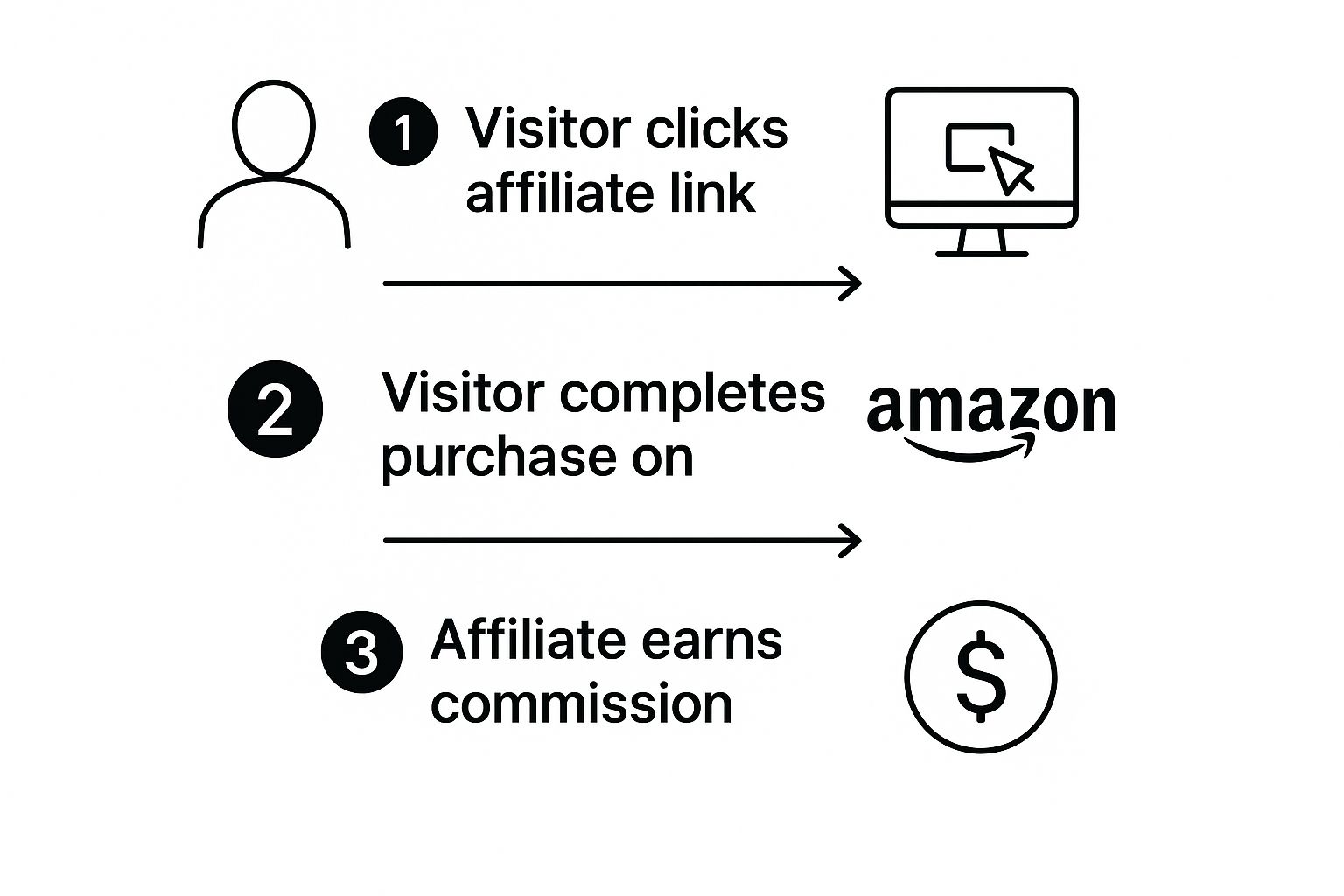
As you can see, you’re not just pushing products; you're the bridge between a person's need and the right solution.
To help you visualize the path ahead, here's a quick look at the main stages of your journey.
Amazon Affiliate Journey Quick Overview
| Phase | Key Objective | Example Action |
|---|---|---|
| Foundation | Establish your niche and platform. | Choose the "home brewing kits for beginners" niche and set up a WordPress blog. |
| Creation | Develop valuable content with affiliate links. | Write a detailed review of the top 3 beginner home brewing kits. |
| Growth | Attract an audience and optimize performance. | Use SEO to rank for "best homebrew kit" and track click-through rates. |
This table maps out the core roadmap. It's not just about signing up; it's about building a real, valuable asset.
Setting Realistic Expectations
It’s tempting to want to see results overnight, but building a successful affiliate site takes time. Think of it in clear phases:
- Laying the Groundwork: This is all about picking your niche, figuring out who you're talking to, and setting up your platform, like a simple blog.
- Creating Great Content: Next, you'll produce high-quality reviews, how-to guides, or comparison posts that naturally weave in your affiliate links. To get a better feel for how these relationships work, it's worth understanding general affiliate principles.
- Driving Growth: Finally, you’ll focus on bringing people to your site through things like SEO or social media, and then you’ll start analyzing what works to improve your earnings.
Think of yourself as a trusted advisor, not a salesperson. Your audience is looking for real recommendations, and building that trust is the single most important part of finding long-term success.
Consider this your foundational briefing. We're going to walk through each of these stages together, giving you clear, actionable advice to get you started on the right foot. For more great advice, check out our guide on essential affiliate marketing tips for beginners to get a head start.
Finding a Niche You Can Actually Win
Let's be real: your niche is the foundation of your entire affiliate business. Get this part right, and everything else gets easier. Get it wrong, and you're in for an uphill battle. Forget the fluffy advice to "just pick your passion." While you need to be interested, a truly winning niche is where your genuine interests meet real audience demand and, most importantly, profit potential.
Think of it less as picking a topic and more as choosing a specific group of people to help. Your goal is to become their go-to expert for a particular problem.
Moving Beyond Broad Categories
Starting with a huge category like "fitness" or "kitchen gadgets" is a guaranteed way to get lost in the noise. The competition is just insane. You have to drill down and find a specific, underserved corner of that market. This is what we call "niching down," and it’s where the money is.
For example, instead of "home goods," you might focus on "sustainable home goods for small apartments." See the difference? You’ve instantly defined your audience (eco-conscious apartment dwellers) and the exact kind of products they’re looking for.
Here are a few more examples to get the wheels turning:
- Broad: Travel Gear
- Specific: Ergonomic travel gear for digital nomads
- Broad: Coffee
- Specific: Manual coffee brewing equipment for beginners
- Broad: Pet Supplies
- Specific: High-quality dog toys for aggressive chewers
This kind of focus drastically cuts down your competition and helps you build a loyal audience that’s actively searching for the solutions you provide.
Evaluating a Niche for Profitability
Okay, you've got a few ideas. Now it's time to see if they can actually make money. A niche isn't viable just because you like it; it has to have a clear path to generating income. This comes down to analyzing audience demand and what’s available on Amazon.
A great place to start is on social platforms like Reddit or niche Facebook Groups. Are people constantly asking for product recommendations? Are they complaining about problems that a certain product could fix? That's a great sign you've found an active, buying audience.
Next, it’s time to head over to Amazon and do some detective work. Search for products in your potential niche and look for a few key things:
- Product Availability: Are there a ton of well-reviewed products you could promote? If you can only find a handful of options, that's a huge red flag.
- Price Point: Think about the math. A 4% commission on a $20 item is only $0.80. But that same 4% commission on a $500 item is $20. Promoting some higher-ticket products can make a massive difference to your bottom line.
- Commission Rates: Amazon’s commission rates aren't uniform; they vary by category and typically fall between 1% and 10%. A niche filled with products in the 1% category will be a much tougher grind than one with products in the 4-5% range.
Your sweet spot is a niche that has a good mix of all three: a passionate audience, plenty of products at different price points, and decent commission rates. Don't settle for a niche that's weak in any one of these areas.
Let's walk through a real-world scenario. Say you’re looking at the "home office" niche. It's way too broad. But what if you niched down to "ergonomic home office setups for standing desks"?
Now we're talking. You can immediately map out a variety of products to promote:
- High-ticket items: Standing desks, ergonomic chairs ($300-$1000+)
- Mid-range accessories: Monitor arms, anti-fatigue mats, vertical mice ($50-$150)
- Low-cost additions: Cable management solutions, desk pads ($20-$40)
This product mix gives you the flexibility to create content for people with different budgets, all while solving a very specific problem for a dedicated audience.
Setting Up Your Platform for Success
With your niche locked in, you need a place to publish your content. For most Amazon affiliates, this comes down to two main options: a blog or a YouTube channel. The best choice really depends on your niche and your own personal strengths.
If your niche is very visual and products need to be demonstrated—like reviewing camera gear or showing how a weird kitchen gadget works—YouTube is probably your best bet. Video builds trust like nothing else, and you can drop affiliate links right in the description.
On the other hand, if your niche is more information-based and people are looking for detailed written guides, comparisons, or in-depth reviews, a blog is the way to go. A blog gives you 100% ownership of your platform and lets you build a long-term asset that pulls in free traffic from search engines.
Whichever path you choose, you have to look professional from day one.
- For a blog: Get a clean, fast theme. I personally use and recommend GeneratePress because it's lightweight and easy to work with.
- For a YouTube channel: Make a professional-looking channel banner and keep your video thumbnails consistent so people recognize your brand.
Think of your platform as your digital storefront. When it looks clean and trustworthy, people are more likely to stick around, read what you have to say, and ultimately click your links. Nailing this foundation is crucial before you start creating the content that will actually make you money.
Creating Content That Actually Sells
Okay, you've got your platform up and running. Now for the fun part—and the most important work. Your content is what will make or break your affiliate business. It's the bridge that takes a curious visitor and turns them into a confident buyer.
The biggest mistake I see new affiliates make is trying to hard-sell. Your real job is to be incredibly helpful. Create content so useful that clicking your affiliate link feels like the most natural next step for the reader. If you focus on solving problems first, the sales will come. It's a simple shift in mindset that changes everything.
Choosing The Right Content Formats
Not all content is created equal in the world of affiliate marketing. Some formats just plain work better because they catch people at the exact moment they’re trying to make a buying decision. They’re actively looking for guidance, and you’re there to provide it.
Here are the heavy hitters that consistently get results:
- Detailed Product Reviews: This is the classic for a reason. A great review is so much more than a spec sheet. It’s about sharing your real-world experience, showing your own photos, and giving an honest take on what’s great and what’s not-so-great.
- "Best Of" Comparison Posts: Think "The 5 Best Coffee Makers for Small Kitchens." These articles are pure gold for readers because you do all the legwork for them, saving them from hours of agonizing research. You compare the top contenders and give them a clear winner.
- Problem-Solving Guides: This approach is brilliant because it’s so organic. A post like "How to Finally Get Rid of Pet Hair on Furniture" can naturally lead into a recommendation for a fantastic handheld vacuum you found on Amazon.
These formats are effective because they target readers who already have their wallets out (or are about to). They have a problem and are actively searching for the solution.
Structuring a Review That Builds Trust
Let's break this down with a real example. Say you're reviewing the "AeroPress Go," a super popular travel coffee maker. A lazy review would just rehash the details from the Amazon listing. A powerful review, on the other hand, builds a real connection.
To pull this off, you need to cover all the angles—the good, the bad, and the stuff that surprised you.
The most powerful tool you have as an affiliate is honesty. Readers can spot a thinly veiled sales pitch from a mile away. When you point out a product's flaws alongside its strengths, you instantly become more credible and trustworthy.
Here’s a simple structure I always come back to:
- Start with the Problem: Hook the reader by relating to their struggle. "Trying to brew a decent cup of coffee while you're camping is usually a messy compromise..."
- Introduce the Solution: Position the AeroPress Go as the potential hero of the story.
- Share Your Experience: This is where you shine. Talk about the unboxing, your first brew, and the little details you noticed. Use your own photos, not just stock images.
- Cover the Pros and Cons: Get real. Maybe its portability is a huge pro, but you wish the carrying case felt more durable (a con).
- Compare it to Alternatives: Briefly touch on how it stacks up against other options. This proves you've done your homework and aren't just pushing one product.
- Deliver a Clear Verdict: Wrap it up with a strong conclusion. Who is this absolutely perfect for? And who should probably skip it? This is the ideal spot for your main affiliate link.
This framework turns a basic review into a trusted buying guide, giving your reader the confidence they need to make a purchase.
Finding Keywords That Drive Sales
Creating amazing content is one thing, but people have to be able to find it. That's where a little keyword research comes in. You're looking for the exact phrases people type into Google when they're getting ready to buy.
These are often called "buyer intent" keywords, and they typically include trigger words like:
- Best
- Review
- Comparison
- Vs
- Alternative
For example, instead of a broad term like "coffee maker," you'd target something much more specific, like "best single serve coffee maker without pods." The person searching for that is much further along in the buying process.
You don't need fancy, expensive tools to get started. Just use Google's autocomplete. Type in a product category and see what suggestions pop up—those are the real things people are searching for right now.
Once you have a product picked out, getting the link right is key. You can learn more about how to deep link to any Amazon product to make sure your audience lands exactly where you want them to. It’s a small detail that makes the user experience way better and can really help your conversion rates.
Diving Into the Amazon Associates Program
Alright, with your platform built and ready to go, it’s time to make it official and join the Amazon Associates program. This is where the rubber meets the road—connecting your hard work directly to Amazon's massive product catalog. Getting approved is usually pretty painless, but you'll want to have everything in order first to avoid any hiccups.
The application is just a straightforward online form. You'll fill in details about yourself and, most importantly, the website or social media channel you'll be using. Amazon needs to see that you have an established presence with original content. A brand-new site with only a handful of posts will likely get rejected, so it's a good idea to build up a solid base of quality content before you apply.
Getting Your Application Approved
To give yourself the best shot at approval, your platform needs to look lived-in and legitimate. One of the key things Amazon looks for is a site with at least 10 original posts that have been published recently. They want to see that you're genuinely building an audience, not just throwing up a temporary site to cram full of links.
Have this information ready before you start the application:
- Your website or social channel URL: The primary place you'll promote products.
- A quick summary of your platform: Be prepared to explain your niche and who your audience is.
- How you get traffic: They'll ask how you plan to drive visitors and if you're using other ways to make money.
After you submit, you’ll get provisional approval. Here’s the catch: your account isn't fully approved until you make at least three qualifying sales within the first 180 days. This is Amazon's way of making sure you can actually send them customers who buy stuff.
A Quick Tour of the Associates Dashboard
Once you're in, you get access to the Amazon Associates dashboard. Think of it as your command center for creating links, checking your stats, and seeing how much you've earned. It might look a little overwhelming at first, but you'll really only need a few key features to start.
The tool you'll live in as a beginner is SiteStripe. It's a simple toolbar that appears at the top of any Amazon page once you're logged into your Associates account. With just a click, you can create a unique affiliate link for any product you're looking at. You can grab text links, image links, or a combination of both. Honestly, it's the fastest way to get a link for a product you want to write about.
Pro Tip: Get comfortable with SiteStripe right away. It takes all the friction out of creating clean, trackable affiliate links without ever leaving the product page.
Knowing how to generate these links is a core piece of understanding how the Amazon affiliate system works behind the scenes.
Playing by the Rules to Keep Your Account Safe
Amazon is famously strict about its policies. One wrong move could get your account shut down, so it pays to know the rules. The most critical one is your affiliate disclosure.
You absolutely must state clearly on your site that you're part of the program and earn commissions. This isn't just an Amazon thing; it's a legal requirement from the FTC. Most people handle this by putting a simple statement in their site's footer or near the top of any article containing affiliate links. Something like this works perfectly:
"As an Amazon Associate, I earn from qualifying purchases."
Another big one: never, ever put Amazon affiliate links in emails. It's a hard and fast rule. If you want to promote a product to your email list, send them to a blog post on your site that contains the links. Staying on the right side of the rules is the only way to build a sustainable business with Amazon.
Getting Real Traffic to Your Affiliate Links
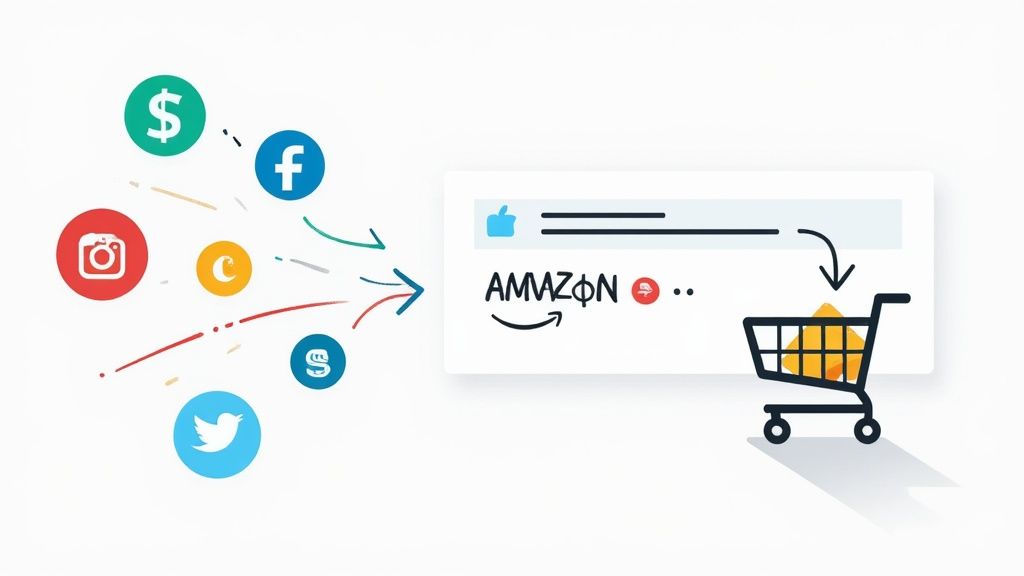
Here's a hard truth: amazing content is useless if no one ever sees it. You could write the most compelling product review in the world, but without eyeballs, you won't make a single sale. Now, we're shifting gears from creation to promotion—the real work of getting the right people to click your affiliate links.
This isn’t about luck. It's about a smart, repeatable strategy.
And no, you don't need a massive marketing budget to pull this off. Some of the most effective ways to get traffic are completely free, starting with the bedrock of all online content: search engine optimization (SEO). It sounds technical, but it’s really just about helping Google understand your content so it can show it to the right people.
Mastering Foundational SEO
Think of SEO as your ticket to long-term, passive traffic. When you get it right, a single article can bring you visitors and sales for years without you touching it again. The whole point is to show up on the first page of Google when your ideal customer types in a search.
Remember those "buyer intent" keywords we talked about, like "best standing desk for small spaces"? Your mission is to convince Google that your article is the absolute best answer to that question. A few simple on-page SEO tweaks can make a world of difference.
- Nail the Title: Your main keyword has to be in the title of your post. Get it as close to the beginning as you can. It's a huge signal to Google.
- Use Subheadings: Don't just write a wall of text. Break up your content with H2 and H3 subheadings that include your keyword or related phrases. This makes your article scannable for humans and search engines.
- Optimize Your Images: Name your image files something descriptive (like
ergonomic-office-chair-review.jpg, notIMG_5892.jpg). Also, fill out the "alt text" with a quick, simple description of the image.
These small moves tell Google your content is highly relevant to what people are searching for. Once your content is optimized and live, you can layer on some proven strategies to get more website traffic to really speed things up.
Tapping Into Visual Search on Pinterest and YouTube
Google is a beast, but it’s not the only search engine in town. For many niches, platforms like Pinterest and YouTube are absolute goldmines. If you’re promoting anything visual—home decor, fashion, cooking gadgets, you name it—you have to be on them.
On Pinterest, you can create beautiful "Pins" that lead back to your blog posts. Imagine someone planning a home office makeover. A stunning photo of a well-organized desk setup could link directly to your article on "The Best Desk Organizers." You're catching them right when they're looking for ideas.
YouTube takes it a step further by building massive trust. A video of you actually unboxing, assembling, and using a product is incredibly persuasive. It answers all the little questions and doubts a potential buyer might have. Then, you just pop your affiliate links right into the video description. Easy.
Using Your Amazon Reports to Grow Smarter
This is what separates the pros from the amateurs. Your Amazon Associates dashboard is so much more than a place to check your earnings. It’s a roadmap telling you exactly what your audience wants to buy next.
Log into your dashboard and head over to the Reports section. You'll see a few key things:
- Clicks: The number of people clicking your affiliate links.
- Ordered Items: A complete list of everything people bought after clicking your links.
- Earnings: Your total commissions for a given period.
The "Ordered Items" report is your secret weapon. You will absolutely find people buying things you didn't even recommend. This is a goldmine for new content ideas.
Let's say you wrote a post about your favorite coffee beans. You check your report and see that three different people who clicked your coffee link also bought the same specific coffee grinder. That's a massive clue! Your audience trusts your taste in coffee, and they're clearly in the market for a grinder, too.
So what's your next move? You write the best damn coffee grinder review on the internet.
This is how you stop guessing and start building a business based on real data. You're simply giving your audience more of what they're already telling you they want. This creates a powerful feedback loop for growth that can turn a hobby into a seriously profitable affiliate site.
Got Questions About Amazon Affiliate Marketing?
Getting started with Amazon's affiliate program can feel a bit like drinking from a firehose. There's a lot to take in, and it’s completely normal to have questions. Let's tackle some of the most common ones I hear from new affiliates so you can jump in with confidence.
Probably the biggest question on everyone's mind is about the money. What can you actually make? The truth is, earnings are all over the map. Data from 2025 pegs the national average salary for an Amazon affiliate at around $77,893 per year, but that's just an average. Top-tier affiliates can easily clear $126,500, while someone just starting out might make a few hundred bucks a month as they find their footing. It all boils down to your niche, how much traffic you can generate, and the commission rates for the products you're recommending.
Do I Absolutely Need a Website to Get Started?
A blog or a niche website is definitely the gold standard for building a sustainable affiliate business, but it's not your only option. You can absolutely get approved for the Amazon Associates program with just a social media presence.
Amazon gives the green light to affiliate links on several platforms:
- Facebook (on business or group pages, not personal profiles)
- YouTube
- TikTok
- Twitch.tv
The main thing they look for is an established, engaged audience. While there isn't a magic number, a good benchmark to aim for before applying is at least 500 real, active followers. A YouTube channel dedicated to product reviews or a highly-focused Facebook group can be a fantastic way to drive affiliate sales.
How Exactly Do Amazon's Affiliate Cookies Work?
Getting a handle on the cookie is essential—it's the little piece of tech that makes sure you get paid. When someone clicks your affiliate link, a small tracking file (the cookie) is saved to their web browser. For Amazon, this cookie has a 24-hour lifespan.
Here's what that means for you: you earn a commission on anything that person adds to their cart within those 24 hours. And the real kicker? You get credit for their entire shopping cart, not just the single item you sent them there for.
Let’s say you link to a fancy new coffee maker. A reader clicks your link, browses around, and ends up adding a $500 TV to their cart instead. As long as they did it within that 24-hour window, you get the commission for the TV. This sitewide commission is one of the most powerful perks of the program.
They don't have to complete the purchase right away, either. Once an item is in their cart, the tracking extends for another 90 days, giving them plenty of time to finally check out.
Is it Okay to Buy Through My Own Links?
I get this question a lot, and the answer is a firm and absolute no. Amazon's rules are crystal clear: you cannot earn commissions on your own purchases. This also applies to asking close friends or family to use your links for their shopping. Trying to game the system this way is a surefire way to get your account shut down for good.
Remember, the program is designed to reward you for bringing new customers and sales to Amazon, not to give you a personal discount. Keep your own shopping and your affiliate work totally separate to protect your account.
Ready to take your affiliate partnerships to the next level and truly manage your program's growth? Coral gives you the toolkit to handle everything from recruiting creators to tracking sales and processing commissions, all under one roof.