How to Start Amazon Affiliate: Ultimate Guide for Success
Category: How to start amazon affiliate
Getting started with Amazon's affiliate program is pretty straightforward on the surface. You head over to the Amazon Associates website, sign up, and start creating unique affiliate links for products. From there, you can share those links on your blog, YouTube channel, or social media pages. When someone clicks through and buys something, you get a slice of the sale. It's your gateway into one of the biggest affiliate networks on the planet.
Setting Realistic Expectations for Your Affiliate Journey
Before you jump into the technical setup, let's talk about the right mindset. This is so important. Becoming an Amazon affiliate isn't a get-rich-quick scheme; it’s about building a real business, one that’s founded on trust and genuinely helping people.
Think of it as a marathon, not a sprint. Patience and consistency are going to be your best friends. Real success comes from creating truly useful content for a very specific group of people. Your main goal should be to build an audience that actually trusts what you have to say, not just to chase a quick commission. Focus on solving their problems, answering their questions, and giving honest opinions on products you actually stand behind.
Understanding the Opportunity
The sheer size of the Amazon Associates program is hard to overstate. It’s the biggest affiliate network in the world, and it really dominates the market.
Amazon Associates holds a massive chunk of the global affiliate marketing pie, somewhere between 46.11% and 46.6% of the market share. That's a testament to its gigantic product catalog and a brand name everyone recognizes, which is a huge plus for creators.
This market leadership gives you a serious leg up. The whole affiliate marketing industry is on an upward swing, and Amazon is leading the charge. For anyone just starting out, this means you’re building on a stable, trusted platform with an almost limitless inventory of products to talk about. You can dig deeper into these affiliate marketing statistics to see just how much the industry is growing.
This is the official Amazon Associates homepage where your journey will begin.
As you can see, the page keeps it simple, laying out the process in three steps: Sign up, Recommend, and Earn. They make it clear that the program is designed to be accessible, whether you have a huge following or are just starting out.
Why Your Passion Matters
Your genuine interest in your niche is what will keep you going when growth feels slow at the beginning. If you love what you're writing about—whether it’s ergonomic office gear, eco-friendly baby products, or the latest camera equipment—creating content will feel less like a chore and more like fun.
That passion shines through as authenticity, and your audience will pick up on it. People are far more likely to trust a recommendation from someone who is obviously knowledgeable and excited about a topic. That trust is what a successful, long-term affiliate business is built on.
How to Find a Niche You Can Actually Win

Let's be honest, picking your niche is the single most important decision you'll make. Get this right, and everything else gets easier. Get it wrong, and you're in for a long, uphill battle. Your niche is the foundation for every article you write and every product you recommend.
The best niches usually live at the sweet spot where your personal passion, your actual expertise, and real audience demand all overlap.
Start by just brainstorming topics you genuinely love. What are your hobbies? What do you find yourself reading about on a Saturday morning? If you’re truly into something, like sustainable gardening or building high-performance PCs, creating content will feel less like a job and more like sharing what you know.
Is Anyone Else Interested? Validating Your Ideas
Okay, so you have a list of potential topics. Now it's time for a reality check: do other people care about this stuff, too? Passion is great, but it won’t pay the bills unless there’s an audience actively looking for information and products in that area.
A super simple first step is to use a free tool like Google Trends. It gives you a quick snapshot of a topic's popularity over time. Is it growing, stable, or a dying fad? A search for "ergonomic office chair," for example, shows rock-solid interest year-round—a great sign. A flash-in-the-pan product would show a huge spike followed by a nosedive.
Key Takeaway: You're hunting for a niche with enough demand to be profitable but not so much competition that you're drowned out. The goal is to find a topic specific enough to become a go-to expert, but broad enough to have a steady stream of content ideas.
Sizing Up the Competition and Your Audience
Once you've confirmed people are searching for your topic, you need to see who you'll be up against. Google your main keywords. Are the top spots all taken by huge, household-name websites? Or do you see smaller blogs and YouTube channels in the mix? Seeing independent creators rank is a fantastic sign that there's room for you, too.
Just as crucial is understanding who you're writing for. Before you write a single word, sketch out a quick "audience avatar." Ask yourself a few simple questions:
- Who is this person? (e.g., A remote worker in their 30s trying to build a better home office.)
- What are their biggest headaches? (e.g., Nagging back pain, feeling unproductive.)
- What solutions are they googling? (e.g., "Best ergonomic chair under $500," "how to set up a healthy workspace.")
After you've narrowed it down to a few strong contenders, the next move is to dive deep into what people are actually typing into search engines. This fast-paced step-by-step guide to keyword research is a great resource for uncovering the exact phrases your audience uses. This not only confirms demand but also hands you a ready-made content plan.
For a more comprehensive look at the entire process, our guide on https://coral.ax/blog/amazon-affiliate-marketing-for-beginners is the perfect place to start.
Choosing and Building Your Affiliate Platform
You've nailed down your niche—now it's time to build its home. This is where your audience will find your recommendations, and frankly, it's the most important asset you'll create as an Amazon affiliate. Your choice of platform, whether it's a blog, a YouTube channel, or a social media page, will dictate your entire content strategy.
There’s no magic bullet here. The right platform depends entirely on your skills, your niche, and the way you naturally communicate. If you're a solid writer who enjoys creating detailed guides, a blog is a no-brainer. After settling on a niche, the next logical step is learning how to build Amazon affiliate websites that actually convert visitors into buyers.
On the other hand, if you're more charismatic in front of a camera and your niche is visual—think home decor or the latest tech gadgets—a YouTube channel could be your ticket. For niches driven by fast-moving trends and quick tips, platforms like TikTok or Instagram can be incredibly powerful for getting in front of a huge audience, fast.
Selecting Your Platform
Think about where your target audience hangs out and how they like to get information. Are they searching Google for 1,500-word deep dives, or are they scrolling through 60-second video reviews on their phone? Matching your platform to their behavior is everything.
- WordPress Blog: The classic for a reason. You own the asset—no one can take it away from you. You have total control over design, monetization, and building long-term authority with search engines. It's perfect for niches that thrive on detailed tutorials, comparisons, and written content.
- YouTube Channel: Video is king. For many products, showing is so much more powerful than telling. It helps you build a genuine connection with your audience, but remember, you're building your house on someone else's land.
- Social Media (TikTok/Instagram): These are amazing for explosive growth and reaching younger audiences. The downside? Content has a very short shelf life, and converting those views into affiliate sales can be a lot trickier than with a blog or a long-form video.
Your platform isn't just a place to dump links. It's the foundation of your brand. Pick a memorable name, give it a professional look, and focus on becoming a trustworthy resource people actually want to come back to.
Comparing Top Amazon Affiliate Platforms
To help you decide, let's break down the most common options. Each has its own set of pros and cons, and what works for one person might be a terrible fit for another.
| Platform | Best For | Pros | Cons |
|---|---|---|---|
| WordPress | Content creators focused on SEO, in-depth reviews, and long-term asset building. | Complete ownership and control. Highest potential for passive income via search traffic. Flexible monetization. | Slower to get started. Requires learning basic website management and SEO. |
| YouTube | Visual niches, product demonstrations, and building a personal brand with a loyal following. | High engagement rates. Can build trust quickly. Strong search engine of its own. | Platform algorithm changes can kill your reach. You don't own your channel. Higher production effort. |
| Instagram/TikTok | Trend-based niches, quick tips, and reaching a massive, often younger, audience quickly. | Potential for viral growth. Excellent for building a community around a niche interest. | Very short content lifespan. Difficult to place direct affiliate links. Sales conversions can be low. |
Ultimately, the best platform is the one you can consistently create great content for. Don't chase trends if they don't fit your style.
Getting Your Foundation Right
Once you've made your choice, don't rush the setup. Treat this like a real business from day one, because it is. A sloppy foundation will kill your credibility before you even start.
For a blog, that means picking a clean, memorable domain name that hints at your niche. For a YouTube channel, it's about crafting a channel name and description that are optimized for search, telling people exactly who you are and what you offer. A professional-looking logo and consistent branding across the board go a long way in building trust.
This image breaks down the basic flow for getting your affiliate links once your platform is up and running.
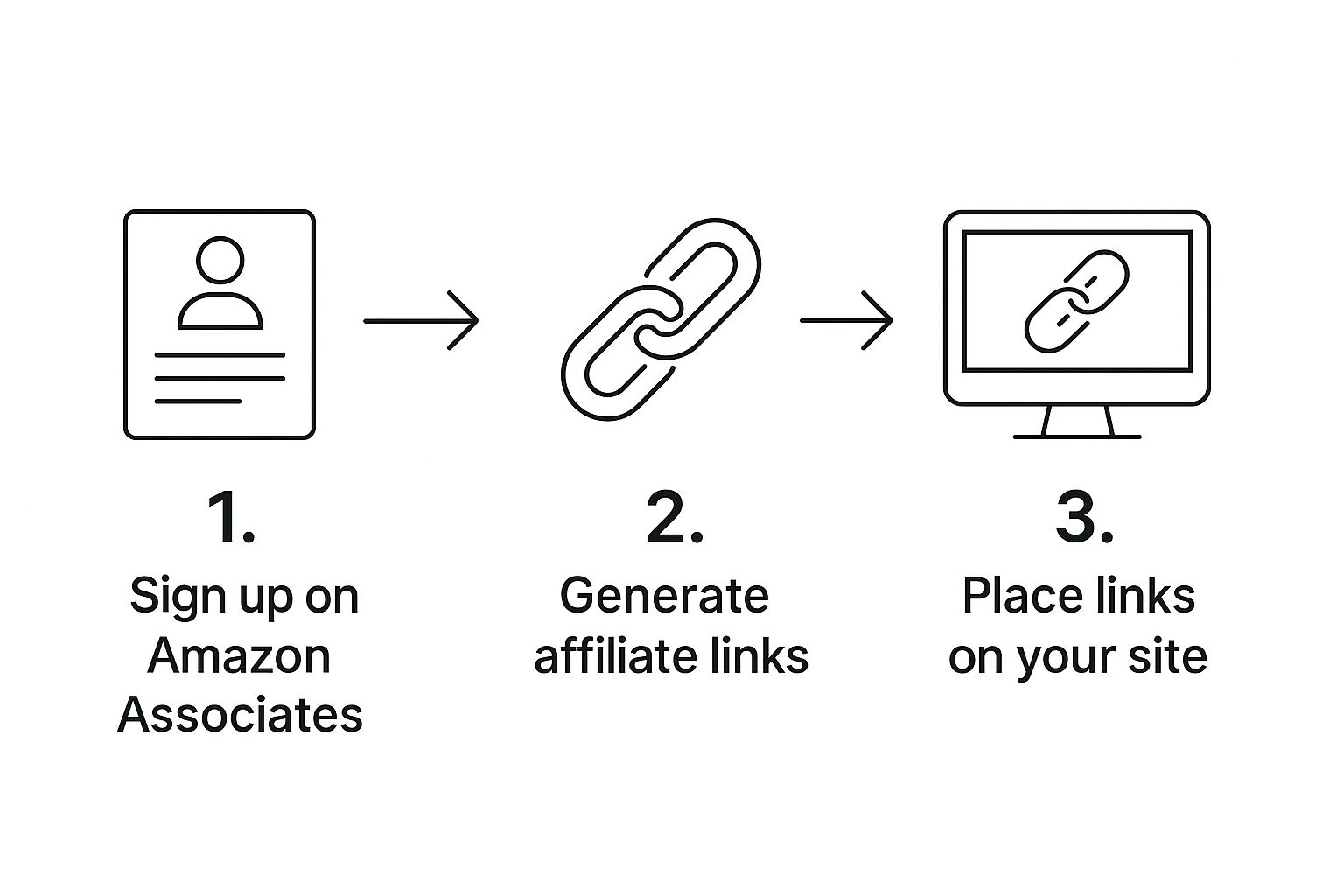
It’s a simple visual, but it shows the core engine of your business: you sign up, generate unique links for products, and then place those links in your content. That's what connects your hard work directly to Amazon's marketplace and your potential earnings.
Creating Content That Actually Sells
Alright, your affiliate platform is all set up. Now for the fun part—creating content that actually moves the needle and gets people to buy. This is where you stop being a website owner and start becoming a trusted resource.
Forget about just rehashing product descriptions from Amazon. Your audience is looking for real answers to their problems. They have questions that go way beyond "Is this a good gadget?" They want to know which product will solve their specific problem, how it compares to others, and why they should trust your recommendation. Your job is to be the expert who guides them.
Nail These High-Converting Content Formats
To do this right, you’ll need a mix of content that catches people at different points in their buying journey. Each type of article has a specific job to do, and when you combine them, the results can be powerful.
Here are three of my go-to formats that consistently perform well:
- The "Best Of" Roundup: Think articles like "The 5 Best Drones for Beginners in 2024." These are absolute gold for SEO because they target people who are ready to buy but feel overwhelmed by the choices. You’re essentially doing the hard research for them.
- The In-Depth "How-To" Guide: A post titled "How to Set Up Your First Home Recording Studio" is a perfect example. It solves a real-world problem from start to finish. Along the way, you can naturally recommend the microphones, audio interfaces, and headphones they’ll need to follow your advice.
- The Head-to-Head Comparison: This is for the buyer who is this close to making a decision. An article comparing "Sony WH-1000XM5 vs. Bose QC Ultra Headphones" helps them make that final choice. They've already done their research, and they just need an expert to give them the final nudge.
When you create content like this, you’re not just a salesperson; you're building real authority in your niche. That's the secret to a long-term, successful affiliate business. If you're just starting out, we have more foundational advice in our guide on https://coral.ax/blog/affiliate-marketing-tips-for-beginners.
Build Trust by Being Real
No matter what format you choose, your authenticity is everything. If you can, write from your own experience. Used the product? Great. Share what you genuinely loved and what you didn't. People can smell a fake sales pitch from a mile away.
Your recommendations should feel less like a sponsored ad and more like honest advice from a friend who knows their stuff. That trust is what brings people back again and again.
Video is an incredibly effective way to build this kind of connection. We've all seen the rise of social commerce—people buy from creators they know and trust. To turn your viewers into customers, you have to learn how to make promotional videos that get results without sounding like a corporate ad.
The entire creator economy, which is really what we're talking about here, is booming. It's expected to hit a market size of $32.55 billion by 2025. This just proves how much commerce has shifted toward creators whose genuine voice is their most powerful tool.
Getting Through the Amazon Associates Application
Alright, with your platform primed and ready, it's time to apply to Amazon Associates. This isn't just another sign-up form; think of it as your official introduction to Amazon. Filling it out correctly is a crucial first step in getting approved.
You'll start with the basics: your name, address, and phone number. Make sure everything is accurate and consistent with your other professional details. Then, Amazon will ask where you plan to promote their products. This is where you'll list your primary website, YouTube channel, or any other platform you'll be using.
Nailing Your Profile and Traffic Sources
This is the part where you really need to sell yourself and your platform. Amazon wants to know what your site is about, who you're talking to, and how you plan to send them customers.
In the profile section, you’ll describe your website's purpose and pick the topics that fit your niche. Be specific. Instead of just saying "I run a lifestyle blog," try something more descriptive like, "My blog focuses on sustainable and eco-friendly kitchen gadgets for home cooks, complete with product reviews and comparison guides." This paints a much clearer picture for the review team.
You’ll also need to explain how you get traffic to your site and how you plan to generate links. Be upfront about your methods. Whether you rely on organic search, have a killer Pinterest strategy, or a growing email list, lay it out for them. A clear plan shows you’re a serious partner.
If you want a deeper look into the nuts and bolts of the program, our guide on how Amazon affiliate works breaks it all down.
The First Hurdle: Making Your First 3 Sales
Once you submit your application, the clock starts. You have a 180-day qualification window to make at least three qualifying sales. This is where a lot of new affiliates get nervous, but it’s totally manageable with a bit of planning.
My Advice: Don't stress about the three-sale requirement. The key is to have a couple of high-quality, purchase-focused articles ready to go before you apply. Think "best of" lists or in-depth reviews. Promote these to your audience right away to prove your site can drive actual sales.
This trial period is simply Amazon’s way of weeding out inactive accounts. By having content ready to publish the moment you're conditionally approved, you can easily meet this requirement and get your account fully unlocked.
The effort is well worth it. Amazon affiliate commissions can build into a serious income stream, with different rates for each product category. The flexibility to earn on a blog, YouTube, or social media makes it one of the most popular programs out there. For a closer look at what's possible, you can explore detailed breakdowns of affiliate income.
Your Amazon Affiliate Questions Answered

Jumping into the Amazon Associates program, you're bound to have questions. Everyone does. I've put together this section to tackle the most common ones I hear from new affiliates, so you can get clear, direct answers and move forward with confidence.
Let's start with the rules, because getting this wrong can cost you. The single most important document is the Amazon Associates Program Operating Agreement. The biggest takeaway? You absolutely have to disclose that you earn from qualifying purchases. This isn't optional—it's about being transparent with your audience and staying on the right side of Amazon's terms.
Another rule that trips people up is simple: don't use your own affiliate links for your personal shopping. It's tempting, I get it, but Amazon's system is smart and will flag it. It’s one of the quickest ways to get your account shut down.
Making Sense of Your Earnings and Reports
That first sale is a great feeling, but what happens next? Understanding the reports and payment schedule is key to actually running this like a business. First off, Amazon has a payment threshold of $10 for direct deposit or Amazon gift cards.
Your earnings report can feel a bit overwhelming at first glance. Let’s break down the metrics that really matter:
- Clicks: Simple enough—how many times people clicked your links.
- Ordered Items: The number of products people bought through your links.
- Shipped Items: This is the important one. It's the number of items that have actually left the warehouse.
- Earnings: Your commission, which is calculated based on shipped items, not ordered ones.
The delay between an item being "ordered" and "shipped" is where most confusion comes from. You don't earn a dime until the product is on its way to the customer. This can cause a lag in your reports, especially during major sales events.
Key Insight: Don't panic if you see a sale on your report one day and it's gone the next. It almost always means the customer canceled the order or their payment didn't go through. It’s a completely normal part of ecommerce.
How Does the Cookie Window Work?
You'll hear the term "cookie" a lot. When someone clicks your affiliate link, Amazon places a small tracking file (the cookie) on their browser that lasts for 24 hours.
Here's the powerful part: you get credit for anything that person adds to their cart and buys within that 24-hour window. They might click your link for a coffee maker but end up buying a TV and a new set of towels, too. You earn a commission on the whole cart.
The catch? If they click someone else's affiliate link after yours, the new cookie overwrites yours, and the other person gets the commission. This is often called the "last click" model. It highlights why your content needs to be the final push that gets someone to click and buy.
Keep in mind that Amazon's commission rates are all over the place. They can be as low as 1% on things like groceries or as high as 10% for categories like luxury beauty. Knowing these rates is crucial for focusing your efforts on products that will actually make a difference to your bottom line.
Ready to streamline your affiliate strategy and turn your passion into a scalable business? Coral gives you the tools to manage your creators, track performance, and grow your brand on Amazon. Discover how Coral can simplify your affiliate management today.