Do You Need an Affiliate Agency?
Category: Affiliate agency
Think of an affiliate agency as your outsourced affiliate marketing department. They're a team of specialists you hire to build and run your program from the ground up—finding partners, cutting deals, tracking sales, and handling payouts. In return for their expertise and network, you pay a fee.
Do You Really Need an Affiliate Agency?
So, here's the big question every brand eventually asks: "Do I really need an affiliate agency?" With the affiliate marketing world expected to hit an eye-watering $31.7 billion by 2031, it’s tempting to just hand the keys over to a team of experts. (You can dig into more affiliate marketing industry growth stats on hostinger.com).
Agencies have a strong pitch. They promise a fast start and instant access to their Rolodex of proven publishers. But that convenience comes at a price, and it's not just about the money. You’re often trading away control and direct contact with your partners, all while paying steep monthly retainers plus a cut of the revenue your affiliates bring in. For most growing brands, the answer is no—you don't need an agency. Modern platforms provide the tools to manage your program directly, saving you money and giving you full ownership.
Let's break down the three real options you have on the table:
- Hiring a Traditional Agency: You outsource everything. This is the fast track, but it's also the most expensive and gives you the least control.
- Building an In-House Team: You keep total control. This path gives you direct relationships with your partners but takes a lot of time, money, and expertise to get right.
- Using a Direct Platform (like Coral): This is the modern hybrid. You get the tools to manage your own program effectively, which means you can skip the agency middleman and keep more of your money.
The decision really boils down to ownership. An agency manages your program for you. A platform gives you the tools to own your affiliate relationships and, ultimately, your program's success.
The reality is, most brands don't actually need an agency anymore. Platforms today give you the same powerful tools agencies use, but without the hefty price tag. For a more detailed look at the pros and cons, our complete guide on choosing an affiliate marketing agency is a great resource.
Getting a handle on how these three models differ is the first step. It's how you build an affiliate program that's not just successful, but also sustainable and profitable for the long haul.
Comparing Your Affiliate Management Options
Deciding how to run your affiliate program is a big deal. It's a choice that will shape your budget, how much control you have, and ultimately, how fast you can grow. You've got three main paths: hiring an affiliate agency, building your own team, or using a direct management platform. Each one has its own set of trade-offs.
An agency can feel like the easy button. They promise a fast start and bring their own network of publishers to the table. The catch? That convenience costs a lot, usually a hefty monthly retainer plus a cut of the revenue your affiliates generate. On the flip side, bringing it all in-house gives you total control, but you're on the hook for salaries, training, and finding the right affiliate program software to keep things running.
A platform like Coral carves out a smart middle ground. It gives you the tools to own your affiliate relationships and strategy directly, but at a tiny fraction of the cost of an agency or a new hire. You get to keep control without having to build your entire system from the ground up.
Key Differences at a Glance
So, what's the real difference? It all boils down to ownership and cost.
When you hire an agency, you're essentially renting their expertise and contacts. It can often feel like a "black box"—you don't always get direct contact with the affiliates promoting your brand. An in-house team means you own those relationships completely, but that comes with the high overhead of full-time staff.
This decision tree can help you think through the best fit for your brand.
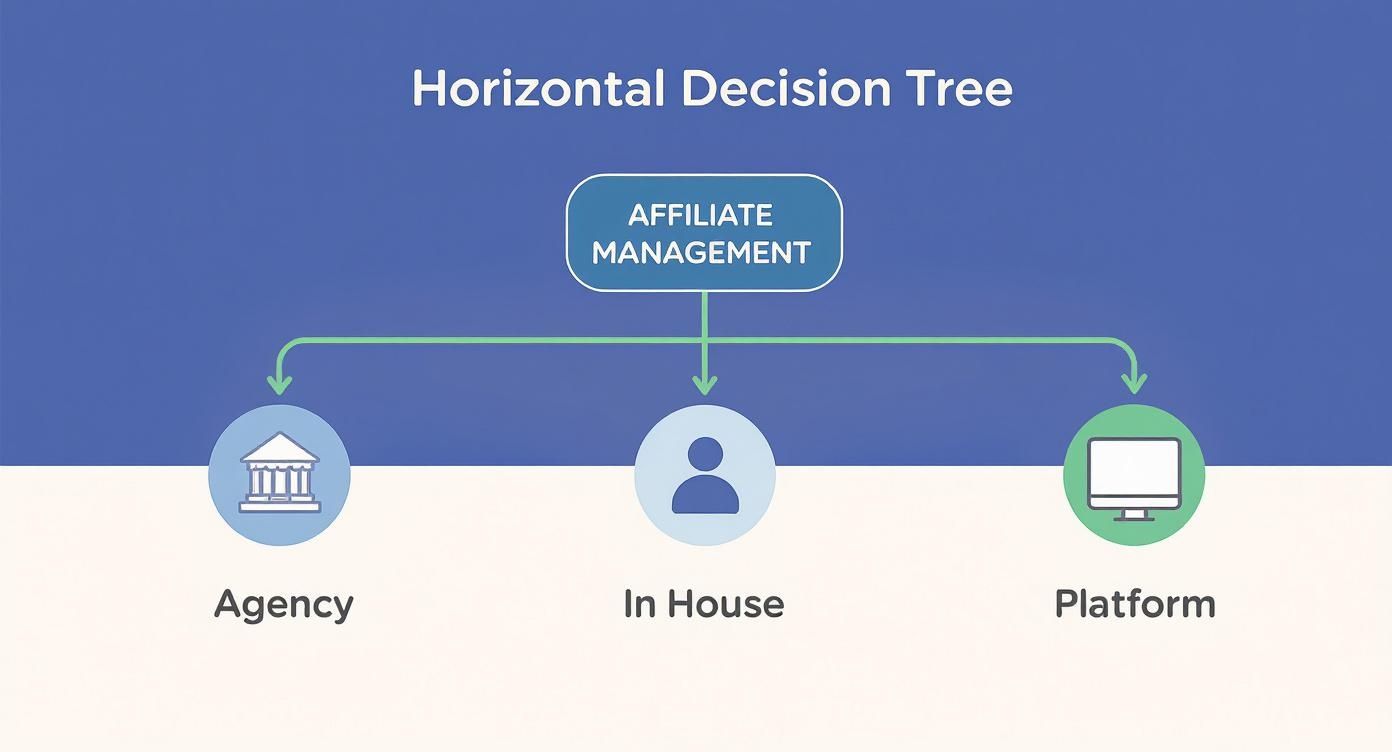
As the visual shows, your best move depends on your budget, how hands-on you want to be, and your growth goals. It's also helpful to see how specialized affiliate agencies compare to general marketing agencies to understand the full picture.
To make things even clearer, let's look at a side-by-side comparison.
Affiliate Management Models at a Glance
| Attribute | Affiliate Agency | In-House Program | Affiliate Platform |
|---|---|---|---|
| Cost | High (retainer + % of revenue) | High (salaries, benefits, software) | Low (flat monthly fee) |
| Control | Low (agency manages relationships) | High (you own everything) | High (you own relationships, use tools) |
| Speed to Launch | Fast | Slow (hiring & setup) | Fast (quick setup) |
| Expertise | Instant access to specialists | Built over time | Self-managed with platform support |
| Relationships | Agency owns publisher contacts | You own direct relationships | You own direct relationships |
| Best For | Large brands with big budgets | Well-funded, established brands | Startups & SMBs seeking growth |
This table lays out the core trade-offs, helping you match your company's needs with the right management style.
The Cost of an Affiliate Agency vs. Other Models
Let's talk numbers, because this is where the difference really hits home. An affiliate agency will typically charge a monthly retainer of $2,000–$10,000+. On top of that, they'll take a commission of 10-30% on every sale your affiliates make. Hiring an in-house manager? You're looking at a salary that can easily top $70,000 a year, not including benefits and software licenses.
A direct platform eliminates the expensive middleman. Instead of unpredictable commissions, you pay a flat, predictable fee, putting thousands of dollars back into your pocket each month—money that can be reinvested into growing your brand.
Here’s a real-world example. Imagine your brand generates $50,000 in monthly affiliate revenue. With an agency, you might pay $5,000 in commission plus a $3,000 retainer. That’s $8,000 flying out the door every single month. A platform like Coral gives you all the tools you need for a small fraction of that cost, which completely changes the math on your program's profitability. It's a big reason why so many brands are shifting away from the old agency model.
Understanding Affiliate Agency Fees and Margins
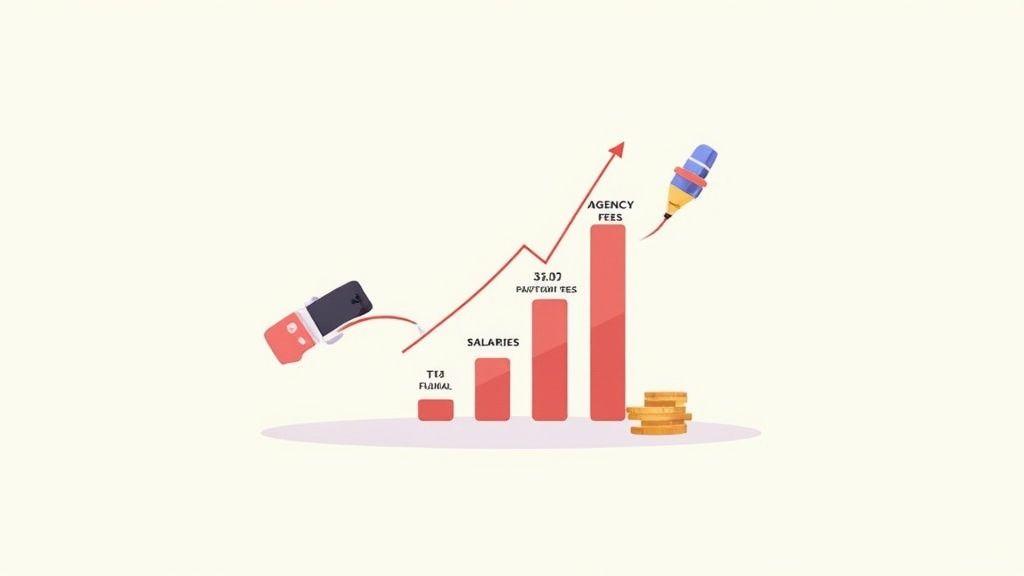
One of the biggest questions brands have is, "What percentage of revenue do agencies take?" To figure out if an agency is the right move for your bottom line, you have to look past the sales pitch and understand how their fees are structured. It's often a layered approach that can get expensive, fast.
Most agencies don't just charge one flat fee. You'll typically see a one-time setup charge, a monthly retainer just for keeping them on, and the big one: a performance commission. That's a percentage of the revenue your affiliates bring in.
Breaking Down Agency Fee Structures
So, what does this actually look like in practice? An affiliate agency might break down their pricing like this:
- Setup Fee: A $1,000–$3,000 one-off payment to get things started.
- Monthly Retainer: A recurring $2,000–$5,000+ bill, whether you have a great month or a slow one.
- Performance Commission: An extra 10-30% cut of the total revenue your affiliates generate.
That last part—the revenue share—is where your profit margins really take a hit. As your program scales and your affiliates start driving serious sales, the agency's commission balloons, even if their day-to-day work hasn't changed. You’re essentially penalized for your own success. This fee structure is a major limitation, as it directly reduces the amount of money your brand keeps.
The real problem with the agency model is that you're paying a permanent middleman. You pay a retainer for their management and a cut of the revenue, which means you're paying twice for the same result. That's money that should be in your pocket.
This is a totally different world from using a direct platform like Coral. Instead of a pricey retainer and a commission that grows with your sales, you pay a simple, flat subscription fee. This predictability means that as you scale, the extra profit is yours to keep, putting more money directly in your brand's pocket.
By cutting out the middleman, a platform approach puts you back in control of your margins. You get to reap the rewards of your program's growth. If you want to dive deeper into optimizing your payouts, check out our guide on designing affiliate commission structure examples.
How Agencies Recruit and Manage Affiliates
https://www.youtube.com/embed/pN6xV5Ac6uU
When you sign on with an affiliate agency, you're really paying for two things: their process and their network. But what does that actually look like? A common question is, "How do agencies find and recruit affiliates?" Let's pull back the curtain.
Most agencies kick things off by tapping into their private database of publishers. These are the affiliates they've built relationships with over the years and can activate quickly for new clients. This speed is a huge part of their pitch, as it helps them get a program off the ground much faster than a brand could on its own.
From there, it's all about expansion. Agencies are constantly scouting and poaching top affiliates from competing brands. They'll find who's driving results for products like yours and try to make them a better offer. They also rely heavily on old-school manual outreach—think cold emails and LinkedIn messages—which gets the job done but takes a ton of time.
The Trade-Offs of Agency Recruitment
Getting those initial partnerships locked in quickly is great, but the agency approach comes with some serious strings attached. The biggest issues usually boil down to a loss of transparency and control over who is representing your brand out in the wild.
- Lack of Transparency: You often have very little insight into where or how your brand is being promoted.
- Misaligned Partners: The agency's main goal is to hit volume targets, which can lead them to partner with affiliates who don't necessarily align with your brand's values or image.
- Conflicts of Interest: An agency might push publishers that are easiest for them to work with, not the ones that are truly the best strategic fit for you.
An agency’s biggest asset is its network, but that same network creates a wall between you and your affiliates. You lose out on building direct relationships, which is where the real long-term value is created. It's this fundamental disconnect that pushes so many brands to eventually move away from the agency model.
This is exactly why platforms like Coral exist—to cut out the middleman. When you have the tools to recruit and manage partners directly, you can build your own network without paying hefty agency fees. You keep total control, build authentic relationships, and can be confident that every single partner is a perfect fit.
If you're ready to start building your own affiliate team, check out our complete guide on how to recruit affiliates. The direct approach puts the power, and the profit, back in your hands.
The Platform Alternative: Taking Direct Control of Your Program
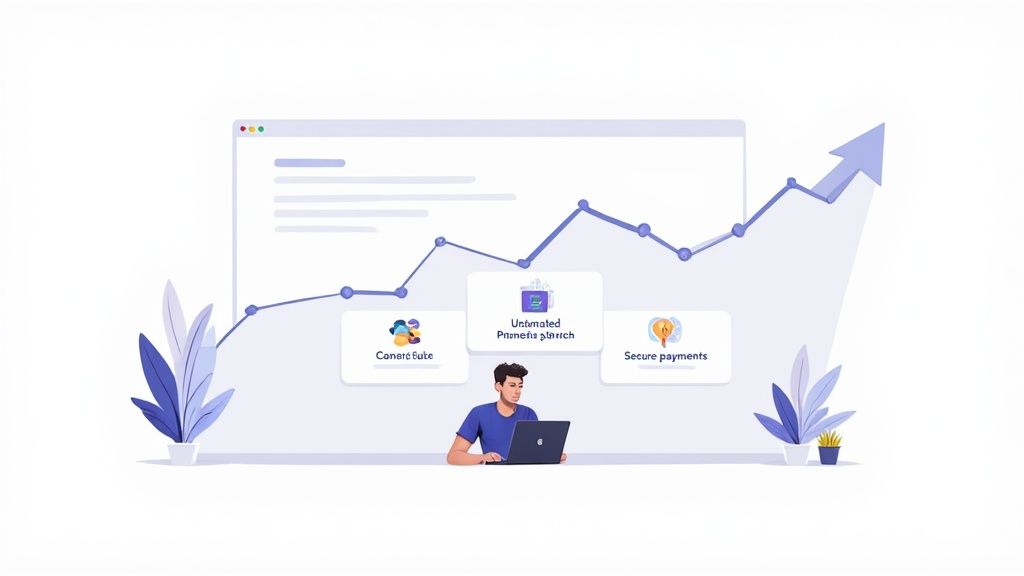
So you have the full-service affiliate agency on one side and the completely hands-on in-house team on the other. But what if there was a middle ground? A third option has popped up that gives you the control of an in-house program without needing a dedicated team.
Platforms like Coral are built to do just that. They give you the tools to run your own affiliate program effectively, cutting out the agency entirely. This approach puts you, the brand owner, firmly back in the driver's seat.
Think of it as your affiliate program's command center. Instead of getting filtered reports from an agency, you get direct access to everything—partner discovery, automated outreach, smooth onboarding, and secure payments, all in one dashboard. It’s about running a professional, scalable program without the hefty price tag or headcount.
How Coral Eliminates the Need for Agencies Entirely
The big idea here is pretty straightforward: swap out expensive agency retainers and unpredictable rev-share deals for a simple, flat subscription fee. If you’re leaning toward managing things yourself, comparing platform costs to agency fees is a must. For a real-world example, you can check out replibee's platform pricing. For growing brands, this change in how you pay for management can be a total game-changer.
This shift isn't just about saving a few bucks; it's about empowerment. Coral eliminates the need for an agency by providing all the necessary tools for direct management:
- Partner Discovery: Find and recruit affiliates without an agency's Rolodex.
- Automated Management: Streamline onboarding, communication, and tracking.
- Direct Payments: Handle payouts securely without a middleman.
- Full Ownership: You own the relationships and the data, building a long-term asset for your brand.
By cutting out the agency middleman, you’re not just saving money—you’re freeing up cash. Every dollar that once went to agency overhead can now go toward higher commissions for your best partners or get reinvested into other parts of your business.
This model is all about building direct, authentic relationships with your affiliates. You own the contacts, you own the data, and you drive the strategy. That direct connection is what builds real loyalty and drives better performance in the long run.
With the right tools, any brand can build a killer affiliate program without the high costs and lack of transparency that often come with traditional agencies. The direct platform approach puts more money back into brand pockets and ensures you have full control over your growth.
Unpacking the Big Questions
Stepping into affiliate marketing can feel like a minefield of choices. Let's tackle the most common questions brands have when they're weighing their options: agency, in-house, or a direct platform.
Do I Really Need an Affiliate Agency?
For most brands on the rise, the answer is a straightforward no. An agency might dangle the carrot of a quick start and a ready-made network, but that convenience comes with a hefty price tag and a loss of control. Today's platforms give you the exact same tools the agencies use, putting you in the driver's seat to manage your own program without giving up a huge slice of your revenue.
How Do Agencies Find and Recruit Affiliates?
Agencies usually stick to a three-pronged approach. They'll pull from their private list of publishers, actively scout and poach high-performing affiliates from your competitors, and do old-fashioned manual outreach through email or social media. It can get you off the ground fast, but you often miss out on transparency and building real relationships with your partners.
An agency's network is its main selling point, but it's also a wall between you and your affiliates. You lose that direct connection with the people who are actually championing your brand—and that connection is the secret sauce for authentic, long-term partnerships.
What Percentage of Revenue Do Agencies Take?
Agency fees are rarely just one number. You're typically looking at a monthly retainer, which can run anywhere from $2,000 to $5,000+, plus a performance commission that skims 10% to 30% off the revenue your affiliates bring in. This model means the more successful your program becomes, the more you pay, which can seriously eat into your profit margins down the line.
How Does Coral Eliminate the Need for Agencies Entirely?
Simple: Coral cuts out the expensive middleman by putting professional-grade management tools directly into your hands. Instead of shelling out for high retainers and a cut of your revenue, you pay a predictable, flat subscription fee. This gives you total control over everything—finding partners, managing them, and paying them. By giving you a single dashboard for everything from onboarding to tracking performance, Coral lets you build and grow your own profitable affiliate program, making sure more of your hard-earned money stays with you.
Ready to take the reins of your affiliate program and keep more of your revenue? Coral provides all the tools you need to build, manage, and scale your partnerships directly. See how it works at https://coral.ax.