The Evolution of Amazon Brand Management: From Ads to Advocates
Category: Amazon brand management
Effective Amazon brand management has evolved far beyond tweaking listings and running PPC campaigns. In today's saturated market, true success lies in building brand equity, earning customer trust, and creating a sustainable competitive advantage. This guide contrasts traditional approaches with a modern, creator-focused strategy, showing how platforms like Coral are redefining growth on Amazon.
The New Rules of Amazon Brand Management
The old playbook—relying heavily on paid advertising to capture existing demand—is yielding diminishing returns. With rising ad costs and fierce competition, brands need a smarter, more relational approach. Modern Amazon brand management is about building a brand that customers actively seek, trust, and recommend. It’s about shifting from renting an audience's attention to earning it through authentic connections.
Shifting Tides in a Competitive Marketplace
The Amazon landscape has fundamentally changed. A constant influx of sellers drives up advertising costs, making it harder and more expensive to stand out. To thrive, brands must pivot to strategies that build long-term value. This begins with a deep understanding of performance, which you can gain with a comprehensive guide to Amazon Brand Analytics.
The chart below highlights the key shifts impacting brands: declining ad ROI, increased competition, and a decisive consumer preference for creator-led content over traditional ads.
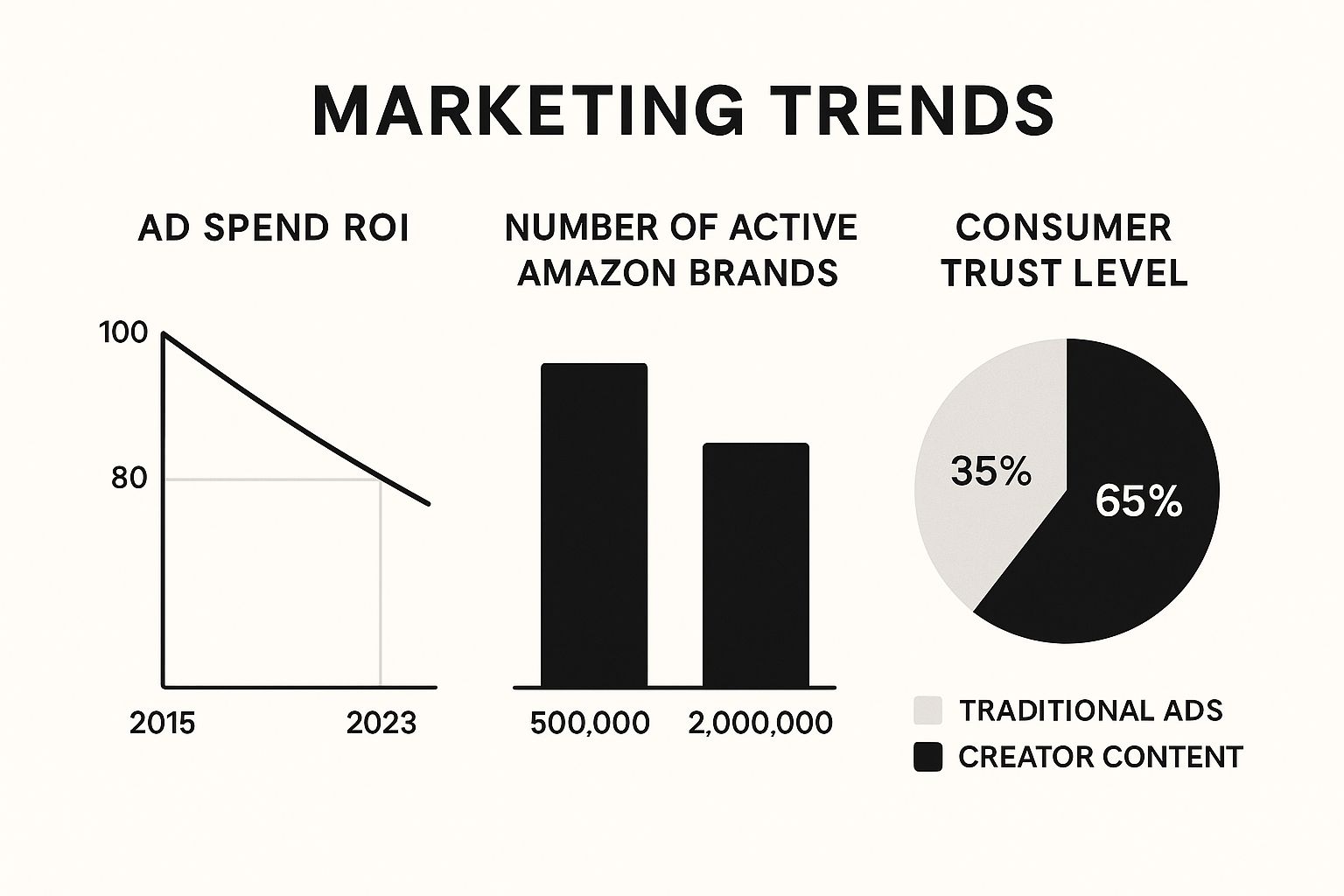
The data is clear: as traditional channels become more crowded and less effective, the future of brand growth lies in the trusted voices of content creators.
The Rise of Creator-Led Growth
This new reality is why creator partnerships are no longer a niche tactic but a core component of modern brand management. Instead of just buying impressions, brands can collaborate with authentic creators who have cultivated dedicated communities. These partnerships offer a more genuine—and sustainable—path to growth.
By building a network of passionate advocates, brands can turn one-time collaborations into ongoing partnerships, driving word-of-mouth growth and maximizing long-term revenue.
This creator-driven approach isn't just another marketing channel; it's a foundational element for building social proof, reaching high-intent buyers, and creating a brand that doesn't just compete on Amazon but leads its category.
Comparing Traditional vs Creator-Led Strategies

Your approach to Amazon brand management defines your growth trajectory. The traditional model is transactional, focusing on technical optimization and paid ads to capture existing demand. It treats growth as a game of bids, keywords, and conversion rates.
In contrast, a modern, creator-led approach—powered by platforms like Coral—is relational. It centers on building authentic partnerships to generate new demand through social proof. The goal shifts from "renting" an audience's attention to earning it by partnering with trusted voices. This fundamental change is reshaping long-term success on Amazon.
The Transactional Nature of Traditional Management
Traditional Amazon brand management revolves around the platform's native tools: Pay-Per-Click (PPC) ads, listing SEO, and A+ Content. While essential, these tactics are fundamentally reactive. They aim to outmaneuver the algorithm to win clicks and convert existing shoppers. This model can deliver immediate sales but often leads to a costly and relentless battle for visibility in an increasingly crowded space.
The Relational Power of Creator-Led Strategies
A creator-led strategy, managed through a platform like Coral, reframes brand management entirely. Instead of focusing solely on algorithms, it prioritizes building a community of brand advocates who genuinely love and promote your products. This creates a powerful, sustainable growth engine that reduces dependency on volatile ad spend.
Collaborating with creators produces authentic content that resonates deeply with niche audiences, building trust in a way branded ads cannot. This isn't just about a short-term sales spike; it's about embedding your brand within relevant communities and fostering a loyal customer base that drives organic growth. For more on building a community, explore our guide on brand advocate programs.
Traditional vs Creator-Led Amazon Brand Management
The difference between these two philosophies becomes clear when placed side-by-side. One is about capturing today's sale; the other is about building a brand that customers seek out tomorrow.
| Aspect | Traditional Brand Management | Creator-Led Brand Management (with Coral) |
|---|---|---|
| Primary Goal | Capture existing demand, win the sale. | Generate new demand, build brand loyalty. |
| Core Tactics | PPC advertising, listing SEO, A+ Content. | Affiliate partnerships, influencer collaborations, UGC. |
| Audience Focus | Broad targeting based on keywords. | Niche, high-intent communities via trusted creators. |
| Key Metrics | Return on Ad Spend (ROAS), ACoS. | Creator-attributed sales, LTV, brand search volume. |
| Growth Model | Transactional, ad-dependent, and reactive. | Relational, driven by authentic social proof, and proactive. |
The creator-led model doesn't replace traditional tactics but enhances them, adding a crucial human layer that builds lasting value far beyond the next click.
Performance Tracking and Long-Term Value
In the traditional model, success is measured by metrics like ACoS and ROAS, which define ROI based on immediate ad spend returns. While important, these figures don't capture the full picture of brand health or customer loyalty.
Creator-led management with a platform like Coral enables more meaningful performance tracking. You can directly measure creator-attributed sales via Amazon Attribution, monitor commission payouts, and identify top-performing partners. This data reveals more than just which collaborations drive sales—it provides the insights needed to build stronger, more effective brand ambassador strategies for the long term. The focus shifts from short-term ROI to building profitable, lasting relationships that create a powerful competitive moat.
How Creator Partnerships Fuel Brand Growth

Creator collaborations are no longer a trendy add-on to your Amazon brand management—they are a primary engine for sustainable growth. Why? Because authentic content from trusted individuals cuts through the ad fatigue that plagues modern shoppers. This authenticity is the bedrock of today's most successful brand strategies.
Unlike disruptive ads, creator content adds value. An unboxing video, a product tutorial, or a lifestyle integration provides social proof that a branded advertisement can never replicate. This approach isn't just about selling a product; it's about demonstrating a solution, forging a deeper connection with consumers.
Accessing Niche, High-Intent Audiences
One of the most significant benefits of creator collaborations is direct access to specific, highly engaged communities. Creators invest years building trust with their followers, who rely on them for credible recommendations. When a creator features your product, you receive a warm introduction to a pre-qualified audience that already trusts the source. It’s a far more efficient and effective path to motivated buyers than broad-based Amazon PPC marketing.
With approximately 75% of US Amazon shoppers being Prime members—a market of around 180 million subscribers—creator partnerships provide a trusted, direct line to this massive and engaged audience.
Building Lasting Brand Credibility
On Amazon, trust is paramount. While traditional Amazon brand management focuses on optimizing listings and accumulating reviews, creator partnerships build that trust before a shopper even reaches your product page. A recommendation from a followed creator feels like advice from a friend, not a corporate sales pitch. This credibility translates directly into higher conversion rates and increased customer loyalty. A shopper who discovers your brand through a trusted source is more likely to convert and become a repeat customer.
A creator-led approach transforms brand management from a transactional process into a relational one. Instead of just acquiring customers, you are building a community of loyal advocates who drive organic growth.
Platforms like Coral are specifically designed to nurture these powerful relationships. By providing tools to manage brand ambassador strategies, set custom commissions, and track performance, Coral provides the infrastructure for a scalable and effective creator network.
Tracking Performance and Driving Sustainable Growth
The impact of creator partnerships is highly measurable. With a platform like Coral, you can move beyond vanity metrics and quantify the real business impact of your collaborations. The focus shifts from ad-centric stats like ACoS to metrics that demonstrate true brand growth.
Here’s how you can measure what truly matters:
- Creator-Attributed Sales: Use Amazon Attribution to see exactly how many sales each creator drives, providing a clear ROI for every partnership.
- Conversion Rates: Monitor which creator links are most effective at turning clicks into purchases, allowing for continuous optimization.
- New-to-Brand Customers: Track how many new customers your creator network brings to your brand, proving the value of reaching new audiences.
This data-driven approach enables intelligent scaling. You can identify top-performing partners, understand what content resonates, and make informed decisions that lead to sustainable growth. To learn more about the mechanics, explore these modern influencer marketing strategies.
Building Your Creator-Focused Growth Engine

Shifting your Amazon brand management to a creator-centric model involves building a scalable system, not just running isolated campaigns. It requires a robust process for discovering the right partners, structuring motivating deals, and empowering their creativity while maintaining brand consistency. The goal is to create a reliable engine that consistently drives authentic engagement and sales. This represents a strategic pivot from transactional advertising to relational marketing, investing in people who become true advocates for your brand.
Identifying and Vetting the Right Creator Partners
The success of your creator program hinges on partner selection. The focus should be on relevance and engagement, not just follower counts. A micro-creator with a dedicated, niche audience can often outperform a mega-influencer with passive followers. Start by defining your ideal creator profile: consider their content niche, audience demographics, engagement rates, and past brand collaborations. Look for creators who are already passionate about your product category for the most authentic partnerships.
The best brand advocates are the ones who would happily use and recommend your product even if you weren’t paying them. Your job is to find those people and give them the tools to share that passion with a wider audience.
Platforms like Coral simplify this process. You can create a dedicated landing page for your program to streamline applications and manage your entire network from a single, intuitive dashboard, removing the administrative friction from scaling your program.
Structuring and Managing Collaborations
Once you've identified the right creators, structure partnerships that align incentives. While flat fees have their place, a commission-based or hybrid model often fosters stronger, more motivated, and long-term relationships. When creators earn more as they sell more, your goals become perfectly aligned.
A robust creator program should include:
- Clear Commission Tiers: Offer competitive, performance-based rates. Consider bonuses for top performers or for acquiring new-to-brand customers.
- Transparent Tracking: Use tools like Amazon Attribution to give creators real-time visibility into the sales they drive, building trust and motivation.
- Simple Payouts: Ensure a reliable and straightforward payment process to keep partners happy and focused on creating content.
Effective affiliate program management is the glue that holds these partnerships together, providing the structure needed to scale your efforts efficiently.
Empowering Creativity While Ensuring Brand Consistency
The final component is the creative brief. The goal is to provide clear direction without stifling the creator's unique voice—the very reason you chose to partner with them. A great brief establishes guardrails, not a rigid script. It should cover essential product benefits, key messaging points, brand dos and don'ts, and necessary FTC disclosure guidelines. This balance empowers creators to integrate your product authentically, producing content that resonates with their audience and drives genuine results.
Measuring the True ROI of Creator Marketing
Effective Amazon brand management requires understanding what truly works. To measure the real impact of creator partnerships, you must look beyond vanity metrics like likes and shares and focus on KPIs that directly affect your bottom line. This means tracking creator-attributed sales, conversion rates from unique affiliate links, and the lift in your branded search volume on Amazon. When you can draw a direct line from a creator's content to a sale, you replace guesswork with data-driven strategy.
Moving Beyond Vague Metrics
Traditional advertising metrics like ad spend and impressions fail to capture the full picture of brand health or customer loyalty. A creator-led strategy offers a much clearer and more direct method of measuring impact. You can tie every piece of content to a tangible business outcome, allowing you to identify which partners are driving sales versus simply generating awareness. This clarity is a game-changer for optimizing your program, rewarding top performers, and making intelligent investments.
The KPIs That Actually Matter
To accurately assess the impact of your creator collaborations, you need robust influencer tracking tools. A platform like Coral, integrated with Amazon Attribution, allows you to focus on the data that demonstrates the health and success of your program.
Here are the essential KPIs you should be watching:
- Creator-Attributed Sales: Tie sales directly to the specific creator who drove the traffic for a clear financial ROI on each partnership.
- Conversion Rate by Creator: Identify your most persuasive advocates by seeing which partners are most effective at turning audience interest into purchases.
- New-to-Brand Customers: Track how many new customers each creator acquires, proving your program's ability to expand your market reach.
- Commission-to-Revenue Ratio: Calculate the direct cost of sales from your creator program, often revealing a more efficient channel than traditional PPC.
Understanding these numbers is crucial. To learn more about calculating returns, consult this detailed guide on influencer marketing ROI.
By focusing on concrete sales data and customer acquisition metrics, you transform your creator program from a marketing expense into a predictable and scalable revenue engine.
This data-first approach distinguishes a one-off campaign from a strategic, long-term asset, providing the proof needed to invest confidently in the relationships that build your brand on Amazon.
Why Collaborative Commerce Is the Future
The traditional playbook for Amazon brand management—outbidding competitors and optimizing for algorithms—is no longer sufficient. Relying solely on ads is a reactive and expensive strategy that fails to build a resilient brand. In a crowded marketplace, the future belongs to collaborative commerce. This modern approach, driven by authentic creator partnerships, is about earning customer attention and building a loyal community, not just renting temporary visibility.
The Limitations of Ad-Centric Strategies
Traditional, ad-centric strategies reduce growth to a set of transactional metrics like ROAS and ACoS. While useful, this focus on short-term wins overlooks a critical reality: consumers are experiencing ad fatigue and are increasingly skeptical of purely algorithmic recommendations. This model traps brands in a cycle of dependency, where visibility is directly tied to ad budget. The moment spending is reduced, sales can plummet, revealing a brand foundation built on paid clicks rather than genuine customer loyalty.
The future of brand management isn’t about winning an algorithm; it’s about winning hearts. Creator partnerships allow you to build genuine connections that ads simply cannot replicate, creating a loyal customer base that actively seeks out your brand.
Embracing a Sustainable, Relationship-Based Model
A creator-focused platform like Coral provides the tools for this new, modern approach. It’s designed to help you move beyond simple transactions and build true partnerships that fuel lasting growth. By collaborating with creators, you build a powerful network of advocates who produce authentic content, engage niche audiences, and generate a level of credibility that money can't buy.
This strategy is not only more authentic but also more cost-effective and resilient. You invest in relationships that deliver ongoing value, measuring success by the long-term impact each creator has on revenue and new customer acquisition. Exploring different brand ambassador strategies can reveal the immense potential of these partnerships. To master the mechanics, it's essential to understand the fundamentals of affiliate marketing for Amazon sellers. It's time to stop just surviving on Amazon and start building a brand that thrives through the power of authentic human connection.
Frequently Asked Questions
Transitioning your Amazon brand management from a traditional, ad-centric model to a creator-led strategy is a significant shift. Here are answers to some of the most common questions brands have when embracing this modern approach to growth.
How Do I Find the Right Creators for My Brand?
Finding the right creators is about audience alignment, not just follower count. The best partners are those whose followers mirror your ideal customer and whose personal brand genuinely complements yours. A great starting point is to identify creators already discussing products within your category. For a proactive approach, create a dedicated landing page for your partnership program. This provides a clear path for interested creators to connect with you, simplifying the recruitment and vetting process.
How Can I Manage Dozens of Creator Partnerships at Scale?
Managing multiple partnerships without a centralized system leads to chaos. A dedicated platform for creator-led Amazon brand management, like Coral, is essential for scale. It allows you to onboard creators, set custom commission structures, track performance, and manage payouts from a single dashboard.
The goal is to build a system, not just run campaigns. Centralizing your creator management frees you from administrative busywork and allows you to focus on building strong, profitable relationships with your partners.
This eliminates messy spreadsheets and manual sales tracking, enabling you to grow your network of brand advocates efficiently and without limit.
What’s the Best Way to Structure Creator Commissions?
While flat fees can work for one-off campaigns, performance-based commissions are superior for fostering long-term, motivated partnerships. When creators earn a percentage of the sales they generate, their incentives are perfectly aligned with yours. This motivates them to create content that consistently converts. Consider a tiered commission structure to reward top performers—for example, offering a higher rate for reaching sales milestones or for acquiring new-to-brand customers. Explore these brand ambassador strategies for more ideas on structuring compelling offers.
How Do I Measure the Real Impact of Creator Collaborations on Sales?
To prove the ROI of your creator program, you must move beyond vanity metrics and focus on what drives the business forward. The most important metric is creator-attributed sales, which can be tracked precisely using Amazon Attribution. This data shows you exactly how much revenue each creator generates. Additionally, monitor key performance indicators (KPIs) like conversion rates per creator and the number of new-to-brand customers they acquire. This allows you to identify your top partners and understand the true business value your program delivers. Our guide on affiliate marketing for Amazon sellers provides more context on tracking and optimization.
Ready to build a powerful, creator-driven growth engine for your Amazon brand? Coral gives you the tools to recruit, manage, and reward your partners, all while tracking their direct impact on your sales. Start building your affiliate program with Coral today.